
Blog
Professional vs. OTC Whitening: Why Your Grocery Store Kit is Failing You
Why Professional Whitening Delivers More Predictable and Safer Results Than OTC Kits
This article is informed by real-world patient care and commonly asked questions at Toothology in Williamsburg, Brooklyn. Content is written by the Toothology Editorial Team and clinically reviewed by
Dr. Ayala Lieberman, DDS to support accuracy and safety. Medical references are verified using current clinical standards, evidence-based dentistry, manufacturer guidance for dental materials, and trusted public health resources to help patients make informed oral health decisions
Professional teeth whitening vs OTC kits
Professional whitening is usually more predictable because it starts with a dental exam, uses stronger whitening gels under supervision, protects your gums, and can include custom-fitted trays for even coverage. Over-the-counter kits can help with mild surface stains, but results often fall short due to poor fit, inconsistent use, lower-strength gels, and lack of guidance especially if you have sensitivity or existing dental work.
Professional vs. OTC Whitening: Why Your Grocery Store Kit is Failing You
You’ve tried the strips. Maybe the gel trays from the drugstore. You followed the instructions perfectly, dealt with the sensitivity, and waited for that bright white smile you saw in the ads. But when you looked in the mirror after a couple of weeks you weren’t as satisfied with the results as you expected.
If you’re wondering why OTC whitening kits don’t deliver what you expected, the main reason is professional whitening and OTC kits are not the same type of treatment. Understanding the difference can save you time, frustration, and unnecessary sensitivity.
7 Common Reasons Your OTC Whitening Kit Isn’t Working (As Expected)
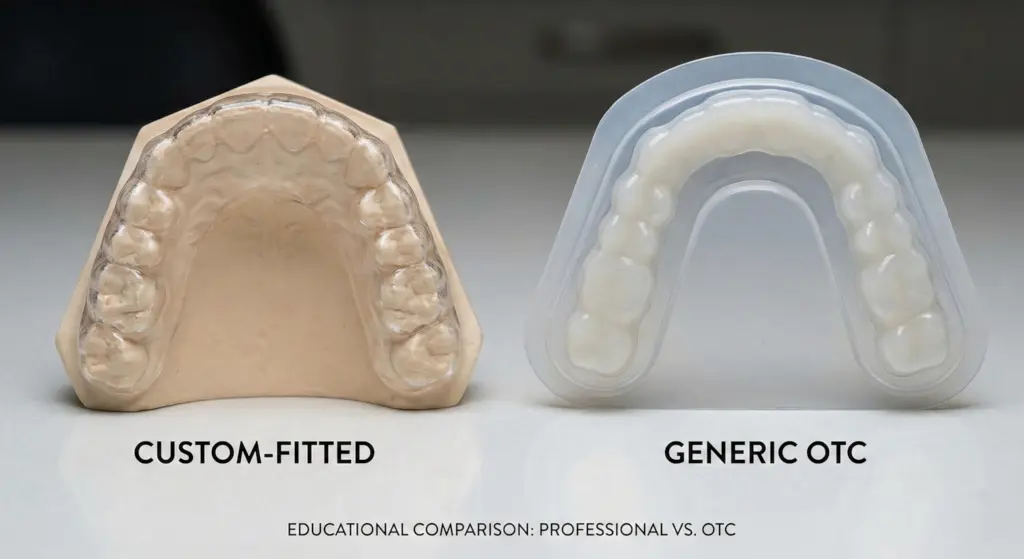
1. One-Size-Fits-All Trays Don't Actually Fit Anyone
The generic trays that come with most OTC kits are designed to fit the “average” mouth. When the tray doesn’t seal correctly against your teeth, the whitening gel can leak onto your gums or pool unevenly. In that case, you might get whitening on your front teeth while your molars stay stained.
2. Lower-strength peroxide means slower results
Many OTC products use lower peroxide levels, which can mean milder whitening. Some in-office systems use higher concentrations under supervision for faster, more noticeable results.
3. You're Treating the Wrong Type of Stain
Not all tooth discoloration is the same. OTC kits can help with surface stains (coffee/tea/wine). Deeper discoloration from aging, medication, or trauma often needs professional treatment.
4. Existing dental work won’t whiten
Crowns, veneers, and fillings don’t change shade with whitening. That can create a two-toned look if restorations are visible in your smile zone.
5. Sensitivity Stops You Before You See Results
Tooth sensitivity is one of the most common reasons people quit OTC whitening halfway through. Sensitivity happens because peroxide can temporarily irritate teeth, especially with recession or enamel wear. Without professional guidance on pacing, desensitizing treatments, or alternative formulations, many people simply give up when the discomfort becomes too much.
6. Inconsistent use leads to inconsistent results
Skipping days, shortening wear time, or switching products reduces effectiveness. Professional plans are easier to follow because the schedule is clear and supervised.
7. Hidden dental issues can block results
Cavities, gum problems, enamel wear, or cracks can make whitening uncomfortable and unpredictable. A professional guidance can catch these issues before treatment begins, which is why dentists often recommend a cleaning and checkup before any whitening procedure.
Whitening Ingredients 101: Hydrogen Peroxide vs. Carbamide Peroxide
Both professional and OTC whitening products rely on peroxide-based reactions to break down stain molecules. Understanding the difference between the two main types can help you make sense of product labels.
Hydrogen Peroxide
Hydrogen peroxide is the faster-acting whitening ingredient. It breaks down quickly when it contacts the teeth, releasing oxygen molecules that penetrate the enamel and break apart stain molecules. Some in-office systems use higher concentrations (often in the 25%–40% range) under professional supervision, but protocols vary by case and product.
Carbamide Peroxide
Carbamide peroxide is essentially hydrogen peroxide combined with urea, which makes it break down more slowly. It’s often used in take-home whitening trays (both professional and OTC) because the slower release can reduce sensitivity. A 10% carbamide peroxide gel is roughly equivalent to 3.5% hydrogen peroxide in whitening strength.
Higher concentrations may work faster, but they can also increase sensitivity and require professional oversight to protect gums
Surface Stains vs. Deeper Discoloration: What Whitening Can and Can't Fix
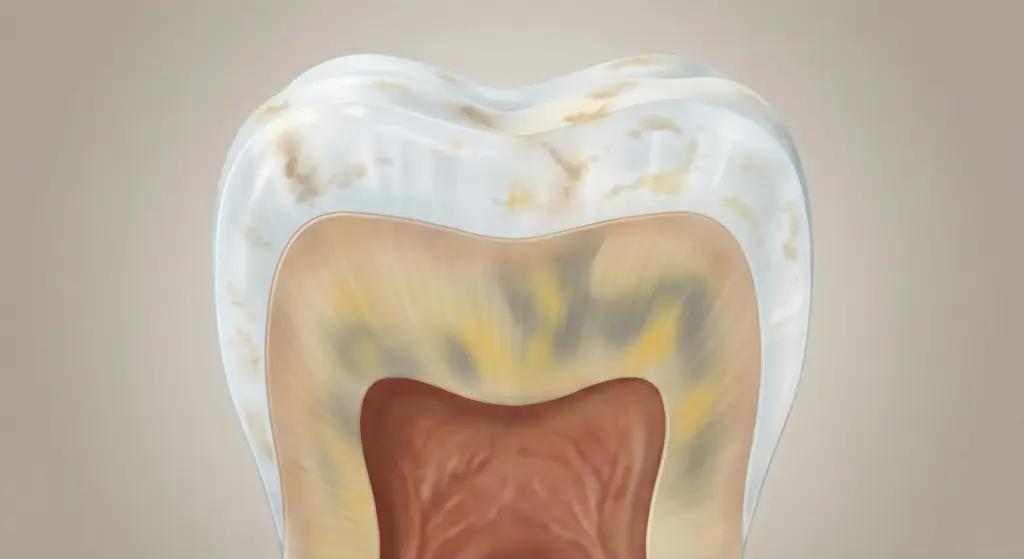
Not all tooth discoloration responds the same way to whitening treatments. Understanding the difference between extrinsic (surface) and intrinsic (internal) stains helps set realistic expectations.
Extrinsic Stains (Surface-Level)
Extrinsic stains often respond well to both professional cleaning and whitening treatments, including some OTC products if they’re used consistently. Extrinsic stains form on the outer layer of tooth enamel and are typically caused by:
- Coffee, tea, and red wine
- Tobacco use
- Berries and dark-colored foods
- Poor oral hygiene allowing plaque buildup
Intrinsic Stains (Deep Discoloration)
These occur within the inner structure of the tooth (the dentin layer) and may be caused by:
- Aging (as enamel thins and dentin darkens naturally)
- Certain medications (like tetracycline antibiotics during tooth development)
- Excessive fluoride exposure in childhood (fluorosis)
- Dental trauma or root canal treatment
Intrinsic discoloration often requires professional-strength whitening, and in some cases, may need alternative cosmetic treatments like veneers or bonding if whitening doesn’t achieve the desired result.
What Professional Teeth Whitening Does Differently
Comprehensive Exam Before Treatment
Every professional whitening plan starts with an examination. Your dentist will check for cavities, gum disease, enamel erosion, and existing dental work.
Custom-Fitted Trays for Even Coverage
Professional take-home whitening kits include trays made from impressions of your actual teeth. This will ensure the whitening gel stays in contact with all tooth surfaces evenly, prevents leakage onto gums, and delivers consistent results across your entire smile.
Higher-Concentration Whitening Gel with Protective Measures
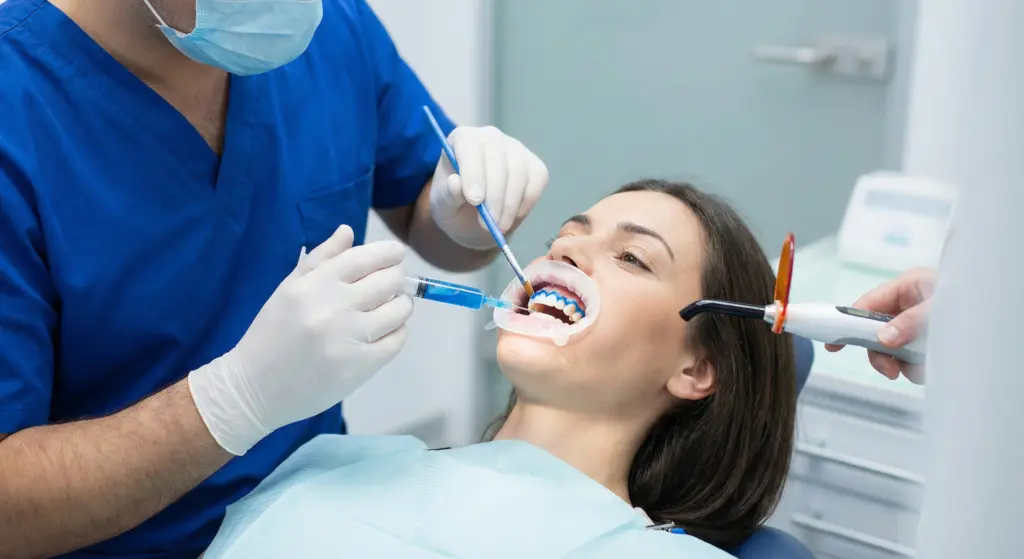
In-office whitening uses professional-strength peroxide (often 25-40% hydrogen peroxide) applied under controlled conditions. This allows for better results in as little as one appointment while minimizing risk.
Personalized Sensitivity Management
If you have sensitive teeth, your dentist can adjust the treatment protocol. This may include desensitizing options and a slower, lower-strength approach.
Follow-Up Care and Maintenance Guidance
Professional whitening includes aftercare instructions tailored to your lifestyle and dietary habits. You’ll know exactly how to maintain results, when touch-ups might be needed.
'Laser Whitening' Explained: What the Marketing Really Means
You’ve probably heard the term “laser teeth whitening” or “light-activated whitening,” which sounds high tech and effective, but it’s important to understand what’s actually happening.
The peroxide is doing the work. Some systems use a special light (LED or other light sources, and sometimes an actual laser) to accelerate the chemical breakdown of the peroxide, potentially speeding up the whitening process. However, research on whether the light significantly improves results compared to peroxide alone is mixed. Some studies suggest minimal added benefit; others show slightly faster results.
What matters most is the concentration and quality of the whitening gel, the precision of application, and the health of your teeth going into treatment. A “laser whitening” session at a mall kiosk with poorly trained staff is far less effective and potentially less safe than in-office whitening at a licensed dental practice.
If a practice offers light-activated whitening, ask about peroxide concentration, how gums are protected, and what to expect for sensitivity and results.
Safe Teeth Whitening for Sensitive Teeth
If you’ve avoided whitening because of sensitivity concerns, or if you’ve tried OTC products and quit due to discomfort, professional whitening can still be an option.
Before Treatment
- Get a dental exam before treatment
- Start using desensitizing toothpaste (with potassium nitrate or stannous fluoride) 2-3 weeks before whitening
- Discuss your sensitivity history with your dentist
During Treatment
- Use a lower-concentration whitening gel
- Apply desensitizing gel before or after whitening sessions as recommended by your dentist
- Take breaks between whitening sessions if discomfort occurs
- Avoid extremely hot or cold foods and drinks during the whitening period
After Treatment
- Continue using desensitizing toothpaste for several weeks
- Avoid acidic foods and drinks
- Use a soft-bristled toothbrush and gentle brushing technique
In-Office Teeth Whitening Cost: What to Expect in NYC and Brooklyn
Professional whitening costs can vary widely depending on the type of treatment, the practice, and your location.
In-Office Whitening (Single Session)
In-office whitening is often several hundred dollars per session and can reach $550+ depending on the system used and how many sessions are needed. This may include a cleaning (sometimes billed separately), protective measures for gums, application of professional-strength whitening gel, and sometimes light activation. Results can often be seen immediately, with teeth appearing often looks noticeably brighter after one appointment.
What may be included
- Initial examination and consultation
- Professional cleaning before treatment
- Custom tray fabrication (for take-home options)
- Dentist supervision and safety protocols
- Aftercare instructions and follow-up guidance
How to Maintain Your Whitening Results
Daily Habits That Protect Your Smile
- Brush twice daily with a whitening or fluoride toothpaste
- Floss daily to prevent plaque buildup that can yellow teeth
- Rinse with water after drinking coffee, tea, red wine, or dark sodas
- Use a straw for staining beverages when possible
- Avoid tobacco products entirely
Professional Maintenance
- Schedule cleanings every 6 months to remove surface stains and plaque
- Ask about touch-up whitening sessions every 12-24 months, depending on your habits
- Keep your custom trays (if you had professional take-home whitening) for occasional maintenance
Foods and Drinks That Stain Teeth Fastest
If something can stain a white shirt, it can probably stain your teeth. The biggest culprits include:
- Coffee and black tea
- Red wine and dark sodas
- Berries (blueberries, blackberries)
- Tomato-based sauces and balsamic vinegar
- Soy sauce and curry
When to Call a Dentist Urgently
While whitening is generally safe when done properly, there are situations that require professional attention.
Contact your dentist if you experience:
- Severe, sharp pain that doesn’t resolve within a few hours of stopping treatment
- Gum tissue that becomes white, raw, or severely irritated
- Bleeding gums after whitening
- Swelling in the mouth or face
- Sensitivity that worsens over several days instead of improving
- Uneven whitening results that suggest underlying dental problems
Frequently Asked Questions
Yes, professional whitening typically delivers more consistent and noticeable results. It includes a dental exam first, uses higher-concentration peroxide under supervision, provides custom-fitted trays for even coverage, and includes protective measures for gums and sensitive teeth. OTC kits may work for minor surface stains but often fail due to poor fit, lower peroxide levels, and lack of personalized guidance.
Whitening strips often fail because they don't fit teeth properly (causing uneven gel contact), contain low peroxide concentrations that can't tackle deeper stains, or you might be treating the wrong type of discoloration. Intrinsic stains from aging or medication often require professional-strength treatment.
Yes, whitening can be safe for sensitive teeth when done under professional supervision.Starting with a dental exam to rule out underlying issues like cavities or enamel erosion is essential.
No. Whitening treatments only affect natural tooth enamel and don't change the color of dental restorations like crowns, veneers, or fillings.
Results can last anywhere from several months to a few years, depending on your habits. If you drink coffee, tea, or red wine regularly, smoke, or have poor oral hygiene, results may fade faster.
Stop treatment immediately. Rinse your mouth thoroughly with water, and avoid using the whitening product until you've spoken with a dentist.
It's not recommended to use OTC whitening while wearing braces because the brackets block the gel from reaching parts of your teeth, leading to uneven results. For Invisalign, you may be able to use whitening products, but you should consult with your dentist first.