
Blog
Dental Emergency Guide Brooklyn: What Counts as an Emergency
When to Call an Emergency Dentist, Go to the ER, or Safely Wait
This article was written to help Brooklyn residents make clear, time-sensitive decisions during dental emergencies. It reflects current clinical guidance on urgent dental care, first aid, and when hospital-level treatment is necessary.
Introduction-What counts as a dental emergency?
A dental emergency includes severe pain, uncontrolled bleeding, dental trauma, knocked-out teeth, or signs of infection like facial swelling or an abscessed tooth. These situations often require immediate dental care. If you experience trouble breathing or swallowing, rapidly spreading facial swelling, fever with facial swelling, or severe trauma, go to the ER (Emergency Room) or call 911(U.S. emergency services) immediately. For a knocked-out adult tooth, severe toothaches, or visible abscesses, contact an emergency dentist in Brooklyn NY as soon as possible.
Brooklyn Emergency Guide: What Actually Counts as a Dental Emergency?
It’s 2 AM, and your tooth is throbbing. Or maybe your child just knocked out a tooth at the playground. You’re searching on your phone, trying to figure out: do I need care right now, or can this wait until morning?
Dental emergencies can be stressful and painful, but knowing what counts as a true emergency and where to go for help can make all the difference in saving a tooth, managing pain, and preventing complications.
What Actually Counts as a Dental Emergency?
A dental emergency is any situation involving your teeth, gums, or mouth that requires immediate attention to relieve severe pain, stop bleeding, save a tooth, or prevent a serious infection from spreading. These situations can’t safely wait days or weeks for a regular appointment.
Common dental emergencies include:
- Knocked-out tooth (avulsed tooth)
- Severe, persistent toothache
- Broken or cracked tooth with pain or sharp edges
- Dental abscess or swollen jaw (signs of infection)
- Uncontrolled bleeding from the mouth
- Partially dislodged tooth (tooth pushed out of position)
- Dental trauma from an accident or injury
- Persistent bleeding after a tooth extraction
If you’re experiencing any of these issues, time often matters. The sooner you get appropriate care, the better your chances of preserving your tooth and preventing complications.
ER vs Emergency Dentist vs Can Wait: Quick Decision Guide
Not all dental problems require the same level of urgency. Here’s how to decide where to go:
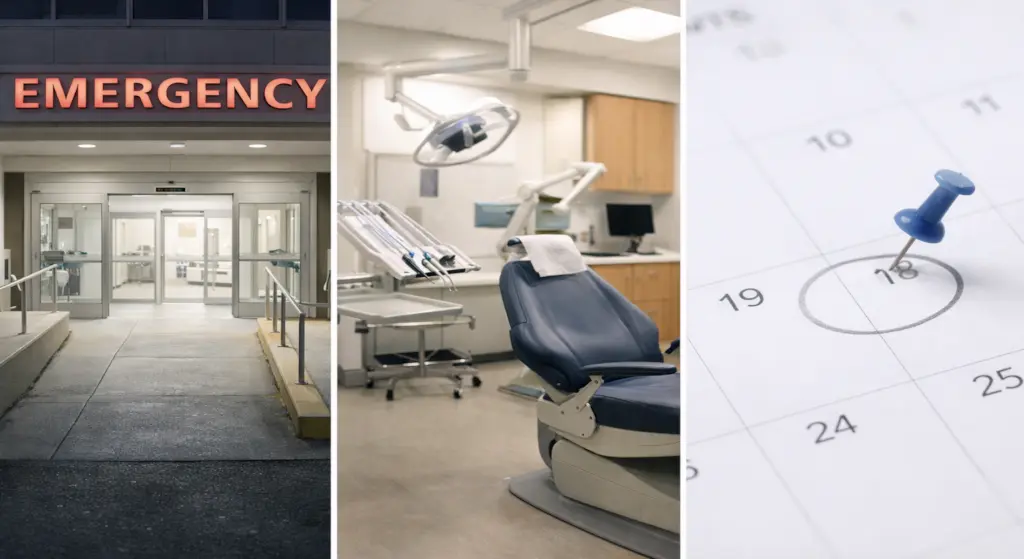
Go to the ER or Call 911 Immediately If:
Some dental problems can become life-threatening medical emergencies. Seek emergency medical care right away if you experience:
- Difficulty breathing or swallowing
- Facial swelling accompanied by fever
- Rapidly spreading swelling of the face or neck
- Severe facial trauma or suspected broken jaw
- Uncontrolled bleeding that won’t stop after 15-20 minutes of pressure
These situations require hospital-level care. The ER can stabilize you, address life-threatening complications, and refer you to a dentist for follow-up dental treatment once the emergency is under control.
Call an Emergency Dentist Brooklyn, NY Same Day If:
Many dental emergencies are best handled by a dentist rather than an ER.
Knocked-Out Adult Tooth
If the tooth is kept moist and you get to a dentist within 30-60 minutes, it may be possible to reimplant it successfully.
Severe Toothache or Tooth Pain
Persistent, intense tooth pain that doesn’t respond to over-the-counter pain relief may indicate infection, deep decay, or an abscess. Ignoring it can lead to worsening infection and more extensive treatment.
Dental Abscess or Swollen Jaw
A visible bump on your gums, swelling along the jaw, or a pimple-like sore on the gums can be a sign of a dental abscess
Broken or Cracked Tooth with Pain
A broken tooth emergency occurs when a tooth fractures and exposes inner tooth structure or causes significant pain or sensitivity.
Tooth Partially Dislodged or Pushed Out of Position
A tooth that’s been shifted from trauma needs to be repositioned and stabilized as soon as possible to prevent permanent damage or loss.
Persistent Bleeding After Tooth Extraction
Some bleeding after an extraction is normal, but if it continues heavily for several hours despite biting on gauze, you should contact your dentist or an emergency dentist for evaluation.
Can usually wait 24-72 Hours (but you still need a dental appointment)
Not every dental problem requires same-day care.
- Small chip or crack without pain
- Lost filling or crown without pain
- Mild tooth sensitivity
- Dull toothache that comes and goes
Even if these issues don’t require emergency care, it’s still wise to call your dentist for guidance
What to Do Right Now: Safe First Aid for Dental Emergencies
For Tooth Pain Relief
- Rinse your mouth with warm salt water
- Gently floss around the painful tooth to remove any trapped food
- Take OTC pain relievers if safe for you and as directed on the label (ibuprofen or acetaminophen)
- Apply a cold compress to the outside of your cheek for 15-20 minutes to reduce swelling
- Do NOT place aspirin directly on the tooth or gums
For a Knocked-Out Permanent (Adult) Tooth
- Handle the tooth by the crown only (avoid touching the root)
- Rinse it gently with water if dirty (do not scrub or use soap)
- If possible, try to place the tooth back in the socket immediately Important: Do not try to reinsert a baby tooth. Replanting guidance applies to an adult (permanent) tooth. If you’re unsure, keep the tooth moist and contact a dentist immediately.
- If you can’t reinsert it, keep it in milk (best at home) or in a clean container with saliva, or a tooth preservation kit(not water)
- Get to a dentist within 30-60 minutes for the best chance of saving the tooth
For a Broken or Cracked Tooth
- Rinse your mouth with warm water
- Save any tooth fragments you can find
- If there’s bleeding, apply gauze for 10 minutes
- Use a cold compress on the outside of your mouth to reduce swelling
- Cover any sharp edges with dental wax or sugar-free gum temporarily to protect your tongue and cheeks
For Swelling or Abscess
- Rinse with warm salt water several times a day
- Apply a cold compress to the outside of your face
- Do NOT try to pop or drain the abscess yourself
- Seek same-day dental care for evaluation and treatment
For Uncontrolled Bleeding
- Apply firm, steady pressure with clean gauze or a clean cloth for 15-20 minutes
- Avoid rinsing, spitting, or touching the area excessively
- Keep your head elevated
- If bleeding doesn’t stop after 20 minutes of pressure, seek emergency care
What NOT to Do During a Dental Emergency
Avoid these common mistakes that can make things worse:
- Don’t place aspirin directly on your gums or tooth
- Don’t use sharp tools or needles to try to remove debris or drain an abscess
- Don’t try to glue a broken tooth or crown back on with household glue or adhesive
- Don’t ignore facial swelling or fever
- Don’t wait and hope the problem goes away
What to Expect at an Emergency Dental Appointment
When you contact an emergency dentist in Brooklyn NY, here’s what typically happens:
What to Bring
- Your insurance information or payment method
- A list of any medications you’re taking
- Any tooth fragments (if applicable)
- A knocked-out tooth stored properly in milk or saliva
During Your Visit
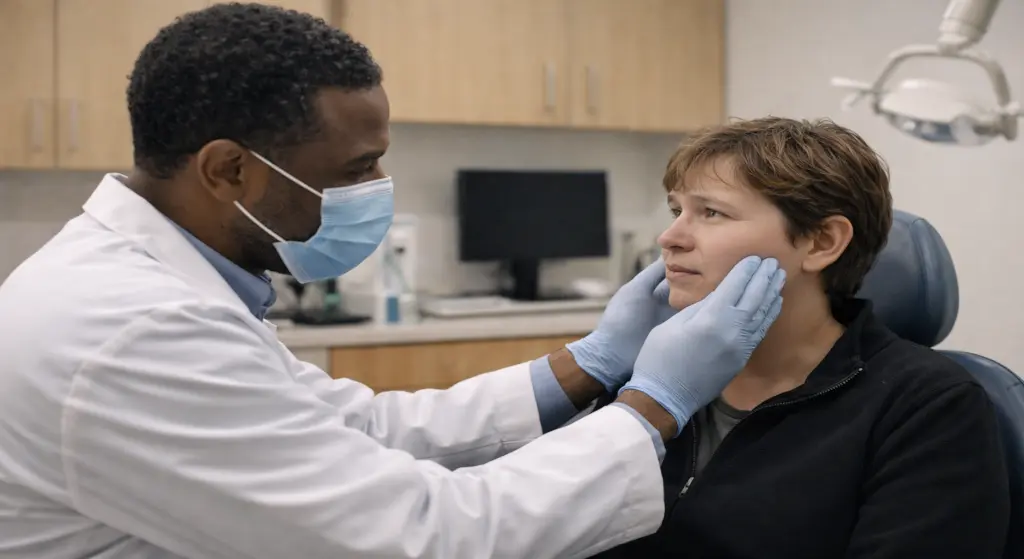
The dentist will conduct a thorough examination, often including X-rays to assess the extent of damage or infection. They’ll provide immediate pain relief when possible, address the emergency, and create a treatment plan for any follow-up care needed.
Depending on the situation, treatment may include root canal therapy, extractions, dental bonding, crowns, or reimplanting a knocked-out tooth
Finding Same-Day Dentist Brooklyn Care
Brooklyn residents have several options for urgent dental care. Many dental practices, including Toothology Dental in Williamsburg, offer same-day emergency appointments depending on availability. When you call, clearly describe your symptoms so the office can prioritize your case appropriately.
For neighborhoods like Park Slope, Downtown Brooklyn, Bushwick, or Greenpoint, same-day care may be accessible within your local area. If you’re unable to reach your regular dentist, search for ’emergency dentist Brooklyn NY’ or ‘same-day dentist Brooklyn’ to find offices with availability.
Frequently Asked Questions
A dental emergency requires immediate care to prevent tooth loss, stop bleeding, relieve severe pain, or address infection. This includes knocked-out teeth, severe toothaches, uncontrolled bleeding, dental abscesses, and significant trauma. An urgent problem should be addressed within 24-72 hours .
Go to the ER if you have trouble breathing or swallowing, facial swelling with fever, rapidly spreading swelling, severe facial trauma, or uncontrolled bleeding. For dental-specific issues like knocked-out teeth, severe tooth pain, or dental abscesses without systemic symptoms, an emergency dentist is usually better equipped to provide definitive treatment.
If it’s a baby tooth, don’t try to put it back. If it’s an adult (permanent) tooth, handle the tooth by the crown (chewing surface) only. Rinse it gently if dirty, but don't scrub it. If possible, try to place it back in the socket immediately. If you can't, store it in milk (best) or a clean container with saliva / tooth preservation kit. Get to a dentist within 30-60 minutes.
Yes. A dental abscess is a bacterial infection that won't heal on its own. If left untreated, the infection can spread to surrounding tissues, the jaw, and in rare cases, the bloodstream or brain.
A small chip without pain, sharp edges, or exposed inner tooth structure is usually not an emergency, but it should still be evaluated and repaired within a few days to prevent further damage.
Facial swelling can indicate a dental infection or abscess. If the swelling is accompanied by fever, difficulty breathing, or difficulty swallowing, go to the ER immediately.
Many emergency dentists offer same-day appointments depending on availability and the severity of your situation. When you call, describe your symptoms clearly so the office can assess urgency and fit you in as soon as possible.
Many dental insurance plans cover emergency exams and X-rays, but coverage varies by plan. Emergency exams, X-rays, and necessary procedures like extractions or root canals are typically covered, though you may have copays or deductibles. Contact your insurance provider or the dental office to verify coverage before your appointment.