
Blog
Weekend Toothache? When to Call an Emergency Dentist in Brooklyn
How to Tell If Weekend Tooth Pain Needs Same-Day Dental Care
This article was written to help Brooklyn residents make safe, time-sensitive decisions when weekend tooth pain strikes. It reflects current clinical guidance on dental emergencies, first-aid care, and when same-day treatment is necessary.
When Weekend Tooth Pain Becomes a Dental Emergency
It’s Friday night, and your tooth starts throbbing. By Saturday morning, the pain is worse, and you’re wondering: do I need to see a dentist right now, or can this wait until Monday? When you’re dealing with a persistent toothache emergency during the weekend, knowing when to seek immediate care can make the difference between saving a tooth and facing more extensive treatment later.
Not all tooth pain requires emergency care, but certain symptoms shouldn’t wait. This guide will help Brooklyn residents quickly determine whether their weekend toothache needs same-day attention, what safe steps they can take at home, and when to head to an emergency dentist versus the ER(Emergency Room).
What Counts as a Persistent Toothache Emergency?
A persistent toothache can become an emergency when it’s severe, worsening, wakes you up at night, lasts more than a few hours, or comes with swelling, fever, or drainage.
Warning signs that your toothache may be an emergency:
- Swelling in your jaw, face, or gums
- Fever accompanying tooth pain
- Bad taste or drainage from the tooth
- Radiating pain spreading to the ear, neck, or jaw joint
- Sharp pain when biting or chewing
- Severe, throbbing pain that keeps you awake
- Recent dental trauma or injury
Dental pain can result from nerve inflammation (pulpitis) inside the tooth or from infection in the surrounding bone and tissue. Both conditions often require professional treatment to prevent complications and relieve pain.
Toothache vs Emergency: Quick Weekend Triage
When tooth pain strikes on the weekend, use this simple guide to decide your next step:
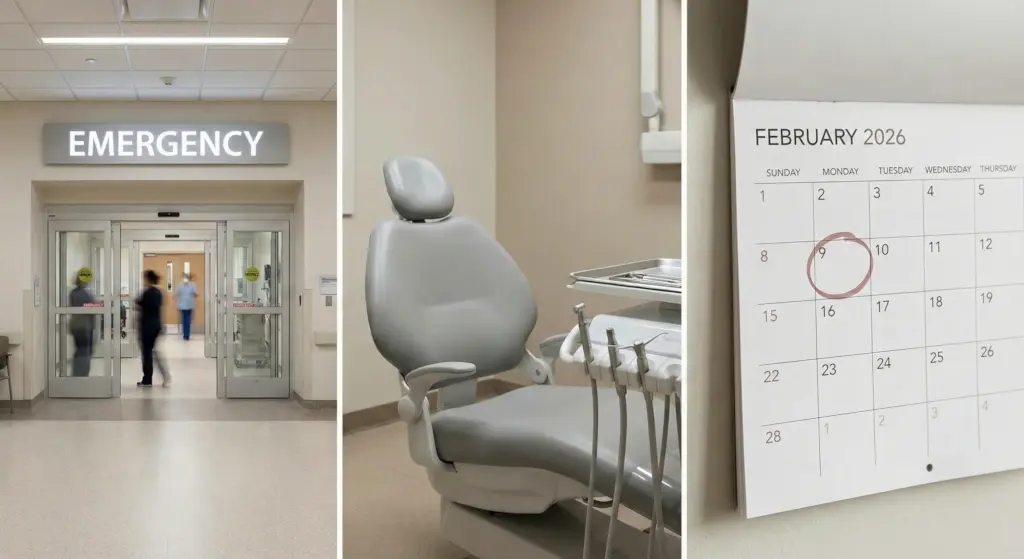
Go to the ER(Emergency room) or Call 911 (U.S. emergency services) Immediately If:
- You have trouble breathing or swallowing
- Facial or neck swelling is rapidly spreading
- You have high fever with facial swelling
- You experienced major facial trauma
- Bleeding is uncontrolled despite 20 minutes of pressure
Call a Weekend Dentist in Brooklyn Same Day If:
- Severe toothache with visible swelling or suspected abscess
- Radiating jaw pain that’s getting worse
- Cracked or broken tooth with sharp pain when biting
- Tooth knocked out or partially dislodged
- Broken tooth with exposed inner structure
- Pain from a recent dental procedure that’s worsening
Can Usually Wait Until Monday (But Call for Guidance):
- Lost filling or crown with mild sensitivity but no severe pain
- Small chip with no pain or sharp edges
- Dull, intermittent toothache that’s manageable with OTC pain medication
- Mild temperature sensitivity that comes and goes
Understanding the difference between emergency room care and emergency dental care can help you get the right treatment faster.
The ER focuses on airway management, medical stabilization, and infection control through medications when indicated. They may provide pain relief and prescribe antibiotics when clinically indicated, but for definitive dental treatment (like draining an abscess, removing a damaged tooth, or starting an emergency root canal), you need a dentist.
Common Reasons Tooth Pain Spikes on Weekends
Why does tooth pain always seem to get worse on Saturday night? The truth is, it doesn’t necessarily spike on weekends but when you’re busy during the week, you might not notice mild symptoms until you slow down.
Pulpitis (Inflamed Tooth Nerve)
Pulpitis occurs when the nerve inside your tooth becomes inflamed, often due to deep decay, a crack, or repeated dental work. Symptoms include lingering pain after hot or cold foods, spontaneous throbbing, and intense pain that wakes you at night.
Cracked Tooth
A cracked tooth can cause sharp pain when biting or chewing, especially when you release the pressure. Cracks can be hard to detect visually, but a dentist can identify them through examination and X-rays.
Lost Filling or Crown
When a filling or crown comes out, the inner layers of your tooth (dentin) become exposed. The exposed area is also vulnerable to bacteria and further decay.
Dental Abscess
A dental abscess is a pocket of pus caused by bacterial infection, usually at the root of a tooth or in the gums. Symptoms include persistent, throbbing pain, swelling in the jaw or face, tenderness when touching the area, bad taste in your mouth, and sometimes fever.
Wisdom Tooth or Gum Inflammation
Pain and swelling behind your back molars can indicate an erupting wisdom tooth or inflammation of the gum tissue around it (pericoronitis). This can cause soreness, swelling, difficulty opening your mouth, and sometimes a bad taste.
Safe Dental Pain Relief at Home (Until You're Seen)
While arranging professional care, these safe steps can help manage tooth pain:

Safe Home Care Steps
- Mix 1/2 teaspoon of salt in 8 ounces of warm water and rinse gently several times a day
- Remove any trapped food particles that might be causing irritation
- Apply a cold compress to the outside of your cheek for 15–20 minutes to reduce swelling.
- Take OTC pain medication as directed
- Elevate your head when sleeping
What NOT to Do
- Don’t place aspirin directly on your gums or tooth
- Avoid alcohol-based mouthwashes on open sores
- Never use a heating pad on facial swelling, it can worsen inflammation.
- Don’t try to puncture or drain a swollen area
- Don’t take leftover antibiotics from a previous prescription
But remember these home care measures are temporary. They’re not substitutes for professional treatment, especially if you’re experiencing severe symptoms.
When You Might Need a Root Canal Emergency
Many weekend toothaches that require same-day care turn out to need root canal therapy. If you’re experiencing severe, persistent pain with or without swelling, it may indicate that the nerve inside your tooth is inflamed or infected.
An emergency root canal aims to relieve pain and address infection by removing the damaged nerve tissue and cleaning the inside of the tooth. Sometimes the first emergency visit involves opening the tooth, draining any infection, medicating the canals, and placing a temporary filling.
Your dentist will conduct a thorough examination, take X-rays to assess the extent of damage or infection, and discuss your options. In some cases, extraction might be recommended instead of root canal therapy, depending on the tooth’s condition and your overall dental health.
What to Expect at a Weekend Emergency Dental Visit

Examination and Diagnosis
The dentist will examine the painful tooth and surrounding area, review your symptoms and medical history, take X-rays to see inside the tooth and bone, check your bite, and assess for signs of infection or swelling.
Treatment Options
Depending on what’s causing your toothache, emergency treatment may include,
- Temporary filling to seal an exposed nerve or protect a damaged tooth
- Re-cementing a loose or fallen crown
- Draining an abscess to relieve pressure and infection
- Emergency root canal therapy to remove infected nerve tissue
- Tooth extraction if the tooth can’t be saved
- Prescription for antibiotics or pain medication when clinically indicated
Your dentist will explain your options, discuss what’s involved in each treatment, provide an estimate of costs, and create a plan for any follow-up care needed.
How to Find a Weekend Dentist in Brooklyn
When tooth pain strikes on Saturday or Sunday, finding dental care quickly is essential.
Call Early and Describe Your Symptoms
Many dental practices in Brooklyn, including offices in Williamsburg, Greenpoint, Park Slope, Downtown Brooklyn, and Bushwick, offer same-day emergency appointments depending on availability.
Be prepared to explain
- The nature and severity of your pain
- When symptoms started and whether they’re worsening
- Any visible swelling, bleeding, or other symptoms
- Your insurance information or questions about payment options
What to Bring
- Insurance card and ID
- List of current medications
- Any relevant dental records if you’re a new patient
If you can’t reach your regular dentist or they don’t offer weekend hours, search for ’emergency dentist Brooklyn’ or ‘weekend dentist Brooklyn’ to find practices with availability. Many offices reserve time specifically for urgent cases.
Frequently Asked Questions
A toothache is an emergency if it's severe and persistent, accompanied by swelling, causes radiating pain to your jaw or ear, involves visible abscess or pus, occurs with fever, or results from dental trauma. If over-the-counter pain medication doesn't help and the pain is interfering with sleep or daily activities, seek same-day care.
It depends on the severity. Mild, intermittent pain that's manageable with OTC medication can often wait, but worsening pain, swelling, fever, or signs of infection should not be ignored.
Facial or jaw swelling can indicate a dental infection or abscess and should be evaluated the same day. If swelling is accompanied by fever, difficulty breathing or swallowing, or is rapidly spreading, go to the ER immediately.
Yes, many weekend emergency dentists can begin root canal treatment or provide stabilizing care to relieve pain until definitive treatment. The first emergency visit may involve opening the tooth, draining infection, and medicating the canals, with final restoration completed at a follow-up appointment.
Ibuprofen and acetaminophen are commonly used for dental pain relief when taken as directed on the label. Never place aspirin directly on your tooth or gums, as it can burn tissue. If you have health conditions, and unsure about which pain reliever is safe for you, consult your doctor or pharmacist before taking anything.
The ER can provide pain management and prescribe antibiotics when clinically indicated, but they typically don't perform dental procedures like root canals, extractions, or fillings.
No. A dental abscess is a bacterial infection that requires professional treatment.
Sharp pain when biting can indicate a cracked tooth, even if you can't see the crack visually. It might also suggest an infection at the root of the tooth or a problem with a previous filling or crown.