
Blog
Baby's First Dental Visit: A Brooklyn Parent’s Timeline & Guide
A Brooklyn Parent’s Guide to Early Dental Care and Healthy Habits
This article is written to guide parents through their child’s earliest dental milestones using evidence-based pediatric dental recommendations. It focuses on prevention, education, and helping families build healthy oral habits from infancy.
When should my baby have their first dental visit?
It is best to schedule your baby’s first dental visit by age 1, or within 6 months after the first tooth appears whichever comes first. This early visit helps establish a dental home, allows the dentist to check for early signs of decay, and gives parents guidance on infant oral health, teething, feeding habits, and proper brushing techniques.
Why Your Baby's First Dental Visit Matters
As a new parent in Brooklyn, you’re juggling pediatrician appointments, feeding schedules, sleep training, and countless other milestones. It’s common to wonder whether babies really need a dentist yet. The answer is yes ,and the first visit is mostly about prevention, education, and guidance.
Your baby’s first dental visit isn’t about drilling or filling cavities. It’s about prevention, education, and establishing a relationship with a pediatric dentist who can guide you through teething, brushing, and keeping those tiny teeth healthy as they grow. Early childhood cavities can develop early, but with the right routine and guidance, they’re often preventable.
When Should a Baby Go to the Dentist?
The American Academy of Pediatric Dentistry recommends a child’s first dental visit by age 1, or within 6 months of the first tooth erupting, whichever comes first. This recommendation is based on decades of research showing that early dental visits improve long-term oral health outcomes and help prevent early childhood cavities.
Why so early?
- Prevention starts before problems appear
- Parents get personalized guidance
- Establishing a continuity of dental care
- Catching issues early since some babies are at higher risk for cavities due to diet, genetics, or feeding habits
Even if your baby doesn’t have teeth yet by age 1, the visit is still valuable. The dentist can examine gum health, check jaw and facial development, and provide guidance on oral hygiene practices to start as soon as teeth begin erupting.
Brooklyn Parent Timeline: From Birth to Toddlerhood
0-3 Months: Gum Care Begins
Even before teeth appear, you can start building healthy habits. After feedings, gently wipe your baby’s gums with a clean, damp cloth or soft gauze.
3-6 Months: Teething May Begin
Many babies start teething between 4 and 7 months, though the timing varies widely. You might notice increased drooling, fussiness, or a desire to chew on everything. Safe soothing options include chilled (not frozen) teething rings, gentle gum massage with a clean finger, or a cool, damp washcloth for baby to chew on.
6-12 Months: First Tooth Dental Care
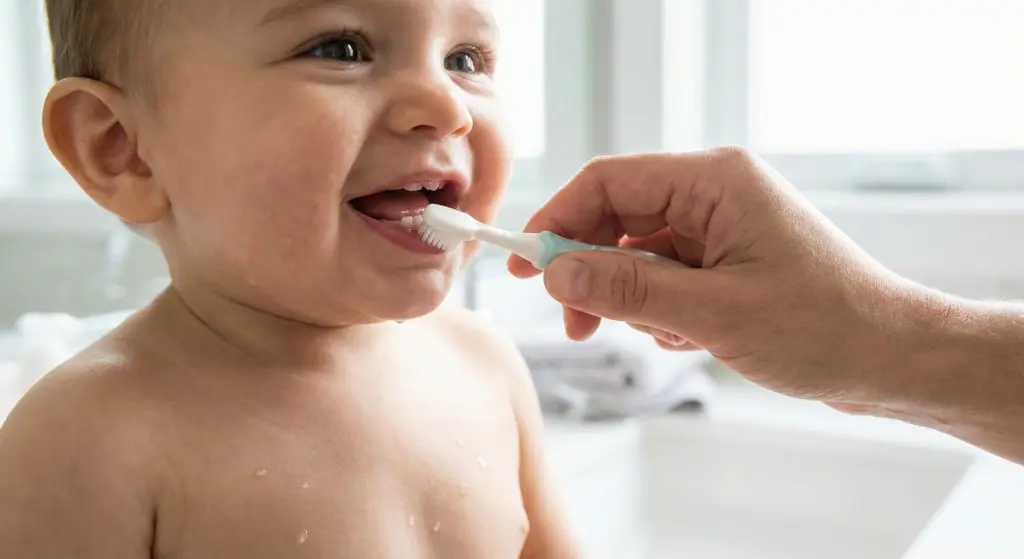
Most babies get their first tooth between 6 and 10 months. Once that first tooth appears, it’s time to start brushing.
How to brush:
- Use a soft-bristled, small-headed baby toothbrush
- Apply a tiny smear of fluoride toothpaste
- Brush gently twice a day, especially before bedtime
- No need to rinse at this age, the small amount of toothpaste is safe to swallow
By 12 Months: Schedule the First Dental Visit
Whether your baby has one tooth or several, aim to have that first dental appointment by their first birthday. The dentist will conduct a gentle examination, answer your questions, and provide personalized guidance for the months ahead.
12-24 Months: Building Healthy Habits
During the toddler months, continue brushing twice daily with a rice-grain-sized smear of fluoride toothpaste. And also your dentist will guide you on:
- Transitioning from bottle to cup
- Managing snacking and sugary drink habits
- Fluoride needs based on your local water supply and cavity risk
- When to start flossing (usually when teeth touch)
- Follow-up visit frequency
What Happens at the First Dental Visit?
Many parents worry about what to expect at their baby’s first dental appointment.
The Examination
The dentist or hygienist will examine your baby’s mouth, by checking,
- Gum health and any erupting teeth
- Tooth development and alignment
- Signs of early decay (white or brown spots)
- Jaw and facial growth
- Bite issues or concerns
Parent Education and Guidance
The first visit is as much about coaching parents as it is about examining the baby. The dentist will discuss,
- Proper brushing technique and frequency
- Fluoride toothpaste use and dosage
- Feeding practices that affect dental health
- Pacifier use or thumb-sucking habits
- Teething and how to soothe discomfort safely
- Warning signs that require a follow-up visit
How to Prepare Your Baby (and Yourself) for the Visit
A little preparation can make the first dental visit smoother for everyone,
Pick the Right Time
Schedule the appointment when your baby is typically well-rested and fed. Avoid nap times or times when they’re usually hungry or cranky.
What to Bring
- Insurance card and ID
- List of any medications or supplements your baby takes
- Notes on feeding routine and any concerns
- Your questions about teething, brushing, pacifiers, or thumb-sucking
- Comfort items
Stay Calm and Positive
Babies pick up on parental anxiety. Even if you’re nervous about the dentist yourself, try to stay relaxed and upbeat. Use a cheerful tone when talking about the visit.
First Tooth Dental Care: Daily Routine That Prevents Cavities
Establishing a consistent oral care routine from the moment the first tooth appears is one of the best things you can do for your child’s long-term dental health.
Brush Twice Daily
Once teeth erupt, brush them twice a day, ideally in the morning and before bed. Use a soft-bristled toothbrush designed for babies and a tiny smear of fluoride toothpaste (about the size of a grain of rice for children under 3).
Avoid Sharing Utensils
Cavity causing bacteria can be transmitted from parent to child through saliva. While it’s not always possible to avoid, try not to share spoons, cups, or clean pacifiers with your mouth.
Fluoride and Water
If your home has fluoridated tap water ,your baby gets some fluoride from drinking water and eating foods prepared with it. If you use well water or only give bottled water, talk to your dentist about whether additional fluoride supplementation is recommended based on your child’s cavity risk.
Bottle, Bedtime, and Snacks: Preventing Baby Bottle Tooth Decay
Baby bottle tooth decay is one of the most common chronic conditions in young children. But it’s also highly preventable.
The Bedtime Bottle Problem
Putting your baby to bed with a bottle of milk, formula, or juice creates a perfect environment for cavities. Here’s why: when liquid pools around the teeth during sleep, bacteria in the mouth feed on the sugars, producing acid that attacks tooth enamel. Over time, this can lead to early childhood cavities.
Safer alternatives:
- If your baby needs a bottle to fall asleep, fill it with water only
- Gradually wean your baby from nighttime bottles as they approach 12-18 months
- If you’re breastfeeding at night, try to wipe gums or brush teeth after the last feeding
Limit Frequent Sipping and Snacking
Constant exposure to food and drinks (other than water), even milk, keeps teeth bathed in sugar and acid. Try to limit eating and drinking (other than water) to specific meal and snack times.
Transition from Bottle to Cup
Plan to begin transitioning from bottle to cup around 12 months and phase bottles out over the following months. Sippy cups should be used for water primarily; avoid prolonged use of sippy cups filled with milk or juice, as they can have similar effects to bottle use.
Teething Tips That Are Safe (And What to Avoid)

Safe Teething Remedies
- Use a chilled (not frozen) teething ring
- Use a clean finger to rub the sore gums gently
- Let baby chew on a clean, wet washcloth that’s been chilled in the fridge
- If your baby seems very uncomfortable, ask your pediatrician about appropriate pain relief
What to Avoid
- Teething necklaces or bracelets
- Avoid teething gels with benzocaine for children under 2 (safety warning). Ask your pediatrician/dentist for safer options.
- Don’t use juice or sweet treats to soothe teething pain, this can contribute to cavities
When to Call a Dentist Sooner
While the first routine visit should happen by age 1, call a pediatric dentist sooner if you notice:
- White or brown spots on teeth
- Swelling in the gums, face, or jaw
- Persistent bad breath
- If a tooth is knocked out, chipped, or pushed out of position
- Bleeding that won’t stop after 15-20 minutes of gentle pressure
- Pain or sensitivity that seems severe

Choosing a Child-Friendly Dentist in Brooklyn
Finding the right pediatric dentist NYC or child-friendly dentist Brooklyn is an important part .
What to Look For
- Experience with infants and young children
- Calm, welcoming environment
- Clear parent education
- Convenient location and hours
Brooklyn Neighborhoods to Consider
Brooklyn families in Williamsburg, Greenpoint, Park Slope, Downtown Brooklyn, and Bushwick have access to several pediatric and family dental practices. When choosing a dentist, consider proximity to home or daycare, office hours that fit your schedule, and whether the practice accepts your insurance.
Frequently Asked Questions
Schedule your baby's first dental visit by age 1, or within 6 months after the first tooth appears ,whichever comes first.
Some babies get teeth later than others, and that's perfectly normal. The first visit is still valuable even without visible teeth. Your dentist can assess gum health, check jaw and facial development, and provide guidance on feeding habits, oral hygiene practices to start soon, and what to expect as teeth begin erupting.
Use a soft, small-headed toothbrush designed for babies. Apply a tiny smear of fluoride toothpaste, about the size of a grain of rice for children under 3 years old. Brush gently twice daily. Around age 3, increase to a pea-sized amount of toothpaste and teach your child to spit it out.
Teething may cause drooling and fussiness, but a true fever (around 38°C / 100.4°F or higher) is not typically from teething and should be discussed with your pediatrician.
Baby bottle tooth decay (early childhood caries) is caused by frequent, prolonged exposure of teeth to sugary liquids like milk, formula, or juice ,especially at bedtime or during naps. .
Fluoride helps prevent cavities by strengthening tooth enamel. Most babies get some fluoride from drinking fluoridated tap water and using fluoride toothpaste. Your dentist can advise whether additional fluoride supplements are appropriate based on your child's age, cavity risk, and whether your home has fluoridated water.
Call a dentist promptly if you notice white or brown spots on teeth, gum or facial swelling, persistent bad breath, dental trauma, or bleeding that won't stop after 15-20 minutes. Go to the emergency room or call 911(U.S. Emergency Services) if your baby has trouble breathing or swallowing, rapidly spreading facial/neck swelling, or high fever with facial swelling.
After the first visit by age 1, most children should see the dentist every six months for routine checkups and cleanings.