
- Dental Implants · Patient Education
If you vape and are considering dental implants, here is what you need to know about nicotine, osseointegration, and how to give your implant the best chance of success.
Vaping and Dental Implants: How Nicotine Affects Your Healing Process
If you vape regularly and have been looking into dental implants, there is a good chance you have come across some version of the warning: nicotine is not your implant’s friend. But the fuller picture is more nuanced than that — and more useful. Understanding the specific ways vaping affects your mouth and healing tissue during implant surgery helps you make informed decisions, have a better conversation with your dentist, and take practical steps that can meaningfully improve your outcome.
THE GOOD NEWS
Vaping or smoking is not an automatic disqualifier for dental implants. Many patients who smoke or vape proceed to successful implant treatment — but their outcomes depend significantly on factors like gum health, bone density, nicotine exposure around surgery, and how carefully they manage oral hygiene through the healing process.
If you are considering Williamsburg dental implants and currently vape or smoke, the most important first step is an honest conversation with a clinician who can evaluate your specific bone and gum health.
Why Nicotine Is the Number One Enemy of Dental Implants
Dental implants succeed because of a highly specific biological process: the titanium post placed into the jawbone gradually fuses with the surrounding bone tissue over weeks and months, creating a stable anchor for the replacement tooth. That process — and the gum healing that happens around it — depends entirely on adequate blood supply to the surgical site.
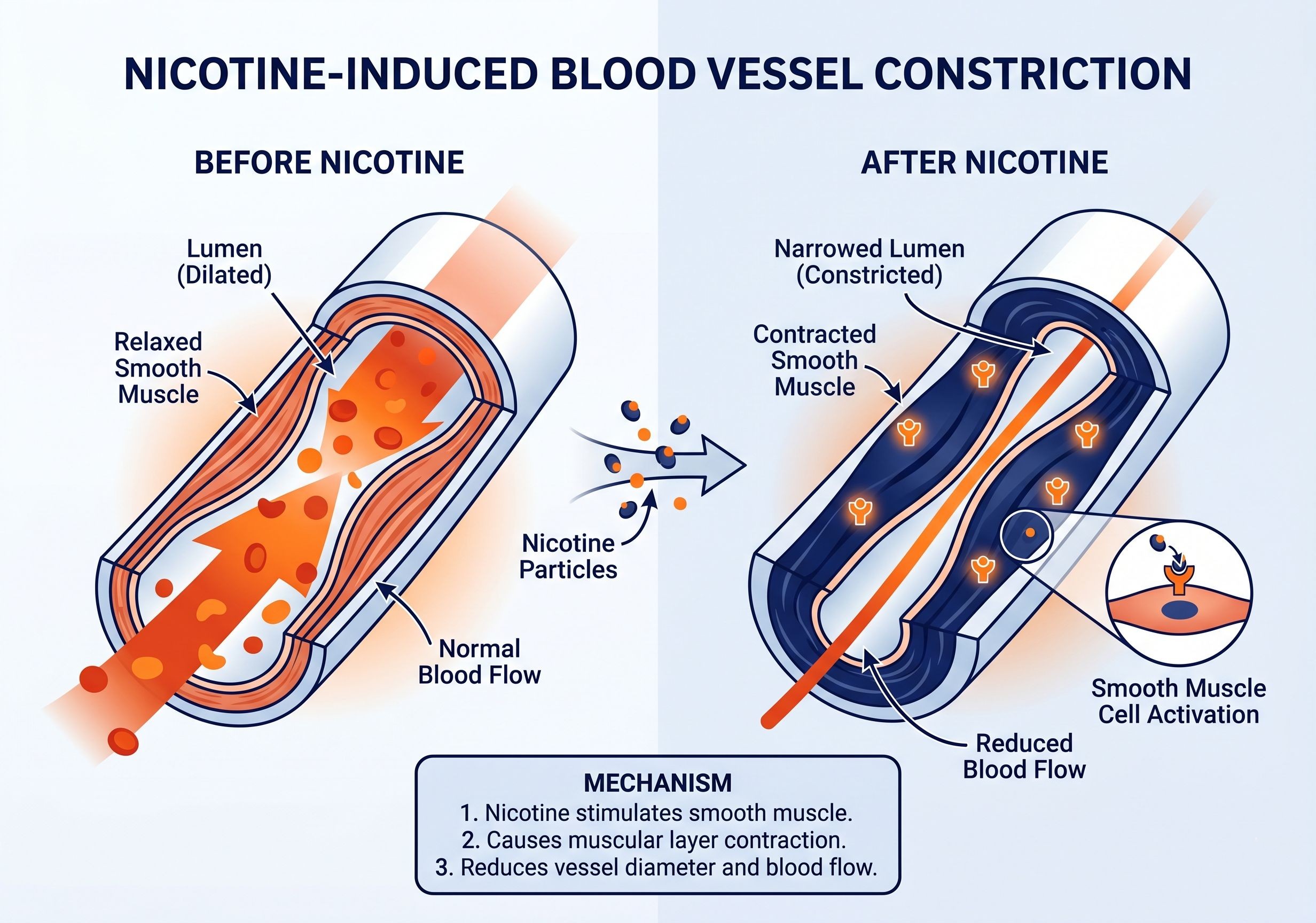
Nicotine, regardless of how it is delivered, is a potent vasoconstrictor. That means it causes blood vessels to narrow, reducing the flow of oxygenated blood and the immune cells that circulate with it to the tissue that needs them most during healing. The effects are not subtle or theoretical: gingival (gum) tissue in people with high nicotine exposure heals measurably more slowly, responds less vigorously to infection, and is less capable of maintaining the healthy margin around a newly placed implant.
The Difference Between Smoking and Vaping for Implant Risk
Combustible cigarette smoking has the most extensive body of research behind it when it comes to implant outcomes — the association between smoking and elevated implant complication rates is well-established in peer-reviewed clinical literature. Vaping is newer, and the long-term data is still developing. But here is the critical point: where nicotine is the active agent, many of the same physiological mechanisms apply.
Vaping also introduces its own specific concerns for oral healing that go beyond nicotine alone. Propylene glycol — one of the primary carrier substances in most vape liquids — has been associated with reduced salivary flow and oral dryness. Dry mouth is not merely uncomfortable around dental surgery: saliva is part of the mouth’s first line of defense against the bacteria that cause peri-implant infection.
| Healing Factor | Cigarette Smoking | Nicotine Vaping | Nicotine-Free Vapor |
|---|---|---|---|
| Nicotine-driven vasoconstriction | High Combustible delivery provides consistent nicotine dose | High Nicotine concentration varies by device and liquid strength | Absent No nicotine; vasoconstriction risk from nicotine is not a factor |
| Effect on blood flow to gum tissue | Well-documented Reduction in gingival perfusion; directly impairs wound healing | Similar concern Similar to smoking when nicotine levels are comparable; less studied overall | No nicotine impact No nicotine-related blood flow impact; other aerosol components are less studied |
| Dry mouth (xerostomia) risk | Moderate Smoke reduces salivary flow | Higher Propylene glycol in aerosol is associated with oral dryness | Moderate to high Aerosol components can still reduce salivary protection |
| Oral bacteria / microbiome disruption | Well-documented Increases anaerobic pathogen load around implants | Emerging evidence Bacterial shifts observed; fewer long-term studies than smoking | Less studied Aerosol inhalation through the mouth may still affect oral flora |
| Heat and thermal stress on soft tissue | High Combusted smoke carries significant thermal load | Lower than smoking Vapor temperature varies by device | Lower still Device aerosol is cooler than combusted smoke |
| Peri-implant infection risk | Elevated Well-established association in clinical literature | Likely elevated Where nicotine is present; evidence still developing | Less clear Limited evidence; may still affect oral environment (dry mouth/irritation) |
Why 'Smoking and Tooth Implants' Guidance Applies to Vapers Too
The clinical guidance around nicotine and oral surgery was developed primarily around combustible tobacco, but the underlying physiology — reduced gingival perfusion, impaired immune response at the surgical site, slower collagen synthesis — applies wherever nicotine is present. The relevant question is not the delivery method but the nicotine exposure, and a frank conversation about that exposure at your implant consultation is the starting point for building a realistic treatment plan.
How Vaping Slows Down Bone Integration (Osseointegration)
Osseointegration is the process by which living bone tissue grows into and bonds directly with the surface of the titanium post. It is not metaphorical — under a microscope, the bone cells physically attach to and interlock with the micro-textured implant surface.
How Nicotine Interferes With Bone-to-Implant Bonding
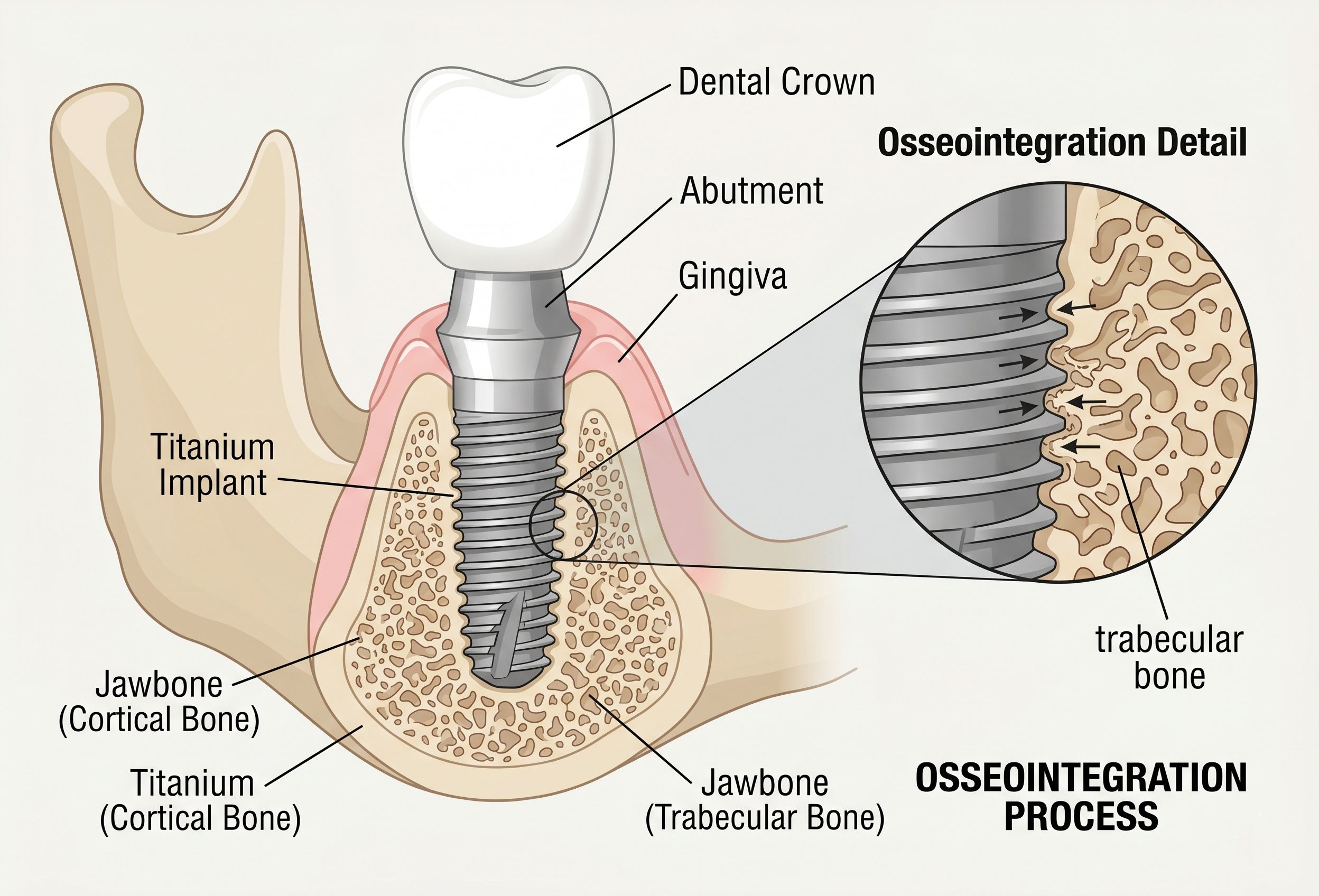
Bone remodeling — the biological process through which bone tissue builds, breaks down, and rebuilds itself — depends on a well-functioning cellular environment with adequate blood supply. Osteoblasts (the cells that form new bone) and osteoclasts (the cells that resorb old bone) work in a tightly coordinated cycle that is sensitive to vascular health and inflammatory signals.
What this means practically is that in patients with significant nicotine exposure, the rate and completeness of bone-to-implant bonding may be reduced. The implant may still integrate — many do — but the risk of incomplete or delayed osseointegration is meaningfully higher.
The Bacterial Environment: How Vaping Changes What Lives in Your Mouth
Emerging research suggests that regular vaping alters the composition of the oral microbiome — the community of bacteria that inhabit the mouth — in ways that may not favour a healing implant site. Specifically, there is growing evidence that vaping may increase the relative abundance of certain anaerobic bacteria associated with periodontal disease and peri-implantitis (infection of the tissue around an implant).
Dry mouth compounds this further. Saliva is not just a lubricant — it contains antimicrobial proteins that actively regulate the bacterial load in the oral cavity. When propylene glycol in vape aerosol reduces salivary flow, the natural defense against pathogenic bacteria around the implant site is weakened.
Osseointegration Timeline
In general terms, osseointegration in a healthy non-smoking patient takes several months from implant placement to the point where the implant is considered fully integrated and a crown can be attached. This period varies depending on bone quality and density, implant location, surgical technique, and individual healing factors.
Increasing Your Success Rate: Tips for Dental Patients Who Vape
Implant success rate depends on a constellation of factors — bone quality and quantity, gum health, systemic conditions like diabetes, the skill of the surgical team, and aftercare compliance. Nicotine exposure is one modifiable risk factor within that picture.
The Most Important Window: Around Surgery
The period immediately surrounding implant placement is when blood supply and immune function at the site are most critical. The tissue is physically disrupted; clot formation, initial inflammatory response, and the earliest stages of cellular healing are all happening in those first days and weeks. Nicotine exposure during this window has the most direct impact on outcomes.

Your implant clinician will advise you specifically on reducing or pausing nicotine use around your surgery date. Follow their guidance rather than a generic timeline, as recommendations may vary based on your case, your overall health, and the extent of the procedure.
Implant Healing Tips for Patients Who Vape
Follow Clinician Guidance
Ask specifically about the recommended approach to nicotine reduction around your surgery date. Your clinician’s timeline is tailored to your case.
Hydrate Consistently
Dry mouth is both a nicotine side effect and an aerosol effect. Drinking water regularly supports salivary flow, tissue hydration, and the oral environment around the healing implant.
Alcohol-Free Mouthwash Only
Alcohol-based rinses can dry out oral tissue further and irritate the surgical site. Switch to an alcohol-free formula throughout your healing period.
Gentle Oral Hygiene
Use a soft-bristle toothbrush and follow your dentist’s specific instructions for cleaning around the implant site.
Attend Every Follow-Up
Scheduled post-op appointments allow your dental team to catch early signs of complications before they become serious problems.
Avoid Known Irritants
Alcohol, spicy foods, and any product that creates thermal or chemical irritation at the surgical site should be limited during the initial healing period.
Be Honest With Your Dental Team
Patients who disclose their vaping habits accurately allow their clinician to build a plan around real information — not assumptions.
Ask About Nicotine Alternatives
Some patients consider switching from vaping to nicotine patches or gum during healing. Whether this is appropriate depends on your specific situation — discuss it with your providers.
Signs of Implant Failure You Should Watch For
Understanding the difference between normal post-surgical healing and early signs of a problem is one of the most practical things an implant patient can know. Most implants heal uneventfully — but when complications develop, early identification and prompt evaluation make a significant difference to the outcome.
Normal Healing vs. Warning Signs
After implant surgery, some degree of swelling, tenderness, and bruising around the site is expected and normal for the first few days. Warning signs worth monitoring — and promptly reporting to your dental team — include:
Increasing pain or swelling after initial improvement: If discomfort peaks in the first 48 to 72 hours and then gradually improves, that is normal. If pain or swelling increases or returns after a period of improvement, it warrants evaluation.
Persistent bleeding or oozing: Some bleeding after surgery is expected. Bleeding that does not resolve or that recurs significantly after the first day should be reported.
Pus or discharge at the implant site: Any sign of purulent discharge is a clear indication of infection and requires prompt dental assessment.
Persistent bad taste or odor: An ongoing unpleasant taste or odor coming from the implant site can indicate bacterial activity and should not be dismissed.
Gum recession around the implant: If the gum tissue appears to be pulling back from the implant collar or the implant post becomes more visible, this may indicate peri-implant tissue loss.
Mobility or looseness of the implant: A well-integrated implant should feel completely stable. Any sense of movement or looseness is a serious sign that requires immediate evaluation.
Fever: A temperature elevation alongside dental symptoms suggests a spreading infection. This is an urgent situation — contact your dental team immediately or seek emergency care.
When to Contact Your Dentist Immediately
- Fever accompanying oral swelling or pain
- Visible pus or discharge at or near the implant site
- Implant that feels loose or moves when you press against it
- Severe or worsening pain that is not controlled by recommended pain management
- Significant swelling spreading beyond the original surgical area
Frequently Asked Questions
Does vaping increase the risk of dental implant failure?
How long should I stop vaping before dental surgery?
Can I vape after a dental implant procedure?
Does nicotine-free vapor affect gum healing?
What are the signs of dental implant failure in vapers?
How does vaping cause dry mouth and implant issues?
Will a dentist refuse to do implants if I vape?
Can vaping lead to bone loss around dental implants?
Request an Implant Consultation in Williamsburg
If you vape or smoke and are considering dental implants, the safest next step is an implant consultation. We’ll assess gum health, bone density, and risk factors — and help you plan the best timing and aftercare to support healing.
Already Have an Implant?
If you already have an implant and notice swelling, discharge, bad taste or odor, or any looseness — schedule an evaluation promptly. Early intervention makes a significant difference to the outcome.
Implant Consultation
Personalized assessment of bone density, gum health, and risk factors for patients who vape or smoke.
DIRECT LINE
IN THIS GUIDE
TOOTHOLOGY DENTAL
Williamsburg, Brooklyn, NY
Serving Greenpoint, Bushwick, Bed-Stuy & Downtown Brooklyn
718-678-3800
Emergency line available
Open Hours
Mon – Thu: 10:00 AM – 6:00 PM Friday: 10:00 AM – 2:00 PM Sunday: 10:00 AM – 2:00 PM Saturday: Closed
OUR COMMITMENT
- Board-Certified Pediatric Dentists
- Child-Friendly, Anxiety-Reducing Care
- Same-Day Emergency Slots
- Low-Radiation Digital X-Rays
- Most Major Insurance Accepted