
- Emergency Dental · Same-Day Root Canal · Brooklyn
The pain has been building since last night — throbbing, constant, relentless. Here’s how to tell if you need same-day root canal treatment, what the procedure involves, and what it costs in Brooklyn.
Emergency Root Canal in Brooklyn: Signs You Need Same-Day Treatment
The pain has been building since last night. It’s throbbing now — not a dull ache that comes and goes, but a constant, relentless pressure that’s making it impossible to focus, eat, or sleep. You’ve taken whatever pain relief you had on hand and it barely touched it. If this is your situation, this article is for you.
An emergency root canal in Brooklyn is not the right answer for every bad toothache — but for certain tooth pain symptoms, it is the correct and urgent response. Recognising the difference between ordinary sensitivity and pulp inflammation or dental abscess helps you make the right call today rather than in another day or two of worsening pain.
Signs Your Toothache May Require an Emergency Root Canal
Not every toothache is a same-day emergency. Brief cold sensitivity or mild sensitivity after recent dental work can come from exposed dentin rather than an infected nerve. But the following signs are more concerning and should be evaluated promptly — the same day if possible.
Throbbing pain without a trigger
— pain that starts on its own, especially worsening at night, can suggest pulp inflammation or infection
Pain that wakes you up
— tooth pain that interrupts sleep is a strong sign the nerve may be seriously inflamed
Heat sensitivity that lingers
— brief cold sensitivity is common, but heat pain that stays after the trigger is removed is more concerning for pulp involvement
Severe pain when biting or touching the tooth
— this can mean infection or inflammation has reached the root area and surrounding tissue
Localised swelling or a pimple-like bump on the gum
— this may signal an abscess draining near the root tip
Persistent bad taste or bad odour from one area
— this can occur when infection is actively draining
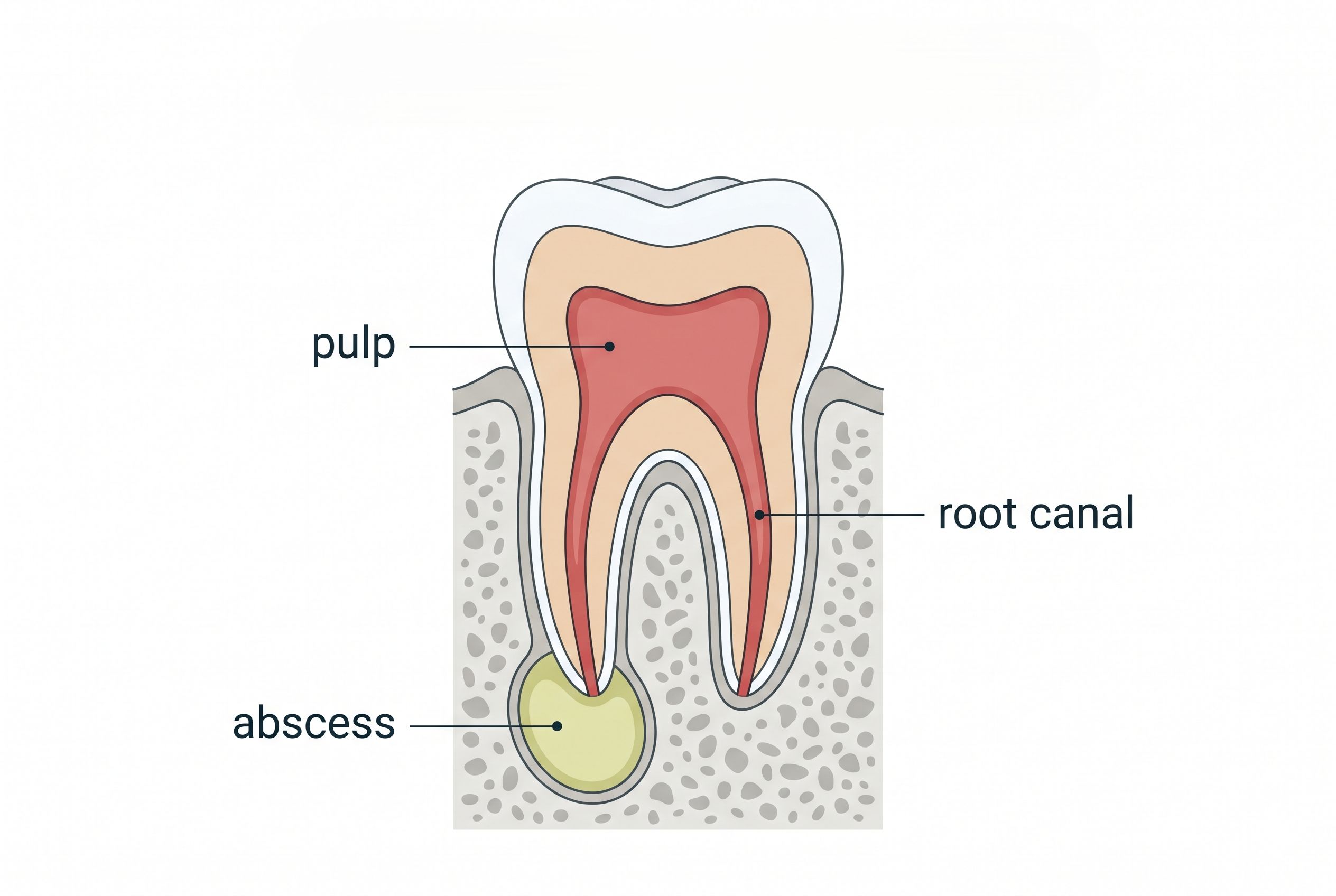
WHY LINGERING HEAT PAIN IS MORE CONCERNING THAN COLD SENSITIVITY
Brief cold sensitivity that goes away quickly is often caused by exposed dentin. Lingering heat pain is more concerning because it can suggest the nerve inside the tooth is irreversibly inflamed. In those cases, the tooth may not recover on its own and may need root canal treatment.
When to Go to the ER or Call 911 Instead
Swelling spreading to the throat, floor of the mouth, or neck
Difficulty breathing, swallowing, or speaking
Swelling under the eye or rapidly worsening facial swelling
High fever combined with dental swelling
Tightness or pressure in the throat
Swelling that is spreading quickly — over hours rather than days
For ER-Level Symptoms — Don't Call a Dentist First
Spreading swelling toward the jaw, neck, or throat, and any difficulty breathing or swallowing, is a medical emergency. Go to the ER or call 911 immediately. For severe tooth pain, localised swelling, bad taste, or worsening symptoms over 24–48 hours, call Toothology for a same-day urgent appointment.
The term “root canal” still scares many people — but with modern local anaesthesia, most patients experience it as pressure and movement rather than sharp pain. Knowing what usually happens makes the visit far less intimidating than the idea of it.
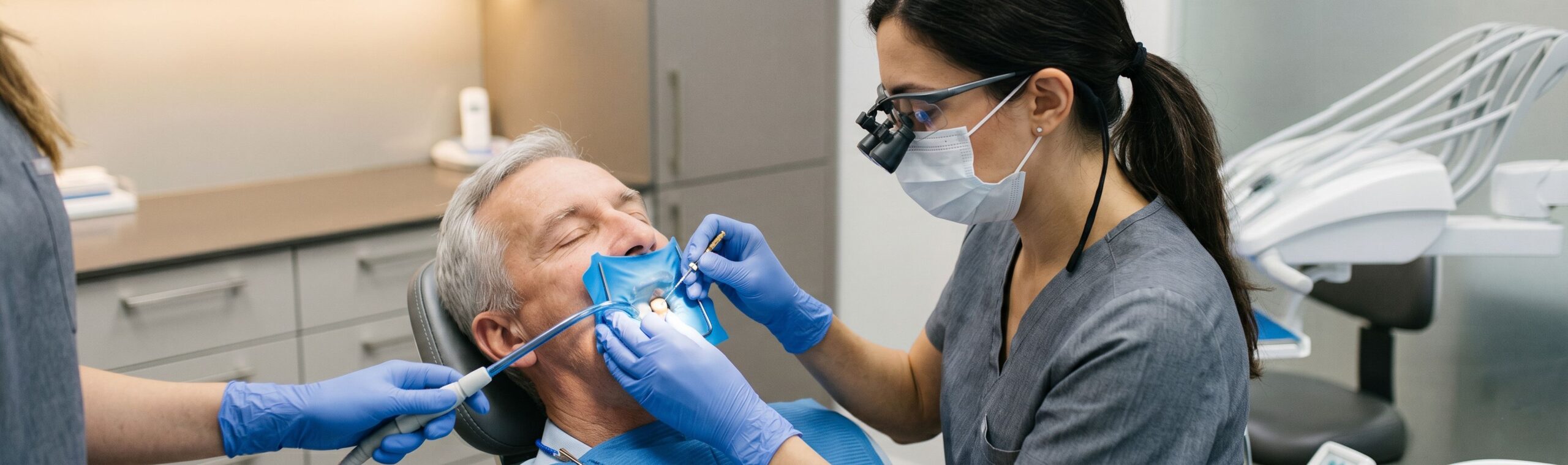
URGENT EXAM & X-RAYS
The dentist checks the tooth and takes imaging to confirm the source of pain, the extent of infection, and whether the tooth can still be saved.
LOCAL ANAESTHESIA
Local anaesthetic fully numbs the tooth and surrounding area. Extra anaesthesia may be needed if inflammation is making the tooth harder to numb — a known challenge that experienced clinicians manage with targeted techniques.
ACCESS OPENING
A small opening is made through the top of the tooth to reach the pulp chamber where the infected tissue is located.
PULP REMOVAL & CANAL SHAPING
The inflamed or infected pulp is carefully removed from the pulp chamber and root canals, which are then cleaned and shaped to prepare for sealing.
IRRIGATION & DISINFECTION
The inside of the tooth is flushed with irrigating solution to remove bacteria and debris from the root canal system.
SEALING THE CANALS
In some cases the canals are sealed the same day; in others, a temporary medicated filling is placed first and the seal completed at a second visit depending on infection severity.
TEMPORARY OR PERMANENT CLOSURE + CROWN
The tooth is closed with a temporary or permanent material. A dental crown is typically recommended afterward to protect the tooth long-term — especially for molars and premolars.
CAN A THROBBING TOOTH STILL BE SAVED?
Often yes. Severe pain does not automatically mean the tooth is beyond saving. In many cases, pain comes from pressure and infection inside the tooth, and once that infected pulp is removed, the pain improves significantly within a day or two. Whether it can be saved depends on how much healthy tooth structure remains — determined by exam and X-rays.
WHAT HAPPENS IF YOU DELAY A ROOT CANAL?
An infected pulp does not heal on its own. Without treatment, the infection can spread into surrounding bone, create an abscess, and in more serious cases spread into deeper facial or neck spaces. Even before that, waiting can mean more bone loss, more difficult treatment, and a tooth that becomes harder or impossible to save.
How Local Anaesthesia Numbs the Area During Root Canal Treatment
Fear of pain during a root canal is one of the main reasons people delay treatment. In reality, most patients find the procedure itself far more manageable than the toothache that brought them in.
Local anaesthesia works by blocking nerve signals in the tooth and surrounding area. Once fully numb, the procedure is usually felt as pressure, movement, or vibration — not sharp pain.

One Honest Challenge: Infected Teeth Can Be Harder to Numb
A badly inflamed or infected tooth can sometimes be harder to numb with a routine injection. This is a known issue, and experienced clinicians manage it by giving additional anaesthetic in more targeted ways if needed. It may take a little longer, but there are effective options to improve comfort.
Treatment should not continue if you are still feeling sharp pain. If you feel sharp pain during the procedure, tell the dentist right away so they can numb the area further before moving on.
WHAT TO EXPECT AFTERWARD
Some mild soreness after the procedure is normal for a day or two and usually responds to standard over-the-counter pain relief. What should improve — significantly — is the throbbing, spontaneous pain that brought you in. If pain is worsening after 48–72 hours rather than improving, call the office.
Cleaning the Infected Tooth Pulp and Nerve Cavity
Inside every tooth is the dental pulp — nerves, blood vessels, and connective tissue. When that pulp becomes irreversibly inflamed or infected due to deep decay, a crack, or a failing restoration, it becomes the source of severe pressure and pain.
Root canal treatment removes that damaged pulp from the pulp chamber and root canals, cleans and disinfects the space, and then seals it to prevent bacteria from re-entering. Once the inside of the tooth is cleaned and sealed, the tooth is no longer generating pain from an infected nerve.
Why a Crown Is Often Recommended After Root Canal Treatment
After a root canal, the tooth no longer has living pulp inside it. Over time, that can make the tooth more brittle — especially in molars and premolars that absorb heavy chewing forces. A crown covers and protects the tooth, significantly reducing the risk of fracture.
SKIPPING THE CROWN CAN UNDO A SUCCESSFUL ROOT CANAL
For back teeth in particular, skipping the crown leaves the tooth vulnerable to fracture — even if the root canal itself was completely successful. Front teeth sometimes need a more conservative restoration depending on remaining tooth structure. The right recommendation depends on the specific tooth.
Emergency Root Canal Costs and NYC Insurance Coverage
Root canal cost is one of the first questions patients ask, especially in an emergency. The exact total depends on the tooth, the complexity of the case, and what treatment is needed afterward.
Which tooth is being treated: Front teeth are usually simpler than molars, which often have more canals and take more time — and cost accordingly.
Whether a specialist is needed: Complex cases may be referred to an endodontist, and specialist fees are typically higher than a general dentist’s.
How far the infection has spread: A more advanced infection may require more treatment, additional appointments, or prescriptions.
X-rays or additional imaging: Diagnostic imaging is part of the evaluation, and some complex cases may need 3D CBCT imaging in addition to standard X-rays.
Whether a crown is needed afterward: For most back teeth, the crown is a separate part of the treatment plan — and often a separate insurance claim — so both need to be checked.
HOW INSURANCE TYPICALLY WORKS
Many dental plans cover root canal treatment as a major restorative service, but coverage varies by plan, deductible, annual maximum, and whether the provider is in-network. The root canal and the crown that follows are often covered under different benefit categories and should both be verified. For urgent visits, the office can assist with insurance verification during intake. Always request an itemised estimate before treatment begins.
Questions Worth Asking When You Call an Emergency Dental Practice
Frequently Asked Questions
How do I know if a toothache is a dental emergency?
Can a dental abscess heal with just antibiotics?
Is an emergency root canal painful?
What happens if you delay a root canal?
Will urgent care or an ER perform a root canal?
How long does a same-day root canal take?
Can a throbbing tooth still be saved?
Your Pain Is Telling You Something — Listen to It Today
Severe throbbing tooth pain, pain that starts on its own, nighttime pain that wakes you up, swelling, or lingering heat sensitivity are not symptoms to simply manage at home. With proper anaesthesia, a clear treatment plan, and an experienced dental team, an emergency root canal is far more manageable than the pain that led to it. Do not wait to see if it improves on its own — call to check same-day availability now.
Severe Tooth Pain in Brooklyn?
CALL US RIGHT NOW
Same-day emergency root canal evaluation and treatment. Describe your symptoms when you call — we’ll confirm availability.
IN THIS GUIDE
QUICK COMPARISON
Swelling spreading to jaw, neck, or throat → ER immediately.
TOOTHOLOGY DENTAL
Williamsburg, Brooklyn, NY
Serving Greenpoint, Bushwick, Bed-Stuy & Downtown Brooklyn
718-678-3800
Emergency line available
Open Hours
Mon – Thu: 10:00 AM – 6:00 PM Friday: 10:00 AM – 2:00 PM Sunday: 10:00 AM – 2:00 PM Saturday: Closed
OUR COMMITMENT
- Board-Certified Pediatric Dentists
- Child-Friendly, Anxiety-Reducing Care
- Same-Day Emergency Slots
- Low-Radiation Digital X-Rays
- Most Major Insurance Accepted