
ORAL HEALTH TIPS
Pregnancy and Your Teeth:
Dental Care for Pregnant Women
Everything you need to know to protect your smile and your baby’s health — trimester by trimester.
Written by Toothology Editorial Team | Reviewed by Dr. Ayala Lieberman, DDS
Why Oral Health Matters During Pregnancy
Pregnancy brings dramatic hormonal shifts that affect nearly every system in your body — including your mouth. Research shows that untreated gum disease during pregnancy is linked to preterm birth and low birth weight. The good news: with the right knowledge and a consistent dental care routine, you can protect both your smile and your growing baby.
This guide covers everything you need to know, from which problems to watch for, to safe dental treatments at each stage of pregnancy.
How Hormones Affect Your Oral Health
During pregnancy, estrogen and progesterone levels rise significantly. These hormones cause blood vessels to become more permeable and responsive, increasing blood flow to the gums and making gum tissue more sensitive and reactive to dental plaque.
Even small amounts of plaque that wouldn’t normally cause a problem can trigger an exaggerated inflammatory response during pregnancy, leading to red, swollen, bleeding gums — a condition known as pregnancy gingivitis.
Key Points
- Estrogen and progesterone surge during pregnancy
- Blood flow increases — gums become more sensitive
- Immune response changes — more vulnerable to bacteria
- Morning sickness introduces stomach acid to teeth
- Cravings often shift toward sugary or acidic foods
5 Common Oral Health Problems During Pregnancy
Knowing what to look for helps you act early and prevent serious complications.
1. Pregnancy Gingivitis
Up to 75% of pregnant women develop gingivitis — gum inflammation caused by hormonal changes and increased sensitivity to plaque. Signs include red, swollen gums that bleed easily when brushing. If left untreated, gingivitis can progress to periodontitis, a more serious infection that affects the bone supporting your teeth.
2. Pregnancy Tumors
Some women develop overgrowths of gum tissue called pregnancy tumors. Despite the alarming name, these are benign and usually appear in the second trimester. They typically disappear after delivery but can be removed if they cause discomfort.
3. Increased Risk of Tooth Decay
Cravings for sugary foods, frequent snacking, reduced saliva, and morning sickness acid all combine to accelerate cavity-causing bacteria. Tooth enamel can erode quickly during pregnancy without diligent care.
4. Loose Teeth
Pregnancy hormones that relax pelvic ligaments also affect the periodontal ligament and bone that hold teeth in place. This can cause teeth to feel slightly loose, even without gum disease. This is usually temporary and resolves after delivery.
5. Dry Mouth (Xerostomia)
Many pregnant women experience reduced saliva flow, leaving the mouth dry and uncomfortable. Since saliva is your mouth’s natural defence against bacteria and acid, dry mouth significantly raises the risk of cavities. Stay well hydrated and chew sugar-free gum to stimulate saliva.
Month-by-Month Dental Guide
A quick reference to what’s changing each month and what to prioritise for your oral health.
| Month | What’s Happening | Dental Focus |
|---|---|---|
| Month 1–2 | Hormones surge; morning sickness may begin | Schedule dental check-up; rinse after vomiting |
| Month 3 | Gums may start to swell and bleed | Gentle brushing 2×/day; begin flossing daily |
| Month 4–5 | Second trimester — safest window for dental work | Ideal time for cleaning, fillings, or X-rays if needed |
| Month 6 | Pregnancy tumors may appear between teeth | Keep up with cleaning; mention any growths to your dentist |
| Month 7–8 | Baby pressing on diaphragm; lying flat is uncomfortable | Routine visits OK; avoid lengthy procedures |
| Month 9 | Baby fully developed; delivery approaching | Elective work best postponed; emergencies only if needed |
Is It Safe to Visit the Dentist When Pregnant?
Yes — and it’s strongly recommended. Skipping dental care during pregnancy puts both you and your baby at risk.
Routine Care is Safe
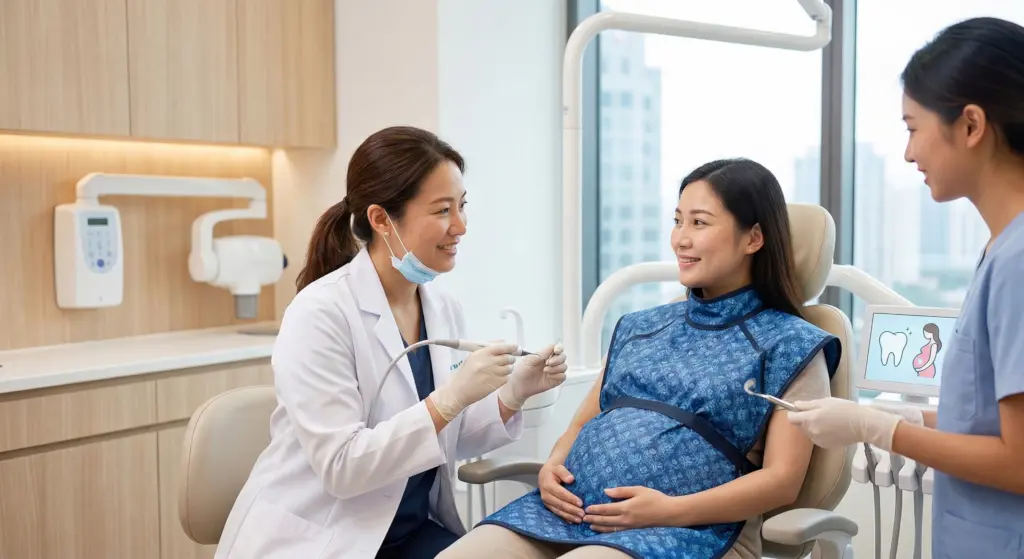
Regular check-ups, professional cleanings, and X-rays with a lead apron are all considered safe during pregnancy. Cleanings are more important than ever, since plaque build-up is more dangerous when your gums are already sensitised by hormones.
What About Anaesthetics?
Local anaesthetics like lidocaine are safe to use in pregnancy. Your dentist will use the minimum effective dose. Always inform your dentist that you’re pregnant so they can adjust your care accordingly.
Emergency Dental Work
A dental infection or severe toothache should never be ignored during pregnancy. Untreated infections can spread and potentially affect your baby. Emergency treatment is appropriate at any stage of pregnancy.
When to Postpone Treatment
Elective procedures — teeth whitening, cosmetic work, non-urgent extractions — are best postponed until after delivery. The second trimester (months 4–6) is the safest window for any necessary dental work.
X-Rays During Pregnancy
Dental X-rays expose you to minimal radiation. With a lead apron, they are considered safe during pregnancy. If an X-ray is clinically necessary — for example, to diagnose an infection — it should not be avoided out of fear.
Trimester-by-Trimester Dental Tips
Your needs — and what’s safest — change as your pregnancy progresses.
🌱
First Trimester
- Tell your dentist you’re pregnant
- Schedule a full dental check-up
- Rinse with water after morning sickness
- Switch to a gentle toothbrush
- Use fluoride toothpaste
⭐
Second Trimester
- Best window for necessary dental work
- Schedule professional cleaning
- Address cavities or gum issues now
- Avoid prolonged lying-flat procedures
- Take prenatal vitamins with calcium
🌟
Third Trimester
- Routine check-ups are still fine
- Avoid elective or lengthy procedures
- Stay hydrated — helps dry mouth
- Brush after every meal if possible
- Plan your postpartum dental visit
Eating for Two: Nutrition and Your Teeth
What you eat during pregnancy has a direct impact on both your oral health and your baby’s developing teeth. Your baby’s teeth begin forming as early as six weeks into pregnancy, and the minerals you consume are critical to their development.
Key Nutrients for Oral Health
- Calcium (dairy, leafy greens, almonds) — strengthens teeth and bones
- Vitamin D (eggs, fortified foods, sunlight) — aids calcium absorption
- Phosphorus (meat, fish, eggs) — supports tooth enamel
- Vitamin C (citrus, peppers, strawberries) — maintains healthy gums
- Folic acid (legumes, leafy greens, fortified cereals) — supports foetal development
Managing Sugar Cravings
Cravings are real and normal — but manageable. When you indulge, rinse your mouth with water immediately. Choose lower-sugar alternatives where possible, and limit sugary snacks to mealtimes rather than grazing throughout the day.
Foods to Limit
- Sugary drinks (juice, soda, sports drinks)
- Sticky sweets and dried fruit
- Acidic foods eaten in excess (citrus)
- Frequent snacking between meals
Your Teeth After Baby: Postpartum Dental Care
The demands of a newborn can make it easy to put your own health on the back-burner — but your teeth still need attention. Hormonal changes don’t fully reverse until after you stop breastfeeding, so gum sensitivity may continue for several months postpartum.
Schedule a Postpartum Check-Up
Book a dental appointment within the first few months after delivery. Your dentist can assess any damage from morning sickness, check for cavities that may have developed during pregnancy, and address any gum disease before it worsens.
Postpartum Dental Checklist
- Book a dental check-up within 3 months of delivery
- Resume or start regular flossing
- Consider a professional clean if gums are still sensitive
- Ask about fluoride treatments if enamel was affected
- Review your diet — sugar intake may have increased postpartum
- Don’t share spoons with your baby — cavity bacteria can transfer
Myths vs Facts: Pregnancy and Dental Care
Some common beliefs about pregnancy and teeth are simply not true. Let’s set the record straight.
MYTH
“You lose a tooth for every baby you have.”
FACT
This old saying has no scientific basis. Tooth loss during pregnancy is not inevitable — it results from untreated gum disease or decay, both of which are preventable with good care.
MYTH
“You shouldn’t visit the dentist when pregnant.”
FACT
Dental check-ups and cleanings are recommended during pregnancy. Untreated gum disease is linked to preterm birth and low birth weight.
MYTH
“X-rays are dangerous during pregnancy.”
FACT
With a lead apron, dental X-rays expose you to very low radiation. If clinically needed — for example, to diagnose an infection — they are safe at any stage of pregnancy.
Warning Signs: When to Call Your Dentist
Don’t wait for your next scheduled appointment if you notice any of the following. Early intervention can prevent small problems from becoming serious.
- Gums that bleed heavily or spontaneously
- Severe gum swelling, pain, or pus
- Toothache or dental abscess
- Loose teeth beyond slight movement
- Painful lump or growth on the gums
- Jaw pain or swelling
- Difficulty swallowing or opening your mouth
⚠️ Dental infections during pregnancy should always be treated promptly. Bacteria from an untreated abscess can enter the bloodstream and potentially reach the placenta.
Daily Oral Care Checklist
- Brush teeth twice a day with fluoride toothpaste
- Use a soft-bristled toothbrush
- Floss once daily
- Rinse with water after morning sickness episodes
- Drink plenty of water throughout the day
- Avoid sugary snacks between meals
- Chew sugar-free gum after eating if brushing isn’t possible
- Attend all scheduled dental appointments
- Take prescribed prenatal vitamins
- Inform your dentist of any new symptoms
Frequently Asked Questions
Can I have a tooth pulled during pregnancy?
Yes, tooth extractions can be performed safely during pregnancy, particularly in the second trimester. If a tooth is causing pain or infection, it should be treated promptly regardless of trimester. Your dentist will use a safe local anaesthetic.
Is teeth whitening safe during pregnancy?
No — teeth whitening is not recommended during pregnancy. The bleaching agents used have not been studied in pregnant women, so most dental professionals advise waiting until after delivery and breastfeeding.
Can my gum disease affect my baby?
Research suggests a link between severe periodontitis and preterm birth and low birth weight. Bacteria and inflammatory markers from infected gum tissue can enter the bloodstream and travel to the uterus. This is a strong reason to treat gum disease promptly.
What toothpaste is safe to use during pregnancy?
Standard fluoride toothpaste is safe and recommended during pregnancy. Fluoride helps strengthen enamel and prevent decay. Natural or fluoride-free toothpastes are not recommended as they provide less protection against cavities.
Does pregnancy cause calcium to be taken from my teeth?
This is a common myth. Your body does not extract calcium from your teeth during pregnancy. Your teeth are not a calcium reservoir in the way that bones can be. Meeting your daily calcium requirements through diet protects both you and your baby.
Medical Disclaimer: This article is for informational purposes only and does not constitute medical or dental advice. Always consult your dentist and obstetrician for guidance specific to your personal health situation.
Keep Your Smile Healthy During Pregnancy
Don’t put your dental health on hold — your smile matters for you and your baby. Our caring team at Toothology is here to support you with safe, gentle care throughout every trimester.
📍 Toothology Dental Clinic | hello@toothology.care | toothology.care