
- Tooth Sensitivity Guide · Brooklyn
A sharp zing when you drink cold water. Ice cream that makes you wince. Cold sensitivity is common — but it’s a symptom, not a diagnosis. Here’s how to find the real cause and fix it.
Tooth Sensitivity to Cold: Causes & Quick Fixes
You take a sip of cold water and a sharp, fleeting zing shoots through one of your teeth. Or you bite into ice cream and the sensation is immediate — not pain exactly, but close enough to make you wince. If this is happening more often than it used to, it’s worth paying attention to.
Cold sensitivity is one of the most common reasons people search for treatment for sensitive teeth. The reassuring thing is that it’s almost always treatable once the cause is properly identified. The tricky part: cold sensitivity is a symptom, not a diagnosis. It can signal anything from minor enamel wear to a cavity to gum recession to a small crack in a tooth. Treating it effectively means finding out which one is actually driving the discomfort.
Why Are My Teeth Suddenly Sensitive to Cold?
To understand why cold hurts, it helps to know a little about tooth structure. Each tooth has three main layers: the hard outer enamel, the dentin beneath it, and the pulp — the soft inner tissue containing the nerve. Enamel and the gum tissue covering tooth roots protect the dentin and pulp from the outside world.
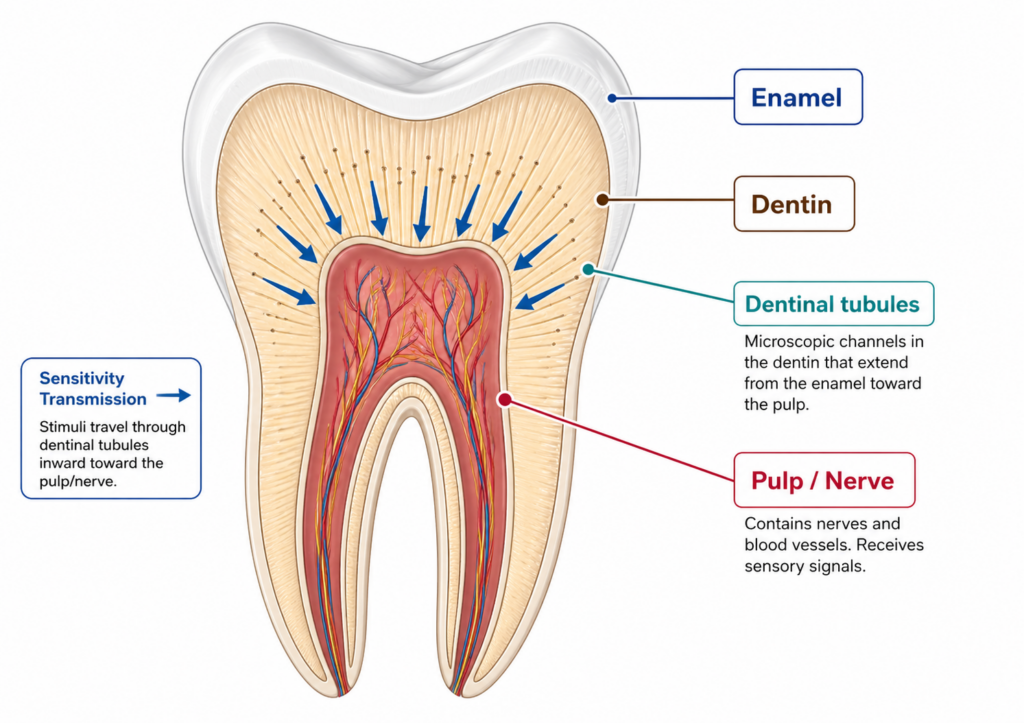
Dentin contains tiny microscopic channels called dentinal tubules that run toward the nerve. When dentin becomes exposed — whether because enamel has worn away, gum tissue has pulled back, or a crack has formed — those tubules are closer to the surface. Cold water, cold air, or cold food can reach and stimulate the nerve much more readily than through an intact, protected tooth. That stimulation is what registers as the sharp, brief pain of cold sensitivity.
HOW COLD REACHES THE NERVE
- ENAMEL - OUTER LAYER
The hardest substance in the body. When intact and full-thickness, it insulates the dentin and pulp from temperature, acid, and bacteria. When it wears or erodes, dentin sits closer to the surface.
- DENTIN - MIDDLE LAYER
Softer than enamel. Contains dentinal tubules — tiny channels that run toward the nerve. Exposed dentin is the primary reason cold triggers sensitivity. Root surfaces have no enamel layer — just cementum, which provides much less protection.
- PULP / NERVE — INNER CORE
Soft tissue containing the tooth’s nerve and blood supply. Cold sensitivity that lingers for more than a few seconds after the trigger is removed may indicate the nerve is significantly involved and warrants prompt evaluation.
Common Causes of Cold Sensitivity
Cold sensitivity rarely appears without a reason. Finding that reason is what makes treatment effective — and what prevents the wrong fix from being applied to the wrong problem.
Enamel Wear & Erosion
Acidic foods and drinks, aggressive brushing with a hard-bristled toothbrush, and chronic acid reflux all erode enamel over time. As enamel thins, the dentin beneath sits closer to the surface and sensitivity increases accordingly.
Gum Recession
When gum tissue pulls back from the tooth, it exposes the root surface. Root surfaces are covered by cementum — not enamel — offering much less protection. Recession-related sensitivity tends to be particularly pronounced and can affect cold, hot, sweet, and tactile triggers.
Tooth Decay (Cavities)
A cavity that has progressed into the dentin layer can cause cold sensitivity, sometimes alongside spontaneous aching or sensitivity to sweets. If sensitivity is localised to one tooth — especially with a visible dark spot or rough edge — decay is worth ruling out.
A Cracked or Fractured Tooth
Cracks in teeth are common and frequently invisible to the naked eye. A crack can allow temperature changes to travel toward the nerve in ways that intact tooth would not permit. If sensitivity is sharp, localised to one tooth, and triggered by biting as well as cold, a crack may be the cause.
Worn or Aging Dental Fillings
Older fillings can wear down, chip, or develop small gaps at the margins where the filling meets the tooth. These micro-gaps allow temperature and bacteria to reach the dentin underneath. New sensitivity in a previously restored tooth may indicate the filling is contributing.
Teeth Grinding (Bruxism)
Grinding or clenching — especially during sleep — subjects teeth to repeated intense pressure that gradually wears down enamel. This can expose dentin across multiple teeth simultaneously, leading to generalised sensitivity rather than a single tooth.
Gum Disease
Active gum disease causes inflammation and recession of gum tissue, which exposes root surfaces and makes teeth significantly more sensitive. If sensitivity is accompanied by bleeding gums, puffiness, or persistent bad breath, gum disease may be a contributing factor.
Recent Dental Treatment
Temporary sensitivity after a professional cleaning, filling, or whitening is not unusual and typically resolves within days to a couple of weeks. If sensitivity persists beyond two weeks or worsens rather than fading, it warrants a follow-up conversation with your dentist.
Quick Professional Fixes for Sensitive Teeth
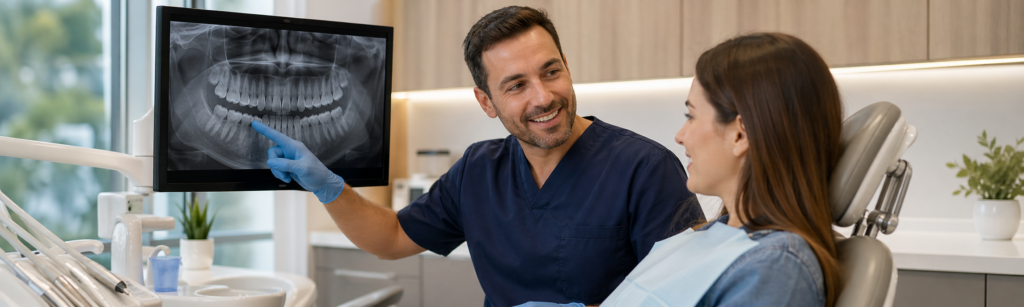
The right treatment depends on what’s causing the sensitivity. That’s why a dental exam — and sometimes digital X-rays — is the right starting point before choosing a treatment. Applying the wrong fix to the wrong cause doesn’t resolve the problem.
In-Office Treatment
Fluoride Treatment & Desensitising Varnish
For sensitivity related to mild enamel wear or early dentin exposure, professional fluoride treatment or an in-office desensitising varnish is often one of the first options a dentist may discuss. Professional desensitising agents are stronger and more targeted than over-the-counter options and may help reduce discomfort more quickly. Desensitising toothpaste at home can complement this for mild cases.
Restorative Treatment
Fillings, Bonding, or Crowns for Structural Problems
If a cavity, worn filling, exposed area of dentin, or significant tooth damage is the source of sensitivity, a restorative solution is needed. A small cavity addressed early may only require a composite filling. A more damaged or weakened tooth may need a crown. The right option depends on what the exam and imaging show.
Protective Appliance
Custom Night Guard for Grinding-Related Wear
When enamel wear is traced to grinding or clenching, a custom-fitted night guard protects the teeth from further wear during sleep. This addresses the mechanical cause of the sensitivity rather than just managing symptoms — and can prevent existing sensitivity from worsening.
Periodontal Treatment
Deep Cleaning or Gum Treatment for Recession-Related Sensitivity
When receding gums are associated with gum disease, treating the gum disease is an essential part of managing the resulting sensitivity. Scaling and root planing — deep cleaning — removes bacterial buildup below the gumline and helps the tissue stabilise, which can reduce both the inflammation and the sensitivity it causes.
Daily Habits That Can Protect Enamel and Reduce Flare-Ups
Professional treatment addresses the cause, but daily habits make a real difference in how quickly sensitivity improves and whether it returns. None of these habits alone will reverse sensitivity that’s already present — but they meaningfully reduce the conditions that allow it to develop or worsen.
- Switch to a soft-bristled toothbrush
hard bristles accelerate enamel wear and gum recession, especially at the gumline
- Use a fluoride toothpaste daily
- Reduce acidic food and beverage exposure
- Don't brush immediately after acidic food or drink
- Stay consistent with professional cleanings
regular tartar removal and monitoring prevents conditions from worsening undetected
- If you grind at night, wear a custom night guard as directed
When Cold Sensitivity Means You Should Book a Dental Exam Soon
Not all tooth sensitivity requires an emergency appointment. But certain patterns and presentations should prompt you to see a dentist sooner rather than later — rather than adopting a wait-and-see approach.
COLD SENSITIVITY IS COMMON — BUT DON'T IGNORE THESE SIGNS
The difference between mild enamel sensitivity and a cavity, a crack, or nerve involvement matters for treatment. A dental exam — including digital X-rays when needed — is the only reliable way to tell them apart. Treating based on guesswork can mask a problem that’s actively worsening.
Frequently Asked Questions
Why do my teeth hurt when I drink cold water?
When teeth are sensitive to cold, it typically means that dentin — the inner layer of the tooth beneath the enamel — has become exposed or more accessible to external stimuli. Dentin contains tiny channels that lead toward the nerve. Cold water moving through those channels creates a brief, sharp sensation that registers as pain or discomfort. The dentin can be exposed due to enamel wear, gum recession, a cavity, a crack, a worn filling, or gum disease.
What are the most common causes of sudden tooth sensitivity?
Sudden or new cold sensitivity is most commonly caused by enamel erosion or wear, gum recession that exposes root surfaces, tooth decay, a cracked or fractured tooth, a worn dental filling, or teeth grinding.
Can professional fluoride treatments help stop cold sensitivity?
Professional fluoride treatment can help in cases related to mild enamel wear or early dentin exposure, but the right treatment depends on the cause of the sensitivity.
What is a dental desensitizer and how quickly can it help?
A dental desensitizer is an in-office material applied to sensitive areas of the tooth to block the dentinal tubules or reduce nerve excitability. Professional desensitizing agents are generally stronger and more targeted than over-the-counter toothpaste options and may help reduce discomfort more quickly.
Can receding gums cause cold sensitivity?
Yes — receding gums are one of the most common causes of cold sensitivity, particularly in adults. Root surfaces are covered by cementum rather than enamel, which offers significantly less protection against temperature changes and other stimuli.
Why does sensitivity sometimes get worse after whitening or a cleaning?
Temporary sensitivity following professional whitening or a dental cleaning is not unusual and is generally expected to resolve within a few days to two weeks. After whitening, the bleaching agents can temporarily increase the permeability of the enamel, making the dentin more reactive. After a cleaning, the removal of tartar deposits can expose areas of the tooth that were previously covered, temporarily increasing sensitivity. In both cases, the tissue adjusts and sensitivity typically fades.
TEETH SENSITIVE TO COLD?
Book an evaluation at Toothology in Williamsburg. We’ll identify the actual cause and give you a clear, targeted treatment plan.
CALL US DIRECTLY
IN THIS GUIDE
TOOTHOLOGY DENTAL
Williamsburg, Brooklyn, NY
Serving Greenpoint, Bushwick, Bed-Stuy & Downtown Brooklyn
718-678-3800
Emergency line available
Open Hours
Mon – Thu: 10:00 AM – 6:00 PM Friday: 10:00 AM – 2:00 PM Sunday: 10:00 AM – 2:00 PM Saturday: Closed
OUR COMMITMENT
- Board-Certified Pediatric Dentists
- Child-Friendly, Anxiety-Reducing Care
- Same-Day Emergency Slots
- Low-Radiation Digital X-Rays
- Most Major Insurance Accepted