
Blog
Seal Out the Cavities: Why Dental Sealants are the "Secret Armor" for Kids
How Sealants Protect Kids’ Molars from Cavities in Brooklyn
This article provides evidence-based information on dental sealants and their role in preventive pediatric dentistry. It reflects current guidance from major dental organizations regarding cavity prevention, material safety, and recommended timing for sealant placement.
What are dental sealants?
Dental sealants are thin protective coatings applied to the chewing surfaces of molars to prevent cavities. They work by sealing the deep grooves (pits and fissures) where food and bacteria get trapped, creating a smooth barrier that’s easier to keep clean. The painless dental procedure takes just minutes per tooth, and research shows sealants can significantly reduce cavity risk in back teeth especially during the first few years after placement..
What Are Dental Sealants? The 'Secret Armor' That Protects Kids' Molars in Brooklyn
As a Brooklyn parent, you do everything you can to protect your child’s health from nutritious meals to regular checkups. But even with careful brushing and limited sweets, many children still develop cavities in their back teeth. The reason is the deep grooves and pits on the chewing surfaces of molars tiny crevices where toothbrush bristles often can’t reach.
That’s where dental sealants come in. A simple, painless preventive treatment that creates a protective shield against cavity-causing bacteria.
Why Back Teeth Are Cavity Magnets
Children’s permanent molars have deep pits and fissures on their chewing surfaces natural grooves that help grind food. Unfortunately, these same grooves are perfect hiding spots for food particles and bacteria. Even with diligent brushing, toothbrush bristles are often too wide to clean deep into these tiny crevices.
When food and bacteria remain trapped in these grooves, they produce acid that attacks tooth enamel. Over time, this can lead to cavities often before parents even realize there’s a problem. In fact, according to the Centers for Disease Control and Prevention (CDC), molars and premolars are the most common sites for cavities in children.
This is why protecting molars from cavities requires more than just brushing and flossing.
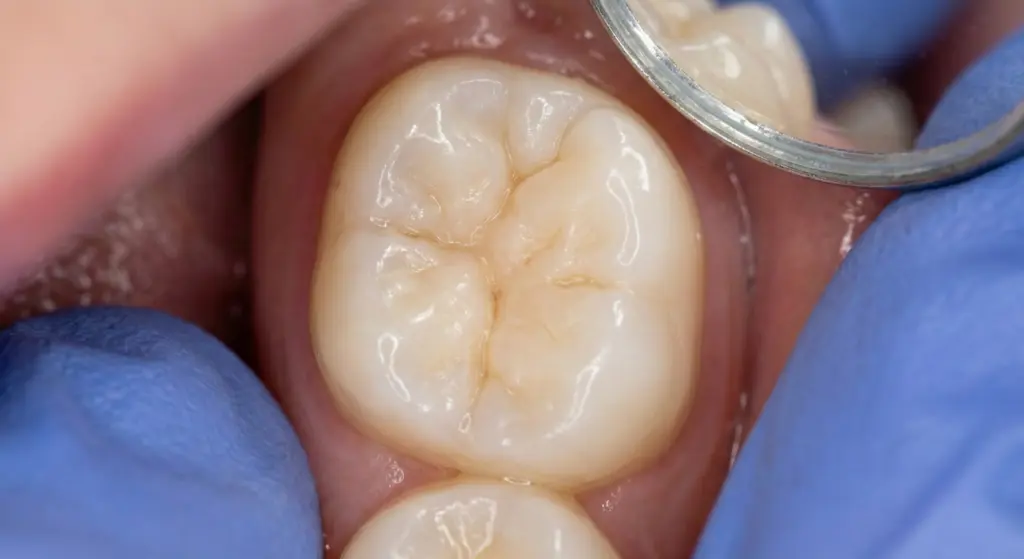
How Sealants Work
Think of sealants as a raincoat for your child’s teeth. Just as a raincoat prevents water from soaking through clothing, sealants prevent food particles and bacteria from settling into the deep grooves of molars. This protective coating:
- Creates a smooth surface that’s easier to clean
- Blocks food and bacteria from reaching the enamel in deep grooves
- Makes tooth surfaces more resistant to acid attacks
- Allows fluoride from toothpaste to better protect the tooth
What Sealants Do and Don't Do
What they do: Sealants help reduce the risk of cavities on the chewing surfaces of back teeth where they’re applied.
What they don’t do: Sealants are not a replacement for good oral hygiene. Your child still needs to brush twice daily with fluoride toothpaste, floss, limit sugary snacks, and visit the dentist . Sealants also don’t protect the sides of teeth between molars – that’s where flossing comes in.
Materials Used
Most dental sealants are made from resin-based materials that have been safely used in dentistry for decades. In some cases, dentists may use glass ionomer sealants, especially when moisture control is difficult or when sealing certain baby teeth.
Why Preventive Dentistry for Kids Matters
Dental sealants are one part of a comprehensive preventive dentistry strategy for children. When combined with other protective measures, they create multiple layers of protection against cavities:
- Fluoride (from toothpaste, water, and professional treatments) strengthens enamel
- Brushing and flossing remove plaque and food particles
- Healthy diet limits sugar exposure that feeds cavity-causing bacteria
- Regular dental exams catch problems early
- Dental sealants add a physical barrier to vulnerable tooth surfaces
According to the American Dental Association (ADA), the combination of fluoride and sealants provides the best cavity prevention for children.
Protecting Molars from Cavities: Understanding Pits and Fissures
To understand why sealants are so effective, it helps to know a bit about tooth anatomy. The chewing surfaces of molars aren’t flat they have grooves, pits, and fissures that vary in depth from child to child.
Why These Grooves Cause Problems
- They’re narrow and deep
- They trap food and bacteria
- They create an ideal environment for decay
Some children have deeper pits and fissures than others, putting them at higher risk for cavities even with excellent oral hygiene. Sealants level the playing field by filling in these grooves and creating a smooth, cleanable surface.
Who Should Get Sealants and When?
The best time for dental sealants is soon after permanent molars erupt and before cavities have a chance to develop.
Timing for Sealants
- First permanent molars: Usually erupt around age 6 (though timing varies by child)
- Second permanent molars: Typically erupt around age 12
- Premolars: May also benefit from sealants if they have deep grooves (usually ages 10-12)
Children at Higher Risk
While all children can benefit from sealants, they’re particularly important for children who:
- Have had cavities in their baby teeth or other permanent teeth
- Have deep pits and fissures in their molars
- Snack frequently or consume sugary drinks
- Have limited exposure to fluoridated water
- Have difficulty with thorough brushing (due to age, motor skills, or orthodontic appliances)
- Have special healthcare needs that make dental care challenging
A Painless Dental Procedure: What Happens During Sealant Application
One of the best things about dental sealants is how quick and comfortable the procedure is.
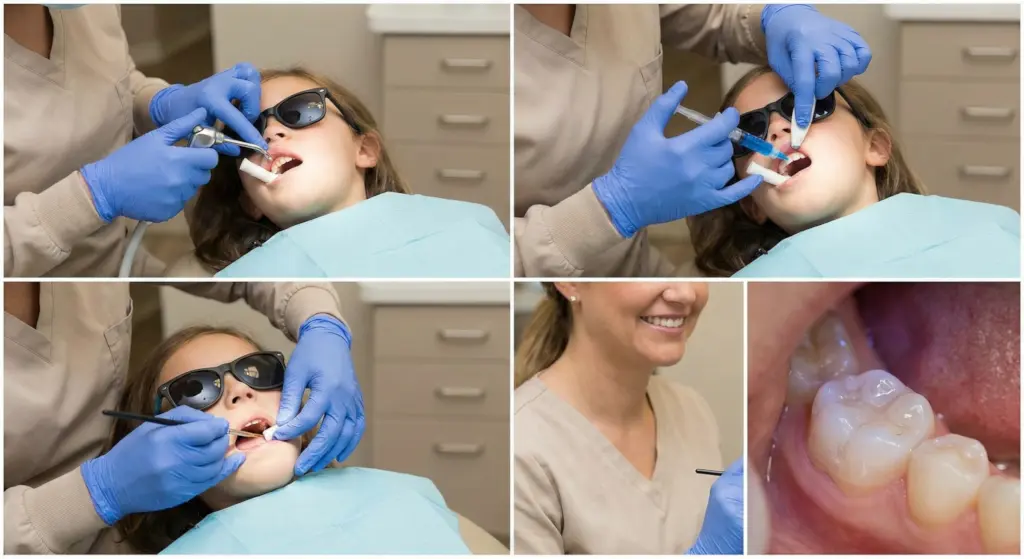
Step-by-Step Process
- The dental hygienist or dentist thoroughly cleans the tooth surface to remove any plaque or food particles
- The tooth is dried completely, often with cotton or a small suction device
- A mild conditioning gel is placed briefly to help the sealant bond securely.
- The liquid sealant is carefully painted into the grooves and pits of the tooth
- The dentist checks that the sealant doesn’t interfere with your child’s bite and makes any needed adjustments
How Long Does It Take?
The entire process typically takes just a few minutes per tooth. For a child getting sealants on all four permanent molars, the appointment often takes about 20–30 minutes, depending on how many teeth are being sealed and how comfortable your child is.
What Your Child Will Feel
The sealant procedure is painless. Your child might feel:
- A slightly sour taste from the etching gel (similar to lemon)
- The texture of materials in their mouth
- The bright blue curing light (which doesn’t hurt)
- Pressure when biting down to check the sealant placement
How Long Do Dental Sealants Last?
Dental sealants can last for several years with proper care. According to the American Academy of Pediatric Dentistry (AAPD), sealants can remain effective for up to 10 years, though some wear and tear is normal.
Typical Lifespan
- Average duration: 5-10 years with good care and regular checkups
- What affects lifespan: Chewing habits, diet, grinding/clenching, and how well the sealant was initially bonded
- Monitoring at checkups: Your dentist checks sealants at each visit and can repair or reapply them if needed
Aftercare Tips
- Continue normal brushing and flossing
- Avoid chewing on ice, hard candy, or non-food items
- Be gentle with extremely sticky foods initially (though normal eating is fine)
- Keep regular dental checkup appointments
Dental Sealants Cost vs Fillings: Prevention Pays
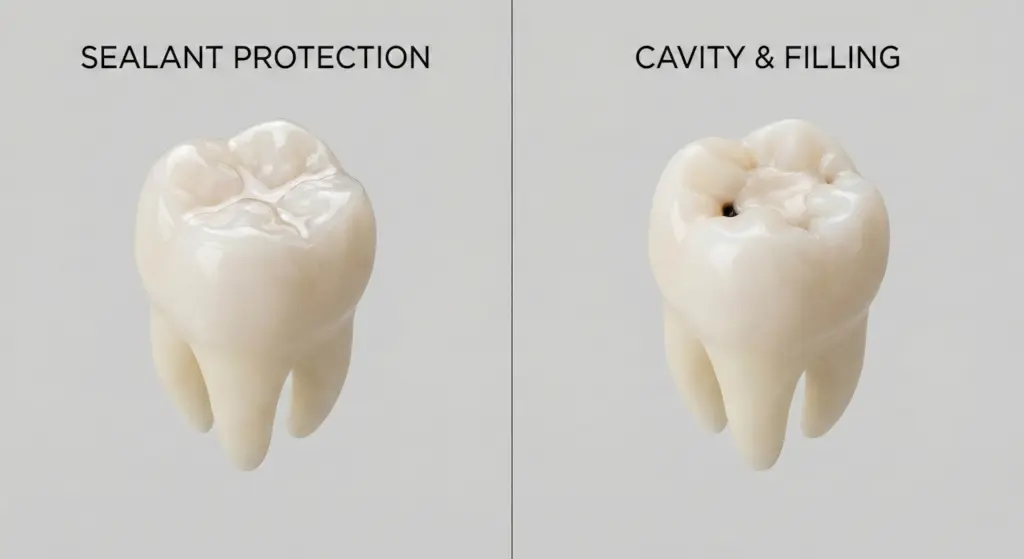
When it comes to protecting your child’s teeth, prevention is almost always more comfortable, faster, and more cost-effective than treating cavities after they develop.
The Cost Advantage of Prevention
While exact costs vary by location and dental practice. More importantly, preventing a cavity means avoiding:
- The need for numbing (which some children find stressful)
- The drilling and removal of decayed tooth structure
- Potential need for more extensive treatment if decay progresses
- Multiple appointments and longer recovery time
Insurance Coverage
Many dental insurance plans cover sealants for children, often at 80-100% when placed on permanent molars. Coverage typically includes sealants up to age 14-18, though policies vary. Contact your dental office to verify your benefits most practices can check coverage before the appointment.
Sealants vs Fillings: Quick Comparison
|
Aspect
|
Dental Sealants
|
Dental Fillings
|
|---|---|---|
|
Purpose
|
Prevention – protects healthy teeth
|
Treatment – repairs damaged teeth
|
|
Comfort
|
Painless, no numbing needed
|
May require numbing; some discomfort
|
|
Time
|
Minutes per tooth
|
Longer appointment; drilling required
|
|
Process
|
Clean, dry, paint on coating, cure
|
Remove decay, shape cavity, fill, polish
|
|
Relative Cost
|
Generally lower; often covered by insurance
|
Higher; treatment of existing problem
|
Frequently Asked Questions
Dental sealants are thin protective coatings applied to the chewing surfaces of molars. They work by sealing the deep grooves (pits and fissures) where food and bacteria get trapped, creating a smooth barrier that prevents decay and is easier to clean with brushing.
No, the sealant procedure is painless. There's no drilling, no numbing shots, and no discomfort.
Many parents ask about BPA. Most modern sealant materials are designed to be safe for dental use, and exposure is considered very low. If you have concerns, ask your dentist what material they use and whether BPA-free options are available.
Sealants are most commonly placed on permanent molars soon after they erupt (around ages 6 and 12). Premolars may also be sealed if they have deep grooves. In some cases, baby molars can be sealed if a child has deep grooves and high cavity risk.
Sealants can last 5-10 years with proper care. They may chip or wear over time, especially on heavily used chewing surfaces.
Yes, dental sealants are very safe. They're typically made from dental resin (a plastic-like material) that has been used in dentistry for decades and is approved by the ADA.
No, sealants are a supplement to good oral hygiene, not a replacement. Children still need to brush twice daily with fluoride toothpaste, floss, eat a healthy diet, and visit the dentist regularly.
Costs vary by location and practice, but sealants generally cost less than fillings. More importantly, preventing a cavity with sealants avoids the discomfort, time, and expense of treating decay.
The best time is when permanent molars first erupt, typically around age 6 for first molars and age 12 for second molars.