
- Patient Guidance · Treatment Planning
When a treatment plan feels bigger than expected, a second opinion is not distrust — it is the most rational way to approach a decision that is significant in cost, impact, or permanence.
Should You Get a Second Opinion on Your Dental Treatment Plan?
You walk out of a dental appointment holding a treatment plan that lists procedures you were not expecting — several crowns, a root canal, possible extractions, or a full-mouth reconstruction that comes with a price tag that makes you hesitate at the door. You trust your dentist well enough. But something about the conversation felt rushed, or the scale of the recommended work surprised you, or you simply want to understand your options before committing to something this significant. Seeking a dental second opinion in that situation is not an act of distrust. It is a reasonable, patient-centred step that any responsible dental professional should welcome.
- Dental Emergency?
If you are dealing with a dental emergency — active infection, significant swelling, severe pain — please seek evaluation promptly rather than waiting for a second opinion to be arranged.
Why High-Cost Dental Work Often Warrants a Second Look
There is nothing inherently suspicious about receiving a large treatment plan from a dentist. Dental disease is progressive, and it is genuinely common for patients who have deferred care for a few years to discover multiple problems at once.
Situations Where a Second Opinion Is Particularly Worth Pursuing
You have been quoted for five or more crowns, implants, or major restorations at once
The consultation felt rushed and you left without a clear understanding of what is wrong
You have been recommended for full-mouth rehabilitation, All-on-X, or a significant bite reconstruction
You have been told to extract a tooth you were not expecting to lose — without a clear explanation
The treatment plan includes procedures you have not been given alternatives for
Recommendations have changed significantly between dentists without clear explanation
You feel pressure to commit quickly or offered heavy discounts for same-day decisions
A large root canal or surgical procedure is recommended and you want to understand the basis
Urgency Changes the Calculation
Not every dental situation can wait. Swelling, spreading infection, significant pain, or any sign of a dental abscess are situations where prompt evaluation and treatment are clinically appropriate. If your dentist has expressed any urgency around a treatment recommendation, take that seriously and discuss the timeline openly.
The Four Things a Good Second Opinion Should Confirm
1
The Diagnosis
Is the clinical finding — the decay, fracture, bone loss — accurately identified and clearly documented?
2
The Alternatives
Is the recommended treatment the only reasonable option, or are there alternatives with different risk/benefit profiles?
3
The Urgency
Does each component need to be addressed immediately, or is phased treatment over time a viable option?
4
The Risks of Deferral
If you wait, what realistically happens? Understanding the cost of inaction is as important as the cost of action.
Treatment transparency — understanding the evidence behind each recommendation — is something every patient is entitled to, and something a thorough second opinion should provide.
Using Advanced 3D Technology for Accurate Diagnosis
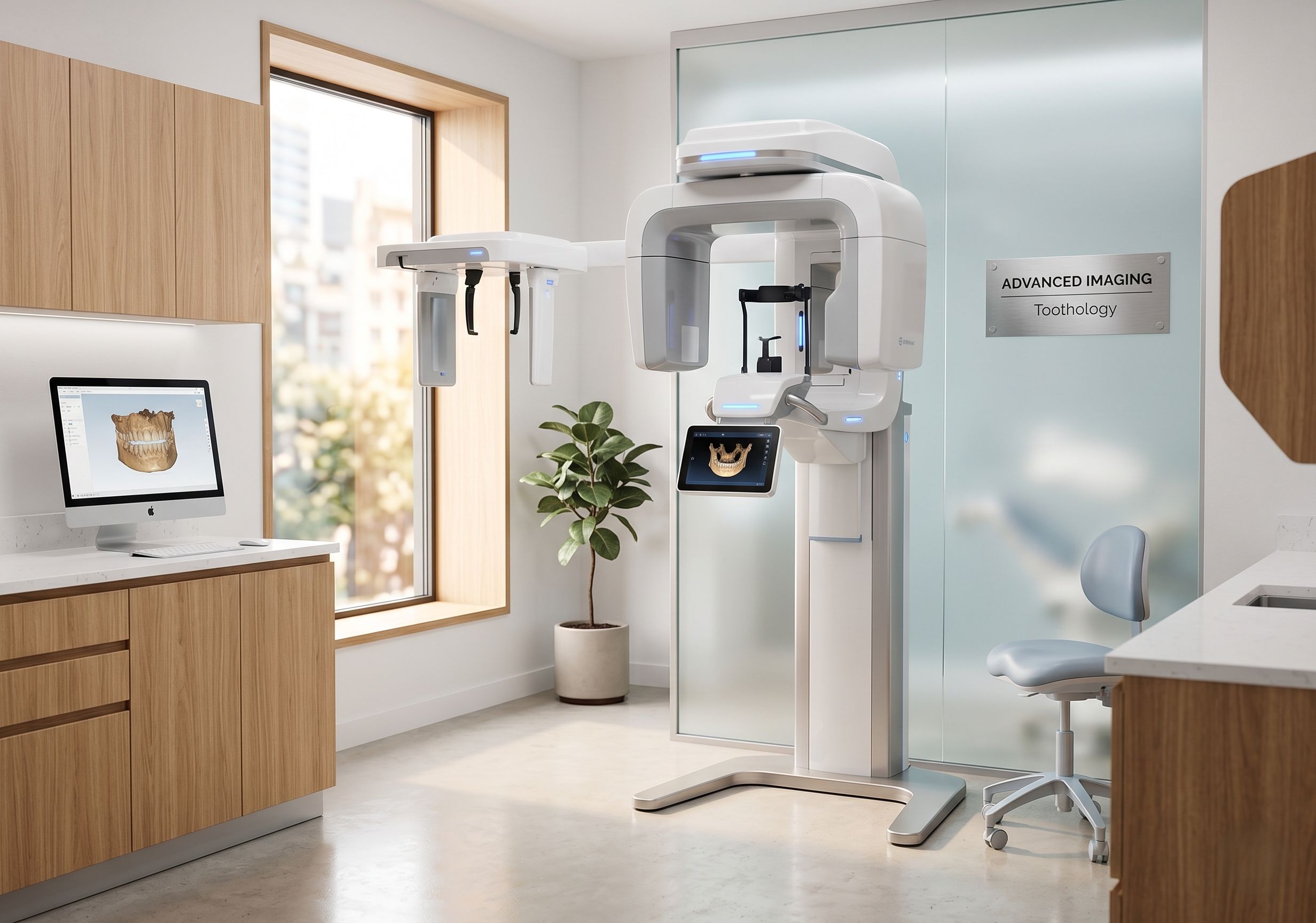
The quality of a second opinion is only as good as the quality of the diagnostic information underlying it. A quick visual exam alone offers far less clarity than a review that includes current radiographs, a thorough clinical assessment, and — when appropriate — 3D imaging.
What a High-Quality Second-Opinion Exam Typically Includes
Review of existing records: X-rays, treatment plan, itemised estimate, and any clinical notes from your first provider
Updated or supplemental radiographs: If your existing X-rays are recent and of good quality, they may be sufficient
Comprehensive clinical examination: A full assessment of teeth, gums, bite, and any symptomatic areas — not just the teeth already identified
Periodontal charting: For any plan involving gum disease treatment or implants, a complete picture of bone levels and pocket depths
3D imaging (CBCT) when clinically indicated: For complex implant planning, suspected root fractures, bone volume assessment, or nerve/sinus proximity
A clear, written explanation of findings: What the clinician found, what they recommend, what the alternatives are, and the risks of each path
When 3D Imaging Makes a Material Difference

Implant Planning
Assessing bone volume, quality, and the precise location of the inferior alveolar nerve or maxillary sinus before placing a titanium post is significantly more accurate in three dimensions.
Suspected Root Fractures
Vertical root fractures are frequently missed or inconclusive on standard radiographs. CBCT can reveal fracture patterns that change whether a tooth is restorable or should be extracted.
Root Canal vs. Extraction
The three-dimensional anatomy of root canals, periapical pathology, and surrounding bone is more accurately assessed in 3D — particularly for multi-rooted posterior teeth.
Bone Level Assessment
The extent and pattern of bone loss in periodontal disease is more completely characterised in three dimensions than on flat radiographs.
Not Every Patient Needs 3D Imaging
The decision to use CBCT should be clinically justified by the complexity of the case and the diagnostic question that needs answering — the benefit should outweigh the additional radiation exposure, which while low relative to medical CT is not zero.
Common Procedures Where a Second Opinion Saves Money
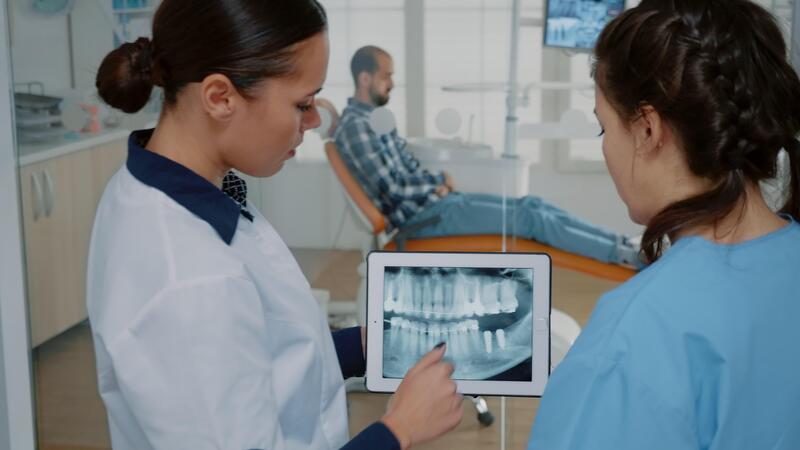
While a second opinion is not a guarantee of a lower-cost alternative — the original plan may well be confirmed as the right approach — there are specific clinical situations where the treatment plan can reasonably vary between practitioners, and where understanding the full option set is genuinely valuable before committing.
| Situation | Option A | Option B | What to Ask |
|---|---|---|---|
| Single missing tooth | Dental Implant Fixed, preserves bone, most closely mimics natural tooth | Bridge Implant-supported or traditional bridge — no surgery, lower initial cost | What are the long-term bone implications of each? What is the risk to adjacent teeth? |
| Tooth with deep infection / structural damage | Root Canal Preserves the natural tooth root, allows crown placement | Extraction + Implant Removes the tooth, replaces with prosthetic or partial | Is the tooth restorable? What does the bone level look like? What is the risk of keeping it? |
| Damaged tooth with significant decay | Full Crown Covers and protects what remains; indicated for significant damage | Ceramic Onlay / Inlay More conservative; suitable for less extensive damage | How much healthy tooth structure remains? Can an onlay support the bite forces here? |
| Multiple missing or failing teeth | Individual Implants Phased; preserves existing teeth; higher long-term investment | All-on-X / Implant Bridge Fewer implants; faster; changes remaining teeth | Which approach preserves more options long-term? What happens if one implant fails? |
| Extensive gum disease | Non-Surgical Therapy Scaling, root planing, re-assessment first | Surgical Intervention Flap surgery, osseous surgery; may be warranted if non-surgical is inadequate | Has non-surgical therapy been tried and measured? What are the re-evaluation criteria? |
Three Scenarios Worth Getting a Second Look On
'You Need Multiple Crowns'
Crown preparation removes permanent tooth structure and is irreversible. Before agreeing to multiple crowns at once, it is worth understanding whether any of the affected teeth might be candidates for the more conservative ceramic onlay.
'This Tooth Needs to Come Out'
Extraction is the most final decision in dentistry. Before agreeing to lose a tooth, a thorough assessment of whether it is genuinely unrestorable — including current imaging — is worthwhile.
'You Need a Full-Mouth Reconstruction'
Plans involving a comprehensive rebuild of the bite, multiple implants, and full-arch restorations can run to significant five-figure costs. Understanding what drives each element and whether any components can be phased, reduced, or replaced with a more conservative option is important.
How to Respectfully Seek a New Perspective on Your Oral Health
One of the most common reasons patients delay seeking a second opinion is the worry that asking for one is somehow rude or disloyal to their current dentist. Requesting records, seeking additional perspectives on a significant treatment decision, and taking time to consider your options before proceeding are all signs of an engaged, informed patient. You do not need to justify or apologise.

What to Request From Your First Provider
Recent digital X-rays (ideally from the last 12–18 months; ask for full-mouth or bitewing series as applicable)
3D CBCT images if they were taken, in a viewable format or on disc
Written treatment plan listing each procedure and the clinical reason for it
Itemised cost estimate for all proposed treatment
Periodontal charting (pocket depth measurements) — particularly if gum treatment is part of the plan
Clinical notes relevant to the diagnosis (optional, but useful if available)
Your Second-Opinion Preparation Checklist
Records from your first provider: X-rays, written treatment plan, itemised estimate — the more complete, the more useful the review
A timeline of symptoms: When did discomfort start? Has it changed? Any recent changes in temperature sensitivity, bite pain, or swelling?
Your medication and allergy list: Systemic medications, blood thinners, bisphosphonates, or known allergies to anaesthetics or dental materials
Your goals and priorities: What matters most — preserving natural teeth, minimising invasive treatment, spreading cost over time, aesthetics?
A realistic budget range: You do not have to share an exact figure, but knowing whether you are exploring all options or working within a range helps
A list of questions about anything you did not understand or want clarified from the first consultation
When the Two Opinions Differ: How to Navigate the Disagreement
If the two assessments reach different conclusions, you are not obliged to simply choose the cheaper one or the more conservative one. Ask each provider to explain the specific clinical rationale for their recommendation — what they see on the imaging, what the evidence base for their approach is, and what they expect would happen under the alternative approach.
Different Doesn't Mean Wrong
Different clinical recommendations from two dentists do not necessarily mean one of them is wrong. Dentistry involves clinical judgment, and reasonable practitioners can weigh the same findings differently based on their training, experience, and approach to risk.
Frequently Asked Questions
Why should I get a second opinion for a root canal?
How much does a dental second opinion cost in NYC?
Does dental insurance cover second opinion exams?
What should I bring to a second opinion appointment?
Can a second opinion find a cheaper dental alternative?
Is it rude to tell my dentist I'm getting a second opinion?
What if the second opinion is different from the first?
How do I find a trusted dentist for a second opinion?
Clarity First — Then Commitment
Whether the second opinion confirms everything your first dentist recommended or introduces an alternative worth considering, the outcome is the same: you have a clearer picture and a more confident basis for the decisions ahead.
Bring Your Records
At Toothology in Williamsburg, second-opinion consultations are approached with the same diagnostic rigour as any new-patient assessment. If you have a written plan or X-rays from another office, bring them in — we’ll review your diagnosis, explain options, and answer your questions without pressure.
Second-Opinion Consultation
Bring your X-rays and treatment plan. We’ll review your diagnosis and explain your options — without pressure.
DIRECT LINE
IN THIS GUIDE
TOOTHOLOGY DENTAL
Williamsburg, Brooklyn, NY
Serving Greenpoint, Bushwick, Bed-Stuy & Downtown Brooklyn
718-678-3800
Emergency line available
Open Hours
Mon – Thu: 10:00 AM – 6:00 PM Friday: 10:00 AM – 2:00 PM Sunday: 10:00 AM – 2:00 PM Saturday: Closed
OUR COMMITMENT
- Board-Certified Pediatric Dentists
- Child-Friendly, Anxiety-Reducing Care
- Same-Day Emergency Slots
- Low-Radiation Digital X-Rays
- Most Major Insurance Accepted