
- Restorative Dentistry Guide · Williamsburg Brooklyn
A sharp twinge that hasn’t gone away. An old filling finally failing. A crown that’s come loose. The same question keeps coming up: is a filling enough, or do you need a crown?
Porcelain Crowns: When a Damaged Tooth Needs More Than a Filling
You bit into something ordinary — bread, an apple, nothing dramatic — and felt a sharp twinge that hasn’t fully gone away. Or maybe an old, dark filling your dentist has been watching for years is finally starting to fail. Or perhaps a crown came loose, and you’re wondering whether it can simply be reattached. In all of these situations, the same question comes up: is a filling enough, or do I need a porcelain crown?
A porcelain crown is a custom-made cap that covers and protects the visible part of a damaged tooth. Sometimes it’s the right choice; other times, a filling, bonding, or smaller restoration may be enough. The answer depends on how much healthy tooth remains, where the damage is, and how much chewing force the tooth needs to handle.
IF A CROWN HAS COME LOOSE
Do not try to glue it back yourself. In some cases, a dentist can re-cement the crown — but only after checking whether it still fits properly and whether the tooth underneath has decay, fracture, or other damage.
What Is a Porcelain Crown?
A porcelain crown is a custom-made cap that fits over the visible part of a damaged or weakened tooth. It is shaped and shaded to look natural while protecting the tooth underneath.
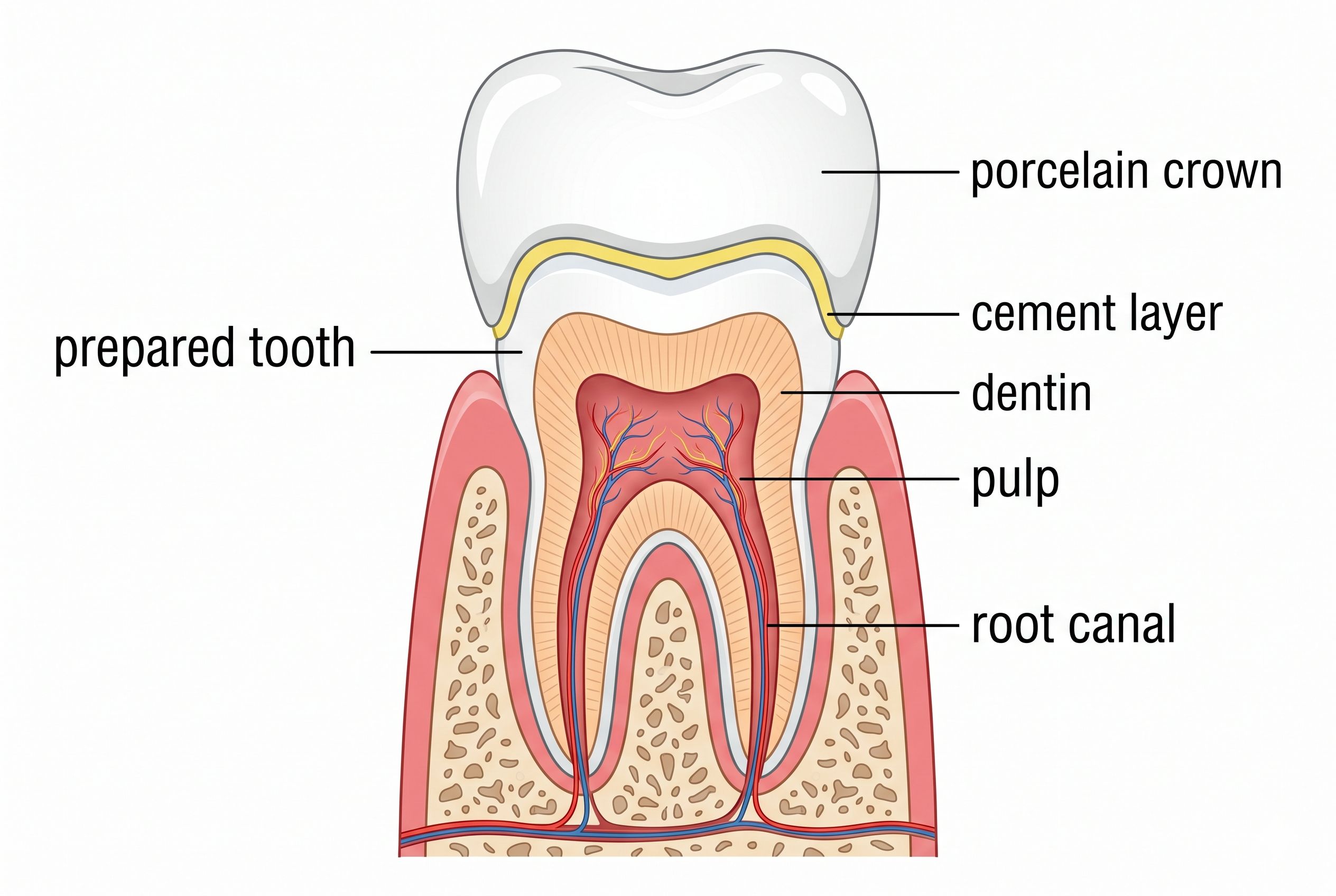
F
A FILLING REPAIRS PART OF A TOOTH
If the damage is small, a filling can fully restore the affected portion while leaving the rest of the natural tooth structure intact.
C
A CROWN PROTECTS THE WHOLE TOOTH
When a tooth has a large cavity, crack, broken cusp, or multiple old fillings, the remaining structure may be too weak to support another filling — full-coverage protection becomes the safer option.
The recommendation is based on the tooth’s condition — not just appearance.
When Is a Crown Better Than a Filling?
The choice between a filling and a crown usually comes down to one question: is there enough healthy tooth structure left to support a filling under normal chewing force? If the tooth walls are too thin, cracked, or weakened, a crown may be the safer long-term option.
Large Cavity
If decay has removed too much tooth structure, a filling may not be strong enough. A crown can protect the remaining tooth from cracking under bite force.
Cracked Tooth
When a crack extends into the tooth, a crown can help hold the tooth together and reduce stress during chewing.
Broken Cusp
If one of the raised chewing points breaks, the tooth may need a crown to rebuild strength and restore normal function.
Failing Old Filling
Repeated filling replacements remove more natural tooth each time. When too little strong structure remains, a crown is often more durable.
After Root Canal Treatment
Many back teeth need crowns after root canals because they can become weaker and more prone to fracture. Your dentist will decide based on how much tooth remains and how much bite force it handles.
Filling vs. Crown: A Quick Comparison
| Factor | Filling | Porcelain Crown |
|---|---|---|
| Best For | Small to moderate cavities with enough healthy tooth left | Large cavities, cracks, broken cusps, or weakened teeth |
| Protection Level | Replaces the damaged portion only | Covers and protects the whole visible tooth |
| Longevity | Works well for smaller repairs | Often stronger for heavily damaged teeth |
| Invasiveness | More conservative | Requires more shaping of the tooth |
| When It Falls Short | Large fillings can weaken or fracture over time | Not needed for minor damage |
CHOOSING THE WRONG TREATMENT COSTS MORE LATER
Trying to use a filling when a tooth really needs a crown can lead to cracks, breakage, or a future dental emergency. Choosing the right treatment early often helps protect the tooth and avoid a more complex repair down the line.
Signs You May Need a Dental Crown
While only an exam and X-rays can confirm whether a tooth needs a crown, there are recognisable signs and situations that warrant scheduling that evaluation rather than waiting.
Visible crack lines on the tooth surface
Pain or a sharp sensation specifically when biting down
A large, old filling that covers much of the tooth
A fractured or broken cusp — the pointed part of a back tooth
Recurring decay around or beneath an existing filling
A tooth that has been significantly worn down over time
An old crown that is cracked, loose, or visibly damaged
A tooth that has had root canal treatment and has not yet been crowned
Warning Signs That Need Prompt Evaluation
Sharp pain specifically when biting down
Swelling near a tooth
Worsening sensitivity to hot, cold, or pressure
A visibly broken tooth edge
A crown that has fallen off entirely
THESE SIGNS DON'T CONFIRM A CROWN — BUT THEY CONFIRM AN EXAM
These signs do not automatically mean you need a crown, but they do mean an exam and X-rays are the right next step. Your dentist can then decide whether a filling, crown, or another treatment is most appropriate for your specific tooth.
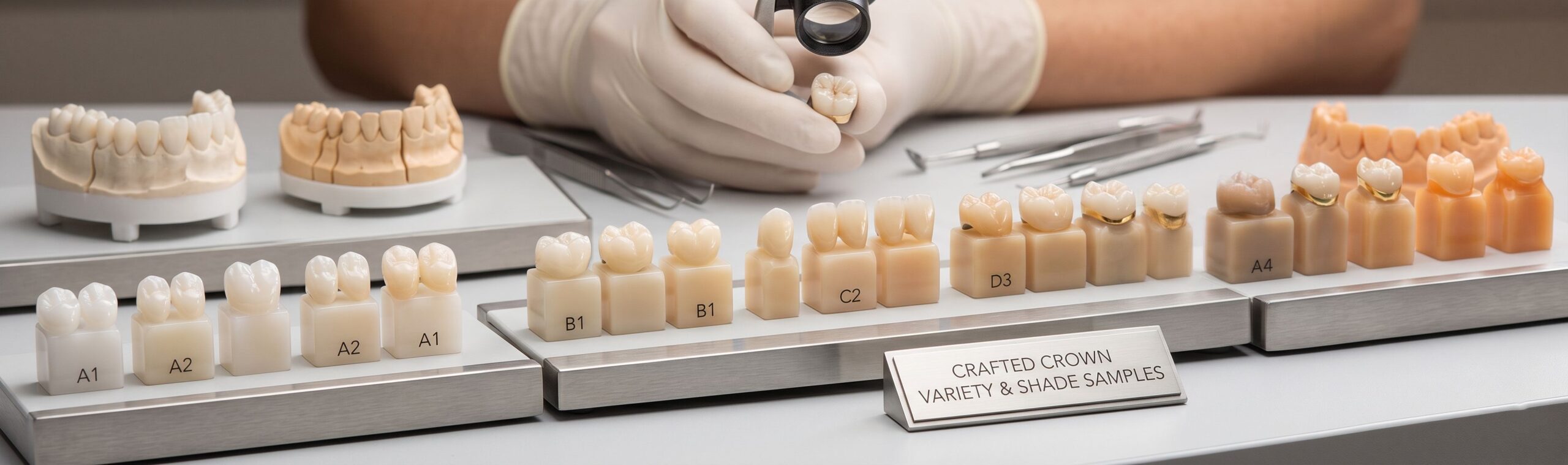
Patients often use porcelain and ceramic interchangeably, and that’s usually fine. Technically, porcelain is a type of ceramic material, often chosen for its natural tooth-like colour and translucency.
Zirconia crowns are also ceramic, but they’re denser and known for strength — making them useful for back teeth that handle heavier chewing forces. Some cases may also use porcelain-fused-to-metal crowns, though all-ceramic and zirconia options are now more common.
All-Ceramic / Porcelain vs. Zirconia: A Quick Comparison
| Factor | All-Ceramic / Porcelain | Zirconia |
|---|---|---|
| Aesthetics | Excellent shade-matching and translucency; often preferred for visible front teeth | Good aesthetics with newer materials, but sometimes slightly less translucent |
| Strength | Strong, but may be more brittle under heavy bite force | Very strong and fracture-resistant |
| Best Location | Front teeth and visible smile areas | Back teeth, molars, and heavy-bite areas |
| Grinding / Clenching | May work with a nightguard and monitoring | Often better for patients who grind or clench |
| Shade Matching | Excellent for blending with natural teeth | Improved, but evaluated case by case for highly visible teeth |
THE BEST MATERIAL DEPENDS ON THE WHOLE PICTURE
Tooth location, visibility, bite pressure, whether you grind your teeth, and your cosmetic goals all factor into the right material choice. This is a conversation to have at your consultation — not a decision to make on your own beforehand.
What Happens During a Crown Procedure?
Getting a porcelain crown is usually a straightforward process, though the exact steps may vary by practice and case.
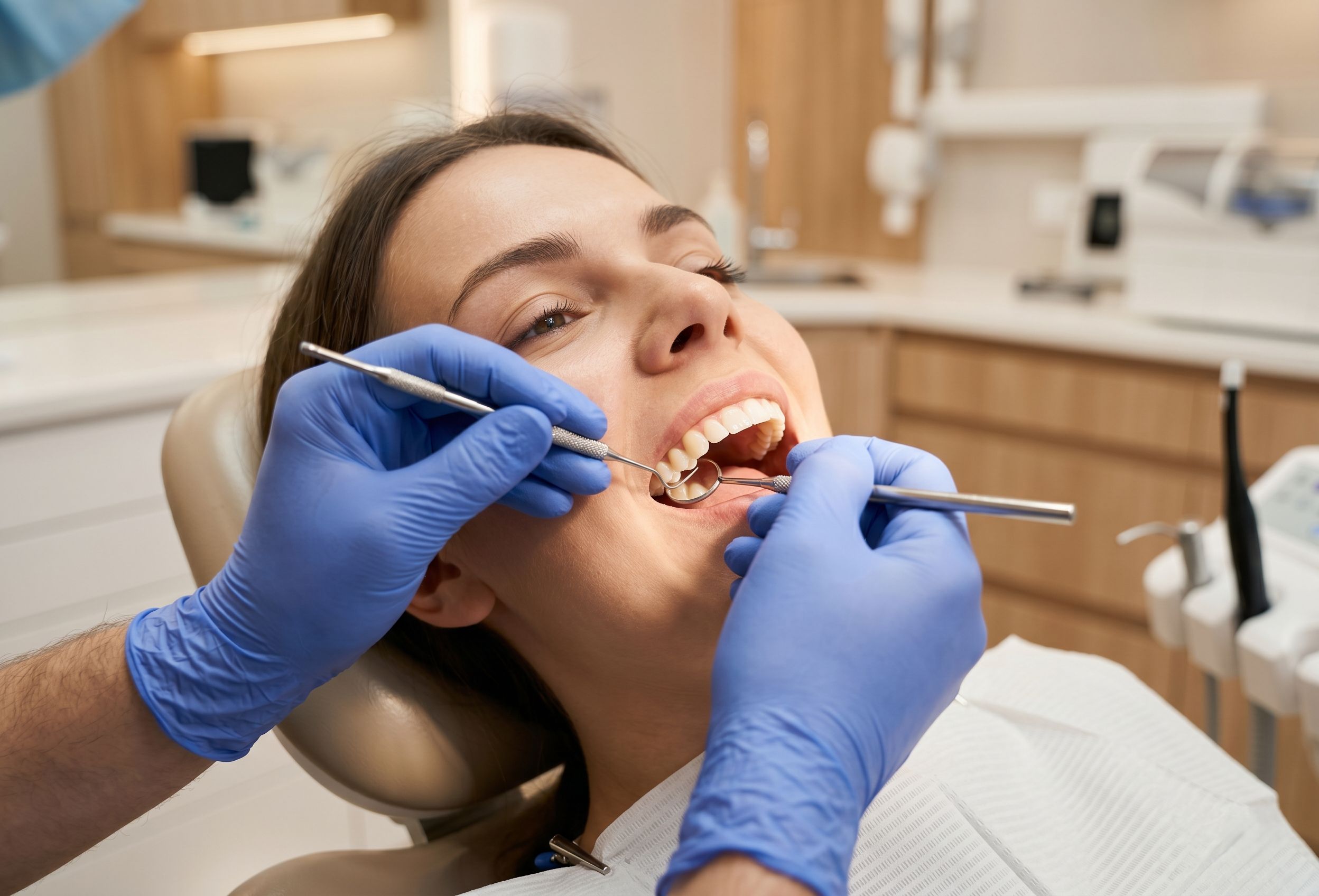
EXAM & X-RAYS
Your dentist checks the tooth, reviews X-rays, and confirms whether a crown is the right option for your situation.
LOCAL ANAESTHESIA
The tooth and nearby gum tissue are numbed for comfort before any preparation begins.
TOOTH PREPARATION
Decay or damaged areas are removed, and the tooth is shaped to receive the crown.
IMPRESSION OR DIGITAL SCAN
A mould or digital scan is taken so the crown can be custom-made to fit your tooth precisely
TEMPORARY CROWN
A temporary crown protects the prepared tooth while the final crown is being fabricated.
FINAL CROWN PLACEMENT
The permanent crown is checked for fit, shade, and bite, then cemented or bonded securely in place.
ONE VISIT OR TWO?
Ask your dentist whether your case needs a traditional two-visit process or if a same-day crown option is available. This depends on the practice’s equipment and the specifics of your tooth.
What to Expect for Comfort
The area is numbed before treatment, so most patients feel pressure or vibration rather than pain. Mild sensitivity after preparation is common and usually temporary.
While wearing a temporary crown, avoid very sticky or hard foods on that side. If it feels loose or falls out, contact the practice promptly. If you feel anxious about the procedure, ask about available comfort options during your consultation.
Porcelain crowns are designed to be durable, long-term restorations, but their lifespan depends on your bite, habits, oral hygiene, and regular dental care.
Factors That Can Shorten a Crown's Lifespan
Grinding or clenching:
Heavy bite forces can wear or chip a crown over time. A nightguard may be recommended if you grind your teeth at night.
Chewing hard objects:
Ice, hard candy, or using teeth to open packaging can stress or damage the crown over repeated use.
Poor oral hygiene:
Decay can still form at the edge where the crown meets the natural tooth — the crown doesn't make that margin immune to decay.
Recurrent decay:
If decay develops around the crown margin, the crown may need repair or replacement.
WITH GOOD CARE, IT'S A LONG-TERM INVESTMENT
With good home care, regular checkups, and bite protection when needed, a porcelain crown can serve as a strong long-term restoration — often for many years.
Yes. Modern porcelain dental crowns are designed to restore both function and appearance, especially for teeth that show when you smile.
Your dentist will match the crown’s shade, shape, contour, and translucency to your surrounding teeth. The crown is also adjusted at the gumline and bite so it looks natural and feels comfortable when chewing.
SETTING REALISTIC EXPECTATIONS
While no crown can be guaranteed to look invisible in every case, a well-planned natural-looking dental crown should blend closely with your smile and restore confident function — not stand out as obviously different.
Frequently Asked Questions
What is a porcelain crown used for?
Is a porcelain crown better than a filling?
How long does a porcelain crown last?
Does getting a dental crown hurt?
Can a porcelain crown fix a cracked tooth?
The Right Treatment Is the One Your Tooth Actually Needs
A cracked tooth, large failing filling, or damaged crown can be hard to judge on your own. The right solution depends on what’s happening beneath the surface — and that requires an exam and X-rays. If you have a cracked tooth, old filling, or damaged crown, schedule a consultation before the tooth breaks further. At Toothology in Williamsburg, Brooklyn, we can confirm whether you need a filling, bonding, onlay, or porcelain crown.
CRACKED TOOTH OR LOOSE CROWN?
Book a crown consultation at Toothology in Williamsburg — we’ll determine whether a filling, bonding, or crown is the right fit for your tooth.
DIRECT LINE
IN THIS GUIDE
8 SIGNS TO WATCH FOR
These signs mean it's time for an exam — not necessarily a crown.
TOOTHOLOGY DENTAL
Williamsburg, Brooklyn, NY
Serving Greenpoint, Bushwick, Bed-Stuy & Downtown Brooklyn
718-678-3800
Emergency line available
Open Hours
Mon – Thu: 10:00 AM – 6:00 PM Friday: 10:00 AM – 2:00 PM Sunday: 10:00 AM – 2:00 PM Saturday: Closed
OUR COMMITMENT
- Board-Certified Pediatric Dentists
- Child-Friendly, Anxiety-Reducing Care
- Same-Day Emergency Slots
- Low-Radiation Digital X-Rays
- Most Major Insurance Accepted