
- Restorative Dentistry Guide · Williamsburg Brooklyn
Do you really need a metallic-looking filling — or is there an option that blends in and still does the job? For most small to moderate cavities, the answer is a composite resin filling.
Tooth-Colored Fillings in Brooklyn: Natural-Looking Cavity Repair
Hearing “cavity” at a routine checkup is never ideal. Or maybe the concern isn’t new — you’ve had a silver filling in a back molar since you were a teenager, and now you’re wondering whether it’s time for something more natural-looking. Either way, many patients ask the same question: do I really need a metallic-looking filling, or is there an option that blends in and still does the job?
Tooth-colored fillings are often the answer. For many small to moderate cavities, a composite resin filling can repair decay, restore function, and match your natural tooth colour closely enough that most people won’t notice it.
What Are Tooth-Colored Fillings?
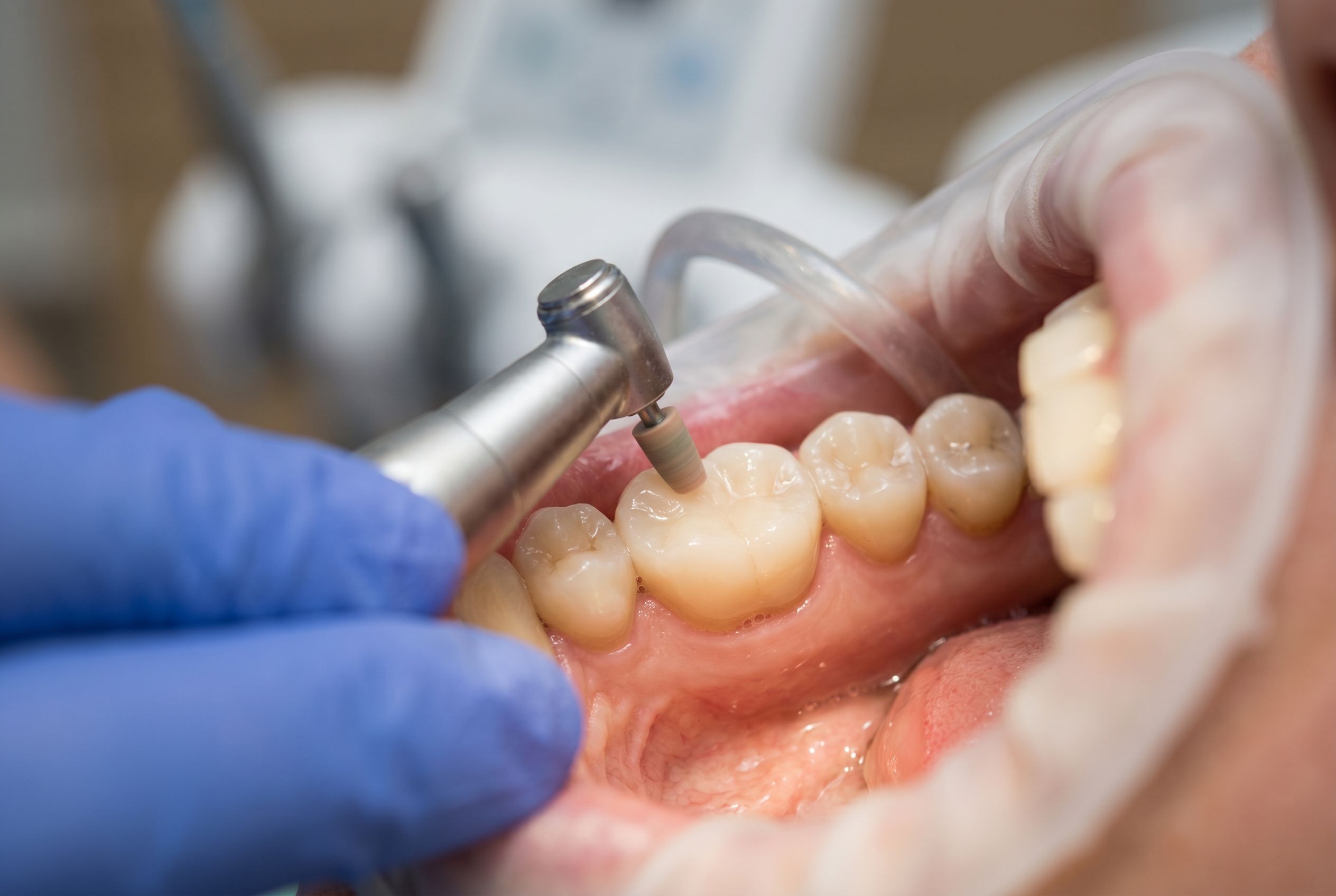
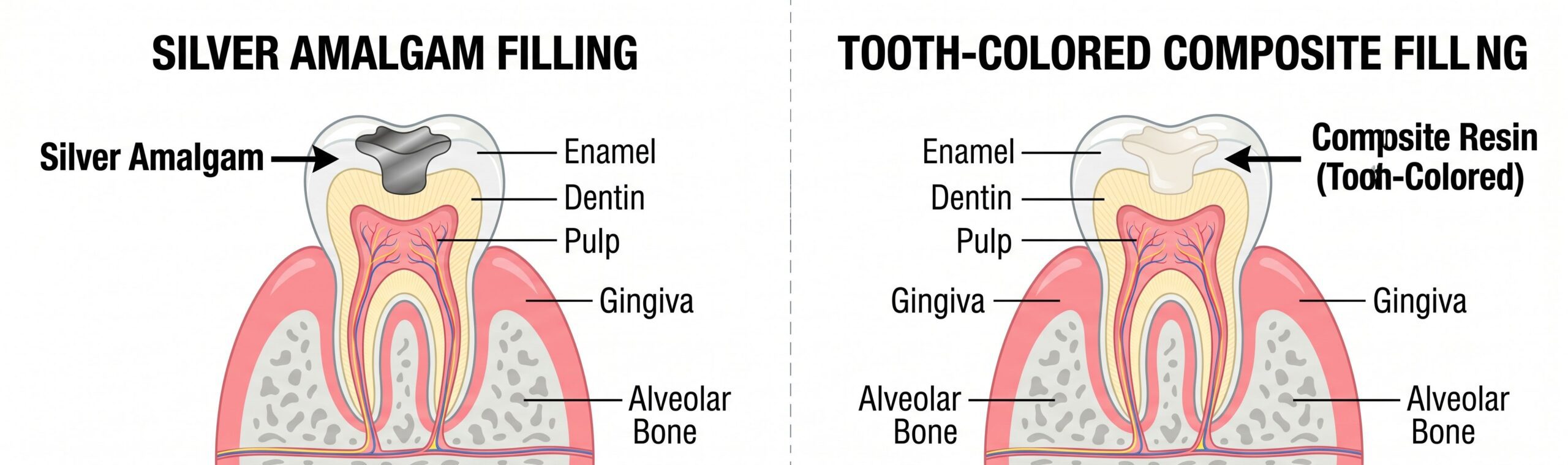
A tooth-colored filling — also called a composite filling or composite resin filling — is a dental restoration made from resin mixed with fine glass or ceramic particles. Unlike silver amalgam fillings, composite resin is shaded to match your natural tooth colour, so the repair blends in naturally.
- Bonds Directly to Tooth
Composite adheres to the tooth with a dental adhesive. In many cases this allows the dentist to remove less healthy tooth structure compared with traditional fillings.
- Front and Back Teeth
Tooth-colored fillings can be used on both front and back teeth. They are especially useful for visible front teeth, and commonly used for small to moderate cavities in back teeth.
- Shade-Matched to You
The dentist selects the closest composite shade to your natural enamel before placing the filling, so the final result blends rather than contrasts.
- Mercury-Free Material
Composite resin contains no mercury — a common preference for patients who want an alternative to silver amalgam for new fillings or replacements.
NOT RIGHT FOR EVERY TOOTH
For larger cavities or heavily damaged teeth, your dentist may recommend a different restoration — such as a crown or onlay — rather than a composite filling. The recommendation depends on how much healthy tooth structure remains.
How Composite Fillings Repair Cavities
The dental filling procedure for a composite resin filling is usually simple and completed in one visit. Knowing the steps makes the appointment feel more routine and less stressful.
DECAY REMOVAL
The dentist removes the decayed or weakened part of the tooth, leaving healthy structure behind. Because composite bonds to the tooth, this is often more conservative than preparing for a silver filling.
BONDING
A dental adhesive is applied so the composite resin can attach securely to the tooth's surface.
LAYERING
The composite material is placed in thin layers to rebuild the tooth shape accurately and ensure a strong, seamless result.
CURING
Each layer is hardened with a special curing light — the process takes only seconds per layer.
SHAPING & BITE CHECK
The filling is shaped to match the natural contours of your tooth and bite. Your dentist checks that it doesn't sit too high or cause discomfort when biting.
POLISHING
The surface is polished so it looks smooth and natural, and is less likely to collect plaque or stain over time.
ONE APPOINTMENT, SAME DAY
For a straightforward cavity, the process is typically calm, routine, and finished in a single appointment. Most patients return to normal daily activities the same day, once any numbness has worn off.
Both tooth-colored and silver fillings have been used successfully in dentistry. The right choice depends on the tooth, the size of the cavity, your cosmetic goals, and your dentist’s recommendation.
| Factor | Tooth-Colored (Composite) | Silver (Amalgam) |
|---|---|---|
| Appearance | Matches natural tooth shade; blends with surrounding teeth | Metallic grey/silver; visible, particularly on front or easily seen back teeth |
| Material | Composite resin — resin with fine glass or ceramic particles | Amalgam — a metal alloy including mercury, silver, tin, and copper |
| Bonding | Bonds directly to tooth structure with a dental adhesive | Held in place more by mechanical retention within the prepared cavity |
| Best Fit | Small to moderate cavities, visible areas, cosmetic preference | Case dependent; many existing amalgam fillings remain functional for years |
| Patient Priority Usually Driving the Choice | Natural-looking result; mercury-free material preference | Durability track record; less concern about visible colour |
A BALANCED WORD ON EXISTING SILVER FILLINGS
Many older silver fillings still work well and do not need replacement just because they are old or visible. If a silver filling is intact, comfortable, and free of decay, replacement may not be necessary. However, if it is cracked, leaking, has decay around it, or you prefer a more natural-looking material, replacing it with composite can be a reasonable option — worth discussing at your next checkup.
When Is a Filling Enough to Save a Tooth?
Composite fillings are a conservative option, but they’re not right for every tooth. A filling usually works best when the cavity or damage is small to moderate and there is enough healthy tooth structure left to support the repair.

- A FILLING USUALLY WORKS WHEN:
- The cavity is small to moderate
- Enough healthy tooth structure remains to support the repair
- No significant crack or fracture is present
- The tooth has not had multiple previous fillings leaving weakened walls
- A CROWN MAY BE NEEDED WHEN:
- The cavity is large and has removed too much tooth structure
- A crack extends into the tooth
- A cusp is broken
- The tooth has had multiple fillings and little strong structure remains
- Root canal treatment has been completed on a back tooth
ONLY AN EXAM CONFIRMS WHICH TREATMENT IS RIGHT
The only way to know what your tooth needs is through an exam and X-rays. Your dentist will check the damage, the remaining tooth structure, and the bite pressure before recommending a filling, crown, or another restoration.
Knowing what to expect at each stage makes a filling appointment feel far more routine.
How Long Do Tooth-Colored Fillings Last?
Composite fillings are durable, but their lifespan depends on the size of the filling, the tooth’s location, your bite force, grinding habits, oral hygiene, and regular dental checkups. Smaller fillings in lower-pressure areas often last longer than larger fillings on heavy chewing surfaces.
Brushing, flossing, and routine cleanings help protect both the filling and the surrounding tooth from new decay. With good care, many tooth-colored fillings last for years — though no filling material lasts forever.
Can Children Get Tooth-Colored Fillings?
Yes. Tooth-colored composite fillings are commonly used to treat cavities in children’s teeth — including both baby teeth and permanent teeth. For parents who prefer a natural-looking cavity treatment over a visible silver filling, composite resin is often a comfortable and aesthetic option. The right choice depends on the size and location of the cavity, the child’s age, and the tooth being treated.
Frequently Asked Questions
Are tooth-colored fillings better than silver fillings?
How long do tooth-colored fillings last?
Do composite fillings look natural?
Can tooth-colored fillings be used on front teeth?
When does a cavity need a crown instead of a filling?
A Conservative, Natural-Looking Way to Treat Cavities
Tooth-colored fillings can repair small to moderate cavities while preserving the natural look of your smile. For many early cavities, composite resin provides a conservative, durable, and natural-looking repair. Cavities are usually easier, faster, and more conservative to treat when caught early. If you think you have a cavity, an old filling that needs attention, or want a more natural-looking repair, Toothology in Williamsburg can help you choose the right option.
THINK YOU HAVE A CAVITY?
Book a dental exam at Toothology in Williamsburg — we’ll confirm what your tooth needs and give you a clear estimate before any treatment begins.
DIRECT LINE
IN THIS GUIDE
COMPOSITE VS. SILVER — AT A GLANCE
COMPOSITE
SILVER
COMPOSITE
SILVER
COMPOSITE
SILVER
COMPOSITE
SILVER
TOOTHOLOGY DENTAL
Williamsburg, Brooklyn, NY
Serving Greenpoint, Bushwick, Bed-Stuy & Downtown Brooklyn
718-678-3800
Emergency line available
Open Hours
Mon – Thu: 10:00 AM – 6:00 PM Friday: 10:00 AM – 2:00 PM Sunday: 10:00 AM – 2:00 PM Saturday: Closed
OUR COMMITMENT
- Board-Certified Pediatric Dentists
- Child-Friendly, Anxiety-Reducing Care
- Same-Day Emergency Slots
- Low-Radiation Digital X-Rays
- Most Major Insurance Accepted