
- Preventive Dentistry Guide · Williamsburg Brooklyn
Most cavities don’t start with pain. Understanding the predictable process behind tooth decay — plaque, bacteria, sugar, acid, and time — is the key to stopping it early.
How Do Cavities Form? A Dentist's Guide to Stopping Decay Early
Most cavities do not start with pain. A dentist points to a small dark spot on an X-ray and a patient says they had no idea it was there. A teen comes in for a routine checkup and there’s a soft groove on a back molar that wasn’t there six months ago. A parent who brushes their child’s teeth carefully every night still hears that a cavity has formed. The answer to how cavities form starts with plaque, bacteria, sugar, acid, and time — and understanding that process is the foundation of stopping decay early.
A cavity is not something that appears overnight. It is the end result of repeated acid attacks on tooth enamel over time, and that process gives you multiple opportunities to interrupt it before it becomes a hole that needs a filling. The earlier tooth decay is caught, the more conservative the solution can usually be.
How Cavities Actually Form
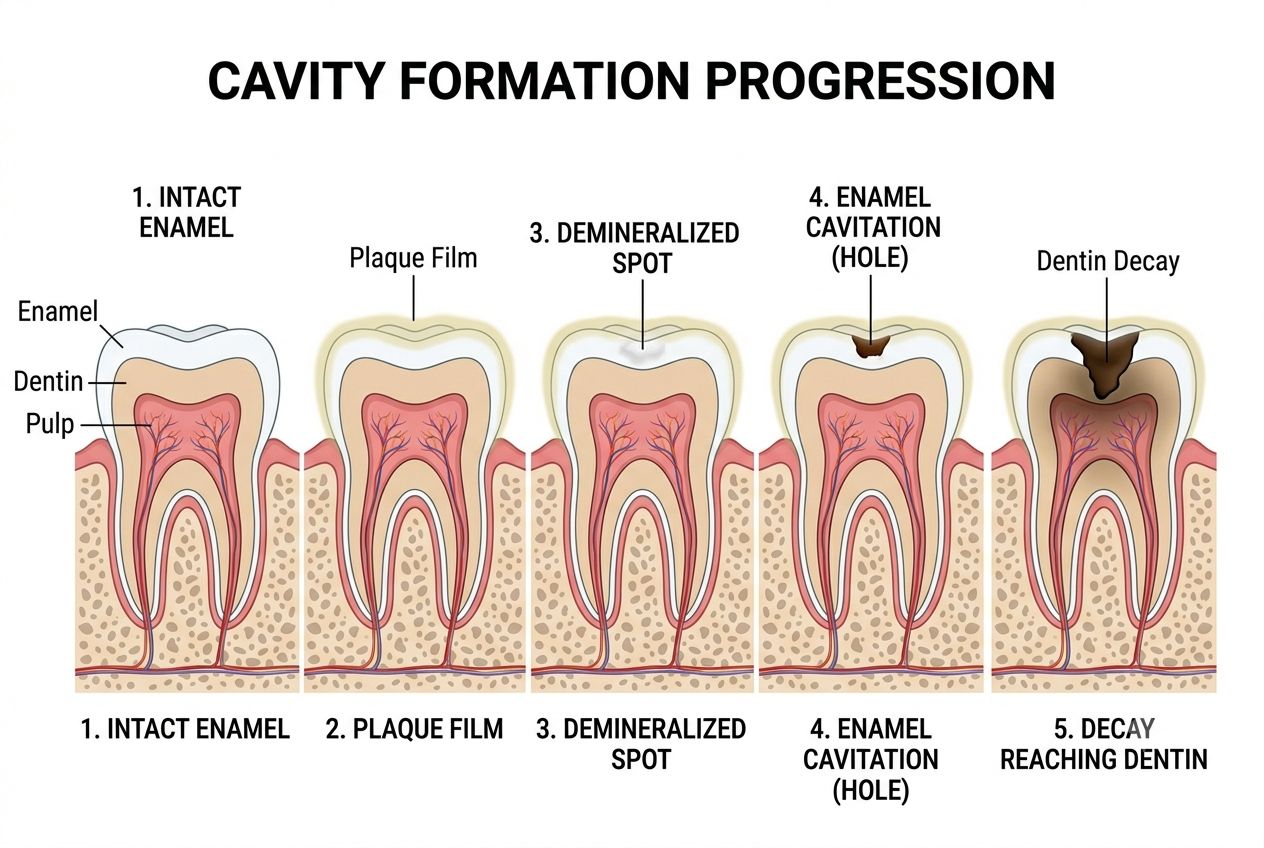
Tooth decay follows a specific, predictable sequence. Understanding each step makes it much clearer why certain habits accelerate decay and why certain preventive measures work.
PLAQUE FORMS
Bacteria, food particles, and saliva create a sticky film on the teeth — this happens to everyone, every day.
BACTERIA FEED ON SUGAR
Bacteria in plaque consume sugars and fermentable carbohydrates from the foods and drinks you consume.
ACID IS PRODUCED
The bacteria release acids as a byproduct, and that acid attacks the enamel surface within minutes of eating or drinking.
ENAMEL LOSES MINERALS
Repeated acid exposure weakens enamel and may create white or chalky spots — the first visible sign of demineralisation.
ENAMEL BECOMES POROUS
Without enough saliva, fluoride, and recovery time, the weakened spot can progress into a small hole — a true cavity.
DECAY SPREADS INWARD
Untreated decay can move into dentin and toward the nerve, causing pain or infection if it continues unaddressed.
IT'S NOT SUGAR ALONE — IT'S FREQUENCY
The key issue is not sugar alone — it is how often teeth are exposed to acid. Sipping a sugary drink throughout the day causes repeated acid attacks, while having the same amount of sugar at one time gives teeth more recovery time. That’s why snacking habits and drink frequency matter so much in cavity prevention.
Why Plaque and Acid Damage Tooth Enamel
Plaque forms on everyone’s teeth every day. It’s a sticky film of bacteria, and the problem starts when those bacteria frequently feed on sugars and refined carbohydrates. After you eat or drink anything other than water, plaque bacteria produce acid that attacks enamel within minutes. Saliva helps neutralise acid and return minerals to the tooth surface, but it needs time. When teeth are exposed to sugar or acid too often — or when saliva flow is low — enamel damage can outpace repair.
Risk Factors for Enamel Erosion and Decay
Incomplete Brushing & Flossing
Plaque that is not removed can harden into tartar, which requires professional cleaning to fully remove.
Frequent Sugar or Acid Exposure
Juice, sports drinks, soda, crackers, white bread, and dried fruit can feed decay-causing bacteria, especially consumed slowly over time.
Dry Mouth
Reduced saliva flow from medications, health conditions, or mouth breathing increases cavity risk significantly.
Deep Grooves in Molars
Some back teeth have grooves that trap bacteria and food, making them harder to clean thoroughly.
Orthodontic Appliances
Braces, wires, and aligners create more places for plaque to collect and hide from a toothbrush.
Missed Dental Cleanings
Professional cleanings remove tartar and help reduce the bacterial buildup that contributes to decay over time.
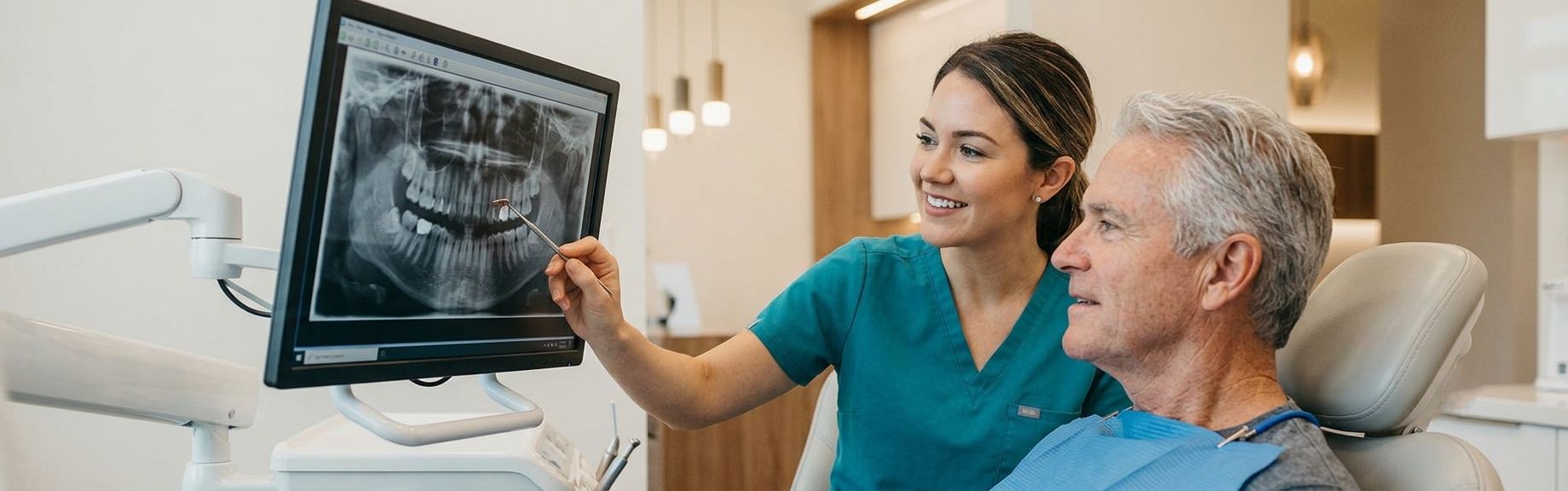
Many early cavities cause no pain at all. Discomfort often appears only after decay has moved deeper into the tooth, which is why routine exams and X-rays are important. That said, these signs are worth mentioning at your next dental visit.
A white, chalky, or matte spot on the tooth surface
A dark brown or black spot in a groove or pit
Sensitivity to sweets or cold drinks
A visible pit, rough edge, or small depression
Food getting stuck in the same spot repeatedly
Floss catching or tearing in one specific area
A bad taste from one part of the mouth
A mild, dull ache in a specific tooth
THESE SIGNS DON'T CONFIRM A CAVITY — BUT THEY CONFIRM AN EXAM
These signs do not always mean you have a cavity. Stains, sensitivity, and rough edges can have other causes. But an exam and X-rays can confirm what’s happening and help keep treatment more conservative if decay is found.
Can a Cavity Heal on Its Own?
It depends on the stage of decay. If you’re asking “can you heal a cavity?” or “will cavities heal?”, the answer depends on whether decay is still in the early enamel mineral-loss stage or whether a true hole has already formed.
- EARLY STAGE — BEFORE A HOLE FORMS
- Enamel mineral loss can sometimes be slowed, stopped, or partially reversed
- Better brushing and fluoride toothpaste can help strengthen enamel
- Reduced sugar frequency gives teeth more recovery time
- Professional fluoride treatment can accelerate remineralisation
- TRUE CAVITY — HOLE HAS FORMED
- Cannot heal or close on its own — teeth do not regrow lost structure
- Dental treatment is needed, usually a filling
- Waiting allows decay to spread deeper into the tooth
- Home remedies cannot reverse an actual structural hole
A NOTE ON OIL PULLING AND HOME REMEDIES
Searches like “oil pulling teeth cavity” often overstate what oil pulling can do. Oil pulling is sometimes promoted online for cavities, but it should not replace brushing with fluoride toothpaste, flossing, or professional dental care. It may be part of someone’s personal routine, but it cannot close a cavity that has already formed.
When a Cavity Needs a Filling
If decay has moved beyond early enamel mineral loss and created a true hole or weak spot in the tooth, a filling is usually needed. Treatment involves removing the decayed tissue, cleaning the area, and restoring the missing structure with filling material.
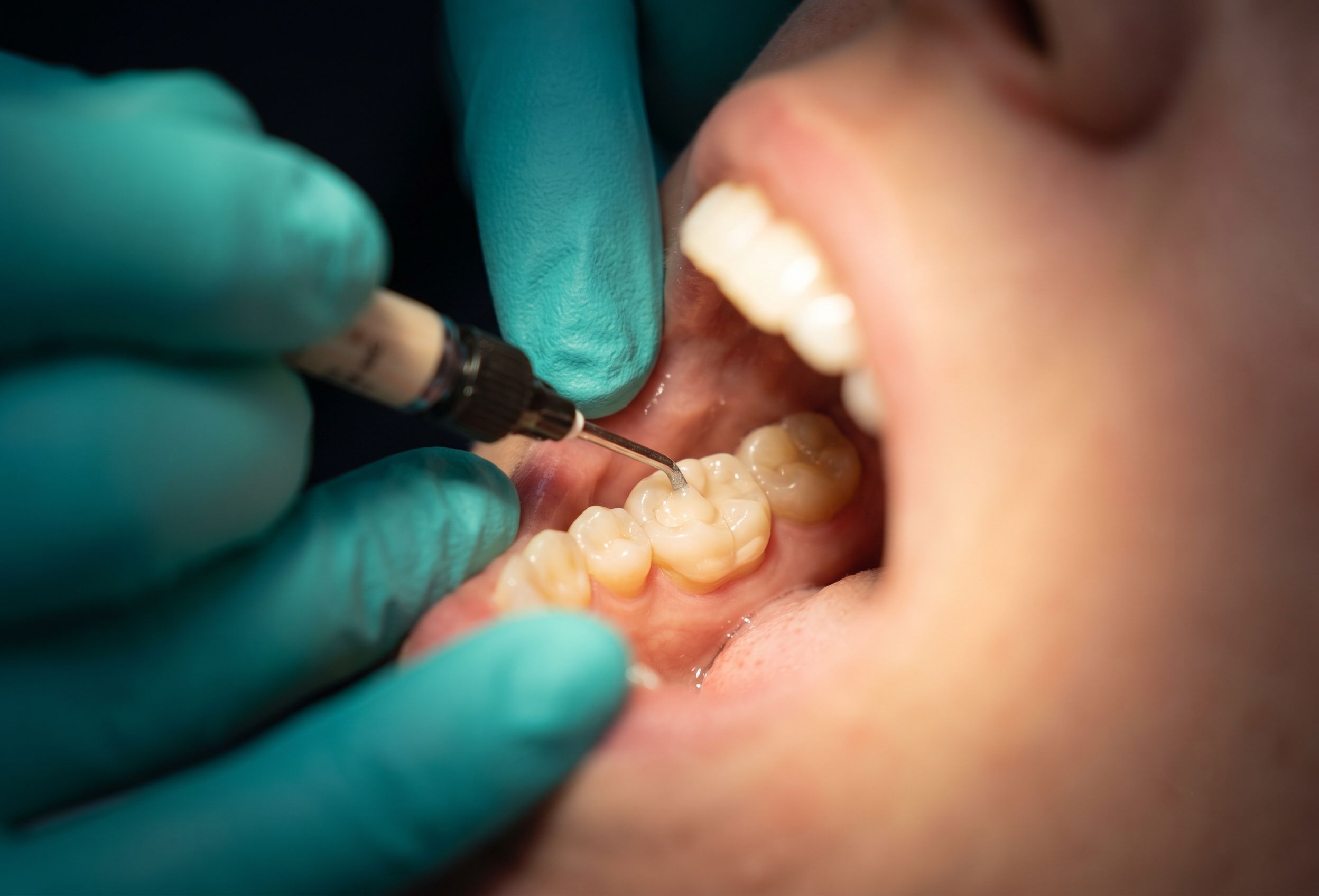
At Toothology, tooth-coloured composite fillings are commonly used for visible teeth and many back teeth. Composite bonds directly to the tooth, can preserve more healthy structure in many cases, and blends with your natural tooth colour.
WHAT HAPPENS IF A CAVITY IS LEFT UNTREATED
Decay can spread from enamel into dentin and eventually reach the tooth’s nerve. This can lead to pain, infection, and the need for more involved treatment, such as a root canal, crown, or extraction. Treating cavities early usually keeps care simpler and more conservative.
How Dental Cleanings Help Prevent Cavities
Brushing and flossing are essential, but even good home care can miss hard-to-reach areas. Over time, plaque can harden into tartar, which cannot be removed with a toothbrush or floss.
A professional dental cleaning removes tartar above and below the gumline, reduces bacteria buildup, and polishes the teeth. The visit also gives your dentist a chance to check for early decay. X-rays can reveal cavities between teeth or under old fillings before pain or visible signs appear.
HOW OFTEN SHOULD YOU GO?
For many adults, cleanings every six months are recommended. Patients with higher cavity risk, dry mouth, gum disease, braces, or frequent decay may need visits more often. Your dentist can recommend the right schedule for you specifically.
Fluoride, Sealants, and Daily Prevention
Preventing cavities works best when several habits support each other.
Fluoride Toothpaste
Fluoride strengthens enamel and helps repair early mineral loss. Brush twice daily; many dentists recommend spitting rather than rinsing immediately so fluoride can stay on teeth longer.
Professional Fluoride Treatment
In-office fluoride provides a stronger protective dose, often recommended for children, teens, patients with dry mouth, exposed roots, or higher cavity risk.
Dental Sealants
Thin protective coatings placed on the grooves of back teeth, where cavities often start. Especially helpful for children and teens; some adults may benefit too.
Daily Habits
Limit frequent sugar and acid exposure, drink water throughout the day, chew sugar-free gum when helpful, and keep up with brushing, flossing, and dental visits.
Daily Cavity Prevention Checklist
Brush twice daily with fluoride toothpaste for two minutes
Floss once daily to clean between teeth
Limit frequent sugary or acidic snacks and drinks
Drink water throughout the day
Attend routine dental exams and cleanings
Ask your dentist about fluoride or sealants if you are cavity-prone
You do not need to wait for pain before scheduling an exam. See a dentist if you notice:
SEEK PROMPT CARE IF YOU HAVE
Swelling near a tooth, severe toothache, fever with dental pain, or facial swelling — these may indicate infection and should not wait for a routine appointment.
Frequently Asked Questions
How do cavities start?
Can small cavities go away on their own?
How do I know if I have a cavity?
What happens if a cavity is left untreated?
How often should I see a dentist to prevent cavities?
Many patients benefit from checkups and cleanings about every six months. If you have frequent cavities, dry mouth, braces, gum disease, or higher risk factors, your dentist may recommend more frequent visits.
Stop Decay Early — Before Treatment Gets More Involved
Cavities form through a predictable cycle of plaque, bacteria, sugar, acid, and time. The earlier decay is found, the easier it is to stop or treat conservatively — often before pain begins. At Toothology in Williamsburg, we can check for early tooth decay with an exam and X-rays, provide professional cleaning, and recommend fluoride, sealants, or a tooth-coloured filling if needed.
Time for a Checkup?
Book a preventive dental visit at Toothology in Williamsburg — we’ll check for early decay and keep treatment as conservative as possible.
DIRECT LINE
IN THIS GUIDE
EARLY CAVITY SIGNS
Many early cavities cause no pain — that's why routine exams matter.
TOOTHOLOGY DENTAL
Williamsburg, Brooklyn, NY
Serving Greenpoint, Bushwick, Bed-Stuy & Downtown Brooklyn
718-678-3800
Emergency line available
Open Hours
Mon – Thu: 10:00 AM – 6:00 PM Friday: 10:00 AM – 2:00 PM Sunday: 10:00 AM – 2:00 PM Saturday: Closed
OUR COMMITMENT
- Board-Certified Pediatric Dentists
- Child-Friendly, Anxiety-Reducing Care
- Same-Day Emergency Slots
- Low-Radiation Digital X-Rays
- Most Major Insurance Accepted