
- Sedation & Dental Anxiety Guide · Williamsburg Brooklyn
If you’ve avoided the dentist for months — or years — you’re not alone. Sedation dentistry and comfort-focused care are designed to make that cycle easier to break.
Dental Anxiety in Brooklyn: Sedation Options for Nervous Patients
If you have avoided the dentist for months — or years — you are not alone. Dental anxiety is common among adults, and delaying care can make small dental problems feel bigger and more overwhelming over time. Sedation dentistry and comfort-focused care are designed to make that cycle easier to break.
The goal is not to force yourself through discomfort. It is to make your dental visit feel more manageable — through a calm conversation about your anxiety, your treatment needs, and which comfort options are right for you.
Why Dental Anxiety Is Common
Dental anxiety often comes from a mix of experiences and triggers — a painful past visit, the sound of dental tools, fear of injections, feeling out of control in the chair, or embarrassment about not having seen a dentist in years. It can also create an avoidance cycle: the longer care is delayed, the more likely small issues become larger ones.
Fear of Pain
Worry that treatment will hurt or that numbing will not work properly.
Dental Sounds & Sensations
Drills, suction, pressure, and vibration can feel overwhelming — especially for patients with sensory sensitivity.
Fear of Injections
Needle anxiety can make the entire appointment feel stressful before any treatment even begins.
Feeling Out of Control
Lying back while someone works inside your mouth can feel vulnerable, especially if you cannot easily communicate.
Embarrassment
Many adults worry they will be judged for delaying dental care. A judgment-free approach changes this entirely.
Past Traumatic Experiences
A painful or frightening dental visit can create long-term fear that makes future appointments feel much harder.

BREAKING THE AVOIDANCE CYCLE
Dental anxiety and delayed care often reinforce each other. The sooner care feels accessible, the smaller and simpler treatment tends to be. Breaking the cycle early almost always means less, not more, treatment needed.
Signs Sedation Dentistry Might Help
Not every nervous patient needs sedation. For some people, a calm dental team, clear explanations, and the option to pause treatment are enough. For others, sedation can make the visit feel significantly more manageable. These signs suggest sedation options may be worth discussing.
You have cancelled or delayed dental appointments because of anxiety
Sitting in the dental chair causes racing heart, sweating, or trouble breathing
You avoid dental care until a problem becomes urgent
You have a strong gag reflex that makes dental work difficult
You are afraid of dental injections
You need a longer or more complex procedure
You have had a painful or difficult dental experience in the past
You find it hard to stay relaxed or still during treatment
You feel embarrassed about the current condition of your teeth
THE FIRST STEP IS A CONVERSATION
If several of these feel familiar, sedation options are worth discussing before your next appointment. The first step is simply a conversation about your anxiety, your health history, and what may help you feel more comfortable. No pressure — no commitment.
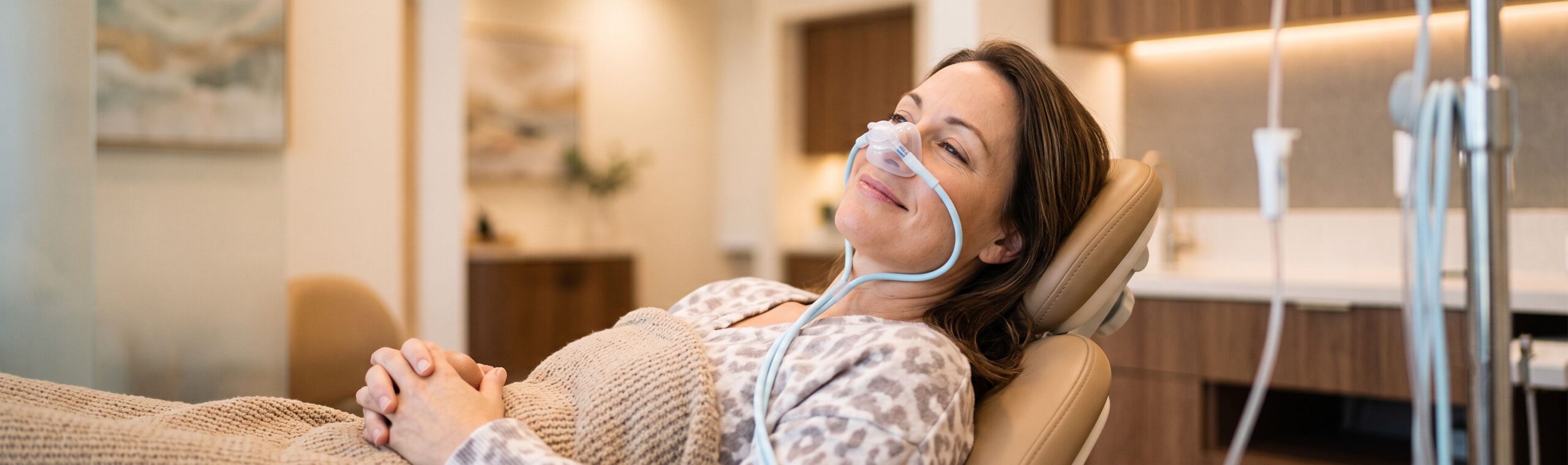
Sedation dental services vary in how they work, how they are given, and how deeply they relax the patient. Two common options for dental anxiety are nitrous oxide (laughing gas) and oral sedation.
| Factor |
😮💨
Nitrous Oxide / Laughing Gas
|
💊
Oral Sedation
|
|---|---|---|
| How It's Taken | Breathed through a small nose mask combined with oxygen throughout the visit | Medication taken by mouth before the visit — usually at home or just before the appointment |
| Awareness | Patient stays fully awake and responsive throughout treatment | Patient is usually awake but very relaxed, calm, or drowsy — may have limited memory of the visit |
| Onset & Recovery | Works quickly; wears off soon after the mask is removed — most patients feel normal within minutes | Takes longer to work; drowsiness often continues for several hours after the visit |
| May Be Helpful For | Mild to moderate anxiety, dental cleanings, simple procedures, gag reflex, or sound sensitivity | Moderate to stronger anxiety, longer visits, complex procedures, or when deeper relaxation is needed |
| Driving Afterward | Dentist confirms when it is safe to leave — often the same visit, once the gas has cleared | Requires a trusted adult escort; no driving for the rest of that day |
SEDATION DOES NOT REPLACE LOCAL ANESTHESIA
Sedation helps reduce anxiety — but it does not numb the tooth. For many treatments, local anesthesia is still needed. The difference is that sedation can help patients feel calmer before and during that step, making the entire appointment easier to manage.
Is Sedation Dentistry Safe?
Sedation can be safe and well-tolerated for many patients when it is properly planned, the right option is selected, and the patient is monitored during treatment. It is not one-size-fits-all. Your dentist will review your health history before recommending any sedation option.
COMPLEX CASES
For patients with complex medical needs or deeper sedation requirements, referral to a specially trained sedation provider may be recommended. The goal is always the safest, most appropriate option for each individual patient.
What Treatments Can Be Done With Sedation?
Sedation is not only for major dental procedures. Many anxious patients use sedation support for routine or longer visits that feel difficult to tolerate without it.
ASK BEFORE YOUR APPOINTMENT
Sedation availability depends on the procedure, your health history, and the dental team’s recommendation. It is best to mention your interest in sedation when booking rather than on the day — so the team can plan properly.
How to Prepare for a Sedation Dental Visit
Preparing for a sedation appointment may involve more steps than a regular dental visit. Always follow the specific instructions from your dental team, since requirements vary by sedation type and procedure.

Comfort-Focused Dental Care in Williamsburg
Sedation can help anxious patients feel more comfortable — but the way the dental team communicates is just as important. Comfort-focused dental care is not only about medication. It is about creating a calmer, more predictable experience from the moment you arrive.
Clear Stop Signal
Agree on a signal — like raising your hand — so the dentist or hygienist pauses whenever you need a moment.
Step-by-Step Explanations
Knowing what will happen before it happens reduces uncertainty and makes each step feel more manageable.
Patient-Paced Treatment
Breaks can be built into the appointment instead of forcing you to push through discomfort.
Judgment-Free Communication
Patients who have avoided care for years are welcomed without criticism. Your situation will be met with understanding, not judgment.
Adequate Numbing Time
Allowing local anesthesia to fully work before continuing treatment makes the experience more comfortable and reassuring.
Honest Cost Conversations
Financial concerns are a common barrier to care. Clear, honest estimates help you plan without surprise.
Frequently Asked Questions
What sedation options are available for dental anxiety?
Is oral sedation safe for dental work?
Can I get laughing gas for a dental cleaning?
What is the best sedation for nervous dental patients?
Do sedation dentists treat dental phobia?
Yes. Sedation dentists often help patients with dental phobia using sedation, clear communication, slower pacing, and judgment-free care. Severe dental phobia may also benefit from support outside the dental office, and your dentist can help point you in the right direction.
“For many patients with dental anxiety, the hardest step is not the appointment — it is making the first call after months or years of avoidance.”
The First Call Is the Hardest Part
Toothology in Williamsburg can help you start with a calm, judgment-free conversation about your concerns, health history, treatment needs, and sedation options. The goal is to make your dental visit feel more manageable — not rushed or pressured.
NERVOUS ABOUT THE DENTIST?
Start with a calm, judgment-free conversation at Toothology in Williamsburg. We’ll discuss your concerns and sedation options before any commitment.
DIRECT LINE
IN THIS GUIDE
SIGNS SEDATION MAY HELP YOU
The first step is a conversation — not a commitment.
TOOTHOLOGY DENTAL
Williamsburg, Brooklyn, NY
Serving Greenpoint, Bushwick, Bed-Stuy & Downtown Brooklyn
718-678-3800
Emergency line available
Open Hours
Mon – Thu: 10:00 AM – 6:00 PM Friday: 10:00 AM – 2:00 PM Sunday: 10:00 AM – 2:00 PM Saturday: Closed
OUR COMMITMENT
- Board-Certified Pediatric Dentists
- Child-Friendly, Anxiety-Reducing Care
- Same-Day Emergency Slots
- Low-Radiation Digital X-Rays
- Most Major Insurance Accepted