
- TMJ & Night Guard Guide · Williamsburg Brooklyn
Waking up with headaches, jaw soreness, or facial tension that eases through the day? Your teeth and jaw may be part of the pattern — and a dental evaluation can help.
TMJ & Jaw Pain: Could Your Headaches Be Caused by Teeth Grinding?
If you wake up with headaches, jaw soreness, or facial tension that eases as the morning goes on, your teeth and jaw may be part of the problem. A TMJ headache can feel like pressure near the temples, jaw, ears, or face — and may be worse after a night of clenching or grinding without you even realising it is happening.
Many people with recurring morning headaches never consider a dental connection. But when headaches happen alongside jaw pain, tooth wear, stiffness, or clenching, a dental evaluation can help determine whether your jaw, bite, or teeth grinding is contributing to the pattern.
TMJ HEADACHES ARE ONE POSSIBLE CAUSE — NOT THE ONLY ONE
TMJ headaches and bruxism are one possible cause of recurring headaches. Tension headaches, migraines, and medical conditions can cause similar symptoms. However, when jaw symptoms are part of the pattern, dentistry is worth including in the conversation.
What Is TMJ and How Does It Cause Headaches?
THE TEMPOROMANDIBULAR JOINT (TMJ)
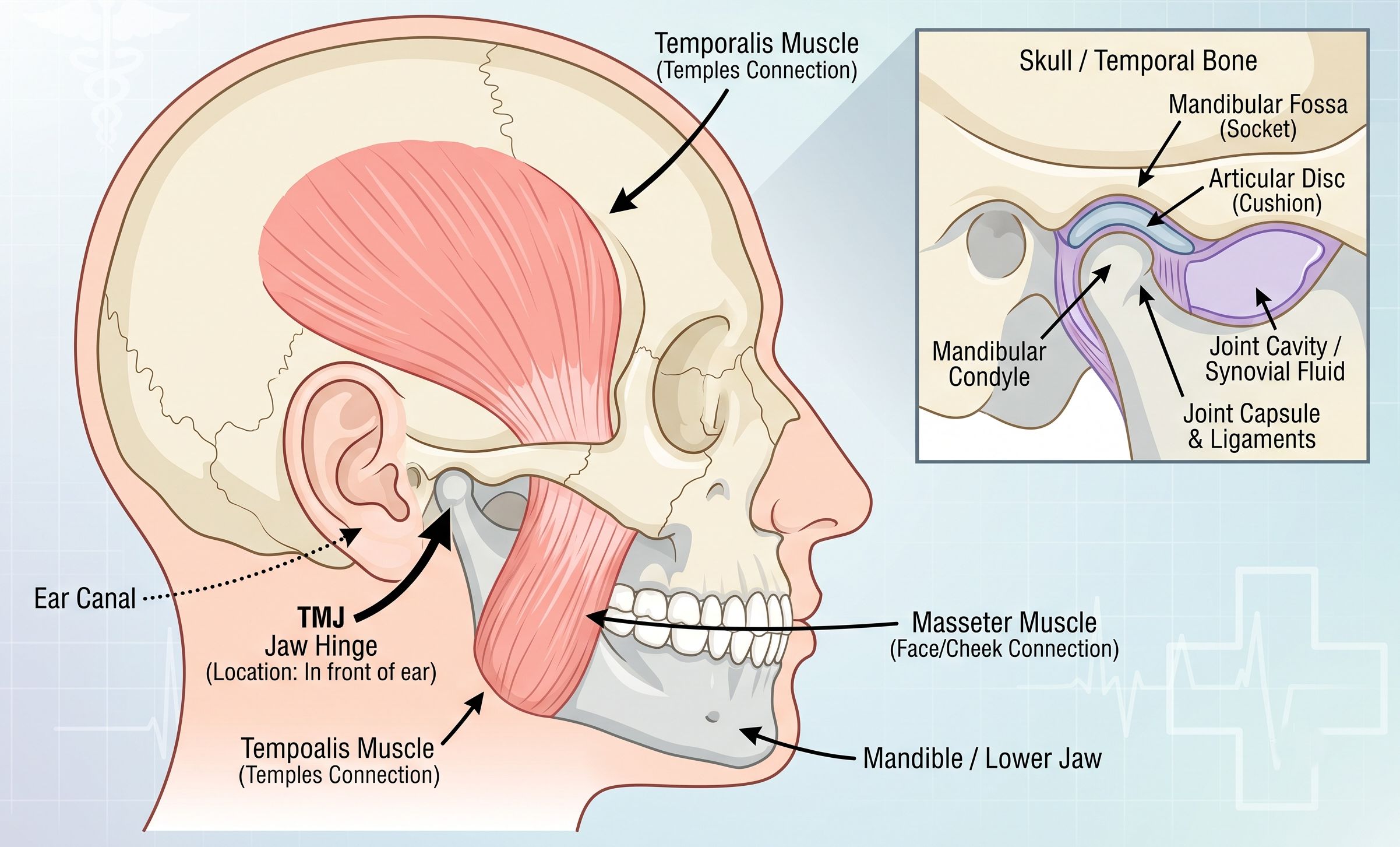
The TMJ is the hinge joint that connects the lower jaw to the skull, just in front of each ear. You use it every time you chew, speak, yawn, or swallow. When this joint or the surrounding jaw muscles become irritated, strained, or overworked, it can lead to temporomandibular disorders (TMD) — what most people call “TMJ problems.” Pain from the jaw area can spread toward the temples, ears, face, neck, or head.
TMJ-related headaches can occur when jaw muscles are under repeated stress from clenching or grinding — especially during sleep. The jaw muscles are among the most powerful in the body, and when they work while they are supposed to be resting, the resulting muscle fatigue and tension can radiate outward toward the head, temples, and ears.
When headaches occur with jaw soreness, chewing discomfort, facial tension, or pain near the ears, TMJ and teeth grinding may be worth evaluating.
Can Teeth Grinding Really Cause Jaw Pain and Headaches?
Bruxism — the clinical term for teeth grinding and jaw clenching — can contribute to jaw pain, facial tension, and headaches. When you clench or grind during sleep, the jaw muscles work far harder than they should while the rest of the body is resting. Over time, this leaves the chewing muscles tired, sore, and tight.
Many people do not know they grind their teeth because sleep bruxism happens unconsciously. In some cases, a dentist may notice signs — such as tooth wear, jaw tenderness, or bite-related stress — before the patient has any idea grinding is occurring.
Signs Bruxism May Be Affecting You
Dull headaches near the temples, especially in the morning
Jaw soreness, stiffness, or tight feeling when waking
Facial muscle tension that eases during the day
Tooth sensitivity, especially after waking
Pain or pressure near the ears or jaw joint
Teeth that look flat, worn, shorter, or chipped
Difficulty opening the jaw wide in the morning
A sleep partner who has heard grinding sounds at night
TMJ headaches, tension headaches, and migraines can overlap, which is why self-diagnosis is not always reliable. A clear pattern and a proper evaluation help identify what is driving the symptoms.

| Headache Type | Common Pattern | Clues to Look For | Next Step |
|---|---|---|---|
| TMJ-Related | Pain or pressure near the temples, jaw, ears, face, or neck — often worse in the morning | Jaw pain or soreness, clenching or grinding, chewing discomfort, clicking, morning stiffness, or visible tooth wear | Dental / TMJ evaluation |
| Tension Headache | Band-like pressure around the head or forehead | Neck and shoulder tension, stress, general muscle tightness — not specifically jaw-related | Medical or dental evaluation depending on symptoms |
| Migraine | Moderate to severe pain, often one-sided or throbbing | Light or sound sensitivity, nausea, visual disturbances, worsens with activity | Medical evaluation |
WHEN TO SEEK URGENT MEDICAL CARE — NOT A DENTAL VISIT
- A sudden, severe headache unlike any previous headache
- Headache with fever or stiff neck
- Headache after significant head trauma
- Confusion, weakness, vision changes, or fainting
- Headache with chest pain or shortness of breath
THESE SYMPTOMS ARE NOT TYPICAL TMJ SIGNS
The warning signs above suggest medical causes that need urgent evaluation. They should not be approached as a dental issue. If you have any of these symptoms, seek medical care promptly.
Signs Your Headache Is Coming From Your Jaw
These signs do not confirm a TMJ diagnosis on their own — but if several apply together, a dental evaluation is a reasonable next step to see whether the jaw, bite, or teeth grinding is contributing.
How Dentists Diagnose TMJ-Related Headaches
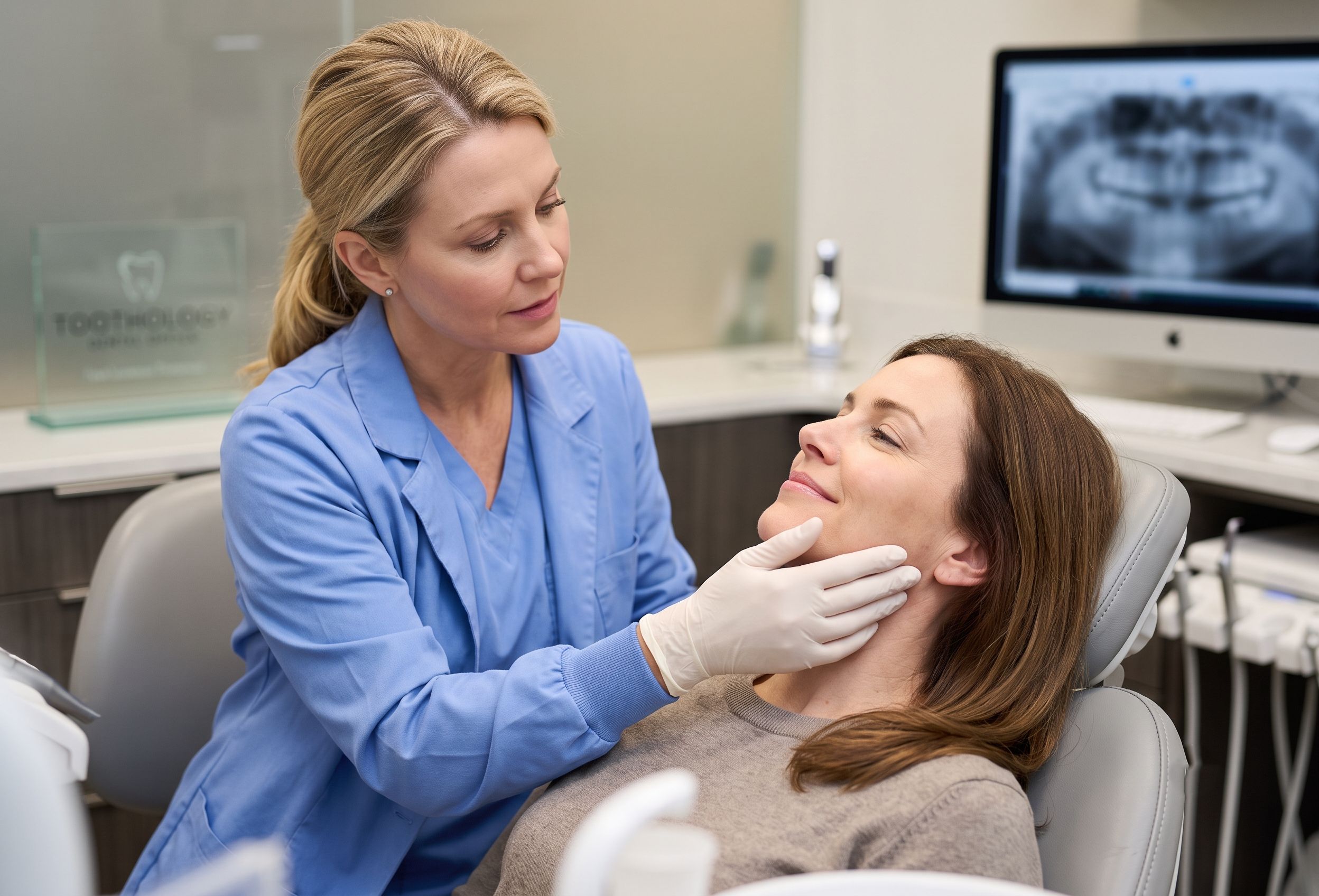
A dental evaluation for suspected TMJ headaches or bruxism is usually simple and non-invasive. The goal is to find out whether the teeth, bite, jaw joint, or jaw muscles may be contributing to symptoms.
Symptom history: Headache timing, morning jaw pain, soreness, sleep habits, stress levels, and any grinding sounds reported by a partner
Teeth: Signs of grinding — flat surfaces, chipped edges, cracks, worn enamel, or unusual sensitivity
Bite: How the teeth come together and whether bite pressure may be straining the jaw joint or muscles
Jaw muscles: Tenderness in the muscles around the jaw, temples, and face when palpated
Jaw movement: Pain, stiffness, limited range of motion, or deviation when opening and closing
TMJ sounds: Clicking, popping, or grinding in the jaw joint during movement
X-rays if needed: To check dental, bite, and jaw-related factors when indicated
THE EXAM DOESN'T AUTOMATICALLY MEAN TREATMENT
The dentist will explain what was found and whether a custom night guard, jaw-pain management, or referral to another provider is appropriate. If dental factors are not the main cause, Toothology can help guide you toward the right next step.
Treatment Options: From Night Guards to Jaw Pain Management
TMJ headache relief usually starts with identifying whether the jaw muscles, bite, or teeth grinding are contributing. The goal is management, protection, and symptom relief — not a guaranteed cure. Treatment depends on your symptoms, tooth wear, bite, and jaw function.
Custom Night Guard / Occlusal Splint
A removable appliance worn during sleep to help protect teeth from grinding and reduce stress on the jaw muscles and joints overnight.
Bite Evaluation
Checking whether uneven bite pressure or an imbalanced occlusion is contributing to jaw strain and muscle overload.
Reducing Jaw Stress
Avoiding very hard or chewy foods, limiting wide jaw opening, applying warm compresses to tight muscles, and learning to release daytime clenching.
Physical Therapy Referral
Helpful for patients with limited jaw movement, chronic muscle pain, or more complex TMJ symptoms that need structured rehabilitation.
Restorative Care
Needed when long-term grinding has caused significant tooth wear, chips, or damage that requires restoration to protect the teeth.
Sleep Evaluation
Recommended in some cases where sleep-related breathing issues may be contributing to bruxism or overnight jaw clenching.
TREATMENT IS INDIVIDUALISED — NOT ONE-SIZE-FITS-ALL
A dentist can explain which options fit your situation after evaluating your teeth, jaw muscles, bite, and symptoms. Some patients benefit from a single intervention like a night guard; others may need a combination approach or referral to a specialist.
Frequently Asked Questions
Can TMJ cause headaches?
What is a TMJ headache?
Can grinding teeth cause jaw pain?
How do I get relief from a TMJ headache?
Does TMJ cause headaches every morning?
TMJ-related strain can contribute to recurring morning headaches — especially when jaw clenching or grinding happens during sleep. If morning headaches consistently improve through the day and occur alongside jaw soreness, facial tension, or tooth wear, a TMJ and bite evaluation is a reasonable next step.
Morning Headaches Are Worth Investigating — Including From the Dental Side
Recurring morning headaches with jaw soreness, facial tension, or signs of teeth grinding should not be ignored. If your teeth, bite, or jaw muscles are contributing, a dental evaluation may identify a practical path for managing symptoms and protecting your teeth from further wear. Contact Toothology in Williamsburg, Brooklyn to schedule a TMJ, jaw pain, and night guard evaluation.
MORNING HEADACHES & JAW PAIN?
Book a TMJ and night guard evaluation at Toothology in Williamsburg — a bite exam, symptom review, and clear treatment discussion.
DIRECT LINE
IN THIS GUIDE
SIGNS TO MENTION AT YOUR VISIT
Several signs together warrant a dental evaluation — even if you've never been told you grind.
TOOTHOLOGY DENTAL
Williamsburg, Brooklyn, NY
Serving Greenpoint, Bushwick, Bed-Stuy & Downtown Brooklyn
718-678-3800
Emergency line available
Open Hours
Mon – Thu: 10:00 AM – 6:00 PM Friday: 10:00 AM – 2:00 PM Sunday: 10:00 AM – 2:00 PM Saturday: Closed
OUR COMMITMENT
- Board-Certified Pediatric Dentists
- Child-Friendly, Anxiety-Reducing Care
- Same-Day Emergency Slots
- Low-Radiation Digital X-Rays
- Most Major Insurance Accepted