
- Invisalign Aftercare Guide · Williamsburg Brooklyn
If your Invisalign retainer breaks, cracks, stops fitting, or goes missing — don’t wait weeks to deal with it. Here’s exactly what to do, what not to do, and why early action matters.
Broken Retainer After Invisalign: What to Do Before Your Teeth Shift
If your Invisalign retainer breaks, cracks, stops fitting properly, or goes missing, do not wait weeks to deal with it. An Invisalign retainer is what holds your teeth in their corrected position after active aligner treatment ends — and gaps in retainer wear are one of the most common reasons teeth begin shifting after Invisalign.
The good news: a broken retainer caught early is a straightforward problem. You have finished treatment, your teeth are in the position you worked for, and a replacement retainer is generally a much simpler process than the treatment that got you there. The goal is to act quickly so the window before any shifting begins stays as small as possible.
Why Retainers Matter After Invisalign
Invisalign moves teeth into a planned position using a series of clear aligners. But once treatment ends, the teeth are not permanently locked in place. The bone and ligament tissue around them still need time to fully stabilise.
Without consistent retainer wear, teeth can gradually shift back toward their previous positions — a process called orthodontic relapse. An Invisalign retainer, clear retainer, or fixed wire retainer holds the teeth in their corrected position after treatment. Consistent wear is essential because it protects the results you worked hard to achieve.
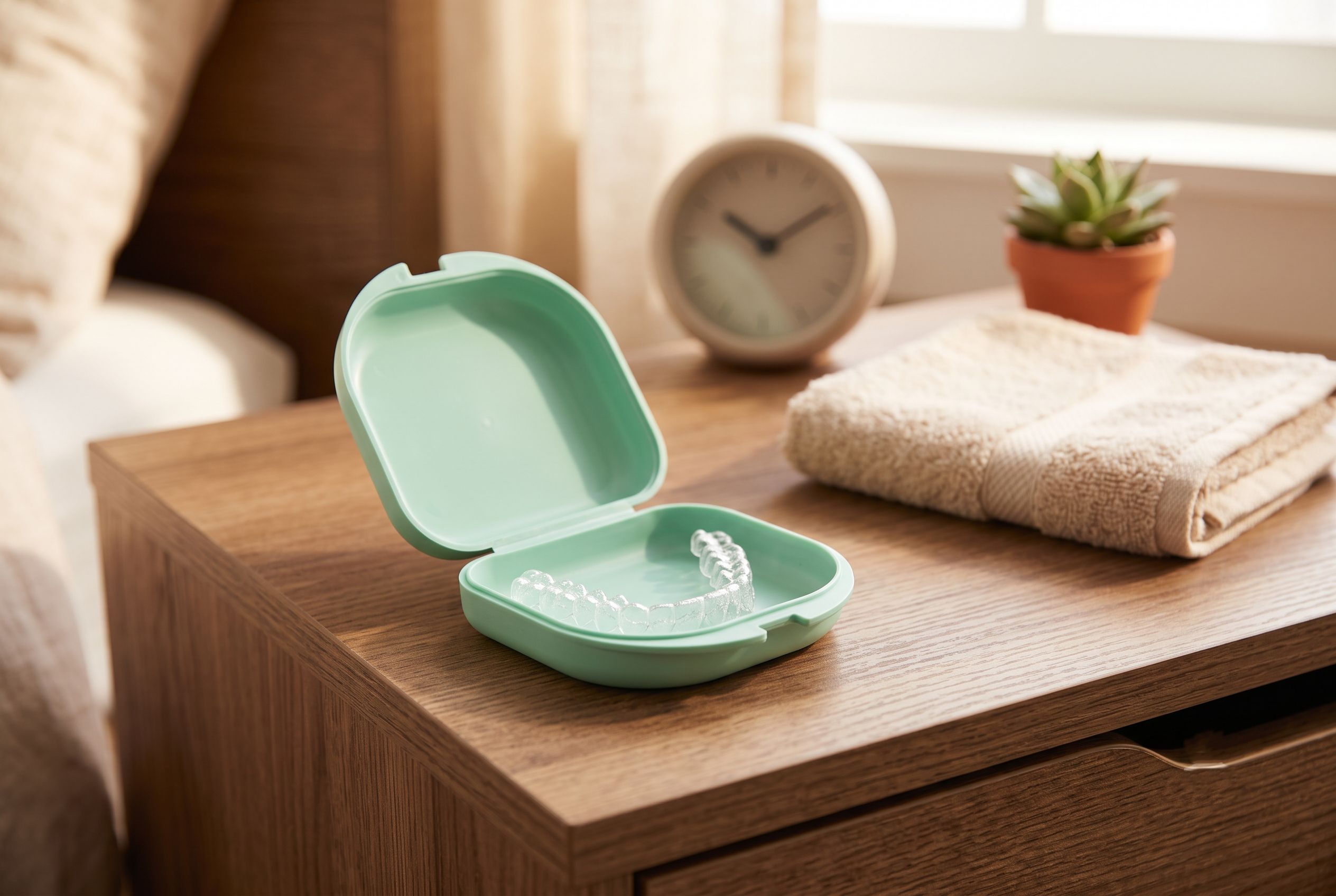
WHEN ARE TEETH MOST VULNERABLE?
Teeth are most vulnerable to movement immediately after active aligner treatment, when the supporting bone and ligament tissue are still stabilising. This is also why a broken or missing retainer needs to be dealt with quickly — the earlier the replacement is started, the smaller the window for unwanted movement.
What to Do If Your Retainer Breaks
A broken retainer should be handled quickly, but you do not need to panic. Follow these steps to protect your results and keep your options open.
Stop wearing it if it is damaged. Do not wear a retainer with sharp edges, cracks, broken pieces, or a poor fit — it will not retain effectively and may irritate your mouth.
Save the pieces. Bring the retainer and any fragments to your appointment — the dentist may be able to assess whether it can be replaced from existing records.
Do not attempt to repair it at home. Glue, tape, heat, or household fixes will not restore proper retention and may make the retainer unsafe or unfit to use.
Call the dental office promptly. The sooner a replacement is started, the lower the risk of unwanted tooth movement in the meantime.
Ask before using an old or backup retainer. A backup retainer may not match your current tooth position — check with your dentist before wearing it.
What Not to Do With a Broken Retainer
- DO NOT DO THIS
- Use glue, tape, or household adhesives on the retainer
- Apply heat or attempt to reshape it yourself
- Wear it if it has sharp edges or broken pieces
- Force it in if it feels tight or painful
- Order a generic retainer without a current scan or dental guidance
- Assume it is okay because it "sort of" fits
- DO THIS INSTEAD
- Stop wearing the damaged retainer immediately
- Save the retainer and all fragments
- Contact your dentist promptly for guidance
- Describe the damage when you call so they can prioritise
- Ask specifically whether any backup retainer may be safe to use temporarily
- Schedule a replacement evaluation as soon as possible
Yes — but the timeline varies significantly between patients. Some notice changes quickly, especially soon after Invisalign treatment, while others experience more gradual movement over time. There is no universal answer.
Teeth shifting after Invisalign is a risk, not a certainty. Acting early gives your dentist more options to help protect your results.
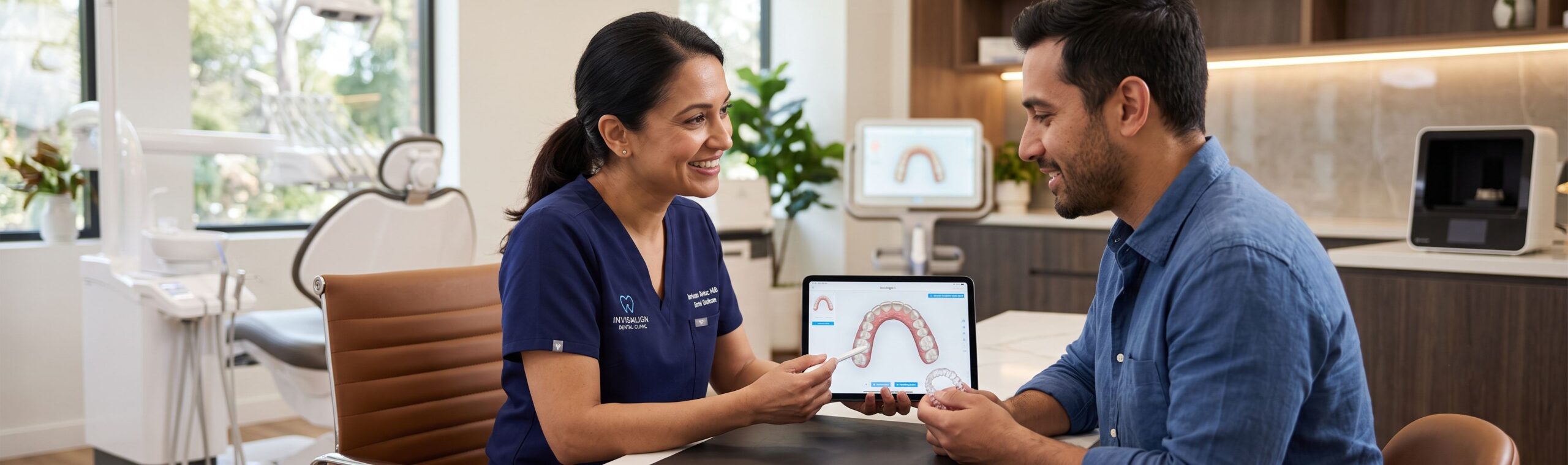
IF YOU MISSED A FEW NIGHTS — DON'T PANIC, BUT DON'T DELAY
Missing a few nights of retainer wear is not catastrophic, but it is not something to keep postponing. The window between “no noticeable shift” and “visible movement” is unpredictable. Contact your dentist promptly rather than continuing to wait and see.
Should You Wear an Old or Backup Retainer?
Maybe — but only if your dentist confirms it is safe to do so. An old or backup retainer may not match your current tooth position, especially if it was made earlier in your Invisalign treatment or has not been used in a while.
Fits comfortably and seats fully: May be usable temporarily — but confirm with your dental office first before relying on it.
Feels slightly tight but not painful: Proceed with caution and call the office. Mild tightness may mean minor movement — your dentist should confirm whether it is safe to wear.
Feels tight, painful, or does not seat fully: Do not force it in. Tightness may mean your teeth have shifted — wearing it could cause harm. Schedule an evaluation promptly.
Cracked, warped, yellowed, or worn out: Do not rely on it for proper retention, even temporarily. It will not hold the teeth effectively.
How Dentists Replace Invisalign Retainers
The replacement process is usually straightforward — especially if your teeth have not shifted much since your last scan or impression.
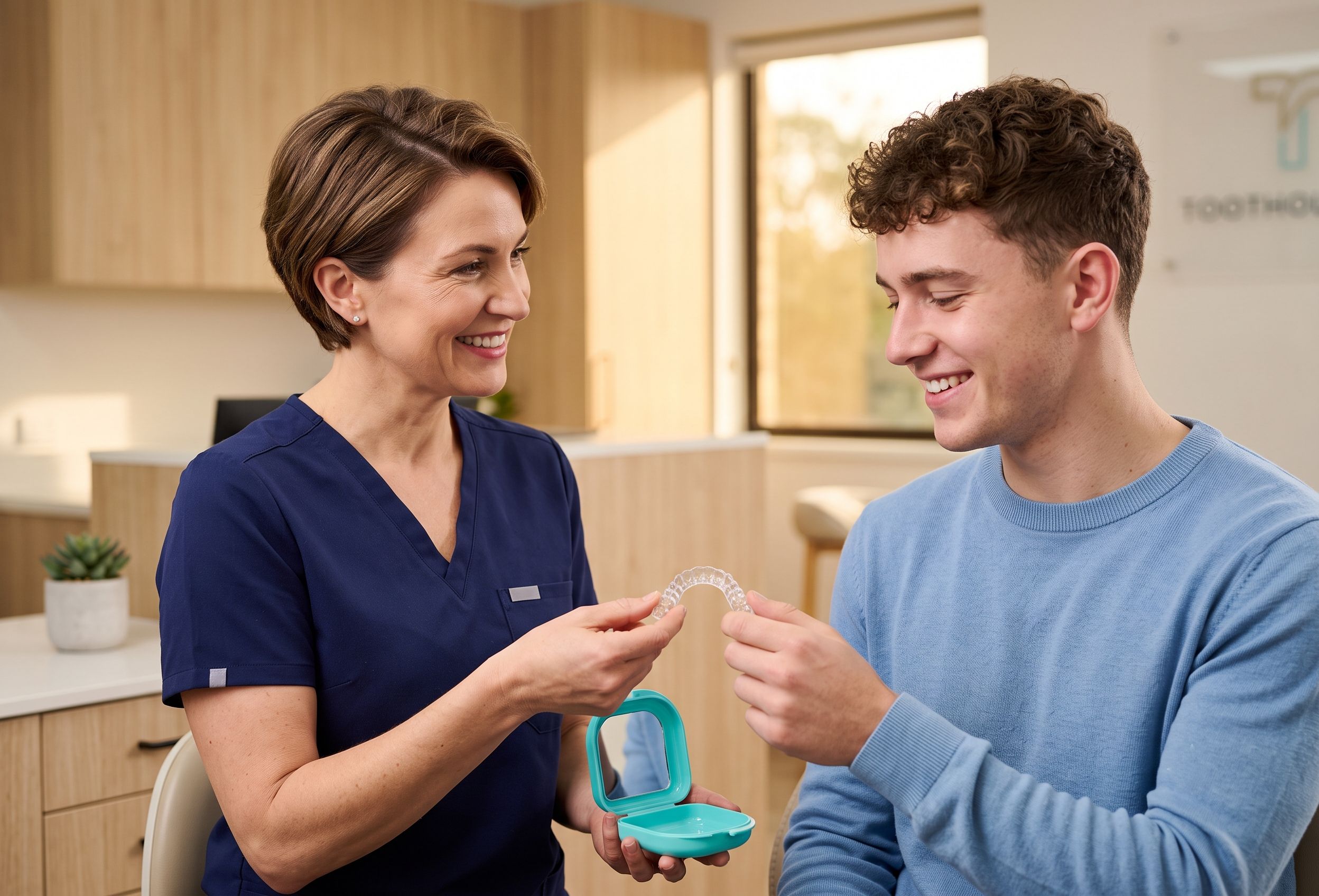
CHECK CURRENT TOOTH POSITION
The dentist looks for any tooth movement since your Invisalign treatment ended. This determines whether existing records are still accurate.
REVIEW EXISTING RECORDS
If a recent digital scan is on file and still accurate for your current position, it may be used to make the replacement retainer without taking a new one.
NEW SCAN IF NEEDED
If teeth have shifted or records are outdated, a new digital scan or impression is taken so the replacement retainer fits your actual tooth position accurately.
REPLACEMENT RETAINER MADE
The new clear retainer is ordered or fabricated to fit your current tooth position — not an estimate of where they should be.
DISCUSS NEXT STEPS IF TEETH HAVE SHIFTED
If movement has already occurred, the dentist may recommend a short course of aligner correction before making the new retainer, to restore your achieved position.
Broken Retainer vs. Poor-Fitting Retainer
Not every retainer problem means the retainer is physically broken. A retainer may be cracked, warped, worn out — or it may no longer fit because the teeth themselves have shifted.
| Factor |
💔
Broken / Cracked Retainer
|
😬
Poor-Fitting Retainer
|
|---|---|---|
| What It May Look Like | Visible crack, broken piece, sharp edge, warped shape, or distorted plastic | Feels tight, loose, or uncomfortable; does not fully seat; different from usual fit |
| Common Cause | Dropping it, chewing on it, heat damage, poor storage, or normal wear over time | Tooth movement, heat warping, wear, or orthodontic relapse since the retainer was last used |
| Should You Keep Wearing It? | No — do not wear if cracked, sharp, warped, or unable to seat correctly | Do not force it in if it feels tight or painful — it may indicate your teeth have shifted |
| Next Step | Bring it to the dentist and discuss replacement options as soon as possible | Schedule an evaluation to check tooth position and fit before deciding on next steps |
WHEN IN DOUBT, CALL FIRST
If you are unsure whether your retainer is broken or just loose-fitting, call the office and describe what you are seeing and feeling. A quick conversation can clarify whether to come in urgently, schedule soon, or safely use a backup in the meantime.
How to Protect Your Invisalign Results Long-Term
Good Invisalign aftercare and retainer habits help prevent damage before it happens and keep your results intact for the long term.
Frequently Asked Questions
What should I do if my Invisalign retainer breaks?
How fast can teeth shift without a retainer?
Can I wear a cracked retainer?
Do I need a new scan for a replacement retainer?
How long do Invisalign retainers last?
It varies depending on wear habits, cleaning, heat exposure, and storage. Retainers can wear out faster if you grind your teeth, clean them harshly, or do not store them properly. Replace your retainer if it becomes cracked, warped, loose, thin, uncomfortable, or no longer fits correctly — do not wait for a complete failure.
Act Early — Your Treatment Results Are Worth Protecting
An Invisalign retainer holds the position your teeth worked hard to reach. If it breaks, cracks, is lost, or stops fitting well, your teeth may begin to shift. The sooner you schedule a retainer evaluation, the easier it usually is to replace the retainer and return to consistent wear. Waiting weeks or months can make the problem more complicated to correct. Contact Toothology in Williamsburg to schedule an Invisalign or retainer-related evaluation.
BROKEN OR LOST RETAINER?
Book a retainer evaluation at Toothology in Williamsburg — we’ll check your tooth position and discuss replacement options before any shifting progresses.
DIRECT LINE
IN THIS GUIDE
NEVER DO THESE
Call the office — a quick conversation clarifies the right next step.
TOOTHOLOGY DENTAL
Williamsburg, Brooklyn, NY
Serving Greenpoint, Bushwick, Bed-Stuy & Downtown Brooklyn
718-678-3800
Emergency line available
Open Hours
Mon – Thu: 10:00 AM – 6:00 PM Friday: 10:00 AM – 2:00 PM Sunday: 10:00 AM – 2:00 PM Saturday: Closed
OUR COMMITMENT
- Board-Certified Pediatric Dentists
- Child-Friendly, Anxiety-Reducing Care
- Same-Day Emergency Slots
- Low-Radiation Digital X-Rays
- Most Major Insurance Accepted