
Dental Bonding in Williamsburg, Brooklyn
Chipped a front tooth? Bothered by a small gap or an uneven edge? Tooth bonding uses tooth-colored composite resin to repair and reshape teeth — usually in a single visit, and usually without removing any healthy enamel.
- Often one visit
- Minimal or no enamel removal
- Shade-matched to your teeth

What Dental Bonding Can Fix
These are the concerns our patients most often ask about and where bonding tends to be the simplest effective answer.
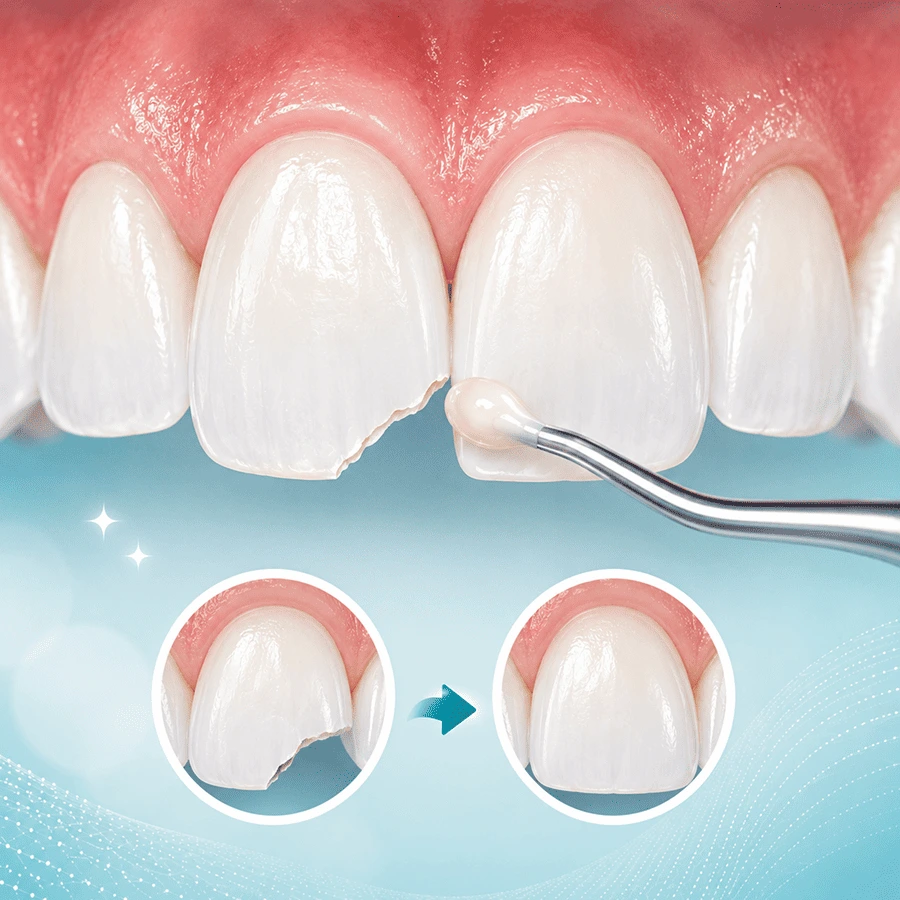
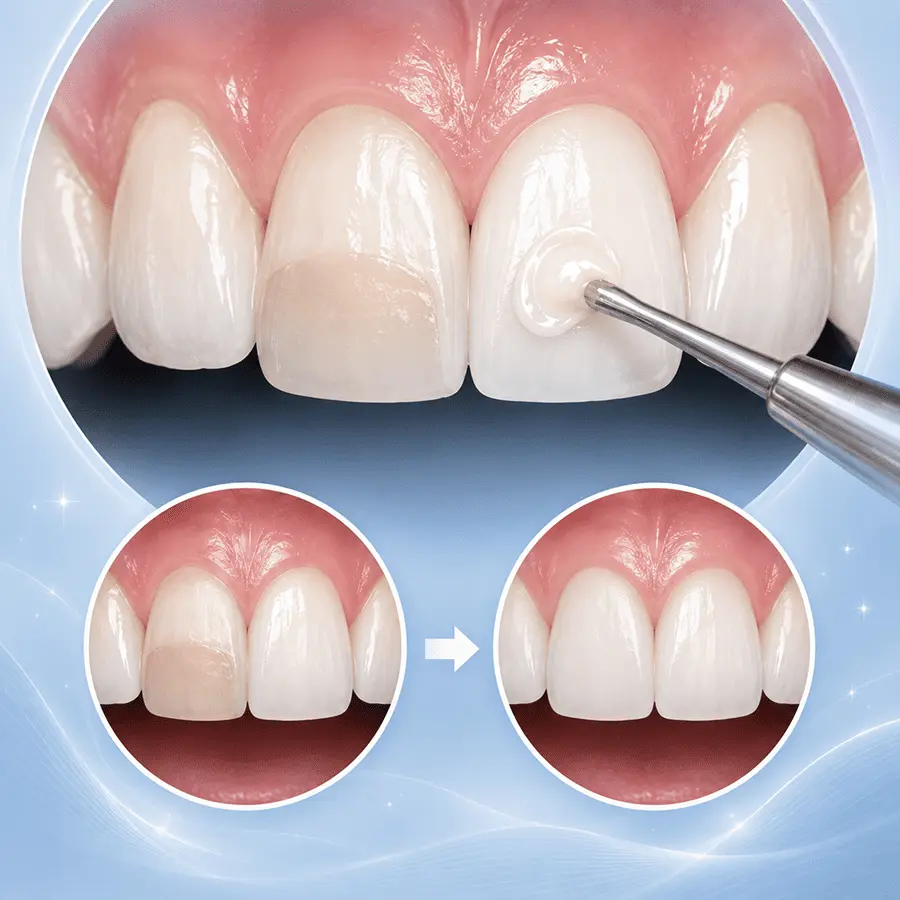
Chipped Tooth Repair
The most common use of bonding. A chipped or fractured front tooth can usually be rebuilt in one visit, with the composite shade-matched so the repair blends into the surrounding tooth.
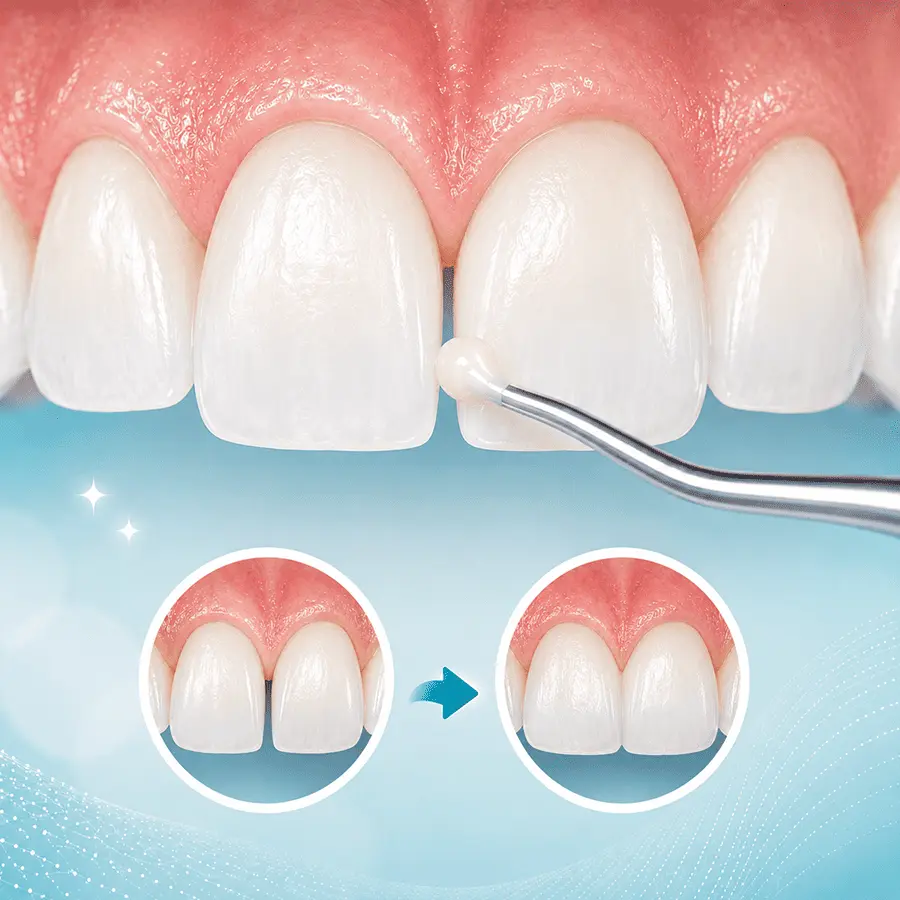
Closing Small Gaps
Bonding can close small to moderate spacing between front teeth without braces or aligners — provided the gums are healthy and the bite is stable.
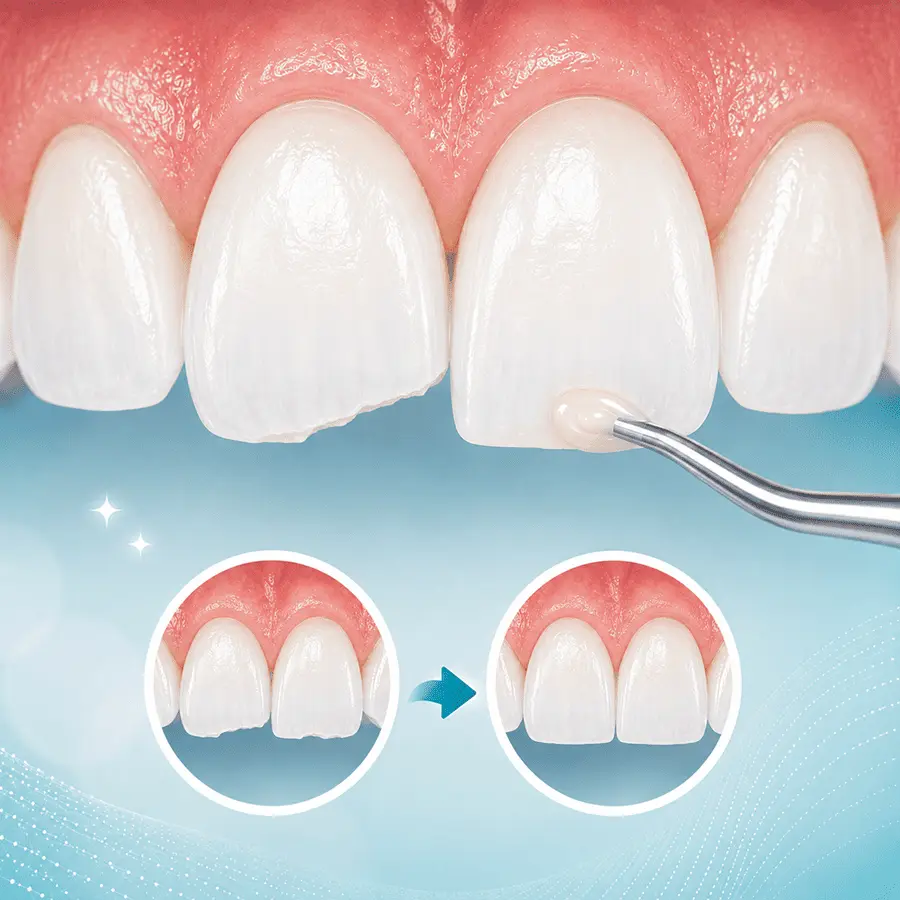
Evening Out Uneven Teeth
If one tooth sits shorter than its neighbor or an edge has worn unevenly, composite can be added to restore symmetry across the smile line.
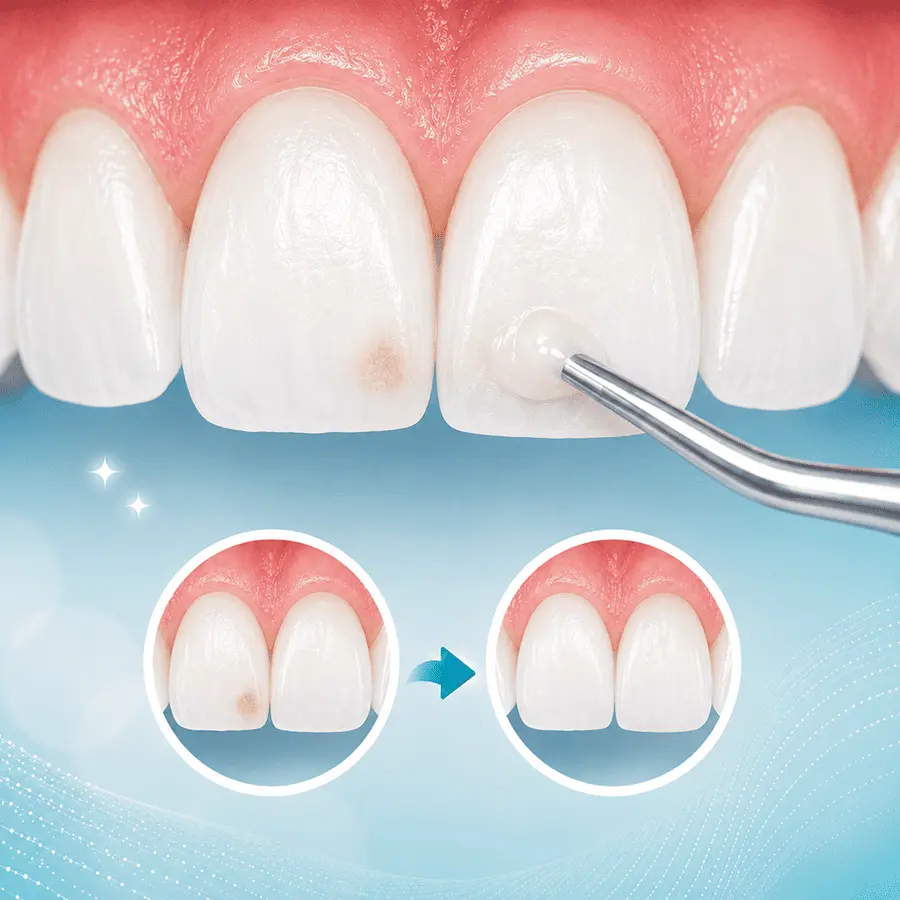
Covering Discolored Spots
Isolated stains or white spots that do not respond to whitening can be masked with composite, since whitening gel cannot correct localized discoloration.
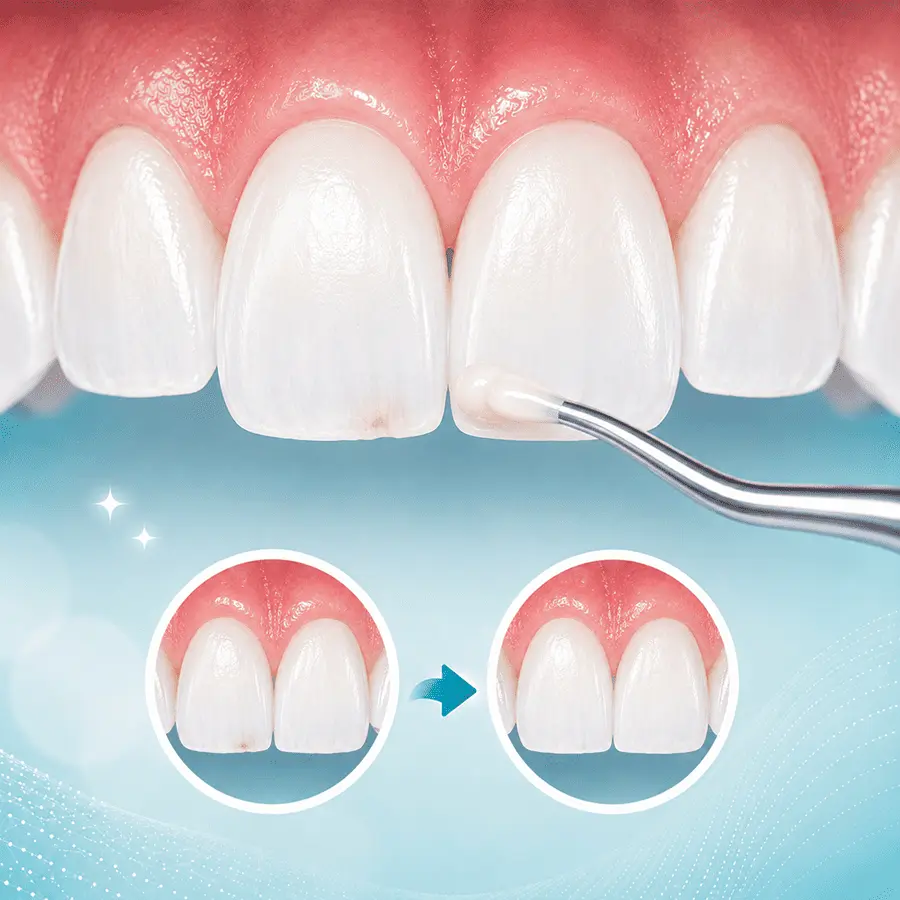
Replacing Mismatched Restorations
Older fillings and repairs that have discolored or no longer match the surrounding tooth can be replaced with fresh, shade-matched composite.
A Conservative First Step
For patients who want to improve their smile but are not ready to commit to veneers, bonding offers a reversible starting point with a much shorter treatment time.
Two Ways We Use Bonding
The material and technique are the same. What differs is how much of the tooth is being reshaped.
Cosmetic Bonding
Used to repair a specific area of a tooth, a chipped corner, a worn edge, a fracture line, a small gap, or a discolored patch.
The composite is applied only where it is needed and blended into the existing tooth. This is the faster and more conservative of the two approaches, and it is what most single-tooth cases involve.
Composite Veneers
Composite is layered across the entire front surface of one or more teeth to change their shape, length, and color together — the same visual goal as porcelain veneers, achieved with directly applied resin instead.
This suits patients who want a broader change across several teeth but prefer a more affordable, more conservative, and faster alternative to porcelain.
Not sure which you need?
That is what the consultation is for. We will look at the teeth in question, talk through what you want to change, and tell you honestly whether bonding is the right tool or whether veneers or aligners would serve you better.
The Bonding Process, Step by Step
Most patients are surprised how straightforward this appointment is.

01
Consultation and examination
We examine the teeth and gums to confirm bonding is appropriate, and talk through exactly what you want changed. If decay or gum disease is present, that gets treated first.
02
Shade selection
Composite is matched to the natural shade of your surrounding teeth. This step is what determines whether the finished result looks like a repair or looks like your tooth.
03
Tooth preparation
The surface is lightly conditioned so the composite bonds securely. In most cases this involves no drilling and no removal of healthy enamel.
04
Composite sculpting
The resin is applied in thin layers and shaped by hand, building up the contour of the tooth. Each layer is hardened with a curing light before the next is added.
05
Polishing
The bonded surface is polished until it matches the light-reflecting texture of natural enamel — the detail that makes the difference between noticeable and invisible.
06
Final adjustments
We check how the tooth meets your bite and refine as needed, so the bonding feels natural when you talk and chew rather than something you are aware of.
Is Dental Bonding Right for You?
Bonding is genuinely excellent for some situations and genuinely the wrong choice for others. Here is where the line sits.
Bonding tends to work well if
- You have minor cosmetic concerns — chips, small gaps, uneven edges, isolated discoloration
- Your teeth and gums are healthy
- You maintain good oral hygiene
- You want a conservative option that preserves natural enamel
- You would prefer to finish in one visit
- You want a more affordable entry point into cosmetic treatment
- You would like to keep the option of veneers open for later
Bonding is usually not the answer if
- The tooth has a large fracture that needs a crown
- There is untreated decay — this must be addressed first
- You have active gum disease
- You grind or clench heavily and are not willing to wear a night guard
- You have significant bite or occlusion problems driving the issue
- The gap is large enough that orthodontics would give a better result
- You are expecting porcelain-level longevity and stain resistance
On grinding
Heavy clenching does not automatically rule out bonding — but it will wear faster if left unprotected. If you grind at night, a custom night guard makes a substantial difference to how long the work lasts, and we will raise it if we see the signs.
On larger gaps
If spacing is being caused by an underlying bite issue, closing it with composite treats the appearance rather than the cause. In those cases we will usually recommend Invisalign first.
What Does Dental Bonding Cost?
Bonding is generally one of the more affordable cosmetic treatments, largely because there is no laboratory work involved — the composite is placed in a single appointment rather than being custom-fabricated off-site.
The cost for any individual case depends on a few things: how many teeth are being treated, how much of each tooth is being reshaped, and whether anything needs addressing first such as decay or gum treatment. A single small chip repair and a full set of composite veneers sit at very different ends of that range.
We give you an estimate before any treatment begins, so you know your expected out-of-pocket cost in advance rather than after the fact.
- Insurance
Bonding done for cosmetic reasons is generally not covered by dental insurance. Bonding used to restore a tooth after damage or decay is sometimes covered as a restorative procedure — coverage depends on your specific plan, deductible, and remaining annual benefits. Our team can verify your benefits before treatment.
- Financing
For larger cases, we work with CareCredit and Cherry. Promotional financing options may be available for qualified applicants.
Learn More About Dental Bonding
What Is Dental Bonding?
Dental bonding — also called composite bonding, tooth bonding, or cosmetic bonding — is a treatment where a tooth-colored composite resin is applied directly to your tooth, sculpted into shape by hand, then hardened with a curing light and polished.
What makes bonding distinctive among cosmetic treatments is that it happens entirely in the chair. There is no laboratory involved, no impressions sent away, and no temporary restoration to wear while you wait. In most cases the whole treatment is finished in one appointment, and because little or no natural enamel needs to be removed, it is one of the most conservative cosmetic options available.
That conservatism matters more than it might sound. Treatments that remove enamel cannot be undone — the enamel does not grow back. Bonding, in most cases, keeps your options open: if you later decide you want porcelain veneers, you generally still can.
How Long Does Bonding Last, and How Do You Look After It?
Bonding is durable but not indestructible. How long it lasts depends much more on circumstances than on the material itself: where on the tooth it sits, how much biting force passes through it, whether you grind at night, and how you care for it day to day.
Bonding on the edge of a front tooth that takes light contact behaves very differently from bonding in an area under heavy chewing load. Grinding is the single biggest factor that shortens its life — which is why we raise night guards when we see the signs.
Getting the most out of it
The everyday care is unremarkable: brush twice daily, floss, and keep your regular hygiene visits. Beyond that, two habits matter more than people expect. Avoid using your teeth as tools — fingernails, pens, ice, and packaging are what chip composite. And if you grind, wear the night guard.
Composite is more porous than porcelain, so bonding can gradually pick up staining from coffee, tea, red wine, and tobacco. The good news is that this is usually fixable without starting over: professional polishing at a hygiene visit refreshes the surface, and if a section does chip or wear, composite can generally be patched or added to rather than replaced wholesale.
One sequencing note on whitening
Whitening gel lightens natural enamel but has no effect on composite resin. If you are considering both, whiten first, then bond — that way the composite is matched to your brightened shade. Whitening after bonding is already in place tends to leave the bonded areas looking darker than everything around them. Our team will flag this at your consultation if it applies to you.
FAQs About Dental Bonding
Clear answers to help you decide whether dental bonding is the right next step for your smile.
How long does dental bonding last?
Dental bonding typically lasts several years before it needs polishing, repair, or replacement, though the exact lifespan depends heavily on where the bonding is placed, how much biting force it takes, and home care. Bonding on a front tooth edge that takes light contact generally lasts longer than bonding in an area under heavy chewing pressure. Grinding or clenching shortens the lifespan considerably unless a night guard is worn.
What is the difference between dental bonding and porcelain veneers?
Bonding uses tooth-colored composite resin sculpted directly onto the tooth in a single visit, usually with little or no enamel removal. Porcelain veneers are custom-made shells fabricated in a lab and bonded to the tooth over two to three visits, typically requiring some enamel preparation.
Bonding is more conservative and faster; veneers are more stain-resistant and longer-lasting. Bonding is generally the better choice for small chips, minor gaps, and single-tooth repairs, while veneers suit larger changes in shape and color across several teeth.
Does dental bonding hurt?
Most bonding appointments are comfortable and often need no anesthetic at all, because little or no enamel is removed. If the area being treated is close to the nerve or if decay needs to be removed first, local anesthetic is used. Our team will discuss comfort options with you before treatment begins.
Does composite bonding stain over time?
Composite resin is more porous than porcelain, so bonding can pick up staining over the years from coffee, tea, red wine, and tobacco. Regular hygiene visits and professional polishing help keep bonding looking fresh. If staining becomes noticeable, bonding can usually be polished or refreshed rather than fully replaced.
Can you whiten teeth that have composite bonding?
Whitening gel lightens natural tooth enamel but does not change the shade of composite resin. If you are considering both, whitening should be completed first, then the bonding shade matched to your newly brightened teeth. Whitening after bonding is already placed can leave the bonded areas looking darker than the surrounding teeth. Learn more about professional whitening.
Is dental bonding permanent?
Bonding is not permanent in the way a crown or veneer is. It is a repairable, replaceable restoration that may need refreshing over time. In most cases little or no natural enamel is removed, which means bonding is one of the more reversible cosmetic treatments available — an advantage if you may want to move to veneers later.
How many visits does dental bonding take?
Most bonding treatment is completed in a single visit, because the composite resin is shaped directly on the tooth rather than being made in a laboratory. More extensive cases treating several teeth may be scheduled across two appointments for comfort and precision.
How do I care for dental bonding?
Care for bonded teeth the same way you care for natural teeth: brush twice daily, floss, and keep regular dental visits. Avoid biting fingernails, pens, ice, or packaging, since composite can chip under sharp force. If you grind your teeth at night, a custom night guard will significantly extend how long the bonding lasts.
Book a Bonding Consultation
Bring the tooth you are unhappy with and we will tell you honestly what bonding can and cannot do for it — including whether a different treatment would serve you better. You will get a written estimate before anything begins.