
- Post-Braces Cosmetic Guide · Williamsburg Brooklyn
Chalky white patches where your brackets used to be are common after braces — and a cosmetic dentist may be able to help. The right treatment depends on the cause, depth, and whether active enamel changes are present.
White Spots on Teeth After Braces: Can a Cosmetic Dentist Fix Them?
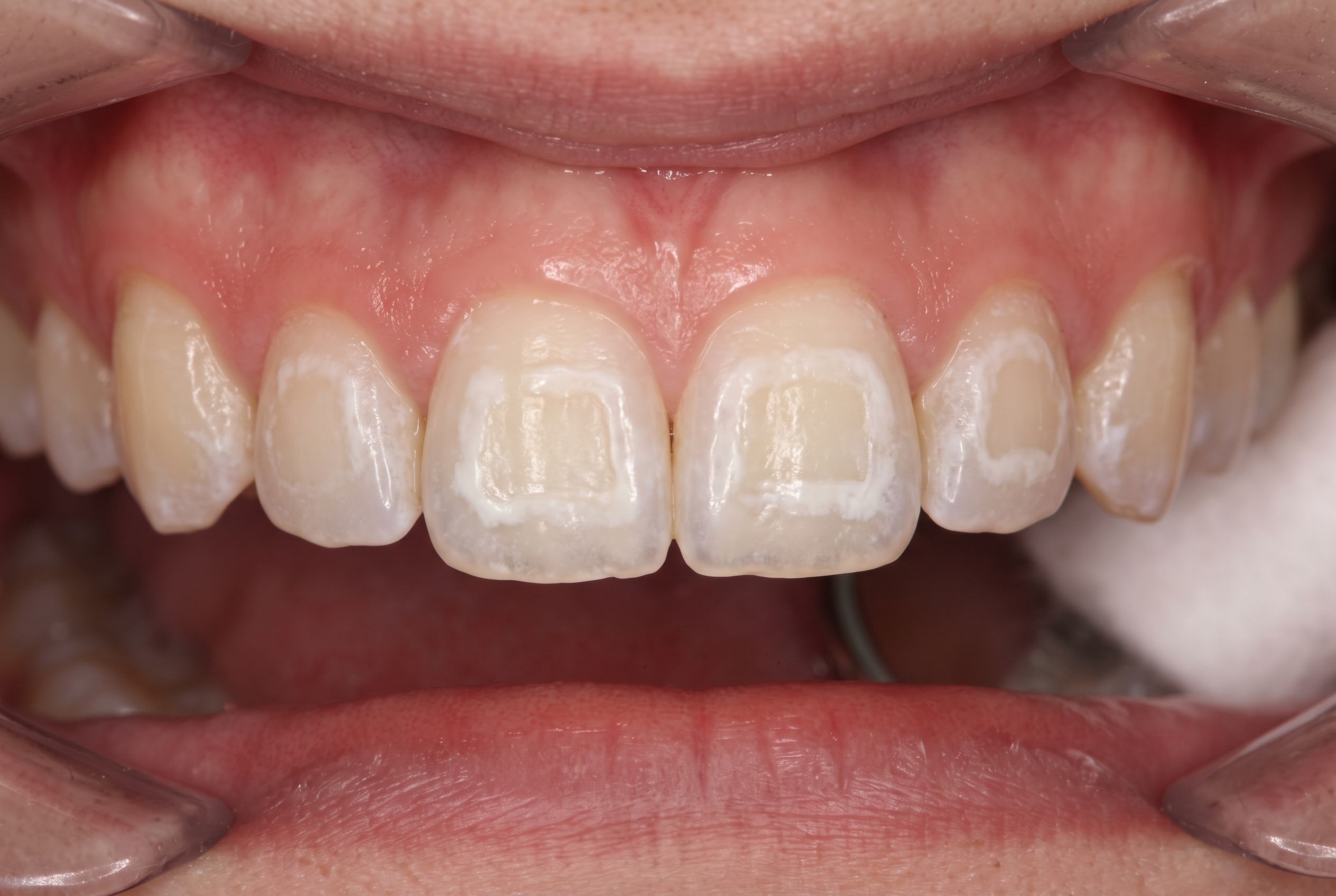
After braces come off, some patients notice chalky white patches where the brackets used to be. These white spots on teeth after braces are a common post-orthodontic concern — and they can affect how the final smile looks after all that work. A cosmetic dentist may be able to improve them, but the right treatment depends on the cause, depth, and whether active enamel changes are present. The best first step is a post-braces dental evaluation.
White Spots After Braces at a Glance
Common Cause
Enamel demineralization around brackets or hard-to-clean areas — where plaque and acids weakened the tooth surface during treatment.
Not Always Permanent
Mild surface spots may fade over time. Deeper or more established lesions often need professional treatment to improve.
Whitening Is Usually Not the Fix
Whitening changes the overall tooth shade but does not repair enamel mineral loss — and may temporarily make spots more noticeable.
Possible Treatments
Fluoride, remineralization support, microabrasion, resin infiltration, or dental bonding — depending on cause, depth, and activity of the spots.
Why White Spots Appear After Braces
Most white spots after braces are caused by enamel demineralization. This happens when plaque bacteria produce acids that pull minerals from the tooth surface, leaving enamel weak, chalky, or opaque in appearance.
Brackets and attachments can make certain areas harder to clean. If plaque stays around the bracket edges or near the gumline for extended periods, white spot lesions can develop in those areas. Braces themselves do not directly cause the spots — the issue is plaque and acid exposure around the appliances, which is why some patients finish orthodontic treatment without any spots while others notice visible changes.
White spots most commonly appear around bracket edges, along the gumline, or on the front teeth where they are most visible.
Are White Spots After Braces Early Cavities?
They can be, but not always. White spots often represent early enamel demineralization — where minerals have been lost from the tooth surface but a cavity has not yet fully formed. This stage is sometimes described as a “pre-cavity.” With the right care, some early white spot lesions may be stabilised or improved. Ignored, some can progress into actual cavities over time.
NOT EVERY WHITE PATCH IS FROM BRACES
Some white spots have nothing to do with orthodontic treatment. A post-braces dental exam helps determine whether the spots are active demineralization, cosmetic discoloration, a pre-existing enamel condition, or early decay that needs restorative care.
Other Possible Causes of White Spots
FLUOROSIS
White streaks or patches that developed while the teeth were forming due to fluoride exposure. These are pre-existing and unrelated to braces.
ENAMEL HYPOPLASIA
Areas where enamel formed thin, weak, or uneven during tooth development — often present before braces and more visible after treatment.
OLD TRAUMA
A previous tooth injury that caused localised enamel changes — which may become more noticeable after teeth are straightened and more visible.
Will White Spots Fade on Their Own?
Mild, very superficial white spots may become less noticeable over time — especially once brushing becomes easier after brackets are removed. Better oral hygiene, enamel rehydration, fluoride, and remineralization support may help very surface-level spots blend in more naturally.
However, many established white spot lesions do not fully disappear on their own. The enamel may become stronger, but the chalky or opaque appearance can remain. For mild spots, monitoring over a few months with excellent home care is reasonable. If spots are deeper, very noticeable, or unchanged after consistent oral hygiene, a professional dental evaluation is the right next step.
Why Whitening Usually Does Not Fix White Spots

Whitening is often the first thing patients think of — but it is usually not the best starting point for white spots after braces. Whitening lightens the overall tooth shade. Since white spot lesions are already lighter than the surrounding enamel, whitening may temporarily make the contrast more noticeable rather than reducing it.
Whitening also does not repair enamel mineral loss, stop active demineralization, or close an early cavity. For this reason, white spots should be evaluated before starting any whitening treatment. A dentist can confirm whether the spots are cosmetic, active demineralization, or early decay — and then recommend the right sequence of care.
EVALUATE BEFORE YOU WHITEN
Whitening may be appropriate as part of a broader cosmetic plan — but after the white spots are properly assessed and treated, not before. Starting with a dental evaluation protects the enamel and leads to a better cosmetic result.
Remineralization and Minimally Invasive Options
For many white spots after braces, the first goal is to strengthen and stabilise the enamel before choosing a cosmetic treatment. The right option depends on the depth, size, activity, and location of the spots.
Fluoride Varnish
Professionally applied fluoride may support remineralisation and help protect enamel from further acid damage. Often recommended as a first-line supportive step for active or significant spots.
Prescription Fluoride Toothpaste
A dentist may recommend stronger fluoride toothpaste for active or significant demineralisation, used at home as part of a daily preventive routine.
Calcium-Phosphate Remineralisation Support
Products such as MI Paste may support remineralisation in selected cases. These should only be used if specifically recommended by the dentist — not self-prescribed.
Microabrasion
A minimally invasive option that removes a very thin outer enamel layer to improve shallow surface discoloration. Suitable only for very superficial spots.
Resin Infiltration
A treatment that may help mask some non-cavitated white spot lesions with minimal tooth preparation. Confirm availability and suitability at your consultation — not every spot qualifies.
ACTIVE LESIONS FIRST, THEN COSMETIC TREATMENT
Active demineralization lesions may need preventive and remineralisation care first, before any cosmetic treatment is considered. Stable cosmetic spots with no active enamel changes may be suitable for minimally invasive or cosmetic treatment sooner.
When Dental Bonding Is the Right Answer
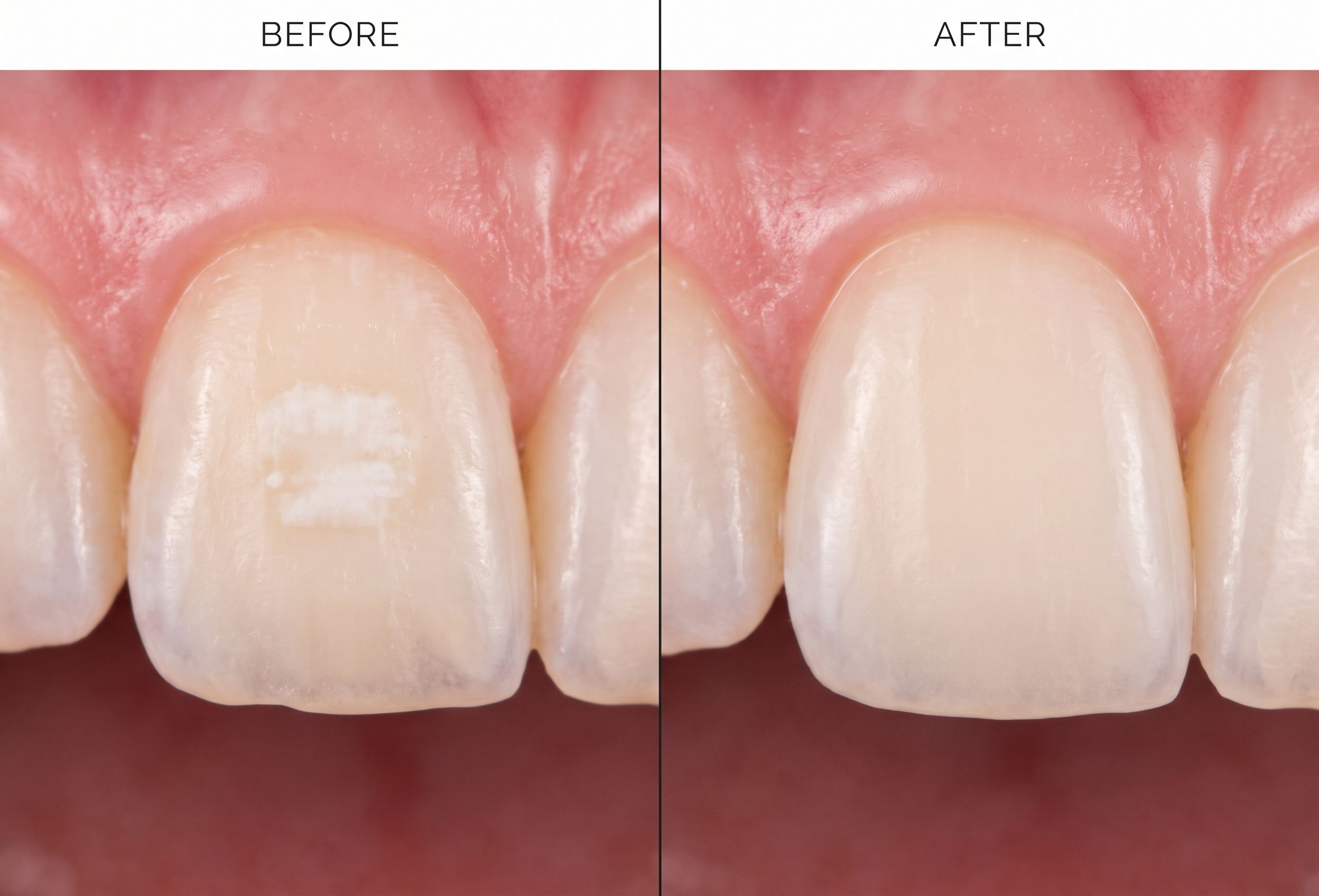
Dental bonding may be a good option when white spots are persistent, clearly visible, or affecting confidence after braces. Bonding uses tooth-coloured composite resin to cover the affected area and blend it with the surrounding enamel — and it is usually a quick, minimally invasive treatment.
- BONDING MAY BE SUITABLE WHEN
- The enamel is stable and no longer actively demineralising
- There is no active decay in the affected area
- The surrounding tooth structure is healthy
- The white spots are mainly a cosmetic concern
- BONDING SHOULD WAIT WHEN
- Active decay is present — the cavity must be treated first
- Enamel is still demineralising — stabilise first
- The affected area has structural problems that bonding alone cannot address
- Remineralisation has not yet been attempted for active lesions
BONDING IS NOT PERMANENT
Composite resin can stain, chip, or need touch-ups over time. Your dentist can explain how to care for the bonded area and when future maintenance may be needed. It remains one of the most accessible and practical cosmetic options for post-braces white spots when the tooth is healthy.
Treatment Options at a Glance
The right treatment depends on the depth, activity, size, and cause of the white spots — not a one-size-fits-all approach. A cosmetic dental evaluation at Toothology helps determine which option fits your specific enamel and cosmetic goals.
| Option | Best Fit | How To Think About It |
|---|---|---|
| Improved Hygiene + Fluoride | Mild or early demineralisation with superficial spots | Helps support enamel and reduce further mineral loss — a good first step |
| Remineralisation Support | Selected cases recommended by the dentist | May support enamel repair; not suitable for every patient — dentist-directed only |
| Microabrasion | Very shallow surface discoloration only | Removes a very thin outer enamel layer — not suitable for deeper lesions |
| Resin Infiltration | Some non-cavitated white spot lesions | May reduce visibility with minimal preparation — confirm availability and suitability |
| Dental Bonding | Persistent or more visible cosmetic spots on stable teeth | Covers the area with tooth-coloured resin; may need maintenance over time |
| Restorative Care | Active decay or structural damage present | Needed when cosmetic treatment alone is not clinically appropriate |
How to Prevent White Spots During Orthodontic Treatment
Most white spots during braces can be prevented with consistent daily care. Prevention is considerably easier than treatment after braces — but if white spots have already appeared, a dental evaluation is the right next step.
Frequently Asked Questions
Why do I have white spots on my teeth after braces?
Can white spots on teeth after braces be removed?
Does teeth whitening fix white spots after braces?
Can bonding cover white spots on teeth?
Are white spots after braces cavities?
They can be early enamel demineralization before a cavity fully forms — sometimes described as a pre-cavity stage. Not every white spot is active decay, but some can progress if not addressed. A dental exam is the best first step to determine activity and the right treatment.
The Best Fix Depends on What Your Enamel Actually Needs
White spots on teeth after braces can often be improved — but the right solution depends on the cause, depth, and activity of the spots. Treatment may include remineralisation support, fluoride, microabrasion, resin infiltration, or dental bonding. If you have finished braces and noticed white spots, Toothology in Williamsburg can evaluate your enamel and explain which preventive and cosmetic options are appropriate for your situation.
WHITE SPOTS AFTER BRACES?
Book a post-orthodontic cosmetic consultation at Toothology in Williamsburg — we’ll identify the cause and explain your treatment options before recommending anything.
DIRECT LINE
IN THIS GUIDE
POSSIBLE TREATMENT OPTIONS
Evaluate before choosing — not every spot needs the same treatment.
TOOTHOLOGY DENTAL
Williamsburg, Brooklyn, NY
Serving Greenpoint, Bushwick, Bed-Stuy & Downtown Brooklyn
718-678-3800
Emergency line available
Open Hours
Mon – Thu: 10:00 AM – 6:00 PM Friday: 10:00 AM – 2:00 PM Sunday: 10:00 AM – 2:00 PM Saturday: Closed
OUR COMMITMENT
- Board-Certified Pediatric Dentists
- Child-Friendly, Anxiety-Reducing Care
- Same-Day Emergency Slots
- Low-Radiation Digital X-Rays
- Most Major Insurance Accepted