
- Restorative & Emergency Dental Guide · Brooklyn
Pain under a bridge, swelling near the gumline, a bad taste, or looseness should not be ignored. These symptoms may point to a problem around the supporting tooth, gum tissue, or cement margin — and early evaluation almost always leads to simpler treatment.
Dental Bridge Infection Symptoms: When Pain, Swelling, or Bad Taste Needs Attention
Pain under a dental bridge, swelling near the gumline, a bad taste, odor, or looseness should not be ignored. These symptoms may point to a problem around the supporting tooth, gum tissue, or cement margin beneath the bridge. Not every symptom means a severe emergency, but dental bridge problems should be checked promptly — an exam and X-rays can identify whether the issue is decay, gum inflammation, infection, a loose bridge, or another concern.
Dental Bridge Symptoms — Quick Reference
Signs to Evaluate
Pain, swelling, bad taste, odor, bleeding gums, looseness, or pain when chewing
Urgent Symptoms
Severe pain, fever, pus with swelling, facial or jaw swelling, or a loose or fallen bridge
Emergency Medical Care
Trouble breathing or swallowing, or rapidly spreading facial or neck swelling
Do Not
Try to remove the bridge, use household glue, ignore swelling, or keep chewing on a painful or loose bridge
How to Tell If a Dental Bridge Is Infected
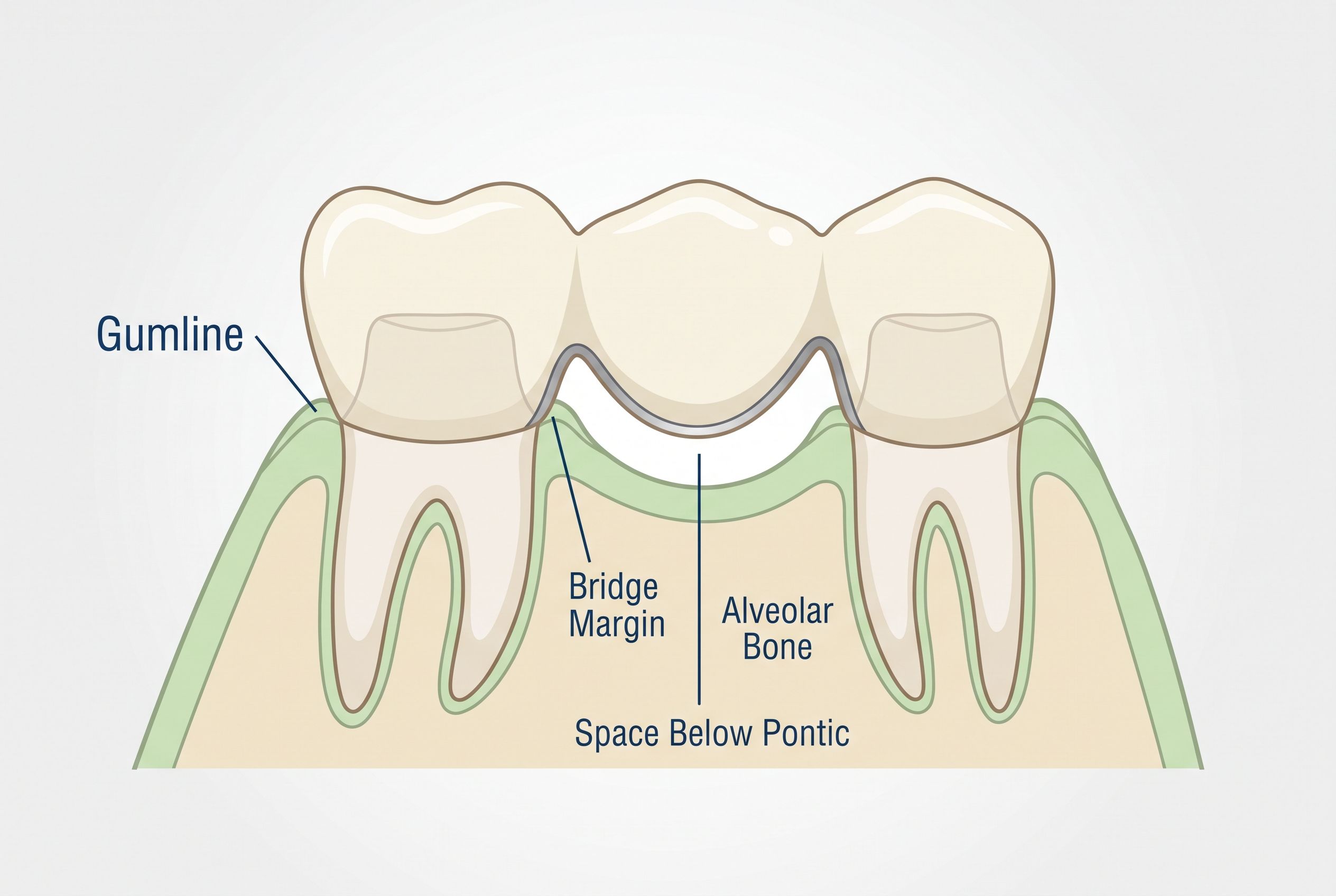
The phrase “dental bridge infection” can be misleading. The bridge itself does not become infected. The problem usually develops around the supporting teeth, gum tissue, bone, or the space beneath the artificial tooth — and symptoms can start mildly before getting worse.
Possible signs that something is wrong around a dental bridge:
SYMPTOMS CAN DEVELOP SLOWLY
Decay or infection under a bridge may not always cause obvious pain right away. Regular dental exams with X-rays help detect problems while they are still easier to treat — even when symptoms are absent or mild.
Pain Under a Bridge: What It Usually Means
Tooth pain under a bridge can come from several different causes — not always infection. Because the symptoms can feel similar, dental bridge pain should be checked with an exam and X-rays rather than relying on pain relievers alone.
Decay under the bridge:
Loose cement or margin failure:
Gum inflammation:
Cracked abutment tooth:
Root infection or abscess:
Bite misalignment:
Swelling, Odor, and Bad Taste as Warning Signs
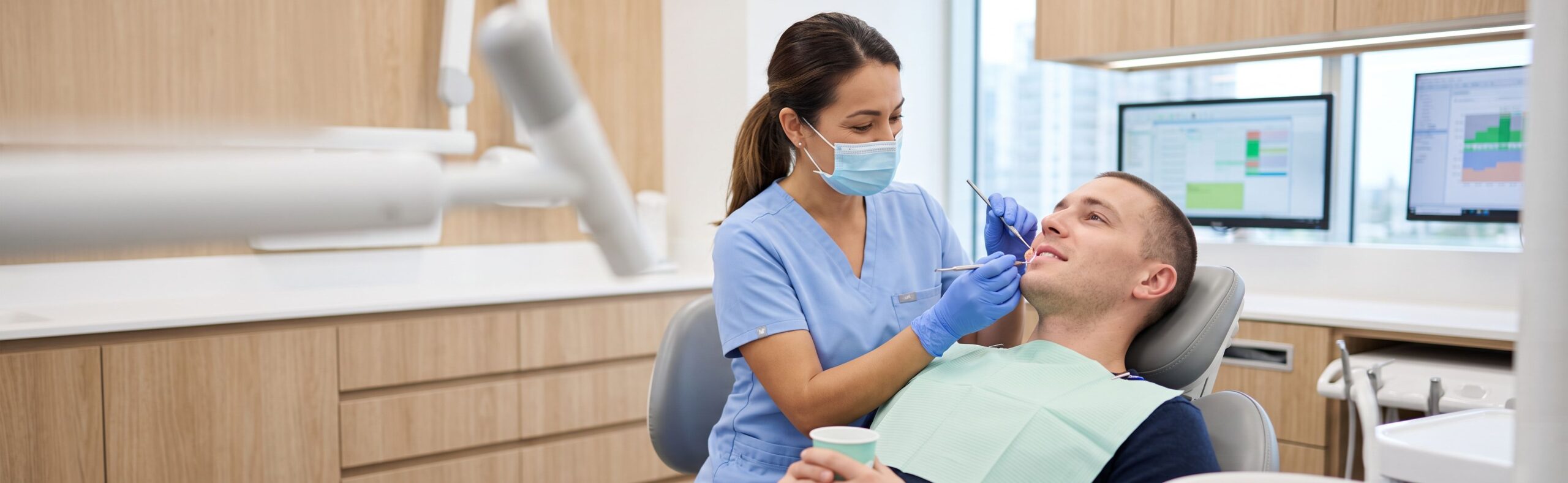
Swelling near a dental bridge, a persistent bad taste, or an odor that does not improve with brushing should be evaluated by a dentist. Swelling may indicate gum infection, a periodontal abscess around a supporting tooth, or a dental abscess at the tooth root.
Bad taste or odor can result from trapped food, bacterial buildup under the bridge, decay, or drainage from an infected area. A bad taste alone does not necessarily mean there is a serious infection. However, if it occurs alongside swelling, pain, pus, tenderness, or a painful bump near the bridge, contact your dentist promptly.
When to Seek Emergency Medical Care
If swelling spreads rapidly toward the face or neck, or if you have difficulty breathing or swallowing, seek emergency medical care immediately — not a dental appointment. These can be signs of a spreading dental infection that requires urgent treatment.
Why Decay Can Form Beneath a Bridge
The teeth supporting a dental bridge can still develop cavities, especially around areas that are harder to clean. Plaque commonly builds up at the crown margins near the gumline, beneath the pontic, and between the bridge and neighboring teeth.
Because a regular toothbrush cannot fully clean under a fixed bridge, additional tools may help:
ASK YOUR HYGIENIST
A dentist or hygienist can show you the best cleaning technique for your specific bridge design at your next visit. Without consistent cleaning, plaque can gradually damage the supporting teeth and cavities may develop before noticeable symptoms appear.
When a Bridge Becomes Loose
A loose dental bridge should be evaluated promptly. Common causes include cement failure, decay in a supporting tooth, fracture, excessive bite pressure, or normal wear over time. If the bridge feels loose, moves, or comes out:
- IF YOUR BRIDGE IS LOOSE — DO THIS
- Avoid chewing on that side to reduce the risk of further damage
- Save the bridge or any loose pieces in a clean container if they come out
- Rinse gently with warm water
- Contact your dentist promptly — especially if you also have pain, swelling, bleeding, or sharp edges
- DO NOT DO THIS
- Do not use super glue or household adhesives to reattach the bridge
- Do not pull on a partially attached bridge
- Do not keep chewing on the bridge or affected side
- Do not wait if you have pain, swelling, or the bridge has fully come out
Which Symptoms Need Urgent Care
Not every dental bridge problem is an emergency, but some symptoms need faster attention. Use this guide to help decide how quickly to act — and always contact your dentist if you are unsure.
| Symptom | What It May Suggest | How Urgent? |
|---|---|---|
|
🍽
Mild Food Trapping
|
Cleaning difficulty or bridge shape issue — common with older bridges | Schedule an appointment if it keeps happening |
|
🦷
Pain When Chewing
|
Bite problem, loose bridge, decay, fracture, or infection | Arrange a prompt dental visit |
|
😮
Swelling Near the Bridge
|
Gum or tooth infection, periodontal abscess | Contact your dentist urgently or the same day |
|
💧
Bad Taste, Pus, or Persistent Odor
|
Decay, drainage, or active infection under or around the bridge | Seek prompt dental evaluation |
|
🔓
Loose or Moving Bridge
|
Cement failure, decay in a supporting tooth, or fracture | Avoid chewing on that side — see your dentist promptly |
|
🚨
Fever, Spreading Swelling, or Trouble Breathing
|
Possible spreading dental infection requiring urgent treatment | Seek emergency medical care immediately — do not wait |
Repair vs Replacement: What to Expect at the Dentist
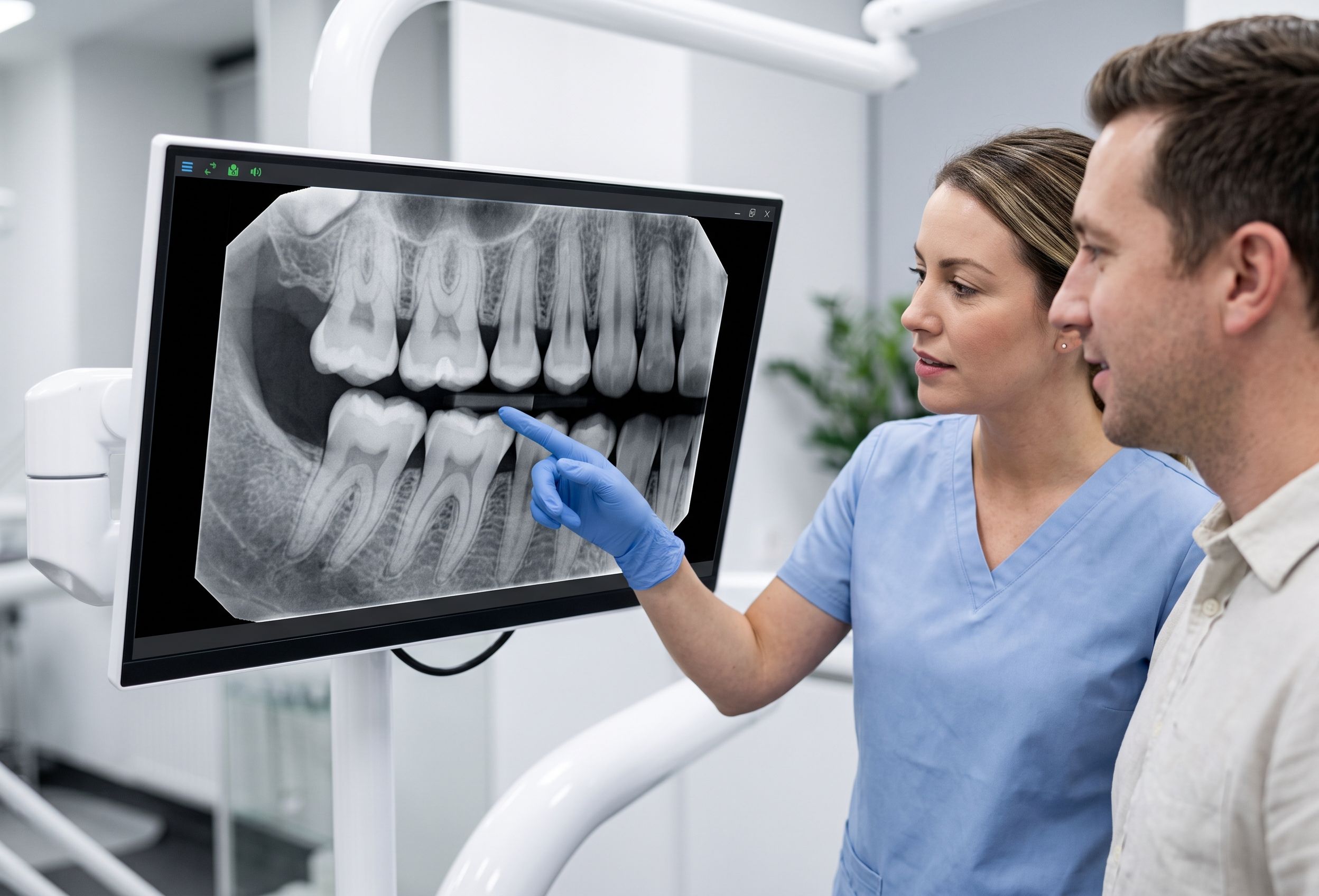
If you have dental bridge symptoms, your dentist will examine the bridge, gums, and supporting teeth and may take X-rays to check for hidden decay, infection, bone loss, or root problems. Depending on the findings, treatment may include:
Cleaning and monitoring — for minor gum inflammation or food trapping without structural damage.
Bridge recementation — if the bridge is loose but still intact and the supporting teeth are healthy.
Decay treatment — if cavities are found around or beneath the bridge.
Root canal treatment — if a supporting tooth has nerve damage or infection that needs to be resolved before or instead of bridge repair.
Periodontal treatment — if gum disease has affected the tissues supporting the bridge.
Bridge replacement — if the bridge is damaged, worn, or no longer fits the supporting teeth properly.
Extraction and replacement options — if a supporting tooth cannot be saved, the dentist can discuss replacement options including implants, a new bridge, or a partial denture.
EXAM FIRST — TREATMENT SECOND
The final treatment plan depends on the condition of the bridge, supporting teeth, gums, and bone. A full examination and X-rays are needed before repair or replacement can be recommended — even if the symptoms seem straightforward.
Frequently Asked Questions
What are the signs of an infected dental bridge?
Why does my tooth hurt under my bridge?
Can you get a cavity under a dental bridge?
What should I do if my bridge feels loose?
How long does a dental bridge last?
Dental bridges can last many years with good care, but their lifespan varies based on oral hygiene, bite forces, gum health, supporting teeth, bridge design, and regular dental exams. Routine appointments help catch problems such as decay or cement failure before they become more serious.
Know the Signs and Act Before Symptoms Worsen
BRIDGE PAIN OR SWELLING?
Same-day urgent appointments for dental bridge problems. Exam, X-rays, and treatment options explained clearly.
IN THIS GUIDE
SEEK URGENT CARE IF YOU HAVE
🚨 Trouble breathing or swallowing: seek emergency medical care immediately.
TOOTHOLOGY DENTAL
Williamsburg, Brooklyn, NY
Serving Greenpoint, Bushwick, Bed-Stuy & Downtown Brooklyn
718-678-3800
Emergency line available
Open Hours
Mon – Thu: 10:00 AM – 6:00 PM Friday: 10:00 AM – 2:00 PM Sunday: 10:00 AM – 2:00 PM Saturday: Closed
OUR COMMITMENT
- Board-Certified Pediatric Dentists
- Child-Friendly, Anxiety-Reducing Care
- Same-Day Emergency Slots
- Low-Radiation Digital X-Rays
- Most Major Insurance Accepted