
- Cosmetic Comparison
Both can improve the look of your front teeth. The better option depends on your tooth condition, bite, and how much change you actually want to achieve.
Dental Bonding vs. Porcelain Veneers: How to Choose for Your Front Teeth
If you’re weighing dental bonding against porcelain veneers for a chipped tooth, a small gap, or a front-tooth shape change, you’re asking the right question — and the answer isn’t the same for everyone. Both treatments can improve the look of your front teeth, but they work differently, prepare the tooth differently, and suit different situations.
This guide explains how each treatment works, what your dentist checks before recommending one, and when another option — including no treatment at all — may make more sense.
QUICK ANSWER
Bonding is often considered for smaller, more conservative changes to one or a few teeth. Porcelain veneers are typically discussed when the goal involves a broader change in shape, color, or length — especially across several front teeth. Neither option is automatically better. The right choice depends on your enamel, bite, gum health, and cosmetic goals.
Bonding and Porcelain Veneers: What Is the Difference?
The main difference is how each treatment changes the tooth and how much preparation is required.
Dental bonding uses tooth-colored composite resin that is applied and shaped directly on the tooth in a single visit. It is a chairside procedure that often requires minimal or no enamel removal, making it a more conservative starting point for localized concerns.
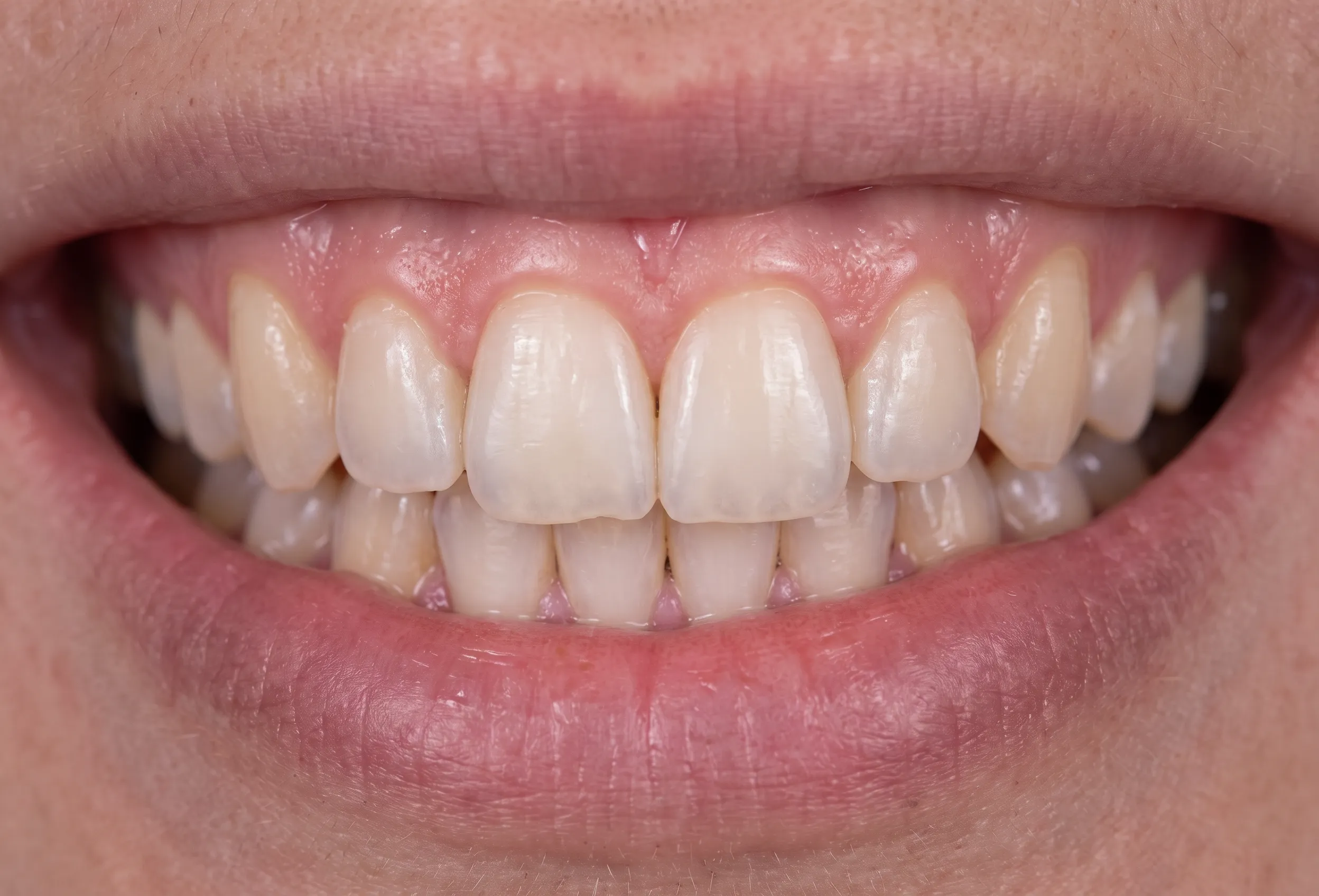
Porcelain veneers are thin, custom-made shells permanently bonded to the front of the teeth after preparation. Unlike bonding, veneers typically require removing a small amount of enamel — which is generally irreversible. Treatment involves at least two visits: a preparation appointment and a bonding appointment, with lab fabrication in between.
- DENTAL BONDING
Tooth-colored composite resin applied and shaped directly on the tooth. Often completed chairside in one visit with minimal preparation.
- Minor chips or worn edges
- Small gaps between teeth
- Subtle shape or contour changes
- Conservative option for limited areas
- PORCELAIN VENEERS
Thin custom porcelain shells bonded to the tooth front after preparation. Requires at least two visits with lab fabrication between them.
- Broader changes in shape, color, or length
- Multiple front teeth at once
- More stain-resistant surface finish
- Requires enamel removal (generally irreversible)
At a Glance — Possible Starting Points
- Small chip or worn edge — Bonding may be a conservative first option
- Minor shape change on one tooth — Bonding may be considered
- Small front-tooth gap — Bonding may work, depending on gap size and symmetry
- Broader change across several front teeth — Veneers may be discussed
- Color concern only — Whitening may be considered first before any restorative work
What Your Dentist Checks Before Recommending Either Option
Choosing between bonding and veneers depends on more than appearance. Before recommending either treatment, your dentist will evaluate whether your teeth and gums are healthy enough for cosmetic work and which option fits your specific situation.
Key Factors Your Dentist Evaluates
Oral health:
Active decay or gum disease should be treated before any elective cosmetic work begins.
Enamel and existing restorations:
The amount of healthy enamel, plus any fillings, crowns, or prior bonding, affects what treatment is possible and appropriate.
Bite and grinding:
Clenching or grinding (bruxism) can increase the risk of chipping, wear, or debonding. A nightguard may be recommended alongside either treatment.
Tooth position and spacing:
If a gap is mainly caused by tooth position, orthodontic treatment may preserve more natural tooth structure than adding material.
Color goals:
Whitening is usually completed before bonding or veneers so the shade can be matched accurately — it cannot change the color of composite or porcelain.
Number of teeth involved:
A single chipped tooth is a different clinical situation from changing shape, length, and color across multiple front teeth.
Maintenance expectations:
Your dentist will discuss how much upkeep you’re comfortable with, and for veneers, confirm that enamel preparation is generally permanent.
Compare Tooth Preparation, Visits, Maintenance, and Repair
The clearest differences between bonding and veneers come down to how much tooth preparation is involved, how treatment unfolds across visits, and what maintenance may look like over time.
| Decision Factor | Dental Bonding | Porcelain Veneers |
|---|---|---|
| What it is | Tooth-colored composite resin shaped directly on the tooth | Thin custom porcelain shell bonded to the front of the tooth |
| Typical use | Small chips, worn edges, minor gaps, or subtle shape changes | Broader changes in shape, color, length, or symmetry |
| Enamel preparation | Often minimal, but preparation depends on the case | Usually requires removal of some enamel and is generally irreversible |
| Visits | Often completed in one visit for limited cases | Usually requires preparation, impressions or scanning, lab fabrication, and a bonding visit |
| Maintenance | Composite may stain, wear, or chip and may need polishing or repair | Porcelain is more stain-resistant but can still chip, loosen, or require replacement |
| Repairability | Often easier to add to or repair | Minor damage may sometimes be repaired; larger damage may require replacement |
| Bite / grinding | Heavy bite forces can increase wear or chipping | Grinding or clenching can also affect longevity and suitability |
| Shade planning | Shade is matched during placement but may change over time | Shade and surface finish are highly controlled; whitening should be planned beforehand when relevant |
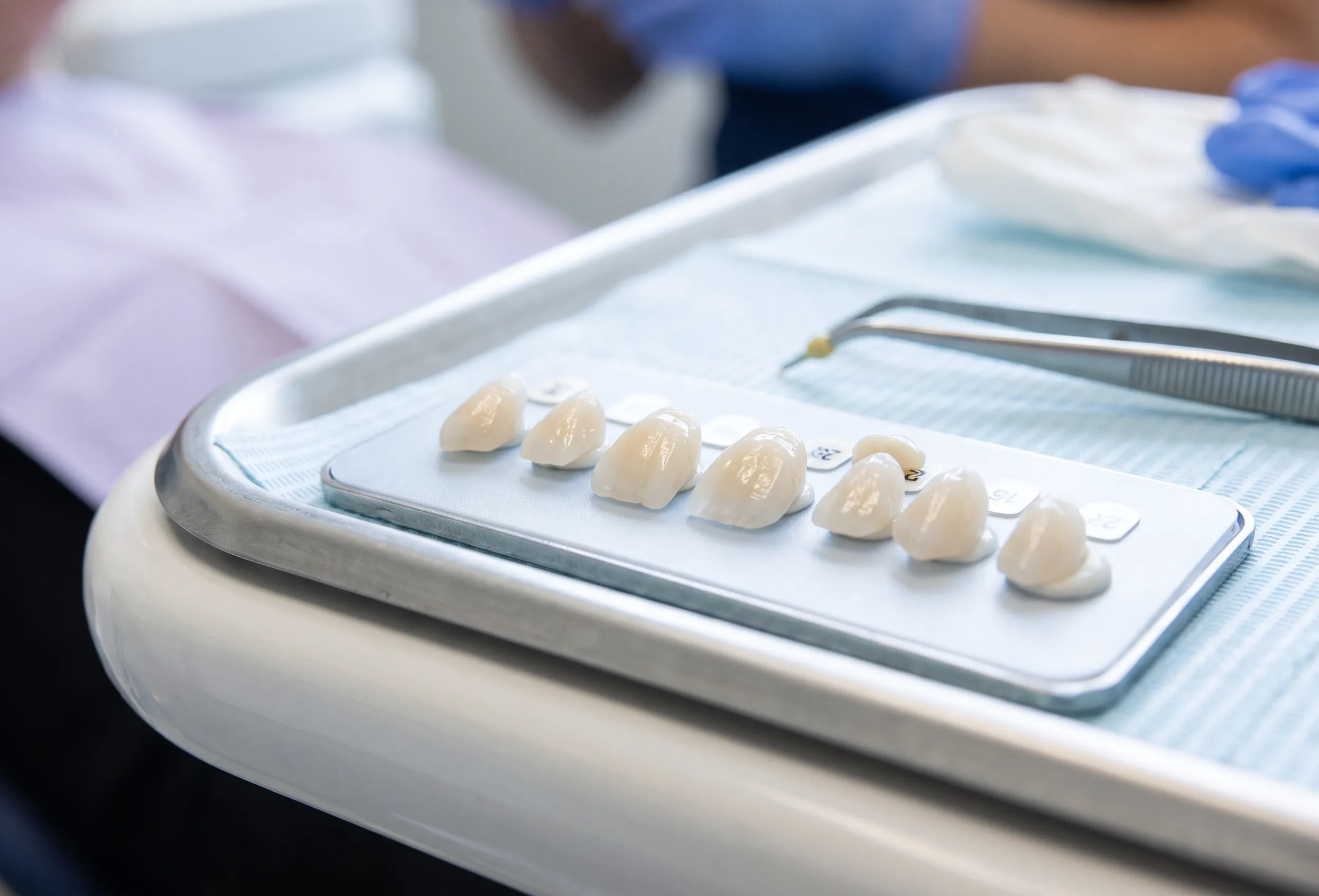
One important practical distinction: bonding can often be added to or repaired in a later chairside visit. With veneers, minor damage may sometimes be addressed, but significant chips or debonding generally require a replacement veneer. This difference in repairability affects long-term planning and overall cost.
Shade planning also differs. With bonding, the composite shade is matched at placement but may shift gradually with staining over time. With porcelain veneers, shade and surface finish are more precisely controlled through the lab process — making it important to complete any planned whitening before veneer fabrication, so the natural teeth and veneers can be matched to the same target shade.
Possible Starting Points by Patient Concern
The table below outlines general starting points based on common concern types. These are not treatment plans — every recommendation should follow a clinical exam of your specific teeth, enamel, bite, and gum health.
| Patient Concern | Possible Starting Point | Why / Caution |
|---|---|---|
| Small chip on one front tooth | Bonding may be considered | Can rebuild a limited area after ruling out deeper damage |
| Small gap between well-aligned teeth | Bonding may be considered | Tooth proportions and symmetry need to be assessed |
| Several front teeth with shape, length, or color concerns | Veneers may be discussed | Can create a broader coordinated change, but requires enamel preparation |
| Main concern is natural tooth color | Whitening may come first | Whitening can lighten natural teeth without covering them |
| Gap or crowding caused by tooth position | Aligners or orthodontics may be more appropriate | Moving the teeth may preserve natural tooth structure |
| Large fracture or heavily restored tooth | Restorative evaluation first | A crown or another restorative treatment may be more suitable |
When Another Treatment — or No Cosmetic Treatment — May Be Better
Bonding and porcelain veneers are not always the right first choice. Depending on the concern, another treatment — or no treatment at all — may make more clinical sense.
Whitening First
If the main concern is natural tooth color, whitening may be a more conservative option. Complete it before bonding or veneers so the final shade can be matched accurately.
Orthodontics or Clear Aligners
If spacing or gaps are caused by tooth position, moving the teeth may be more appropriate — and preserves more natural tooth structure than adding restorative material.
Crown or Restorative Treatment
A heavily fractured or structurally weakened tooth may need a crown or another restorative approach rather than a cosmetic veneer or bonding alone.
Treat Decay or Gum Disease First
Active decay or periodontal disease should always be managed before elective cosmetic treatment. Cosmetic work placed on unhealthy teeth typically doesn't last as expected.
No Treatment — Observation
If the tooth is healthy and the concern is minor, watchful waiting is a reasonable option. A good cosmetic consultation should present this as a genuine alternative, not assume that treatment is always necessary.
Questions to Bring to Your Cosmetic Consultation
A few focused questions can help you understand which option — if any — is right for your teeth before committing to treatment.
Ask at Your Consultation
A cosmetic consultation at Toothology in Williamsburg, Brooklyn can assess your teeth, gum health, bite, and existing dental work before recommending a treatment approach — with no obligation to proceed.
Frequently Asked Questions
Are dental bonding and porcelain veneers the same treatment?
Does either treatment change the natural enamel?
Can bonding or veneers be repaired if they chip or crack?
How do grinding habits and gum health affect the choice?
How do I compare treatment estimates from different dentists?
Make sure each estimate specifies which teeth are included, how much preparation is involved, what material is used, what maintenance is expected, and what the repair or replacement options are. The most useful estimate comes after an actual exam of your teeth — not a range quoted before anyone has looked.
Is one option less expensive than the other?
Bonding is generally lower in upfront cost than porcelain veneers because it uses composite material and is typically completed in one visit without lab fees. Porcelain veneers involve custom lab fabrication, which adds to the per-tooth cost. However, veneer porcelain tends to be more stain-resistant and may last longer with proper care, which can affect the long-term cost comparison. Your dentist can provide specific figures based on your treatment needs.
Not Sure Which Option Fits Your Teeth?
COSMETIC CONSULTATION
Not sure if bonding or veneers is the right fit? A consultation at Toothology in Williamsburg covers your teeth, bite, and goals before recommending anything.
IN THIS GUIDE
WHICH OPTION TO DISCUSS?
Small chip or worn edge
Bonding
Minor shape change
Bonding
Small front-tooth gap
Bonding
Several front teeth (shape/color/length)
Veneers
Color concern only
Whitening First
Gap from tooth position
Aligners First
TOOTHOLOGY DENTAL
Williamsburg, Brooklyn, NY
Serving Greenpoint, Bushwick, Bed-Stuy & Downtown Brooklyn
718-678-3800
Emergency line available
Open Hours
Mon – Thu: 10:00 AM – 6:00 PM Friday: 10:00 AM – 2:00 PM Sunday: 10:00 AM – 2:00 PM Saturday: Closed
OUR COMMITMENT
- Board-Certified Pediatric Dentists
- Child-Friendly, Anxiety-Reducing Care
- Same-Day Emergency Slots
- Low-Radiation Digital X-Rays
- Most Major Insurance Accepted