
- Emergency Dental Guide · Williamsburg Brooklyn
If your temporary or permanent crown fell out, do not panic — but do act quickly. Save the crown, protect the tooth, and call the dentist. The steps you take in the next hour matter.
Dental Crown Fell Out: What to Do Before Seeing a Dentist
If your temporary dental crown fell out, do not panic — but contact your dentist as soon as possible. Whether it is a temporary or permanent crown, the tooth underneath needs protection and should be checked promptly. The most important thing you can do right now is save the crown, avoid chewing on that side, and make the call.
Dental Bridge Symptoms — Quick Reference
Do First
Save the crown in a clean container, rinse gently, avoid chewing on that side, and call the dentist
Do Not
Use super glue, force the crown back on, or eat sticky or hard foods on that side
Urgent Signs
Severe pain, swelling, fever, trauma, bleeding, or signs of infection
Best Next Step
Book an emergency or restorative dental evaluation at Toothology in Williamsburg
Why Temporary Crowns Come Loose
Temporary crowns are held with temporary dental cement, which is intentionally weaker than permanent cement — because the temporary crown must be removable when the final crown is ready. A temporary or permanent crown may come loose for several reasons:
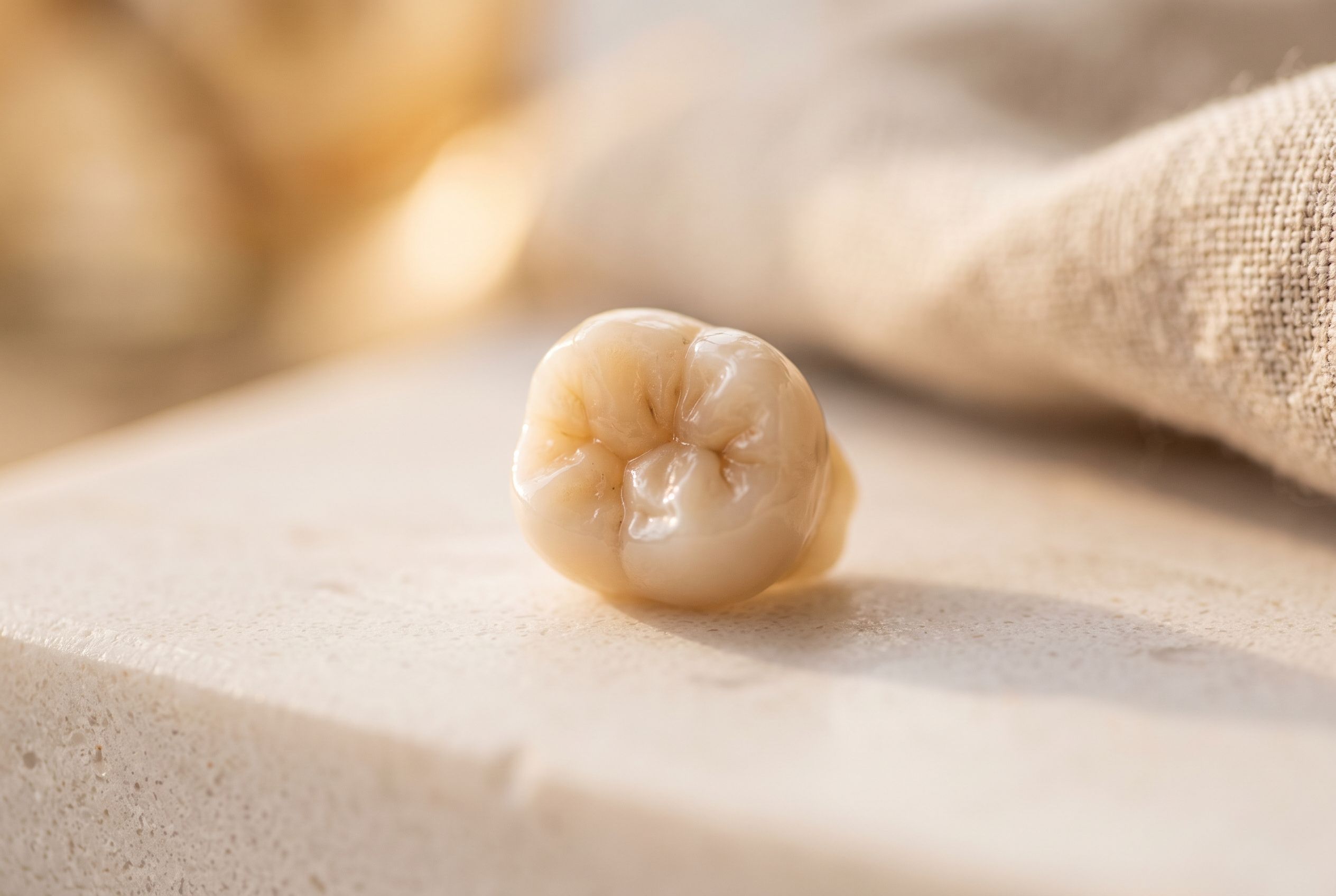
IT IS NOT ALWAYS YOUR FAULT
A crown coming loose is not always the patient’s fault. Temporary cement has limits by design, and even permanent crowns can come off over time with normal wear. The important thing is to protect the tooth and contact your dentist promptly.
What to Do Right Away If a Crown Falls Out
These steps apply whether a temporary crown or a permanent crown came off:
What Not to Do With a Fallen Crown

not
not
not
not
not
not
not
Can You Put the Crown Back on Yourself?
The safest answer is to call your dentist and get the crown checked promptly. A crown should only be recemented after the dentist confirms that both the tooth and the crown still fit properly. Do not assume that because the crown feels like it fits that it is safe to self-cement permanently.
In some situations, an over-the-counter temporary dental cement may be used as a very short-term measure until your appointment. This is not a permanent fix. Only consider it if all of the following are true:
TEMPORARY CEMENT IS NOT A FIX
Even if temporary cement makes the crown feel stable, the tooth still needs a professional evaluation. The dentist must confirm the fit, check for decay or fracture, and determine whether the same crown can be used again or whether a new one is needed.
Is a Fallen Crown a Dental Emergency?
A crown coming off should always be reported to the dentist promptly, but the urgency depends on what you are experiencing. Use the guide below to assess how quickly to act.
| Situation | What It May Mean | How Urgent? |
|---|---|---|
|
🪥
Crown Off, No Pain, No Damage
|
Cement failed or temporary cement reached its limit — common and manageable | Call today — same-day or next-day appointment |
|
🌡
Tooth Sensitive to Air or Temperature
|
Exposed dentine or nerve — the tooth is unprotected and needs coverage | Call today and arrange a prompt appointment |
|
⚡
Sharp Edge Cutting Tongue or Cheek
|
Fractured tooth structure or damaged crown margin | Call today — use dental wax to protect tissue until seen |
|
🦷
Severe or Worsening Tooth Pain
|
Possible decay, fracture, nerve involvement, or infection near the exposed tooth | Seek same-day dental care |
|
😮
Swelling, Pus, or Bad Taste
|
Possible infection, abscess, or drainage around the exposed tooth or root | Urgent dental care — contact the office today |
|
🚨
Fever, Facial Swelling, or Trouble Breathing
|
Possible spreading infection requiring immediate medical attention | Seek emergency medical care immediately — do not wait |
How to Protect the Tooth Until Your Appointment
After calling the dentist, these steps can help protect the exposed tooth until your visit. They are temporary measures — not substitutes for professional care.

ROOT CANAL-TREATED TEETH NEED EXTRA ATTENTION
If the crown came off a root canal-treated tooth, do not assume it is safe because you feel no pain. These teeth have no nerve and may not signal problems through pain — but the tooth is still vulnerable to fracture and bacteria. Call the dentist promptly regardless of how the tooth feels.
What Happens at the Dentist Afterwards
At your appointment, the dentist will check the exposed tooth, gum tissue, and the crown before deciding what happens next. The goal is to protect the tooth, treat any underlying issue, and restore the crown safely.
Clinical exam — checking for decay, fracture, sharp edges, gum inflammation, or any signs of infection around the exposed tooth
X-rays when indicated — evaluating the root, bone level, hidden decay, or fracture that may not be visible during the exam alone
Crown assessment — checking whether the crown is intact, still fits accurately, and can be used again
Recementing the same crown — if the crown and tooth are both healthy and the fit is still accurate
Temporary protection — if the tooth needs coverage while a final solution is planned or further treatment is needed first
New crown — if the old crown is damaged, worn, or no longer fits the prepared tooth properly
Restorative or further treatment — if decay, fracture, nerve involvement, or infection is found beneath the crown
Emergency Crown Repair in Williamsburg, Brooklyn
If your dental crown fell out in Brooklyn or Williamsburg, Toothology at 42A Broadway provides same-day emergency dental care for fallen crowns, broken restorations, tooth pain, and urgent dental concerns. When you call, tell the team:
DO NOT WAIT IF SWELLING IS SPREADING
If you have difficulty breathing or swallowing, or if swelling is spreading toward the face or neck, seek emergency medical care immediately — not a dental appointment. These can be signs of a dental infection requiring urgent medical treatment.
Frequently Asked Questions
What should I do if my temporary crown falls out?
Is a crown falling out a dental emergency?
Can I eat if my dental crown fell out?
Can I put my crown back on at home?
How soon should I see a dentist if my crown comes off?
Call as soon as it happens and aim for same-day or next-day evaluation. Both temporary and permanent crowns need prompt attention to protect the tooth underneath. Do not leave the exposed tooth unprotected longer than necessary — even without pain, the tooth remains vulnerable.
Protect the Tooth Now — Book Your Appointment Today
CROWN FELL OUT?
Same-day emergency crown appointments. Bring the crown with you — we’ll assess, protect, and advise.
IN THIS GUIDE
NEVER DO THESE
TOOTHOLOGY DENTAL
Williamsburg, Brooklyn, NY
Serving Greenpoint, Bushwick, Bed-Stuy & Downtown Brooklyn
718-678-3800
Emergency line available
Open Hours
Mon – Thu: 10:00 AM – 6:00 PM Friday: 10:00 AM – 2:00 PM Sunday: 10:00 AM – 2:00 PM Saturday: Closed
OUR COMMITMENT
- Board-Certified Pediatric Dentists
- Child-Friendly, Anxiety-Reducing Care
- Same-Day Emergency Slots
- Low-Radiation Digital X-Rays
- Most Major Insurance Accepted