
- Crown & Root Canal Clinical Guide · Brooklyn
Root canal treatment is complete and the crown is in place — but the tooth still hurts. Mild tenderness can be part of normal healing. The key question is whether your discomfort is improving or getting worse.
Dental Crown Pain After Root Canal: Is It Normal or a Warning Sign?
Dental crown pain after root canal treatment does not automatically mean the treatment has failed. Mild tenderness can occur while the tissues around the tooth heal. What matters most is the pattern — whether discomfort is steadily improving or becoming more persistent and intense.
Mild and Improving
Often consistent with normal post-treatment healing. Monitor and follow aftercare instructions.
Lasting More Than a Few Days
Should be evaluated. Pain that doesn't resolve on its own within the expected window needs a dentist's review.
Pain That Returns After Improving
A warning sign. Pain coming back after a symptom-free period should be assessed promptly.
Severe or With Swelling
Should not be ignored. Severe pain or any swelling alongside crown discomfort needs prompt dental evaluation.
Is Crown Pain After a Root Canal Normal?
Mild soreness for a few days after root canal treatment can be normal, especially if the tooth was painful or infected beforehand. This tenderness usually comes from the tissues around the root — not the tooth itself — and should gradually improve as healing progresses.
Contact your dentist if the pain is any of the following:
THE PATTERN MATTERS MORE THAN THE PAIN LEVEL
A tooth that is mildly sore but improving each day is very different from one that is worsening, plateauing, or getting better then worse again. Tracking the direction of your symptoms is the most useful thing you can do before your follow-up appointment.
Why a Treated Tooth Can Still Hurt
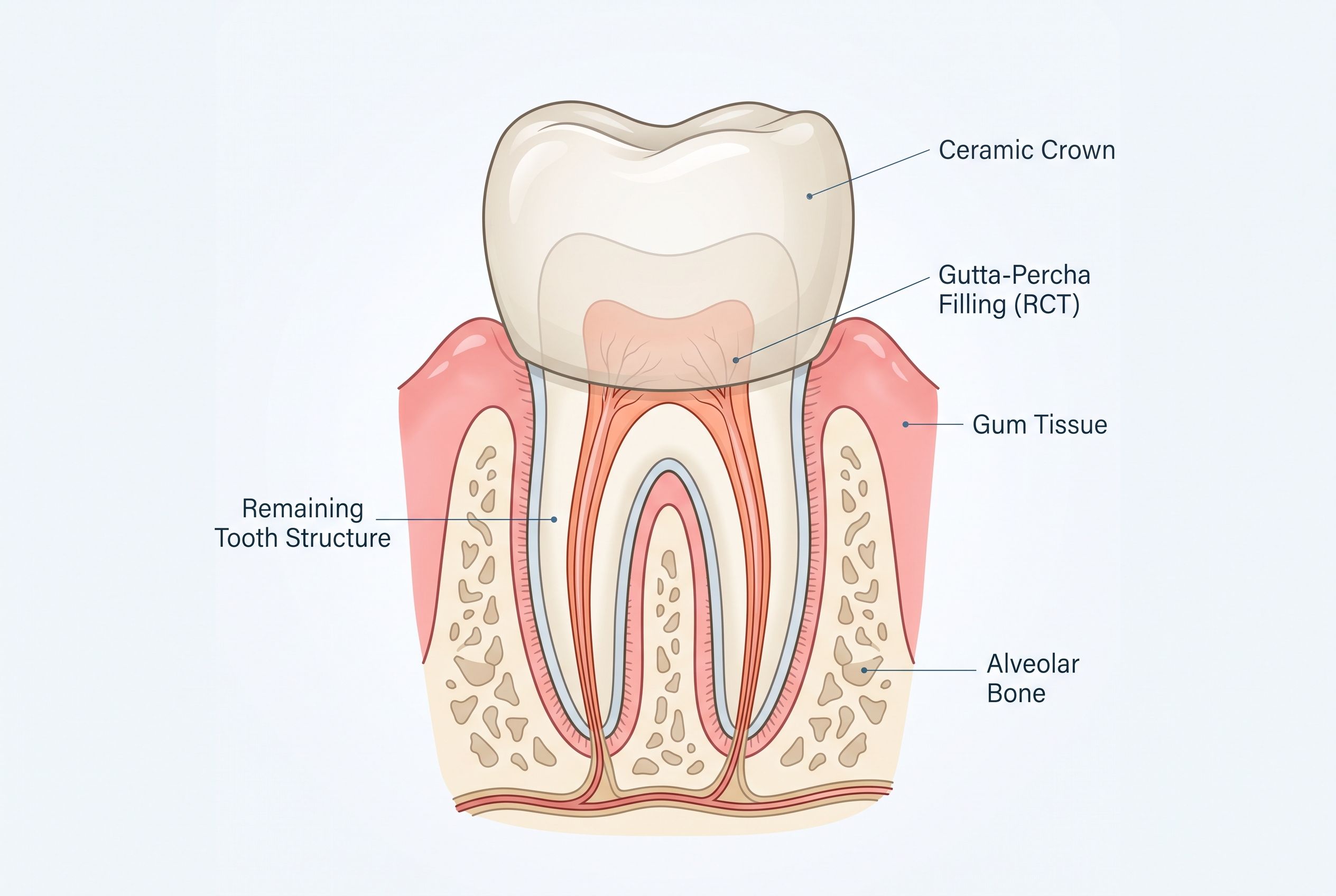
A root-canal-treated tooth can still hurt because the tissues around the root remain sensitive, even though the nerve tissue inside the tooth has been removed. Several distinct issues can cause pain under a crown, and many of them feel similar — which is why a dental exam is usually needed to identify the actual source.
Normal healing: Temporary inflammation around the root tip after treatment — should improve steadily over days.
High bite: A crown that contacts the opposing tooth too early or too heavily places extra pressure on the tissues around the root, causing soreness when biting.
Crown fit or cement problems: A loose or poorly sealed crown can allow bacteria to reach the underlying tooth structure.
Inflammation at the root tip: Persistent inflammation around the apex can cause ongoing tenderness or pressure sensitivity.
Crack or fracture: A damaged tooth or root may cause pain specifically when chewing or applying pressure.
Reinfection or new decay: Bacteria entering through decay or a leaking crown can cause pain months or even years after the original treatment.
Crown Pain When Biting or Chewing

Some sensitivity when biting is expected during early healing after a root canal and should gradually improve. If the crown hurts when biting and that pain persists, worsens, or starts after the tooth had felt better, possible causes include a high bite, a crack or fracture, ongoing inflammation or reinfection, or a loose or leaking crown.
Because these problems feel similar, bite pain alone cannot confirm the cause. If discomfort is not steadily improving, schedule a dental evaluation rather than continuing to test the tooth by chewing on it.
DO NOT FILE OR GRIND THE CROWN AT HOME
Even if the crown feels like it might be too high, do not try to adjust it yourself. Bite adjustments need to be done by a dentist using articulating paper so that only the necessary contact points are changed — not the crown’s overall shape or seal.
Could the Bite Be Too High?
A high crown contacts the opposing tooth too early or too heavily. This extra pressure irritates the tissues around the root and causes soreness — especially when biting. The effect can be cumulative: repeated pressure on already-healing tissues slows recovery and makes symptoms feel more pronounced.
A bite problem is not always obvious. Even when the crown does not feel dramatically “off,” it may still be receiving more pressure than it should. The dentist can check the bite with articulating paper and make a small, precise adjustment if needed. This is one of the most common and most easily corrected causes of post-treatment soreness.
Can a Root Canal Tooth Become Reinfected?
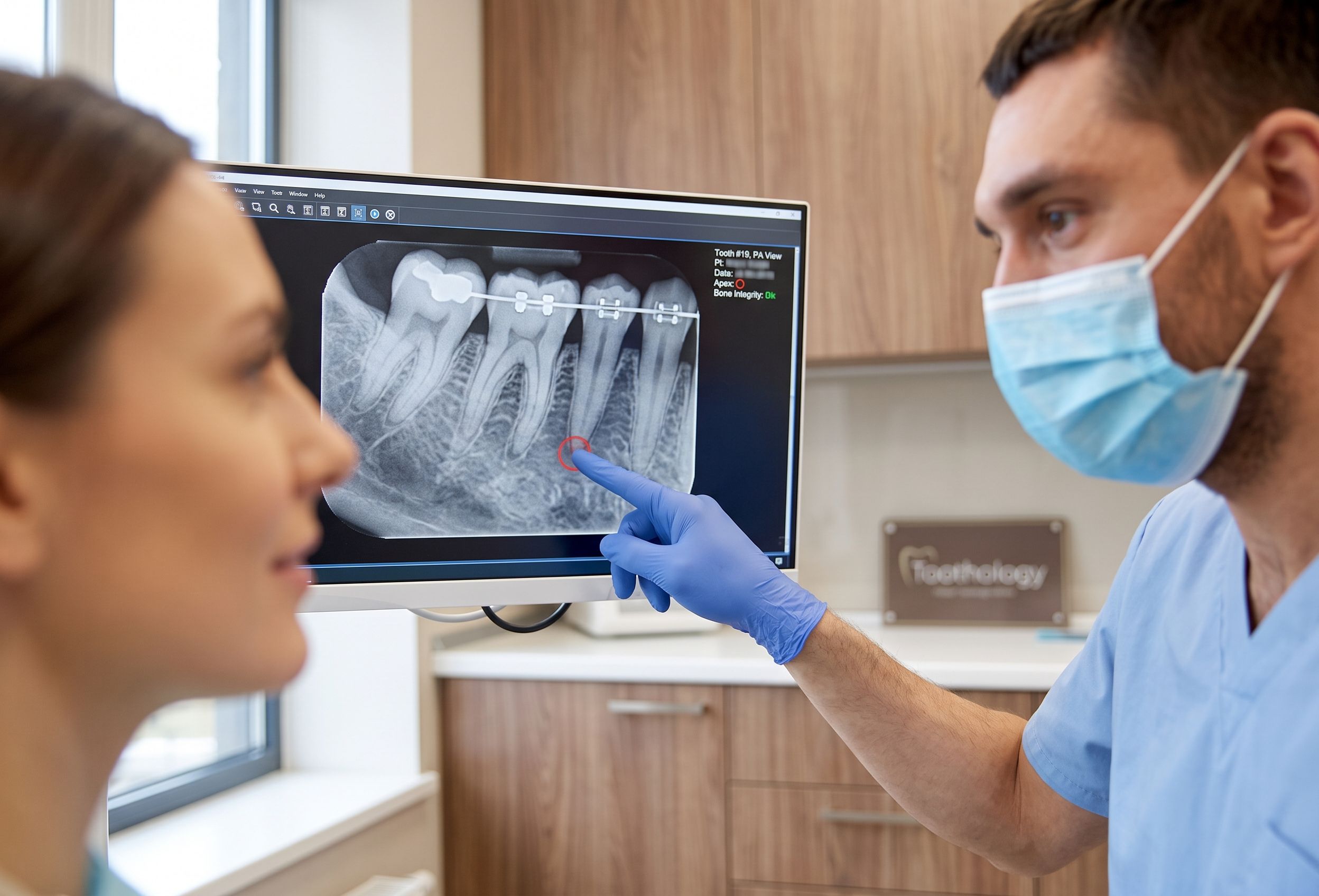
Yes. A root-canal-treated tooth can become reinfected — sometimes months or years after treatment seemed successful. Pain that returns after a symptom-free period should be evaluated promptly.
Possible causes of reinfection include:
Missed canal anatomy:
Complex root systems may include canals that were not fully treated initially
Delayed or failed seal:
Bacteria may re-enter if the tooth was not permanently restored soon enough after the root canal
New decay:
Cavities around crown margins can allow bacteria to reach the canal system
Loose or damaged restoration:
A cracked crown or filling can compromise the internal seal
Tooth fracture:
A crack extending into the root may allow persistent bacterial contamination
RETREATMENT MAY BE POSSIBLE
If reinfection is confirmed, endodontic retreatment — reopening, cleaning, and resealing the canals — may be an option. Whether it is appropriate depends on the tooth structure, extent of infection, existing restoration, and whether a fracture is present. A dental exam and imaging are needed to assess suitability.
When Crown Pain Becomes an Emergency
Not every symptom requires emergency care. Use the pattern below to decide when to monitor at home, contact the dentist, or seek immediate medical attention.
| Monitor / Improving ✔ | Call The Dentist ☎ | Emergency Care 🚨 |
|---|---|---|
| Mild soreness improving each day | Moderate or severe pain lasting more than a few days | Spreading swelling of the face, jaw, or neck |
| Bite sensitivity steadily decreasing | Pain returning after a symptom-free period | Difficulty breathing or swallowing |
| Chewing sensitivity improving day by day | Swelling, pus, bad taste, or drainage near the tooth | Fever with rapidly worsening swelling |
| Following post-treatment instructions comfortably | Uneven bite, loose crown, or severe pain under the crown | Uncontrolled bleeding that does not stop with gentle pressure |
| 🚨 Seek emergency medical care immediately if swelling spreads into the neck or floor of the mouth, or if you have trouble breathing or swallowing. For severe dental pain, swelling, drainage, or fever, contact Toothology or seek urgent dental care promptly. | ||
How the Cause Is Identified
Because several problems can cause similar pain under a crown, a dental exam is usually needed to identify the source. The dentist will gather your history and carry out a targeted clinical evaluation.
QUESTIONS THE DENTIST MAY ASK
- When the root canal and crown were completed
- Whether the tooth was ever completely pain-free
- What triggers the pain — biting, pressure, or spontaneous
- Whether symptoms are improving, worsening, or unchanged
- Whether any swelling, taste changes, or drainage are present
WHAT THE EXAM MAY INCLUDE
- Checking the crown margins and fit
- Evaluating the bite with articulating paper
- Testing for tenderness around the tooth and root
- Examining the surrounding gum tissue
- Taking periapical X-rays to assess the root and bone
- CBCT imaging or endodontist referral for complex cases
VITALITY TESTING IS NOT USED ON THIS TOOTH
Because the nerve tissue has already been removed, standard vitality testing is not performed on a root-canal-treated tooth. If referred pain from a neighbouring tooth is suspected, nearby teeth may be tested instead to help identify the source.
Crown and Root Canal Care in Williamsburg, Brooklyn
Toothology Dental at 42A Broadway, Williamsburg, Brooklyn NY 11249 provides restorative and emergency evaluations for crown pain, bite problems, loose or damaged crowns, and root-canal-related concerns. If you are scheduling for a painful root-canal-treated tooth, let the team know so they can direct you to the appropriate care pathway.
BRING YOUR RECORDS
If available, bring records or X-rays from the original root canal or crown treatment. Having the prior imaging allows the dental team to compare the current tooth status against the baseline and identify changes more accurately. Contact Toothology at (718) 678-3800 or book through ZocDoc.
Frequently Asked Questions
Why does my crown hurt after a root canal?
Is pain under a crown normal?
Can a root canal tooth get infected again?
Why does my crown hurt when I bite down?
When should I call a dentist for crown pain?
Call your dentist if pain is severe, worsening, lasting more than a few days, or accompanied by swelling, pus, bad taste, fever, or a loose crown. Seek emergency medical care immediately for difficulty breathing or swallowing, or for swelling spreading into the face or neck. Even without alarming symptoms, pain that is not steadily improving deserves a dental evaluation.
Timing and Pattern Are the Most Important Signals
CROWN STILL PAINFUL?
If your crown pain is not improving, returning, or comes with swelling or fever — it’s time for an evaluation. Toothology can check the bite, crown, and root.
DIRECT LINE
IN THIS GUIDE
PAIN PATTERN GUIDE
TOOTHOLOGY DENTAL
Williamsburg, Brooklyn, NY
Serving Greenpoint, Bushwick, Bed-Stuy & Downtown Brooklyn
718-678-3800
Emergency line available
Open Hours
Mon – Thu: 10:00 AM – 6:00 PM Friday: 10:00 AM – 2:00 PM Sunday: 10:00 AM – 2:00 PM Saturday: Closed
OUR COMMITMENT
- Board-Certified Pediatric Dentists
- Child-Friendly, Anxiety-Reducing Care
- Same-Day Emergency Slots
- Low-Radiation Digital X-Rays
- Most Major Insurance Accepted