
- Gentle Pediatric Dentistry Guide · Williamsburg Brooklyn
A child’s dental visit is not a smaller version of an adult appointment. It is designed around how children think, feel, and respond — with age-appropriate communication, careful pacing, and a focus on prevention and positive experience-building.
Gentle Pediatric Dentistry: What Makes a Kids' Dental Visit Different
Some children have been to the dentist before and remember something that frightened them — a sound, a sensation, not knowing what was coming next. Others are going for the first time and do not know what to expect at all. Gentle pediatric dentistry is about more than speaking softly. It combines age-appropriate communication, careful pacing, individualized behaviour guidance, and a strong focus on prevention — adapting the visit to each child’s comfort level and previous experiences.
What "Gentle" Actually Means in Pediatric Dentistry
When parents look for a “gentle” dentist, they usually want someone who works at the child’s pace, explains treatment in age-appropriate language, and responds calmly to fear or resistance. In pediatric dentistry, this approach is supported by behaviour-guidance techniques such as tell-show-do, positive reinforcement, distraction, and desensitisation.

“Gentle” does not guarantee that every visit will be completely comfortable. It means the dental team adapts its approach to the child’s age, temperament, previous experiences, treatment needs, and individual concerns. The goal is a predictable, confidence-building experience — not a rushed appointment.
WHAT PARENTS ARE REALLY LOOKING FOR
When parents search for a “gentle” kids’ dentist, they most often want someone who won’t push through resistance, will explain what’s happening, and will treat their child as an individual rather than a procedure to complete. These expectations are reasonable — and they describe the standard approach in thoughtful pediatric dental care.
How a Kids' Visit Differs From an Adult Visit
A pediatric dental visit is designed around the developmental needs of a child, not just around the procedures involved. Several elements of the appointment work differently from an adult appointment.
Communication
Children are spoken to in age-appropriate terms — not clinical language, but not so simplified as to be condescending. The goal is making the child an active participant in their own care.
Pacing
Pediatric visits may build in extra time to allow a child to adjust to each step, ask questions, or take a short break. The dentist adapts to the child's readiness rather than a fixed schedule.
Prevention & Parent Education
A significant portion of the visit focuses on preventing future problems. Because parents manage a young child's oral health at home, guidance is directed at the family as much as the child.
Building a Foundation
A positive, well-explained visit can help children become more comfortable with dental care over time — creating the conditions for a lifetime of easier appointments.
| Aspect | Adult Visit | Kids' Visit |
|---|---|---|
| Communication | Clinical language, direct and efficient | Age-appropriate terms, tell-show-do, child as active participant |
| Pacing | Follows a set appointment schedule | Builds in extra time; adapts to the child's readiness at each step |
| Primary Focus | Treatment, restorations, and hygiene | Prevention, parent education, and positive experience-building |
| Behaviour Support | Not typically part of the visit | Communication techniques, desensitisation, distraction, nitrous oxide if appropriate |
| Parent Involvement | Usually minimal | Parents included in home care guidance and oral health education |
Helping an Anxious or Previously Frightened Child
Dental anxiety in children can come from a previous difficult visit, unfamiliar sounds or sensations, fear of needles, or simply not knowing what to expect. No single approach works for every child — but several techniques consistently help.

Share concerns before the visit. Tell the dental team about previous negative experiences, sensory sensitivities, or specific triggers. This allows the team to prepare and adapt before the child arrives.
Use positive, neutral language. Keep explanations calm and simple. Avoid promising “it won’t hurt” — this can backfire. Instead: “The dentist will explain what is happening and take good care of you.”
Tell-show-do. The dentist explains a step, may demonstrate what to expect, and then proceeds. This removes the element of surprise that often amplifies anxiety.
Gradual desensitisation. For very anxious children, a slower introduction to the dental environment — getting familiar before treatment begins — can make future visits significantly easier.
Comfort items and distraction. A familiar toy or object, headphones, or a video can help a child manage their attention during treatment.
BEHAVIOUR GUIDANCE TECHNIQUE
TELL — SHOW — DO
STEP 1
TELL
The dentist explains what will happen in simple, reassuring language appropriate to the child’s age.
STEP 2
SHOW
The dentist demonstrates the instrument or step — letting the child see, hear, or feel it before proceeding.
STEP 3
DO
Only then does the dentist proceed with the step — giving the child a sense of control and predictability.
What Happens at a First Dental Visit
The ADA and AAPD recommend establishing dental care after the first tooth appears and no later than the first birthday. Early visits help establish a dental home, assess oral health, guide parents on hygiene and diet, and introduce the child to the dental environment in a low-pressure way.
Review of health and dental history
Meeting the dental team and becoming familiar with the office
An age-appropriate oral examination
Cavity-risk discussion and oral health assessment
Brushing technique and diet guidance for parents
Cleaning when appropriate for the child's age and comfort
Fluoride when clinically appropriate
X-rays only when clinically indicated
GOAL: PREDICTABLE AND POSITIVE
The goal of a first visit is to make the experience feel predictable and positive — not to rush through a full set of procedures. What happens at the appointment depends on the child’s age, comfort level, any symptoms present, and their developmental readiness on the day.
When Nitrous Oxide May Be Considered
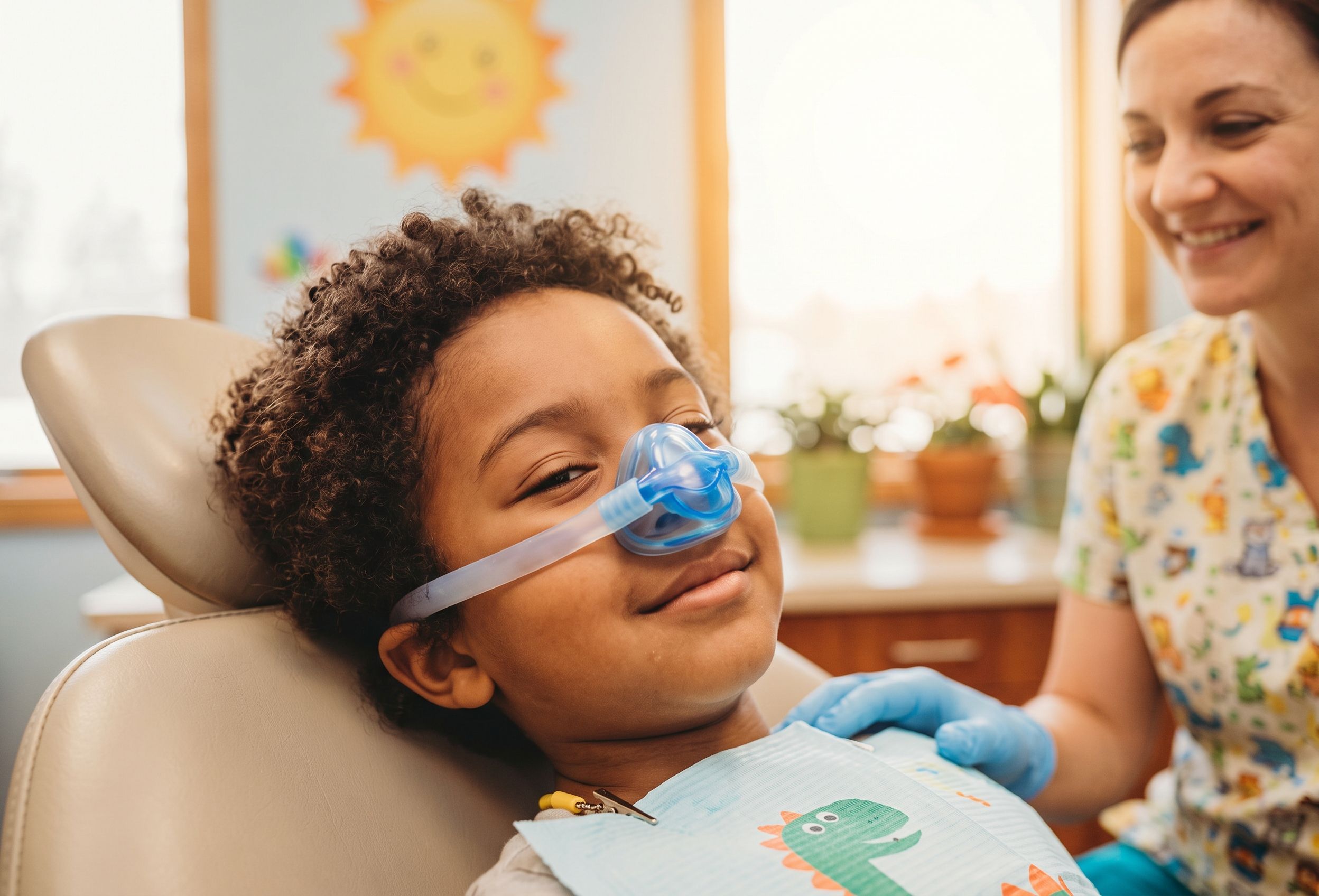
Nitrous oxide — sometimes called laughing gas — may help some children feel more relaxed during dental treatment. It is delivered through a small nose mask, works quickly, and usually wears off soon after it is stopped.
How It Works
Delivered through a small mask over the nose. Takes effect quickly, wears off soon after it is stopped, and does not require needles or sedation recovery time.
Who It May Help
Children who are anxious, have a low pain threshold, need longer procedures, or have had difficult previous dental experiences may benefit when clinically appropriate.
How It Is Assessed
The dentist considers the child’s health history, anxiety level, age, treatment needs, and family preferences before recommending nitrous oxide — it is not automatically offered.
Part of a Broader Approach
Nitrous oxide supports the overall behaviour guidance plan. Communication, pacing, and tell-show-do are still part of the visit alongside it.
What Parents Can Do Before the Appointment
A little preparation can make a child’s dental visit feel more predictable and less frightening. These steps help both the child and the dental team.
Share concerns in advance. Let the dental team know about previous difficult visits, sensory sensitivities, specific triggers, or relevant medical history before you arrive.
Choose a good appointment time. Pick a time when your child is usually rested and not hungry. Avoid nap times or times when they are typically irritable or tired.
Bring a comfort item. A familiar toy, stuffed animal, or small object from home can help your child feel more secure in an unfamiliar environment.
Use calm, neutral language. Explain that the dentist will look at their teeth and help keep them healthy — without adding your own anxiety or describing the visit in worrying terms.
Avoid making promises you cannot keep. Do not say “it won’t hurt” or give detailed descriptions that may increase anticipatory anxiety. Unpredicted sensations feel worse than prepared-for ones.
Ask questions beforehand. Contact the office if you are unsure what to expect. Knowing the format of the visit helps you explain it to your child more confidently.
A BETTER PHRASE THAN "IT WON'T HURT"
“The dentist will explain what is happening every step of the way and will take good care of you.”
This keeps the message positive without making a promise about sensations that cannot always be predicted.
Pediatric Dentistry at Toothology — Williamsburg
Toothology Dental at 42A Broadway, Williamsburg, Brooklyn NY 11249 provides pediatric dental care from infancy through adolescence.
Dr. Kristina Bekiyants
Board-Eligible Pediatric Dental Specialist
Dr. Bekiyants is a board-eligible pediatric specialist and former Chief Resident at Stony Brook University’s Department of Pediatric Dentistry. She focuses on creating positive, confidence-building dental experiences for children — particularly those who have had difficult previous visits or who are anxious about dental care.
Pediatric Services at Toothology
Frequently Asked Questions
What makes a pediatric dentist gentle?
How do I prepare my child for their first dental visit?
What if my child is scared of the dentist?
At what age should a child first see a dentist?
Can I stay in the room during my child's appointment?
Parent involvement can vary depending on the child, the procedure, and the office’s approach. If being present is important to you, ask Toothology about their policy when scheduling the appointment. Some children do better with a parent nearby; others are more cooperative when given some independence. The dental team can help guide what works best for your child.
A Calmer Dental Visit Starts With the Right Approach
Gentle dental care for kids focuses on clear communication, careful pacing, individualized behaviour guidance, and prevention. A positive, well-explained visit can help children build greater confidence with dental care over time — making future appointments easier for everyone. If your child is anxious, has had a difficult previous dental experience, or needs a first dental visit, Toothology in Williamsburg offers a child-focused approach led by Dr. Kristina Bekiyants, a board-eligible pediatric specialist.
READY TO BOOK A KIDS' VISIT?
Gentle pediatric care from infancy through adolescence at Toothology in Williamsburg, with a board-eligible pediatric specialist.
DIRECT LINE

DR. KRISTINA BEKIYANTS
PEDIATRIC SPECIALIST · BOARD-ELIGIBLE
IN THIS GUIDE
PEDIATRIC SERVICES
TOOTHOLOGY DENTAL
Williamsburg, Brooklyn, NY
Serving Greenpoint, Bushwick, Bed-Stuy & Downtown Brooklyn
718-678-3800
Emergency line available
Open Hours
Mon – Thu: 10:00 AM – 6:00 PM Friday: 10:00 AM – 2:00 PM Sunday: 10:00 AM – 2:00 PM Saturday: Closed
OUR COMMITMENT
- Board-Certified Pediatric Dentists
- Child-Friendly, Anxiety-Reducing Care
- Same-Day Emergency Slots
- Low-Radiation Digital X-Rays
- Most Major Insurance Accepted