
- Gum Health Guide · Williamsburg Brooklyn
Bleeding gums when you floss can point to gum inflammation, flossing technique, or both. The pattern matters — and if bleeding keeps returning, it’s worth getting your gums evaluated rather than waiting it out.
Gums Bleed When You Floss? Gingivitis or Just Technique
If your gums bleed when you floss, the cause may be gum inflammation, flossing technique, or a combination of both. A small amount of bleeding when you restart flossing is not uncommon — but bleeding that keeps returning, gets worse, or also happens when you brush should not be ignored and is a good reason to have your gums evaluated.
Why Gums Bleed When You Floss
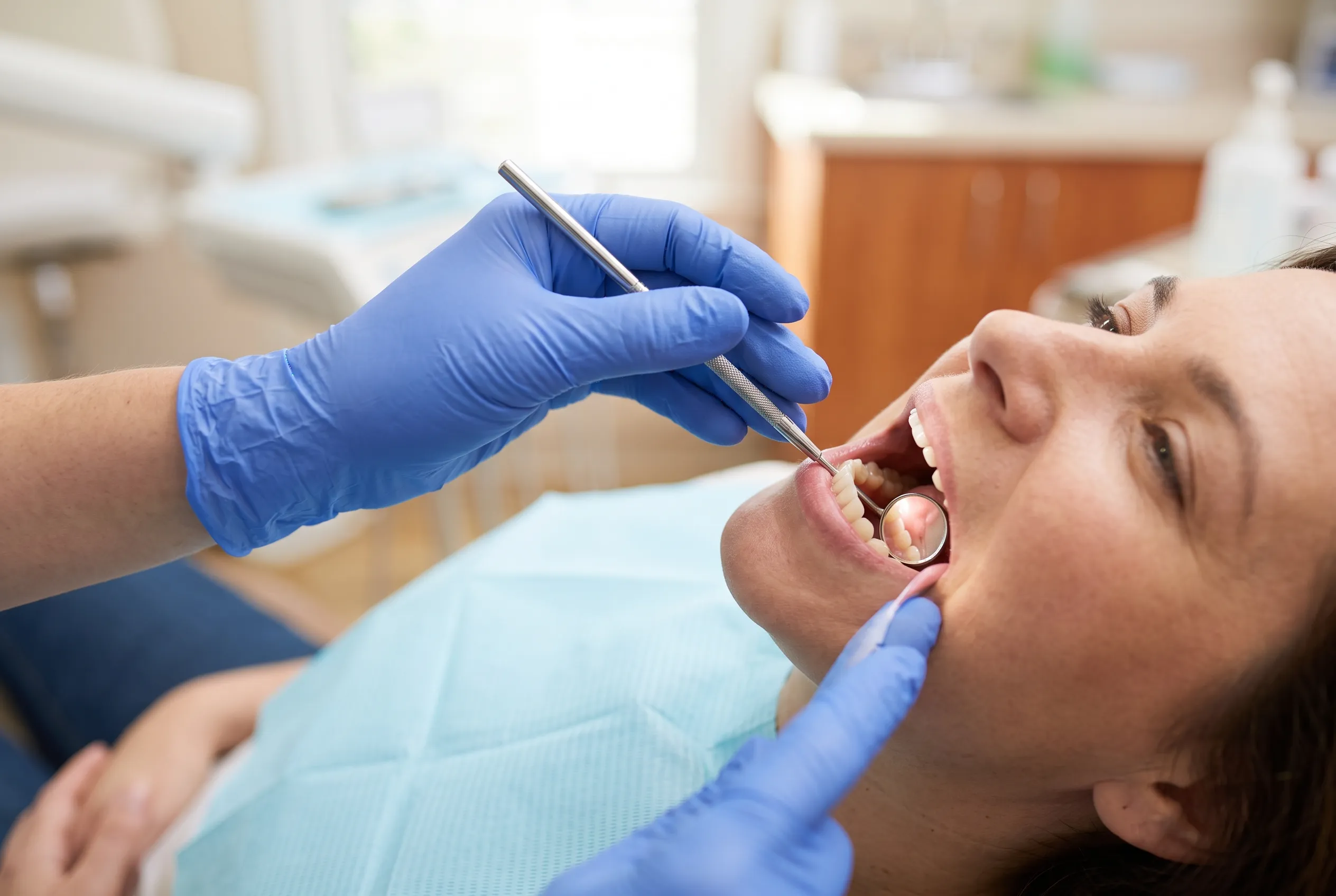
Gums most often bleed during flossing for two main reasons. Understanding which one applies helps guide what to do next.
- GUM INFLAMMATION
When plaque builds up between the teeth and along the gumline, the gums can become red, swollen, and easier to bleed. If plaque hardens into tartar, brushing and flossing cannot remove it — a professional cleaning is needed.
- FLOSSING TECHNIQUE
Snapping floss into the gumline or sawing too aggressively can injure the tissue, even when the gums are otherwise healthy. Adjusting technique may be all that is needed in these cases.
People who are starting or restarting flossing may notice some bleeding at first, especially if the gums are already inflamed. With gentle, consistent daily cleaning, this may improve. However, bleeding that continues, keeps returning, or gets worse should be checked by a dentist or hygienist.
Gingivitis or Technique? What the Pattern May Suggest
These patterns are clues, not a diagnosis. Gingivitis and flossing trauma can also occur at the same time, so persistent bleeding is worth having evaluated regardless of the pattern.
| Pattern | May Suggest Gum Inflammation | May Suggest Technique Irritation |
|---|---|---|
| Where bleeding happens | Several areas of the gums | One specific spot after flossing |
| Gum appearance | Red, swollen, or tender gums | Otherwise normal-looking gums with soreness at one site |
| Bleeding with brushing | May happen as well | Usually linked to flossing the irritated area only |
| What happens over time | Keeps returning until inflammation is addressed | May settle after gentler technique is used |
When Bleeding Is a Sign of Gingivitis
Gingivitis is inflammation of the gums, most often caused by plaque buildup along the gumline. At this stage, the deeper bone and tissues supporting the teeth are not yet damaged — which is why gingivitis can often improve with professional cleaning and better daily oral hygiene.
Signs that may point to gingivitis include:
BLEEDING ALONE CANNOT DIAGNOSE GINGIVITIS
These symptoms can also be related to flossing trauma, pregnancy-related changes, medications, or local irritation. A dentist or hygienist uses a gum examination and periodontal probing to determine whether the problem is limited to gingivitis or involves deeper periodontal tissues.
GINGIVITIS CAN PROGRESS TO PERIODONTITIS
If gingivitis is not addressed, it can progress to periodontitis, which involves loss of the bone and tissues supporting the teeth. Bleeding alone cannot determine whether periodontitis is present — a clinical evaluation is needed.
Other Reasons Gums May Bleed
Gum bleeding is not always caused by gingivitis or flossing technique. The pattern can offer useful clues — bleeding at several sites with red or swollen gums is more consistent with inflammation, while bleeding from one spot immediately after forceful flossing may suggest local trauma.
Hormonal changes: Pregnancy can make the gums more sensitive and easier to bleed, especially when plaque is present alongside the hormonal changes.
Medications: Blood thinners and some other medicines can make bleeding easier or more noticeable. Do not stop or change prescribed medication without speaking with the prescribing clinician.
Local irritation: Food trapped between teeth, a rough restoration, or an appliance that is difficult to clean around can irritate one specific area and cause localized bleeding.
Spontaneous or unexplained bleeding: Bleeding that occurs without an obvious trigger, is unusually heavy, or lasts a long time should be evaluated by a dentist and, when appropriate, a medical professional.
What to Do at Home Without Making It Worse
If your gums bleed when you floss, stopping completely is usually not the best response. Unless a dental professional has told you otherwise, plaque can continue building up when interdental cleaning is skipped. The better approach is to focus on gentle technique and consistency.

Gentle Flossing Technique
Ease the floss in. Guide it gently between the teeth — do not snap or force it into the gums.
Make a C-shape. Curve the floss around one tooth and hug the side of the tooth with it.
Clean the surface. Move the floss gently up and down, going slightly below the gumline.
Repeat on the other side. Clean the adjacent tooth in the same space before moving to the next gap.
Be consistent. Clean between your teeth once daily using this gentle technique — regularity matters as much as force.
Additional Home Care Tips
GIVE IT ABOUT A WEEK
Mild bleeding may improve within about a week of gentle, consistent daily cleaning. If it continues after that, affects several areas, or is getting worse, it is worth scheduling a dental or periodontal evaluation rather than continuing to wait.
When to Book a Periodontal Checkup
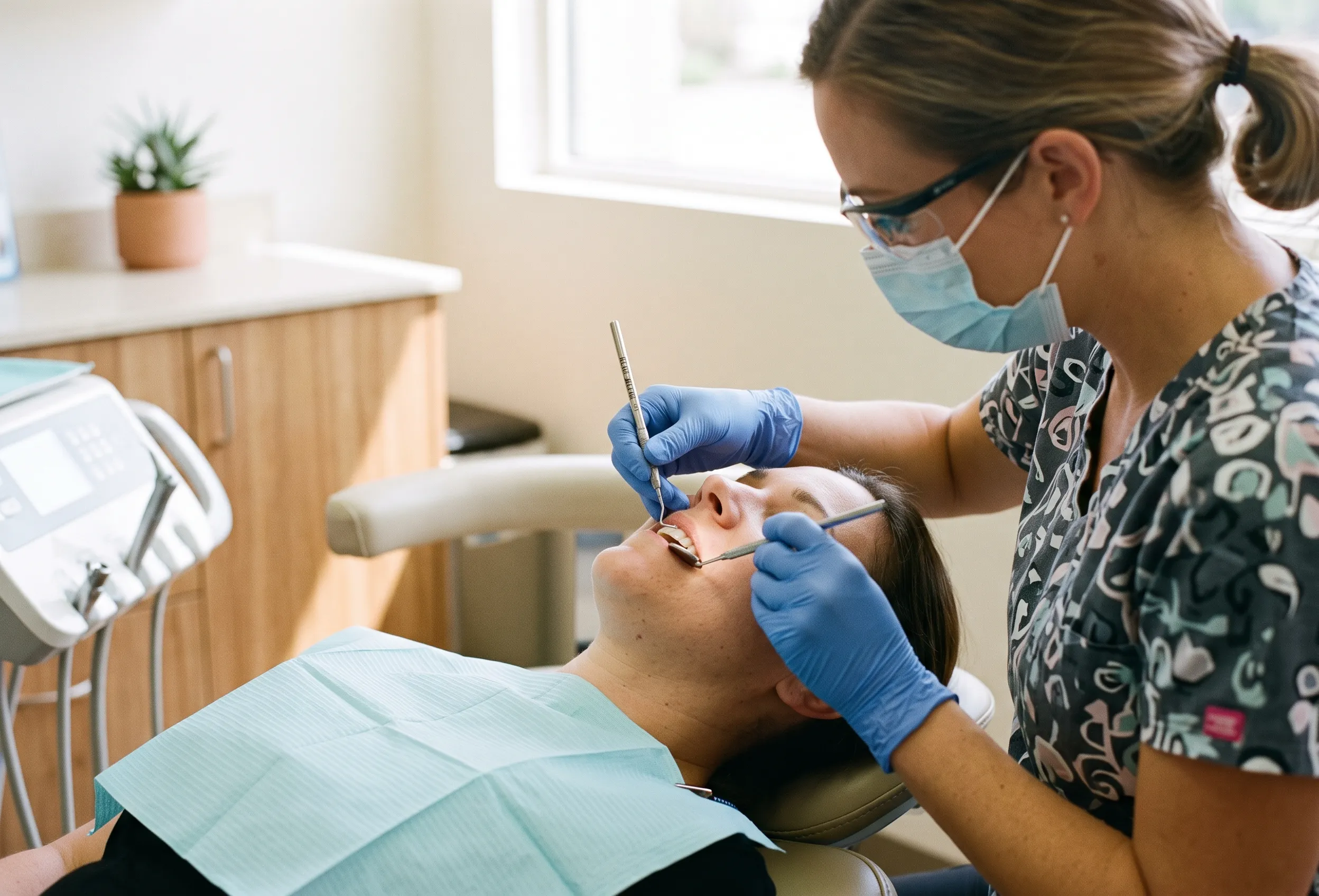
You do not need to wait until bleeding becomes severe. If any of the following apply, schedule a dental or periodontal evaluation:
1
2
3
4
5
6
7
SEEK PROMPT CARE FOR THESE SIGNS
Prolonged or heavy bleeding, pus or a bad taste near the gums, significant swelling, loose teeth, or bleeding after dental trauma should be evaluated promptly — do not wait for a routine appointment.
What the Dental Team Checks at a Periodontal Evaluation
| What They Check | Why It Matters |
|---|---|
| Gum appearance and bleeding points | Shows where inflammation is present and how widespread it is across the mouth |
| Plaque and tartar | Helps identify deposits contributing to gum irritation that need professional removal |
| Periodontal probing | Measures pocket depth around each tooth and checks for deeper periodontal involvement beyond gingivitis |
| Gum recession and tooth mobility | Looks for signs that the supporting tissues may be affected, indicating more advanced disease |
| Medical and dental history | Identifies contributing factors such as smoking, diabetes, pregnancy, or medications that may affect gum health |
| X-rays when indicated | Helps evaluate supporting bone when periodontitis is suspected based on clinical findings |
Treatment Depends on the Diagnosis
- PLAQUE-RELATED GINGIVITIS
May improve with professional cleaning and better home care — keeping consistent daily cleaning going forward is a key part of maintaining the improvement.
- DIAGNOSED PERIODONTAL DISEASE
Scaling and root planing may be recommended. Not every case of bleeding gums requires this — it is used when periodontal involvement beyond gingivitis is confirmed on evaluation.
Frequently Asked Questions
Is it normal for gums to bleed when flossing?
Do bleeding gums mean gum disease?
Can flossing make gums bleed at first?
How long should bleeding gums last?
When should I see a dentist about bleeding gums?
Book an evaluation if bleeding persists after about a week of gentle flossing, also happens with brushing, comes with swelling or tenderness, or keeps returning in the same area. Seek prompt care for significant swelling, pus, loose teeth, spontaneous bleeding, or bleeding that does not settle after dental trauma.
Gums Keep Bleeding? Get Them Evaluated
GUMS KEEP BLEEDING WHEN YOU FLOSS?
Schedule a gum evaluation at Toothology in Williamsburg to find out whether it’s technique, gingivitis, or something that needs more attention.
IN THIS GUIDE
WHEN TO BOOK AN APPOINTMENT
1
2
3
4
5
6
7
TOOTHOLOGY DENTAL
Williamsburg, Brooklyn, NY
Serving Greenpoint, Bushwick, Bed-Stuy & Downtown Brooklyn
718-678-3800
Emergency line available
Open Hours
Mon – Thu: 10:00 AM – 6:00 PM Friday: 10:00 AM – 2:00 PM Sunday: 10:00 AM – 2:00 PM Saturday: Closed
OUR COMMITMENT
- Board-Certified Pediatric Dentists
- Child-Friendly, Anxiety-Reducing Care
- Same-Day Emergency Slots
- Low-Radiation Digital X-Rays
- Most Major Insurance Accepted