
- Preventive Dentistry Guide · Williamsburg Brooklyn
Most people know their dentist checks for cavities. What many don’t realise is that a thorough exam also includes a soft tissue check — a visual and hands-on evaluation of the gums, tongue, cheeks, lips, and throat area.
Oral Cancer Screening: What Dentists Check During a Routine Exam
Most people come to a routine dental exam expecting their dentist to check for cavities and assess gum health. What many do not realise is that a thorough dental exam also includes a soft tissue check — a visual and hands-on evaluation of the gums, cheeks, tongue, lips, floor and roof of the mouth, and the visible throat area.
A red mark on the gum, a small sore that won’t heal, or a white patch noticed while brushing can all feel alarming. Most of the time, these changes have straightforward explanations — a minor irritation, a bite injury, a gum infection, or a temporary reaction. What matters clinically is not the appearance of a change in isolation, but whether it persists, worsens, or lacks an obvious explanation after a reasonable period.
What Is an Oral Cancer Screening?
An oral cancer screening is a quick visual and hands-on check of the mouth, gums, tongue, throat area, and nearby soft tissues. It helps identify unusual changes that may need monitoring or further evaluation. In most dental offices, this screening is part of a routine dental exam — it is painless, takes only a few minutes, and usually requires no special preparation.
Part of Your Routine Exam
An oral cancer screening is not a separate procedure. It is included as part of a comprehensive dental exam at Toothology in Williamsburg.
Quick and Painless
The check takes only a few minutes. No injections, no special equipment, and no preparation is required on your part.
Screening ≠ Diagnosis
A screening does not diagnose cancer. It helps your dentist spot changes that may need closer review. Only a biopsy examined by a pathologist can confirm a diagnosis.
Covers Areas You Can't See Yourself
Areas like the underside of the tongue, floor of the mouth, and back of the throat are difficult to examine clearly at home — the exam provides proper lighting and positioning.
Why Dentists Check the Gums, Tongue, Cheeks, and Throat
A dental exam is not only about teeth. Dentists also check the soft tissues of the mouth because they can spot changes that patients may not notice on their own. During a routine exam, the dentist uses proper lighting, positioning, and touch to look for unusual tissue changes in each of these areas.
| Area Examined | What the Dentist Looks and Feels For |
|---|---|
|
👄
Lips & Lip Corners
|
Sores, ulcers, rough areas, discolouration, swelling, or asymmetry |
|
🫦
Cheeks & Inner Lining
|
Red or white patches, lumps, ulcers, or thickened tissue along the inner cheek surface |
|
🦷
Gums
|
Persistent sores, unusual redness, white patches, swelling, or unexplained gum changes |
|
👅
Tongue
|
Red or white patches, lumps, ulcers, or restricted movement — top, sides, and underside are all checked |
|
⬇
Floor of the Mouth
|
Swelling, lumps, ulcers, or unusual tissue texture under the tongue — an area that is hard to check at home |
|
⬆
Roof of the Mouth
|
Persistent sores, red or white patches, or abnormal tissue changes on the hard or soft palate |
|
🗣
Back of the Throat
|
Visible changes or persistent unexplained irritation in the visible throat area |
|
🫀
Jaw & Neck
|
Enlarged lymph nodes or unexplained lumps felt during palpation of the jaw and neck area |
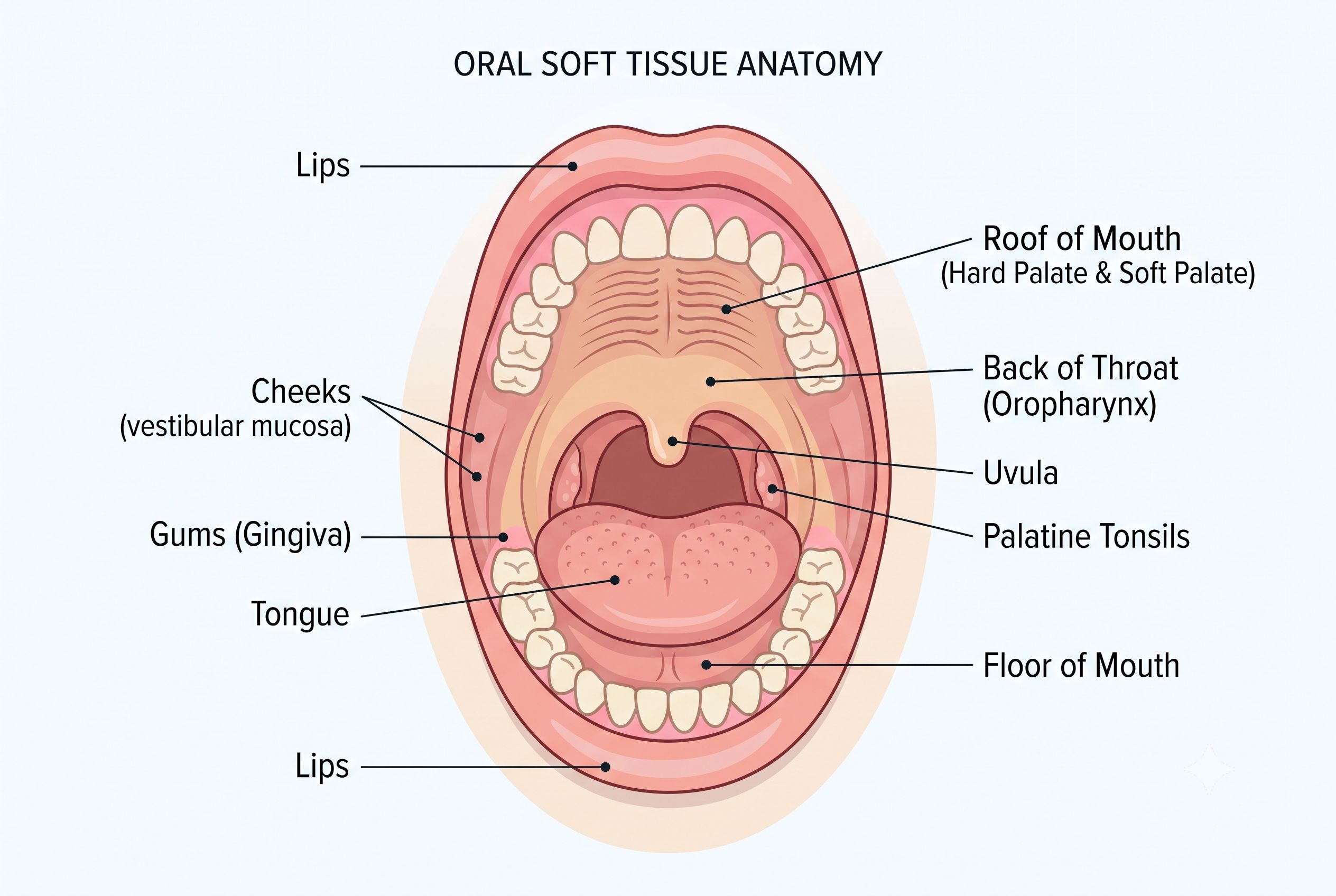
Oral Cancer Signs on the Gums That Should Be Checked
The gums can show changes from irritation, infection, brushing habits, dentures, or other common causes. Not every red spot or sore is alarming — but changes that persist for about two weeks, worsen, grow, bleed without explanation, or cause numbness or pain should be checked by a dentist.
A red or white patch on the gums, tongue, or inside the mouth lasting about two weeks
A sore, ulcer, or rough area that does not heal or keeps returning
A persistent red mark on the gum, cheek, or lip with no clear cause
A lump, bump, or thickened area in the mouth, jaw, or neck
Unexplained bleeding from gum or mouth tissue
Numbness, tenderness, or pain without an obvious cause
Difficulty chewing, swallowing, or moving the tongue or jaw
Persistent sore throat or hoarseness lasting more than two weeks
A loose tooth without a clear dental explanation
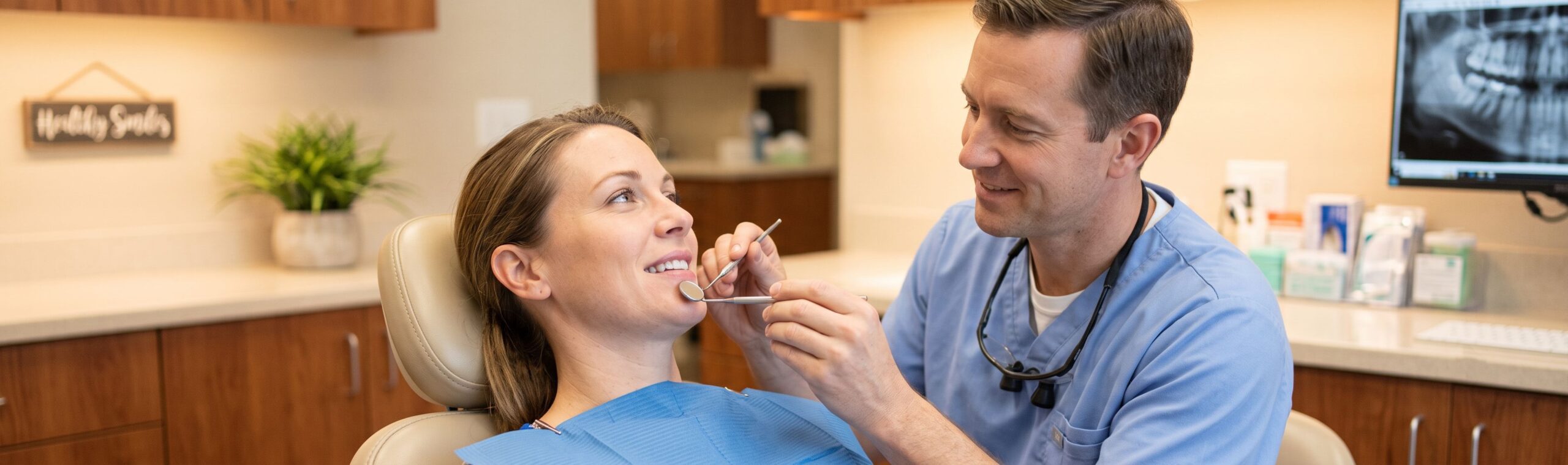
A red mark on the gum is usually caused by something benign — gum inflammation, minor irritation, infection, a canker sore, or a reaction to certain foods or dental products. Most mouth changes are not cancer. A red spot, gum sore, or patch is more often related to irritation, an accidental bite, brushing trauma, or gum disease.
The Persistence Rule
- Usually less concerning:
The red mark improves within one to two weeks — consistent with irritation, a minor bite, or temporary inflammation.
- Worth monitoring:
The mark is present for two weeks but not worsening — worth mentioning at your next routine exam for documentation.
- Should be checked:
The red mark improves within one to two weeks — consistent with irritation, a minor bite, or temporary inflammation.
During an oral cancer screening, the dentist or hygienist checks the soft tissues of the mouth and nearby areas for unusual changes. The process is calm, thorough, and completed as part of the regular exam.
IF SOMETHING UNUSUAL IS FOUND
Any unusual area may be documented, photographed, or monitored. If it does not have an obvious cause or does not improve, your dentist may recommend a follow-up visit or referral to an oral surgeon or specialist.
Who Should Be Especially Consistent With Oral Cancer Screening?
Routine dental exams with soft tissue screening are important for all adults, but some patients should be especially consistent about checkups and reporting any new or persistent mouth changes.
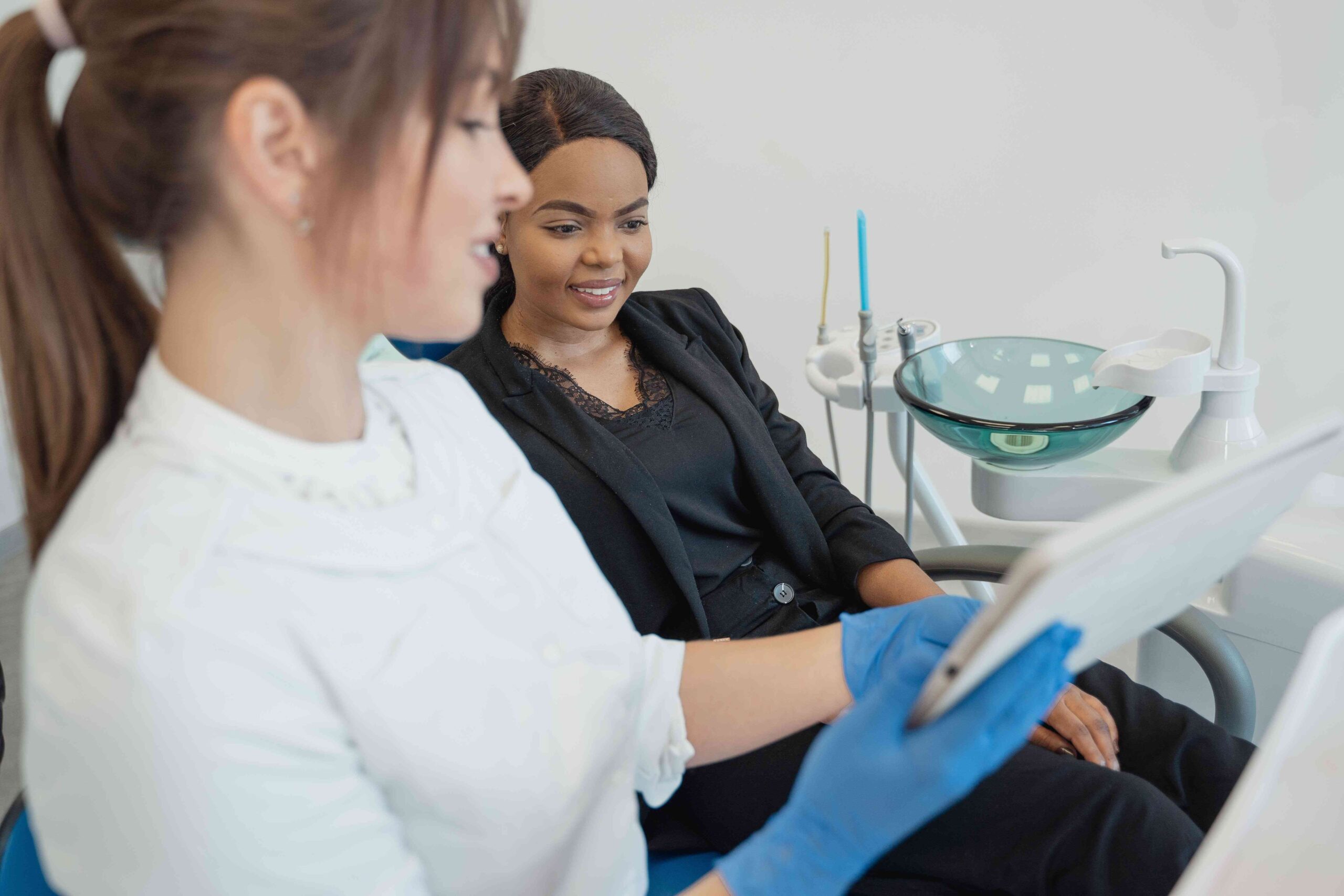
What If Your Dentist Finds Something Suspicious?
Finding an unusual area during an oral cancer screening does not mean cancer has been diagnosed. It simply means the tissue change needs the right next step.
Observation and recheck: If the area may be from a bite injury, denture irritation, or minor trauma, your dentist may remove the irritant and recheck it in about two weeks.
Documentation: The area may be photographed or noted in your chart so changes in size, colour, or texture can be monitored over time.
Treatment of an obvious cause: If the issue looks related to infection, inflammation, or an abscess, treatment may be recommended first.
Referral to a specialist: If the change persists, grows, or has no clear explanation, your dentist may refer you to an oral surgeon, oral medicine specialist, or ENT.
Biopsy if needed: A biopsy is the only way to confirm a diagnosis. Most biopsied mouth lesions are benign, but testing provides clarity.
A REFERRAL IS NOT A DIAGNOSIS
A referral is a careful clinical step to make sure persistent or unexplained tissue changes are evaluated properly and early. It is not confirmation that something serious is present.
Frequently Asked Questions
What does a dentist check during an oral cancer screening?
Can oral cancer show up on the gums early?
Is a red mark on the gum always cancer?
Does an oral cancer screening hurt?
How often should I get an oral cancer screening?
For many adults, a soft tissue screening is included during routine dental exams, often every six months. Patients with higher risk factors — such as tobacco use, heavy alcohol use, HPV-related history, or past oral cancer — should ask their dentist what schedule is best for them specifically.
What happens if the dentist finds something suspicious?
If your dentist finds an unusual area, they may document it, recheck it in about two weeks, treat an obvious cause, or refer you to a specialist for further evaluation. A referral does not mean cancer has been diagnosed — it means the area needs a closer look to make sure it is monitored properly and early.
Early Evaluation Is Always the Right Choice
An oral cancer screening is not a reason to panic — it is a smart part of preventive dental care. For most patients, the exam confirms that the mouth and gums look healthy. If you are overdue for a routine dental exam, have noticed a red mark on the gum, a mouth sore, or another change that has not gone away, Toothology in Williamsburg can help with a proper evaluation.
NOTICED A CHANGE IN YOUR MOUTH?
Book a dental exam at Toothology in Williamsburg — soft tissue screening is included as part of every comprehensive checkup.
DIRECT LINE
IN THIS GUIDE
SIGNS WORTH MENTIONING
If it doesn't improve in ~2 weeks, schedule an exam — don't keep watching at home.
TOOTHOLOGY DENTAL
Williamsburg, Brooklyn, NY
Serving Greenpoint, Bushwick, Bed-Stuy & Downtown Brooklyn
718-678-3800
Emergency line available
Open Hours
Mon – Thu: 10:00 AM – 6:00 PM Friday: 10:00 AM – 2:00 PM Sunday: 10:00 AM – 2:00 PM Saturday: Closed
OUR COMMITMENT
- Board-Certified Pediatric Dentists
- Child-Friendly, Anxiety-Reducing Care
- Same-Day Emergency Slots
- Low-Radiation Digital X-Rays
- Most Major Insurance Accepted