
- Restorative Dentistry Guide · Williamsburg Brooklyn
From a cracked molar to a gap you’ve been covering when you smile — restorative dentistry is how dentists repair what’s broken and replace what’s missing so your mouth works the way it should.
Restorative Dentistry in Brooklyn: How Dentists Repair Damaged, Decayed, or Missing Teeth
A tooth that has been hurting for weeks. An old filling that cracked while eating dinner. A gap from a missing tooth you have been covering with your hand when you smile. A crown that has been loose longer than you meant to let it go. These are exactly the situations restorative dentistry is designed to address — repairing what is damaged and replacing what is missing so the mouth can function comfortably, confidently, and without the daily awareness of a problem you are working around.
The specific treatment that is right for a given situation depends on clinical findings — the extent of the damage, the amount of healthy structure remaining, the condition of surrounding teeth and gum tissue — not on a general hierarchy of which option is “best.”
What Is Restorative Dentistry?
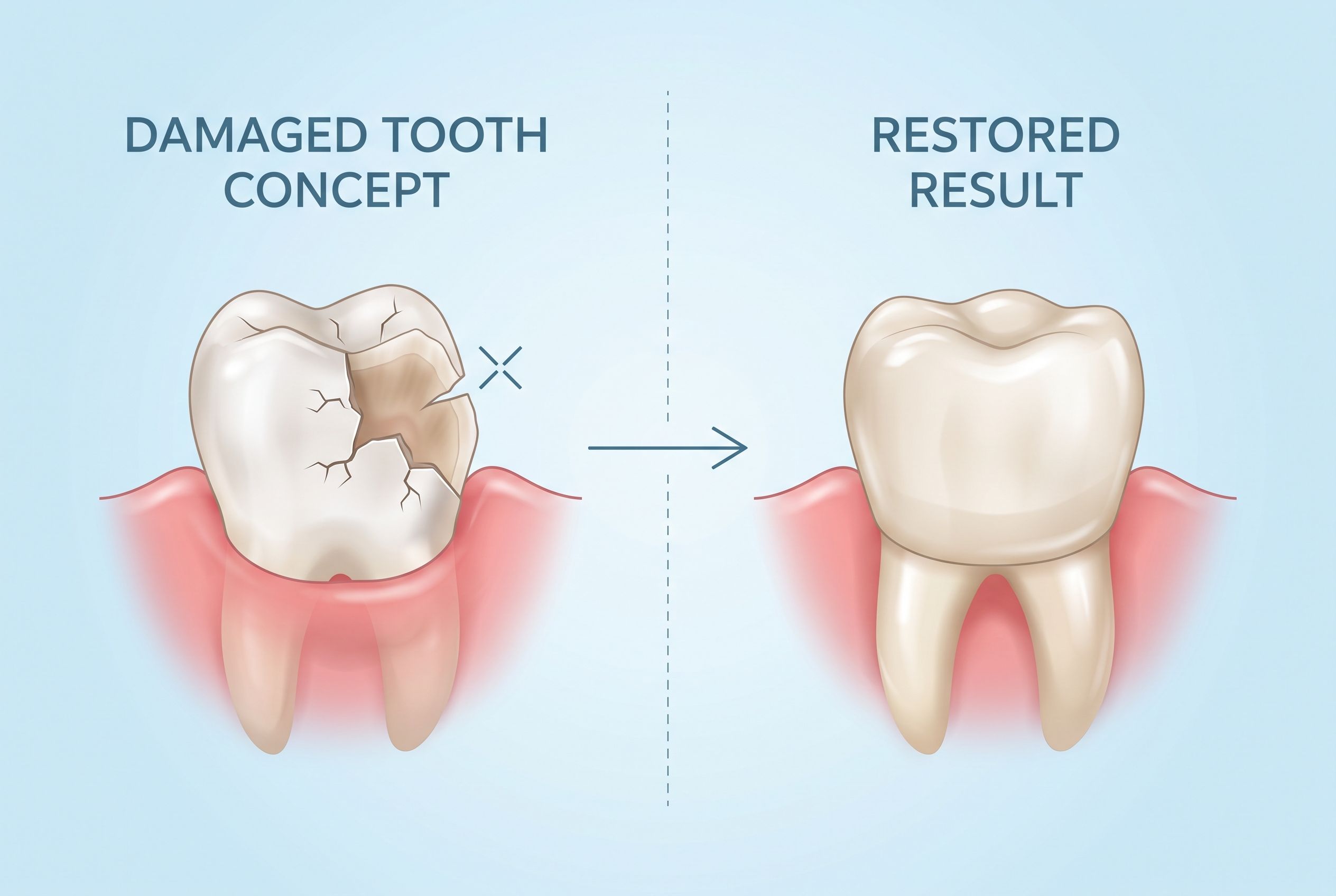
Restorative dentistry focuses on repairing damaged teeth and replacing missing ones. The main goal is function — helping patients chew, speak, and maintain a healthy bite without pain, sensitivity, or instability.
Restorative dental care can include simple tooth-colored fillings, crowns for cracked or weakened teeth, bridges, dentures, implant restorations, or more comprehensive treatment plans for multiple dental problems.
RESTORATIVE VS COSMETIC
Restorative and cosmetic dentistry can overlap — a porcelain crown, for example, can improve both the strength and appearance of a tooth. But restorative treatment is primarily about oral health and function, especially when a tooth is damaged, decayed, worn, or missing.
Signs It May Be Time for a Restorative Dental Evaluation
Restorative dental care may be needed when a tooth has lost structure or function because of decay, fracture, wear, injury, or missing teeth. Since enamel and dentin do not grow back, the right treatment depends on how much damage has occurred and what part of the tooth is affected.
Pain is not the only signal. Cavities, cracks, and infections can sometimes progress without obvious symptoms — routine exams and X-rays help identify these issues earlier, before treatment becomes more complex.
A cracked, chipped, or visibly broken tooth
A large, dark, or growing cavity
Tooth pain or sensitivity when biting or with hot or cold
A loose, cracked, or uncomfortable filling, crown, or bridge
A missing tooth affecting chewing or appearance
Teeth that look worn down or shorter than before
Food trapping around a gap or existing restoration
Swelling, bad taste, or a bump near a tooth
Difficulty chewing comfortably on one side for several weeks
The right option depends on your exam, X-rays, tooth structure, and overall treatment needs. Here is an overview of the most common restorative treatments available at Toothology in Williamsburg.

- TOOTH-COLORED FILLINGS
Composite resin repairs small to moderate cavities and minor damage with a natural-looking, shade-matched result. Bonds directly to the tooth and is often completed in one visit.
CONSERVATIVE · SINGLE VISIT
- DENTAL CROWNS
A custom cap covers and protects a damaged tooth when a filling is not enough — often after large cavities, cracks, heavy wear, or root canal treatment.
PROTECTS FULL TOOTH
- DENTAL BRIDGES
Replaces one or more missing teeth by anchoring to nearby teeth or implants — restoring chewing function and helping prevent neighbouring teeth from shifting.
FIXED REPLACEMENT
- DENTURES
Partial or full dentures replace multiple or all missing teeth — improving chewing, speech, and appearance. Can be partial (some teeth remaining) or full arch.
PARTIAL OR FULL
- IMPLANT RESTORATIONS
The crown, bridge, or denture attached to a dental implant — creating a stable, long-term replacement for missing teeth that can feel and function like a natural tooth.
STABLE · LONG-TERM
- BONDING
Composite bonding repairs small chips, minor fractures, or surface irregularities when the tooth is otherwise healthy — a conservative option with minimal preparation.
MINOR REPAIRS
Fillings, Crowns, Bridges, Dentures & Implants: A Quick Reference
Not sure which option applies to your situation? This table gives a side-by-side overview before your consultation.
| Treatment | What It Does | May Be Used For | Patient Note |
|---|---|---|---|
|
Tooth-Colored Filling
|
Repairs a cavity or small damaged area with a composite resin that matches your natural tooth shade | Small to moderate decay, minor fracture, or surface damage with enough healthy tooth remaining | Often completed in one visit |
|
Dental Crown
|
Covers and fully protects the visible portion of a damaged or weakened tooth | Large cavity, cracked tooth, broken cusp, weak remaining structure, or root-canal-treated tooth | Used when a filling is not enough |
|
Dental Bridge
|
Replaces one or more missing teeth by anchoring a fixed restoration to neighbouring teeth or implants | One or more adjacent missing teeth with healthy anchor teeth or implants on either side | Fixed; helps prevent tooth shifting |
|
Denture
|
Replaces several or all missing teeth to restore chewing, speech, and appearance | Multiple missing teeth across an arch, or full-arch tooth loss | Can be partial or full; removable or implant-supported |
|
Implant Restoration
|
Restores the visible tooth (crown, bridge, or denture) attached to a surgically placed dental implant | Missing tooth replacement where implant placement is clinically appropriate | Can feel and function like a natural tooth |
How a Dentist Chooses the Right Treatment
The right restorative treatment depends on exam findings — not preference alone. The same painful tooth could need a filling, a crown, a root canal and crown, or an extraction depending on what the X-rays and exam show.
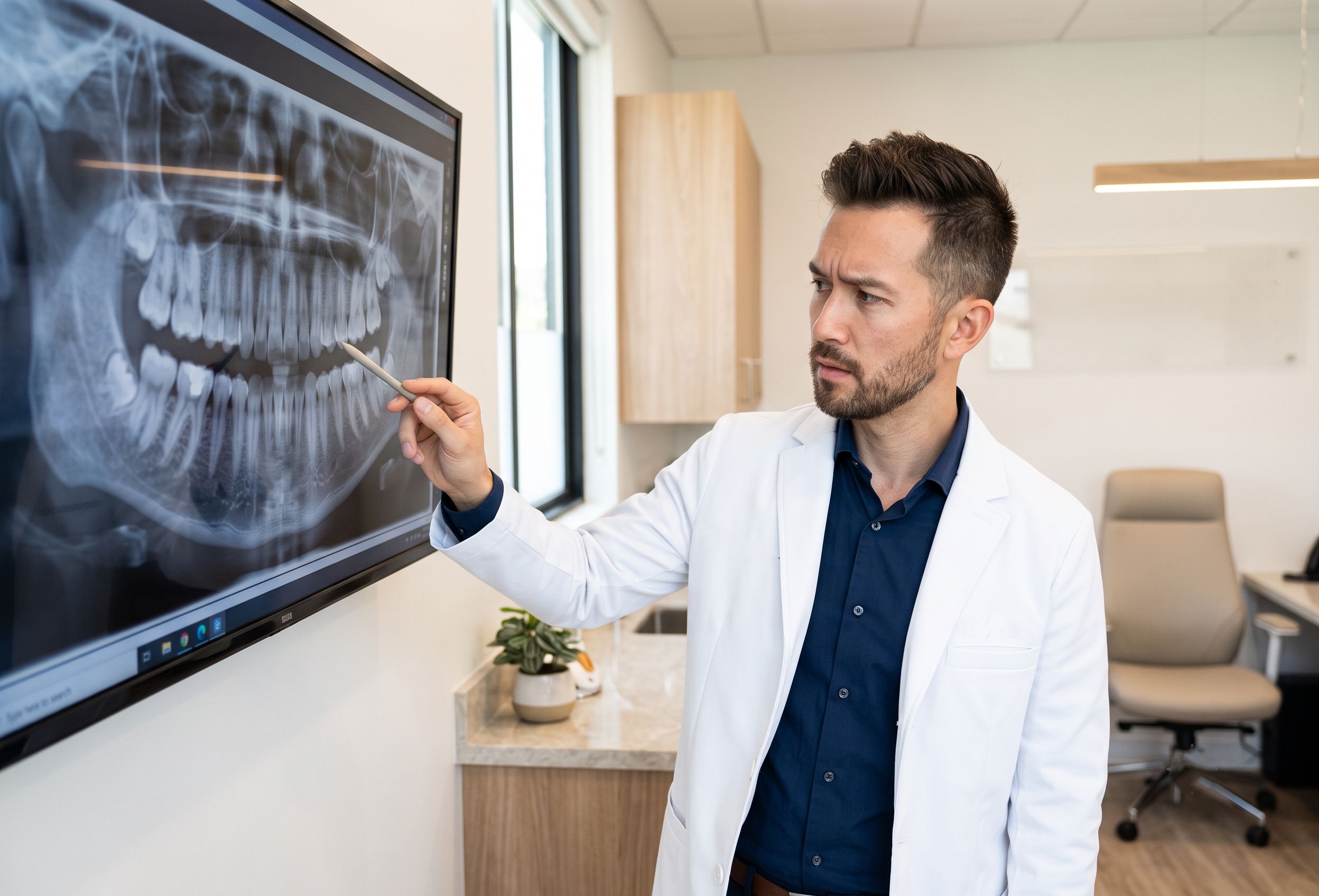
Remaining tooth structure: A small cavity may need a filling, while a weakened tooth with thin walls may need a crown to protect it from fracturing.
Depth of decay: If decay has reached the nerve, root canal treatment may be needed before restoration can proceed.
Crack location and extent: Some cracks can be protected with a crown. Deeper cracks below the gumline may make the tooth non-restorable.
Gum and bone support: Active gum disease, bone loss, or tooth mobility can affect whether a tooth can realistically be saved long-term.
Bite and surrounding teeth: The restoration must work properly with neighbouring teeth and absorb normal chewing forces without shifting or breaking.
Patient priorities: Budget, timeline, appearance preferences, and long-term goals are all part of the treatment discussion at Toothology.
THE LEAST INVASIVE OPTION THAT WORKS
Dentists generally prefer the least invasive option that can work reliably. The goal is to preserve as much natural tooth structure as possible while choosing a restoration that will stay stable over time.
Why Restoring Teeth Early Can Prevent Bigger Problems
Early restorative treatment often allows for simpler, more conservative care. The earlier a problem is evaluated, the more treatment options you usually have.
- TREATING EARLY USUALLY MEANS
- A small cavity that only needs a filling
- A crack caught in time and protected with a crown
- A missing tooth replaced before neighbouring teeth shift
- More treatment options to choose from
- A simpler, more conservative procedure
- DELAYING TREATMENT CAN LEAD TO
- Larger cavities requiring a root canal or crown
- A crack spreading until the tooth is non-restorable
- Dental infection or abscess
- Shifting teeth affecting the bite
- More complex and costly treatment overall
When to Book a Restorative Dental Consultation
The right time to book is when you first notice a problem — not after it becomes painful or urgent. Schedule an evaluation if any of the following apply.
WHAT TO EXPECT AT YOUR CONSULTATION
A restorative consultation at Toothology may include an exam, X-rays, and a clear discussion of whether a filling, crown, bridge, denture, implant restoration, or another treatment is the right fit. You will understand what is happening, what each option involves, and what may happen if care is delayed — so you can make an informed decision at your own pace.
Frequently Asked Questions
What is considered restorative dentistry?
Is restorative dentistry the same as cosmetic dentistry?
What is the most common restorative dental treatment?
Can a badly damaged tooth be saved?
When should I see a restorative dentist?
Schedule an evaluation if you have a cracked or broken tooth, tooth pain, sensitivity, a visible cavity, a loose filling or crown, a missing tooth, difficulty chewing, or worn-down teeth. Earlier care usually gives you more treatment options and keeps the procedure more conservative.
Restore Comfort, Function, and Confidence
A cracked tooth, large cavity, loose bridge, or missing tooth can become more difficult — and more costly — to manage the longer it is left untreated. In most cases, restorative dentistry offers a practical path forward based on your exam, X-rays, and treatment goals. Toothology in Williamsburg can help you understand what is happening, which restorative options make sense, and what to expect from the repair or replacement process.
DAMAGED, DECAYED, OR MISSING TOOTH?
Book a restorative dental consultation at Toothology in Williamsburg — exam, X-rays, and a clear treatment discussion before any commitment.
DIRECT LINE
IN THIS GUIDE
TREATMENTS AT A GLANCE
The right treatment is confirmed by exam & X-rays — not the symptoms alone.
TOOTHOLOGY DENTAL
Williamsburg, Brooklyn, NY
Serving Greenpoint, Bushwick, Bed-Stuy & Downtown Brooklyn
718-678-3800
Emergency line available
Open Hours
Mon – Thu: 10:00 AM – 6:00 PM Friday: 10:00 AM – 2:00 PM Sunday: 10:00 AM – 2:00 PM Saturday: Closed
OUR COMMITMENT
- Board-Certified Pediatric Dentists
- Child-Friendly, Anxiety-Reducing Care
- Same-Day Emergency Slots
- Low-Radiation Digital X-Rays
- Most Major Insurance Accepted