
- Halloween Candy Season · Cavity Warning Signs
If one tooth keeps reacting to candy, desserts, or sugary drinks, it may be a sign that something needs attention — in adults and especially in children during Halloween and candy season.
Teeth Hurt When You Eat Sweets? Halloween Cavity Warning Signs
HALLOWEEN & CANDY SEASON REMINDER
Sweet-triggered tooth pain can become more noticeable during Halloween and candy season, especially in children. If a tooth keeps reacting to candy, it is worth having it evaluated — early decay is often simpler to treat than advanced cavities.
Sweet-triggered pain can be associated with a cavity, but it does not automatically mean tooth decay is present. Other dental problems can cause similar sensitivity, so recurring symptoms should be evaluated rather than self-diagnosed. Whether the concern is yours or your child’s, repeated, worsening, or lingering sweet sensitivity is worth having checked.
Why Sweet Foods Can Make a Tooth Hurt
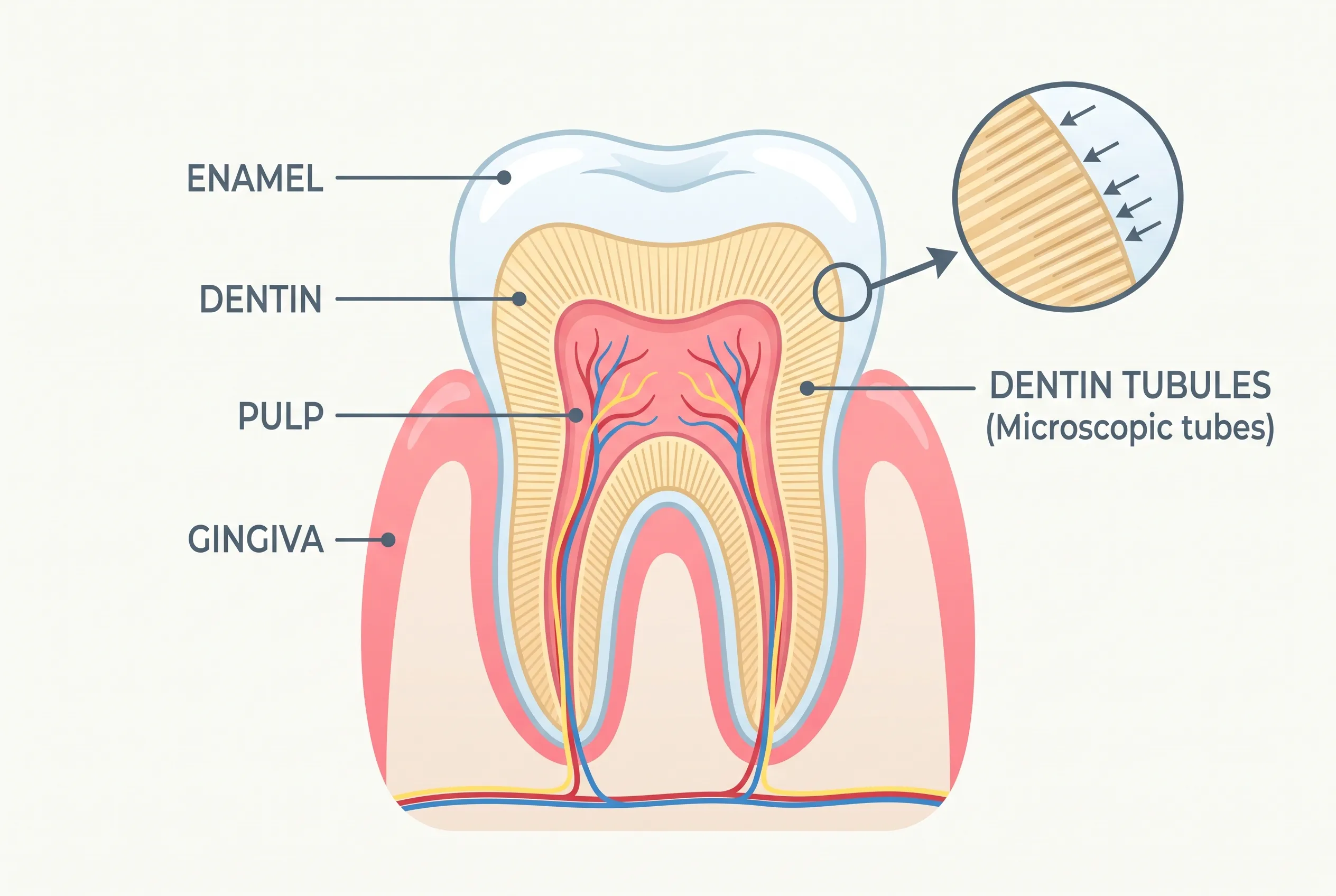
Sweet foods trigger pain or sensitivity when the tooth’s protective enamel is weakened and the underlying dentin becomes more exposed.
HOW DENTIN SENSITIVITY WORKS
Dentin contains tiny channels that connect toward the inner pulp of the tooth. When these channels are exposed by decay, enamel wear, or gum recession, sweet, cold, or acidic foods can trigger a brief sensitive response. This does not mean sugar is directly touching the nerve — it means the tooth has lost some of its protective covering and has become more reactive.
Cavities also develop gradually. Bacteria use sugars from food and drinks to produce acids that weaken enamel over time. Frequent sugar exposure throughout the day increases this risk more than a single sweet treat — it is the repeated pattern of exposure that matters most.
Is Sweet Sensitivity a Sign of a Cavity?
Possibly, but not always. Sweet sensitivity can occur with tooth decay, enamel wear, exposed roots, failing restorations, or general dentin sensitivity. A dental exam is the only reliable way to identify the cause.
- SIGNS WORTH MONITORING
- Mild, occasional discomfort that stops quickly
- Pain stops when the trigger is removed
- No visible food trapping or obvious change
- May reflect sensitivity or early enamel wear
- Mention it at your next scheduled dental exam
- SIGNS THAT WARRANT PROMPT EVALUATION
- Repeated pain in the same tooth every time
- Pain continues after the sweet is gone
- Food trapping, visible discoloration, or rough areas
- Also sensitive to cold or biting pressure
- May indicate decay or another dental problem
Sweet Pain Alone vs Sweet Pain With Other Signs
The pattern of how and when the tooth hurts can offer useful clues. These are not diagnostic, but they help guide when to act.
| Sweet Pain Alone | Sweet Pain + Other Signs |
|---|---|
| Mild, occasional discomfort that does not linger | Repeated pain in the same tooth each time |
| Stops quickly when the trigger is removed | Pain continues after the sweet is gone |
| No obvious food trapping or visible change to the tooth | Food trapping, discoloration, or rough areas near the site |
| May reflect sensitivity or enamel wear rather than a cavity | May indicate decay or another dental problem that needs attention |
| Mention at your next dental exam rather than acting urgently | Prompt evaluation is more appropriate if symptoms are worsening |
Other Causes of Sugar Sensitivity
Sweet sensitivity is not always caused by a cavity. The following problems can produce similar symptoms — which is why a dental exam is needed to identify the actual cause.
Enamel wear or exposed dentin: When enamel becomes thinner or damaged, the underlying dentin becomes more reactive to sweets, cold, and touch. This can happen from acid exposure, grinding, or abrasive brushing.
Gum recession: An exposed root surface is not protected by enamel, making it more sensitive to sweet, cold, and touch. A receded gum on one tooth is a specific version of this.
Cracked or fractured tooth: A crack may cause sharp or inconsistent sensitivity and can sometimes also hurt when biting. Cracks can be difficult to see on X-rays and often require bite testing to locate.
Worn or failing restoration: A damaged filling or a gap around a restoration can expose the underlying tooth structure to sweets and other triggers, producing sensitivity similar to a new cavity.
When to Book a Dental Exam
If the same tooth hurts when you eat sweets more than once, it is worth scheduling a dental exam. Early decay is often easier to treat before it reaches deeper parts of the tooth. You do not need to wait until the pain becomes severe.

- ADULTS — SCHEDULE AN EXAM IF:
- The same tooth repeatedly reacts to candy, desserts, or sugary drinks
- Sensitivity is getting stronger or affecting more teeth
- The tooth is also sensitive to cold or biting pressure
- You have started avoiding one side when chewing
- TISSUE LOSS ITSELF
- Stopping midway through eating candy
- Pointing to or holding the same tooth or cheek
- Chewing only on one side of the mouth
- Avoiding foods they usually enjoy
BABY TEETH STILL COUNT
Baby teeth should still be checked even if they will eventually fall out. Untreated decay in baby teeth can cause pain and lead to more extensive treatment if it progresses — and early dental habits matter.
HALLOWEEN CANDY TIP
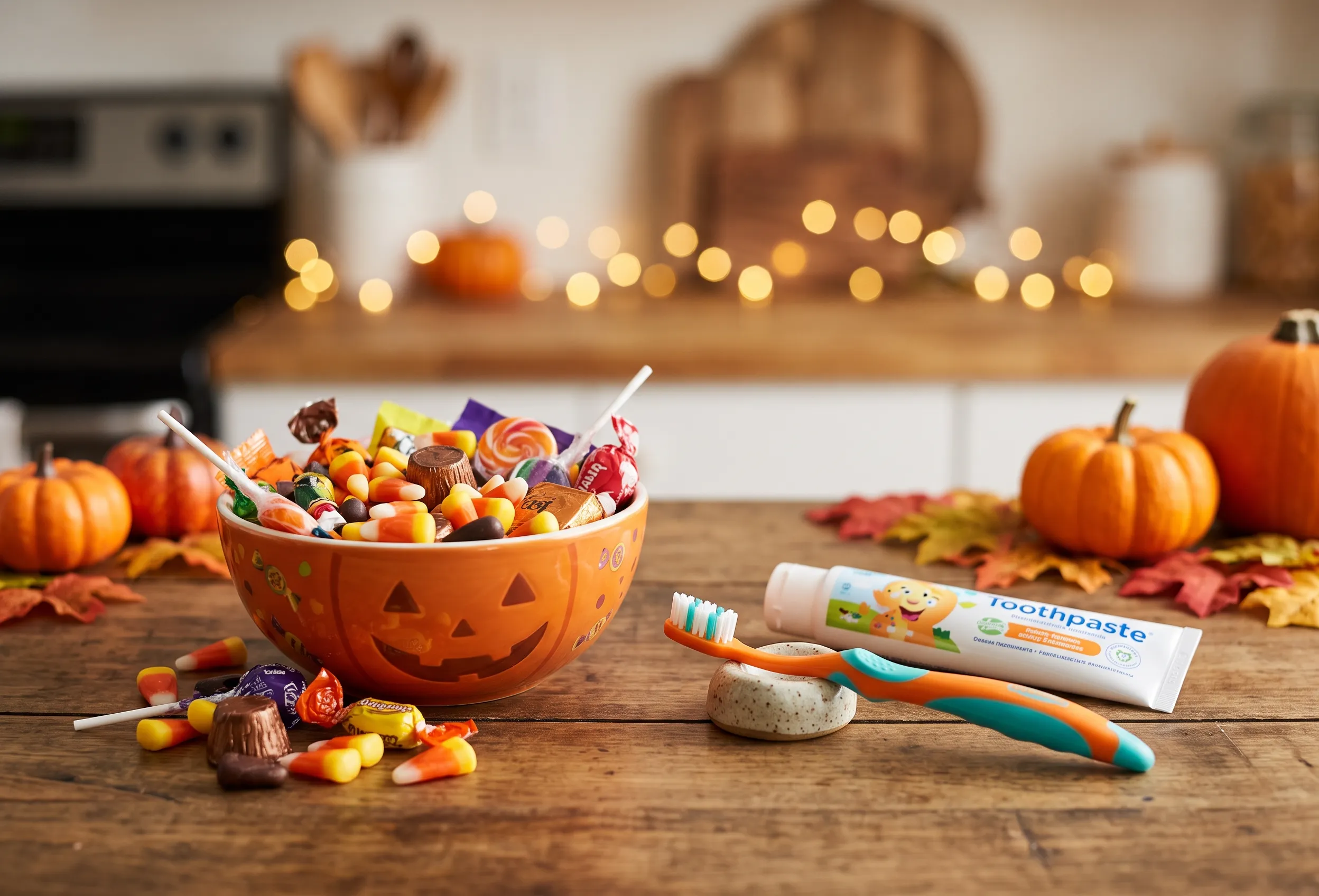
During Halloween season, try to avoid continuous snacking on sweets throughout the day. Frequent sugar exposure keeps teeth under acid attack for longer periods. Enjoying sweets in one sitting and rinsing with water afterward is easier on tooth enamel than grazing repeatedly.
SEEK PROMPT DENTAL CARE IF:
Significant swelling, pus, drainage, or a bad taste · Fever with dental symptoms · Severe or worsening pain · Trauma · A loose tooth or restoration. If there is difficulty breathing or swallowing, or rapidly spreading swelling of the face or neck — seek emergency medical care immediately.
How Dentists Treat the Cause
Sweet sensitivity does not determine the treatment by itself. The dentist first identifies the cause through an exam and any necessary imaging, then recommends care based on that finding.
| If the Exam Finds… | Treatment May Include… |
|---|---|
| Very Early Enamel Change | Fluoride, dietary guidance, and monitoring when appropriate — no drilling required at this stage |
| Cavity with Tooth Structure Loss | Tooth-colored filling or another restoration based on the size and location of the decay |
| Exposed Dentin or General Sensitivity | Desensitizing products, fluoride varnish, or protective bonding to reduce reactivity |
| Worn or Damaged Filling | Repair or replacement of the restoration to seal the tooth and eliminate the trigger |
| Crack or Structural Problem | Restorative treatment such as a larger filling or crown, depending on the extent of the damage |
| Deeper Pulp Disease | Endodontic evaluation and possible root canal treatment when clinically indicated |
| Sweet-Triggered Pain in a Child | Pediatric dental evaluation with treatment based on the affected tooth, severity, and the child's age |
Frequently Asked Questions
Why does my tooth hurt when I eat sweets?
Does sugar sensitivity mean I have a cavity?
Can enamel loss cause sweet sensitivity?
Will a filling fix sweet sensitivity?
When should I see a dentist for sweet sensitivity?
Book an exam if the same tooth reacts repeatedly, symptoms are worsening or lingering, or chewing becomes uncomfortable. For children, repeated complaints or avoiding one side of the mouth are worth checking — baby teeth should still be treated even though they are eventually replaced.
Tooth Hurts After Candy? Get It Checked
TOOTH HURTS AFTER CANDY?
Get it checked at Toothology in Williamsburg. Adults and children welcome — early cavities are easier to treat.
IN THIS GUIDE
SYMPTOM GUIDE
🍬 Halloween tip: enjoy sweets in one sitting, not throughout the day.
TOOTHOLOGY DENTAL
Williamsburg, Brooklyn, NY
Serving Greenpoint, Bushwick, Bed-Stuy & Downtown Brooklyn
718-678-3800
Emergency line available
Open Hours
Mon – Thu: 10:00 AM – 6:00 PM Friday: 10:00 AM – 2:00 PM Sunday: 10:00 AM – 2:00 PM Saturday: Closed
OUR COMMITMENT
- Board-Certified Pediatric Dentists
- Child-Friendly, Anxiety-Reducing Care
- Same-Day Emergency Slots
- Low-Radiation Digital X-Rays
- Most Major Insurance Accepted