
- Tooth Pain Clinical Guide · Williamsburg Brooklyn
Biting pain can come from a crack, cavity, high filling, infection, gum problem, or grinding. Because these causes feel similar, a dental exam is the most reliable way to identify what is actually happening.
Tooth Hurts When You Bite Down: 6 Causes and When to Call a Dentist
If your tooth hurts when you bite down, it is easy to wonder what is causing it and whether it needs urgent attention. Biting pain can have several different causes — and they can feel surprisingly similar. The right step is a dental evaluation rather than waiting to see if it resolves on its own, especially if the pain keeps returning, is getting worse, or makes it difficult to eat.
Why a Tooth May Hurt When You Bite Down
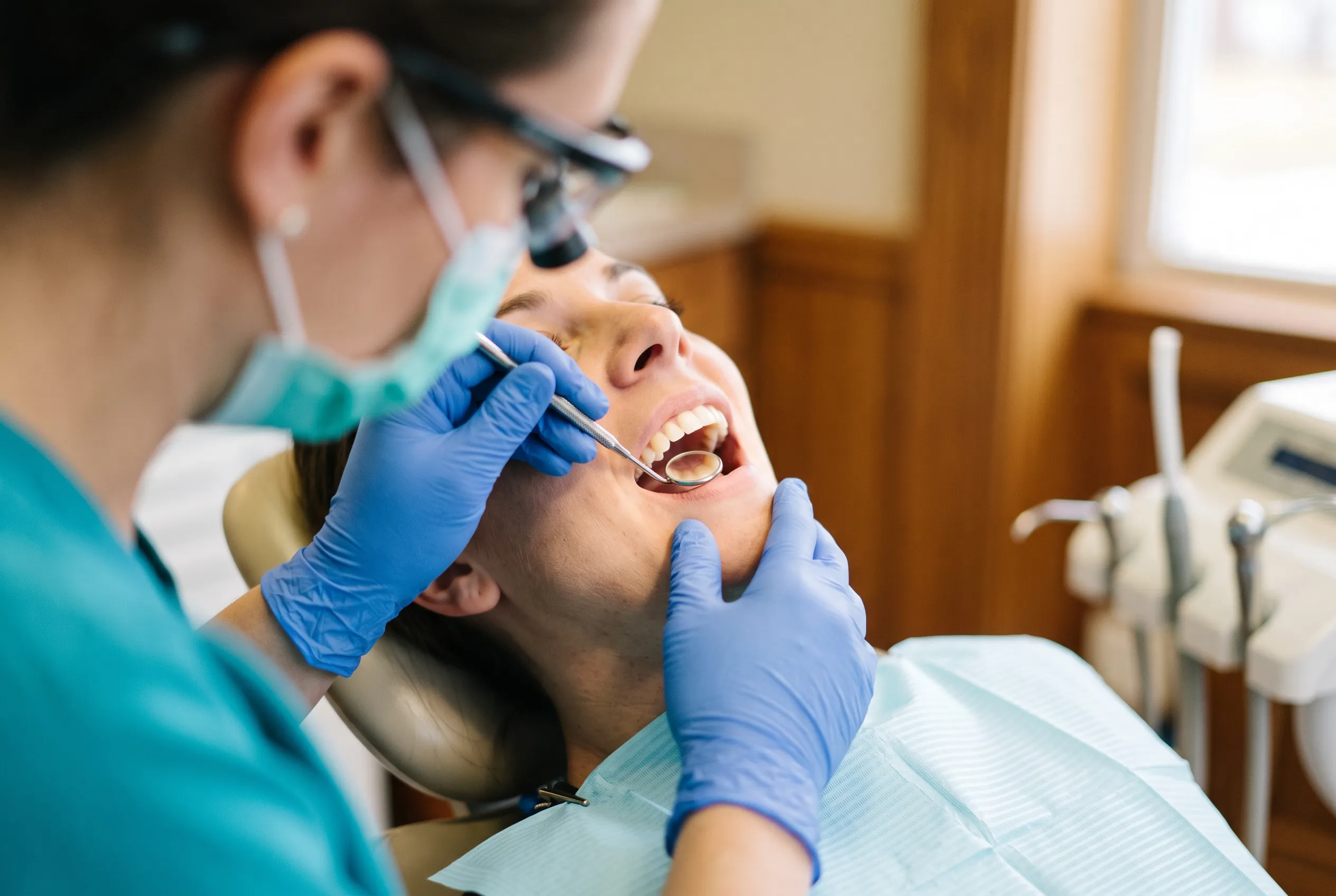
CRACKED TOOTH OR FRACTURED CUSP
A cracked tooth can flex under biting pressure and irritate the pulp or the ligament around the tooth. Pain is often sharp, intermittent, and hard to pinpoint — and may occur when biting down, releasing pressure, or both.
- Temperature sensitivity alongside biting pain
- Pain that is difficult to reproduce consistently
Cracks do not always appear on standard X-rays. Dentists may use bite testing and other clinical checks to locate the problem.
CAVITY OR DEEPER DECAY
Decay can weaken the tooth and irritate the dentin or pulp, making it painful under pressure. Pain severity does not always reflect how advanced the decay is.
- Sensitivity to sweets, hot, or cold
- Pain while chewing
- A visible hole or dark spot in some cases
HIGH FILLING, CROWN, OR BITE PROBLEM
A filling or crown that sits slightly too high places extra pressure on the tooth when biting. This is especially common when pain begins after recent dental work. Older restorations can also become loose, cracked, or leaky, allowing decay to develop underneath.
Do not try to file or adjust a filling or crown at home. The bite needs to be checked with articulating paper and adjusted professionally.
PULP INFLAMMATION, ROOT INFECTION, OR ABSCESS
Inflammation or infection inside the tooth can cause significant pain when biting. Not every infected tooth produces all of the classic symptoms — some present with minimal or atypical signs.
- Persistent or throbbing pain
- Lingering hot or cold sensitivity
- Swelling near the tooth
- Bad taste or drainage
- Fever in some cases
A dental abscess requires treatment of the source of infection. Antibiotics alone are not a definitive treatment for most dental infections.
GUM OR PERIODONTAL PROBLEM
Inflamed gums, periodontal infection, or food trapped between teeth can also make a tooth sore when chewing.
- Bleeding or swollen gums near the affected tooth
- Localized tenderness along the gumline
- Bad taste or persistent bad breath
- Slight tooth looseness
- Repeated food trapping between two teeth
CLENCHING, GRINDING, OR BITE TRAUMA
Clenching, grinding, or biting something hard can overload the tooth and irritate the periodontal ligament. The tooth may feel bruised or pressure-sensitive. Several teeth may be sore at once, and symptoms may be more noticeable in the morning.
A dentist should still rule out a crack, cavity, infection, or restoration problem even when clenching or grinding is suspected — the causes can co-exist.
Cracked Tooth, Cavity, or Bite Problem? Understanding the Overlap
Different dental problems can cause similar biting pain. The pattern can help guide the exam, but it cannot confirm the cause on its own — a dental evaluation is needed to distinguish between them.
| Pain Pattern | May Be Seen With | Why an Exam Is Needed |
|---|---|---|
| Sharp pain when biting or releasing pressure | Cracked tooth, fractured cusp, loose restoration | Bite testing may help locate the tooth; some cracks do not show clearly on routine X-rays |
| Pain after a recent filling or crown; tooth feels "high" | High or uneven bite, restoration issue | Bite contact can be checked and adjusted professionally — but similar symptoms can also come from pulp inflammation |
| Biting pain with lingering hot or cold sensitivity | Deeper decay or pulp inflammation | Pulp testing and examination help determine whether the nerve is affected and what treatment is appropriate |
| Biting pain with swelling, bad taste, drainage, or fever | Dental infection or abscess | Requires prompt dental evaluation — this combination should not be left unaddressed |
| Gum tenderness or repeated food trapping | Gum or periodontal problem, contact issue | Gum probing and evaluation of nearby restorations may be needed to identify the source |
| Several teeth sore, especially in the morning | Clenching or grinding | A dentist should still rule out a problem affecting one specific tooth — causes can overlap |
When Biting Pain Is Urgent
Not every tooth that hurts when you bite requires same-day care — but some symptoms should be evaluated promptly. Use the guide below to decide how quickly to act.

| Level | Signs | What to Do |
|---|---|---|
| Schedule an Exam | Mild pain that keeps returning; one tooth consistently hurts when chewing; symptoms last more than a day or two; pain comes and goes over several days or weeks | Arrange a dental evaluation — do not keep testing the tooth or waiting for it to resolve on its own |
| Urgent / Same-Day Call | Severe or worsening pain; swelling; drainage or pus; persistent bad taste; fever with dental symptoms; trauma; a loose tooth or restoration; pain preventing normal chewing | Call a dentist promptly — same-day evaluation may be appropriate. Toothology reserves time for emergency patients |
| Medical Emergency | Difficulty breathing or swallowing; rapidly spreading swelling of the face or neck; severe systemic symptoms | Seek emergency medical care immediately — not a dental appointment |
While Waiting for Your Appointment
- DO THIS
- Avoid chewing on the painful side
- Rinse gently with warm water
- Use an over-the-counter pain reliever — only if you can take it safely and as directed on the label
- Call the dentist if pain becomes severe, or if swelling, fever, or drainage develop
- DO NOT DO THIS
- Do not place aspirin or other medication directly on the tooth or gums
- Do not try to file, adjust, or glue a filling or crown at home
- Do not keep chewing on the tooth to "test" it
- Do not assume the pain will go away on its own if it keeps returning
What Dentists Check During the Exam
When you have biting pain, the dentist will first ask about when the pain started, what triggers it, how long it lasts, and whether it changes with temperature or pressure. Recent dental work, any trauma, and clenching or grinding history are also important clues.
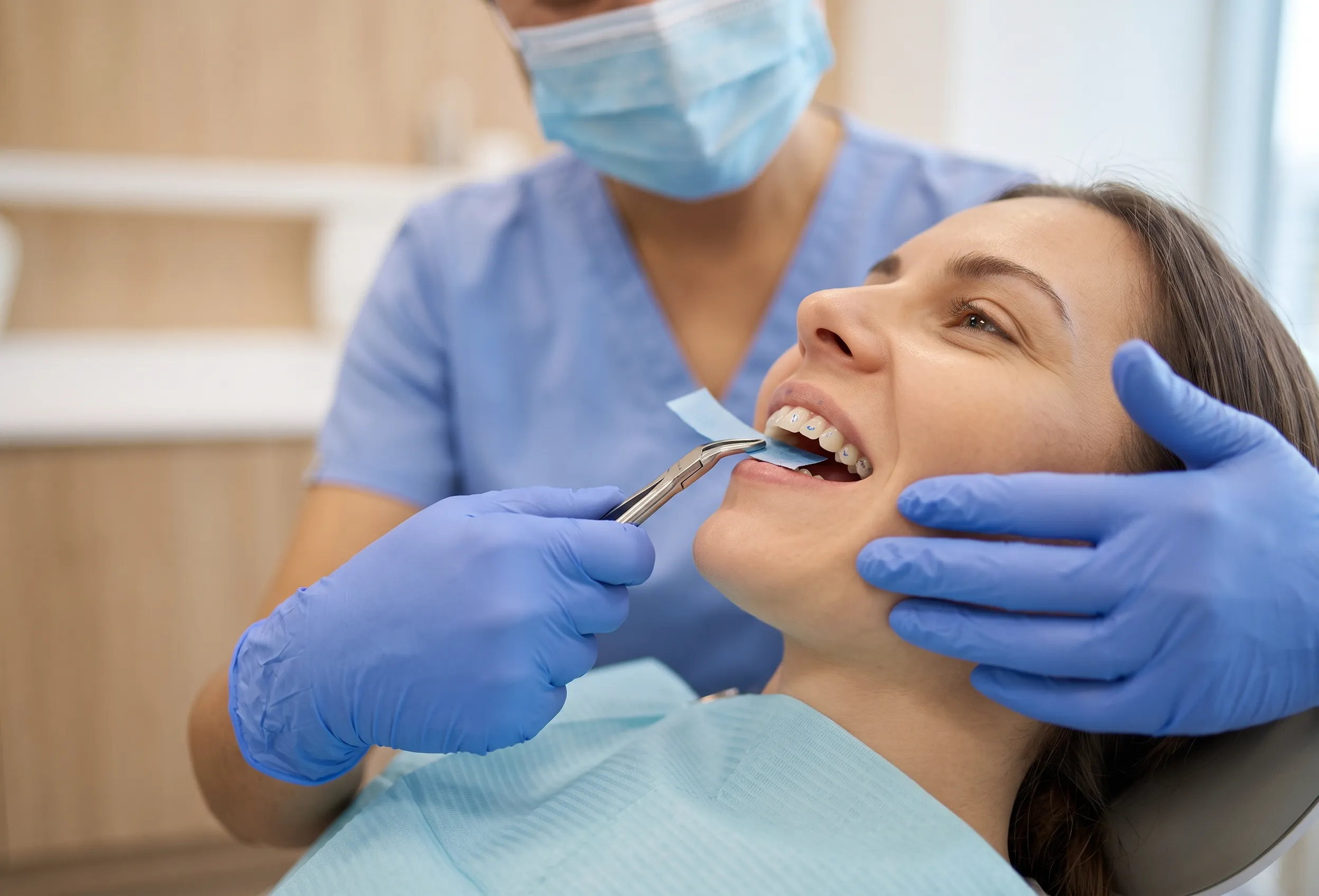
Bite and occlusion check: Articulating paper shows whether one tooth or restoration is contacting too heavily under bite forces.
Visual inspection: The dentist checks for cracks, chips, decay, swelling, gum changes, and problems with fillings or crowns.
Bite and percussion tests: Tapping the tooth or biting on a small device can help identify which tooth is causing the pain.
Pulp testing: Cold or other tests assess how the tooth’s nerve responds, helping to determine whether the pulp is healthy, inflamed, or non-vital.
Periodontal probing: Checks the tissue around the tooth and may identify gum disease or localized pocketing associated with some deeper cracks.
Dental X-rays: Can identify decay, infection, bone changes, and restoration problems, although some cracks may not be visible on standard films. CBCT imaging or referral to an endodontist may be considered if the cause remains unclear.
THESE TESTS WORK TOGETHER
No single test identifies every cause of biting pain. The combination of clinical history, percussion testing, pulp testing, bite evaluation, and imaging helps the dentist distinguish between a crack, cavity, bite problem, pulp inflammation, infection, or gum-related cause.
Treatment Options Based on the Cause
Treatment depends entirely on what the exam and imaging find. Common options include:
Small cavity or limited damage:
Larger weakened area or fractured cusp:
High or uneven bite:
Damaged or leaking restoration:
Pulp inflammation or infection:
Gum or periodontal problem:
Clenching or grinding:
Non-restorable tooth:
Related Guides on This Site
Frequently Asked Questions
Why does my tooth hurt when I bite down?
Can a cracked tooth hurt only when chewing?
Can a high filling cause biting pain?
Is biting pain a dental emergency?
When should I call a dentist for biting pain?
Call if the pain persists, keeps returning, worsens, or makes chewing difficult — especially if you also have swelling, fever, drainage, or a loose restoration. Even if the tooth feels normal between episodes, recurring biting pain over several days or weeks deserves a dental evaluation rather than continued monitoring at home.
If a Tooth Keeps Hurting When You Bite — Get It Checked
TOOTH HURTS WHEN YOU BITE?
Same-day emergency appointments available. Exam, bite check, X-rays when needed, and treatment options explained clearly.
Open Hours
Mon – Thu: 10:00 AM – 6:00 PM Friday: 10:00 AM – 2:00 PM Sunday: 10:00 AM – 2:00 PM Saturday: Closed
IN THIS GUIDE
6 POSSIBLE CAUSES
1
2
3
4
5
6
These causes can feel similar — an exam is the only reliable way to tell them apart.
TOOTHOLOGY DENTAL
Williamsburg, Brooklyn, NY
Serving Greenpoint, Bushwick, Bed-Stuy & Downtown Brooklyn
718-678-3800
Emergency line available
Open Hours
Mon – Thu: 10:00 AM – 6:00 PM Friday: 10:00 AM – 2:00 PM Sunday: 10:00 AM – 2:00 PM Saturday: Closed
OUR COMMITMENT
- Board-Certified Pediatric Dentists
- Child-Friendly, Anxiety-Reducing Care
- Same-Day Emergency Slots
- Low-Radiation Digital X-Rays
- Most Major Insurance Accepted