
- Post-Extraction Recovery Guide · Williamsburg Brooklyn
After an extraction, some soreness is expected. The key difference between normal healing and dry socket is usually how the pain changes over time — not just how the socket looks.
Dry Socket vs Normal Socket: How to Tell After a Tooth Extraction
After a tooth extraction, some soreness, swelling, and tenderness are expected. The key difference between normal healing and dry socket is often how the pain changes over time — not just how the socket looks. Normal discomfort should gradually improve; dry socket pain often becomes severe or gets noticeably worse after a few days instead of getting better.
THE MOST IMPORTANT RULE: WATCH THE PAIN TREND
Rather than focusing only on the socket's colour or appearance, pay attention to whether pain is improving or getting worse over time. A socket that looks unusual but feels progressively better is very different from one where pain keeps intensifying.
What Normal Healing Looks Like After Extraction
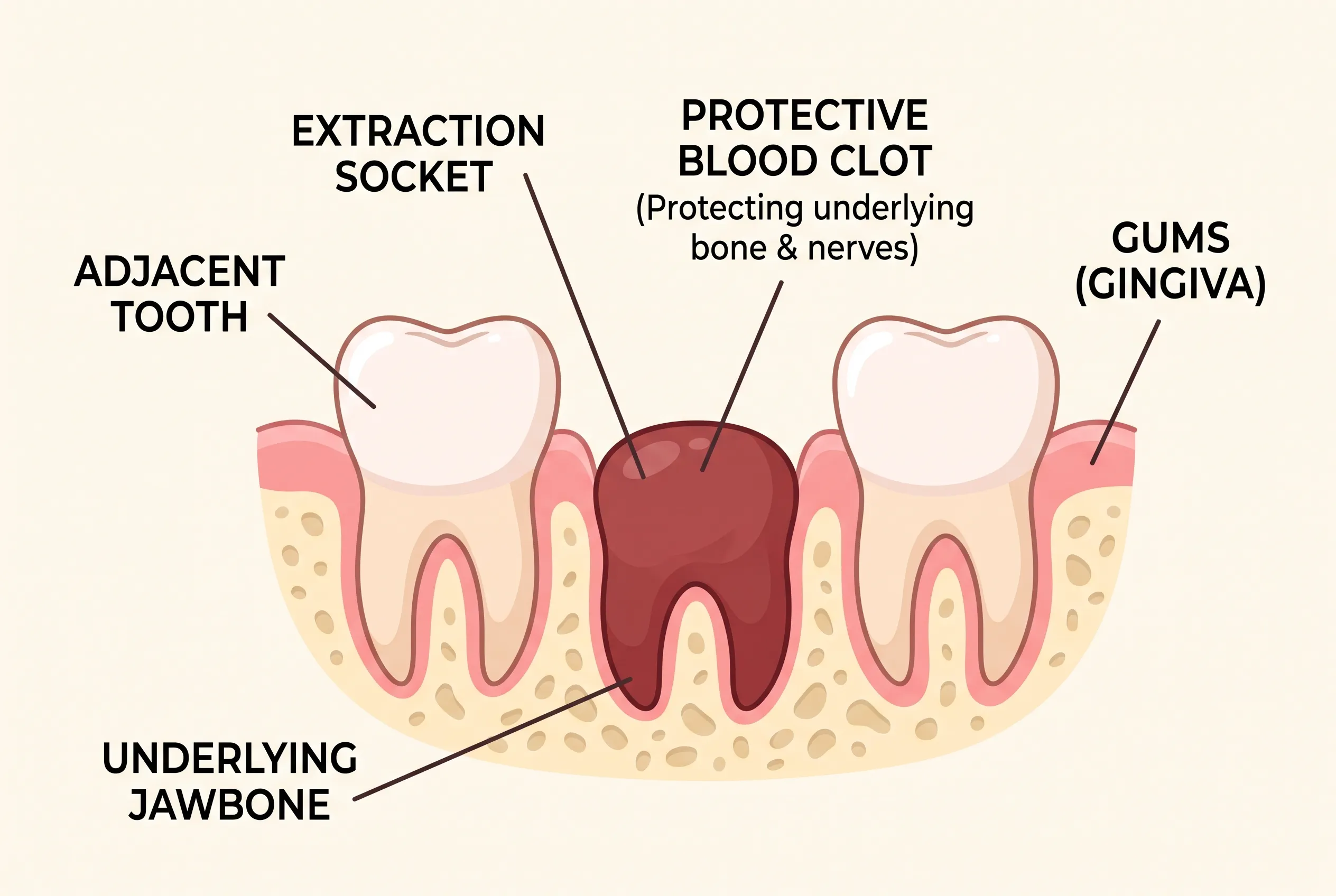
After a tooth is removed, a blood clot forms in the socket. This clot protects the underlying bone and tissue and helps healing begin. That is why post-extraction instructions typically advise avoiding smoking, suction, drinking through a straw, forceful spitting, or touching the area during the first 24–48 hours.
- NORMAL HEALING
Soreness and swelling peak in the first 2–3 days, then gradually improve. The socket may look open while it slowly fills in with healing tissue.
- DIAGNOSED PERIODONTAL DISEASE
Pain that becomes sharply worse instead of gradually better — especially after day 2 or 3 — is worth contacting the dentist or oral surgeon about.
Normal Healing Timeline — and When to Call
| Time | What May Be Normal | What Should Trigger a Call |
|---|---|---|
| First 24 Hours | Mild oozing, blood-tinged saliva, soreness as numbness wears off | Heavy bleeding that does not slow with instructed firm pressure |
| Days 2–3 | Swelling, soreness, and possible jaw stiffness — often the peak of discomfort | Pain becoming sharply worse, especially if it starts radiating to the ear or jaw |
| Days 3–5 | Pain and swelling often begin to improve; healing tissue becomes more visible | Severe throbbing pain, foul taste or odor, or concern about the blood clot |
| Week 1+ | Gradual improvement as soft tissue continues to fill the socket | Worsening pain, increasing swelling, fever, pus, or other concerning symptoms |
- DO NOT PROBE THE SOCKET
Do not check the socket with your finger, a cotton swab, a toothpick, or any other object to see whether the clot is still in place. This can irritate the area, disturb normal healing tissue, and increase the risk of complications.
NORMAL APPEARANCE CAN VARY WIDELY
Normal healing tissue may look white, pink, red, or slightly granular. The socket can also remain visible as an open hole for some time as it gradually fills in. A pale or white-looking area in the socket does not automatically indicate dry socket or infection.
What Dry Socket Feels Like
Dry socket (alveolar osteitis) happens when the blood clot protecting the extraction site is lost or breaks down too early, leaving the underlying bone and nerve endings more exposed. The main warning sign is the pain pattern: while normal extraction pain should gradually improve, dry socket pain often starts or becomes significantly worse within the first few days after extraction — commonly around days 1–5.

Common Dry Socket Symptoms
Severe or Worsening Pain
Pain that does not follow the expected improvement pattern — it gets worse instead of gradually better within the first few days.
Deep, Radiating Pain
A deep, throbbing ache that may radiate to the ear, temple, jaw, or neck on the same side as the extraction.
Bad Taste or Foul Odor
A persistent bad taste or unpleasant odor from the socket area, which may indicate the clot has been lost.
Possible Exposed Bone
The socket may appear empty with visible bone — but you do not need to see exposed bone to have dry socket. Pain pattern is the primary guide.
DRY SOCKET IS NOT THE SAME AS INFECTION
Dry socket mainly causes pain. Infection is more likely when fever, pus or drainage, or increasing facial swelling are present. The two can sometimes occur together, which is another reason to get worsening post-extraction symptoms evaluated rather than waiting.
Dry Socket vs Normal Socket: Key Differences
The clearest difference is usually the pain trend. Use this as a reference alongside your post-op instructions — and when in doubt, call your dentist rather than continuing to monitor at home.
| Feature | Normal Healing | Possible Dry Socket |
|---|---|---|
| Pain Trend | Soreness may peak in the first 2–3 days, then gradually improve over time | Pain becomes severe or noticeably worse within the first few days instead of improving |
| Pain Character | Localized soreness and tenderness around the extraction site | Deep, throbbing pain that may radiate to the ear, temple, jaw, or neck |
| Taste / Odor | Mild blood taste early in healing can be normal | Persistent bad taste or foul odor may be present |
| Socket Appearance | Healing tissue may look white, pink, red, or granular; the socket may remain visible as it fills in | The clot may be absent or broken down; exposed bone may be visible — but appearance alone is unreliable |
| Other Signs | Swelling gradually improves without fever, pus, or spreading redness | Dry socket mainly causes pain; fever, pus, or increasing facial swelling may suggest infection or another complication |
When Post-Extraction Pain Is a Warning Sign
Some discomfort after an extraction is expected, but certain symptoms should be checked promptly. Do not wait several more days if pain is severe, worsening, or radiating.

- CALL YOUR DENTIST OR ORAL SURGEON IF YOU HAVE:
- Severe pain that is new, worsening, or not improving as expected
- Pain that radiates to the ear, temple, jaw, or neck
- A persistent bad taste or foul odor from the socket
- Pain that feels outside what your post-op instructions described as normal
- Concern that the blood clot may have been disturbed
- Heavy bleeding that does not slow with instructed firm pressure
- Increasing facial or jaw swelling
- Fever, drainage, or other signs that may suggest infection
- SEEK EMERGENCY MEDICAL CARE IMMEDIATELY FOR:
- Difficulty breathing or swallowing
- Rapidly spreading swelling of the face or neck
- Bleeding that cannot be controlled with firm pressure
What a Dentist Can Do for Dry Socket
A dentist will first review when the pain started, how severe it is, and whether it is getting worse — then examine the extraction site. X-rays may be used if another cause, such as a retained root fragment or infection, needs to be ruled out.
Cleaning or irrigation: The socket may be gently rinsed to remove debris and prepare it for treatment.
Medicated dressing: A soothing dressing or gel may be placed in the socket to help reduce pain while healing continues underneath.
Pain management and aftercare: The dentist may recommend or prescribe pain-relief medication and give specific instructions for caring for the site at home.
ANTIBIOTICS ARE NOT A STANDARD DRY SOCKET TREATMENT
Antibiotics are not routinely used for dry socket because dry socket itself is not a bacterial infection. They may be prescribed only if a separate infection or another specific clinical indication is present. Treatment typically focuses on reducing pain and supporting the natural healing process.
RELIEF IS USUALLY ACHIEVABLE
Symptoms often begin to improve after appropriate dental treatment. The socket still needs time to heal, but a dental visit for dry socket can make the recovery much more comfortable. Do not wait out severe pain hoping it will resolve on its own.
Related Guides on This Site
Frequently Asked Questions
How do I know if I have dry socket?
What does normal socket healing feel like?
Can dry socket heal on its own?
When does dry socket pain start?
Should I call a dentist for dry socket symptoms?
Yes. Call promptly for severe or worsening pain, radiating pain, bad taste, or foul odor. Seek emergency medical care immediately for difficulty breathing or swallowing, rapidly spreading swelling, or bleeding that cannot be controlled with firm pressure.
Pain Getting Worse After an Extraction?
POST-EXTRACTION PAIN GETTING WORSE?
Urgent post-extraction assessment at Toothology, Williamsburg. Same-day evaluation for severe, worsening, or radiating pain.
IN THIS GUIDE
KEY DIFFERENCES AT A GLANCE
Don't wait — call if pain worsens rather than improving.
TOOTHOLOGY DENTAL
Williamsburg, Brooklyn, NY
Serving Greenpoint, Bushwick, Bed-Stuy & Downtown Brooklyn
718-678-3800
Emergency line available
Open Hours
Mon – Thu: 10:00 AM – 6:00 PM Friday: 10:00 AM – 2:00 PM Sunday: 10:00 AM – 2:00 PM Saturday: Closed
OUR COMMITMENT
- Board-Certified Pediatric Dentists
- Child-Friendly, Anxiety-Reducing Care
- Same-Day Emergency Slots
- Low-Radiation Digital X-Rays
- Most Major Insurance Accepted