
- Cosmetic Guide
A single dark tooth is a different question from general yellowing. The cause — surface stain, internal discoloration, an old injury, or existing dental work — determines whether whitening is appropriate or likely to work.
Why Is One Tooth Darker Than the Others? What to Check Before Whitening
If one tooth looks noticeably darker than the others, it is worth checking the cause before trying to whiten it. A single dark tooth is different from the generalized yellowing that affects much of the smile. The color change may be related to surface stain, internal discoloration, an old injury, or existing dental work — and the cause affects whether whitening is appropriate or likely to produce the result you’re expecting.
THE SHORT VERSION
If one tooth is darker than its neighbors, don’t assume it is only a stain. A dentist should determine why the color has changed before recommending whitening or another cosmetic treatment. The cause — not the color — determines the appropriate approach. Whitening can improve surface staining, but it does not change the shade of crowns, veneers, fillings, or bonding, and internal discoloration may respond differently from general surface yellowing.
A Single Dark Tooth Is a Different Question From General Staining
Generalized yellowing usually affects many teeth at once and may be related to surface staining, buildup, or natural changes in enamel over time. A single tooth that looks noticeably darker than its neighbors is a different clinical picture.
When one tooth is darker, the key question is whether the discoloration is external (sitting on or near the enamel surface) or internal (originating within the tooth structure itself). The distinction matters because these respond differently to whitening treatment.
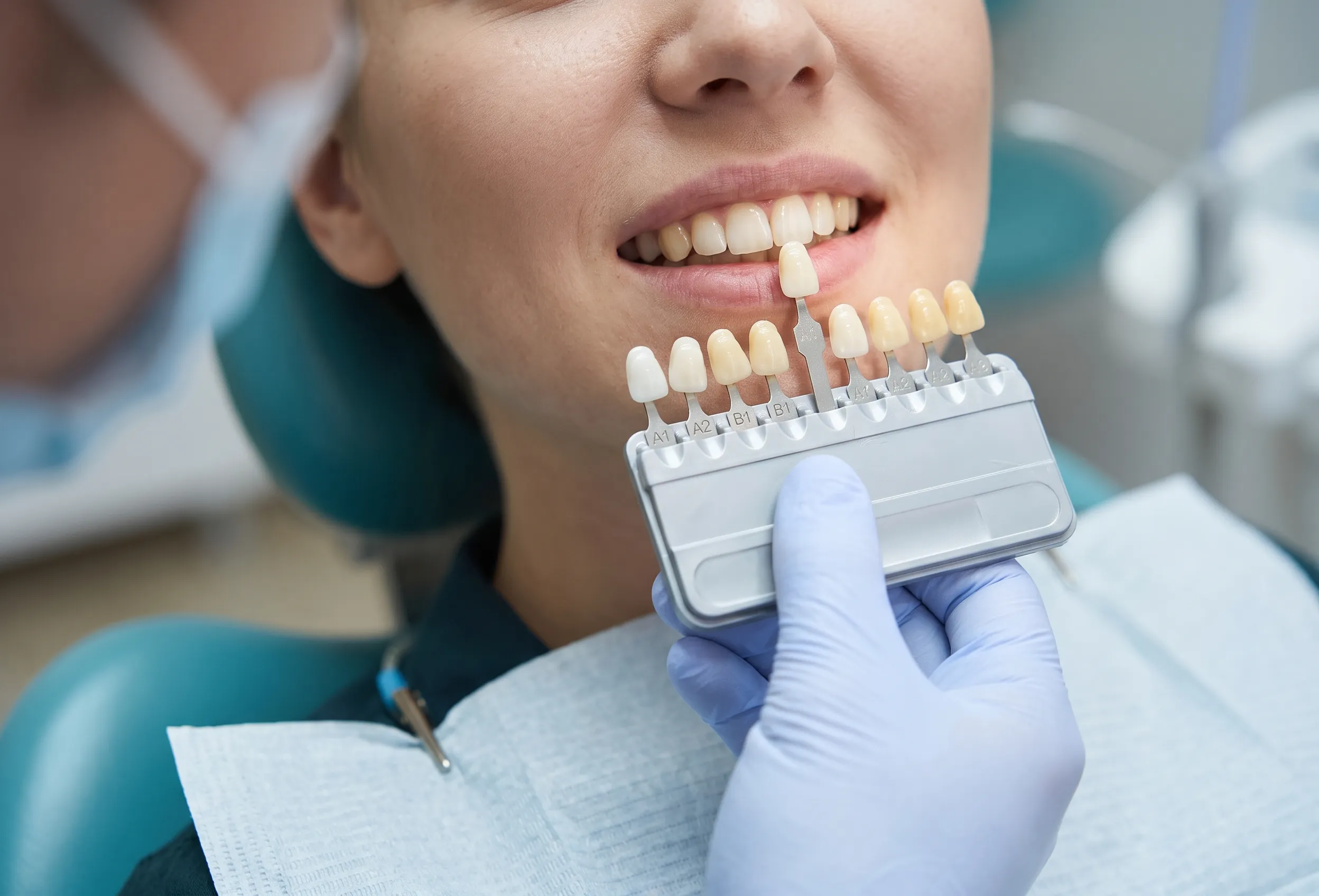
Surface (External) Discoloration
Sits on or near the enamel. May be related to plaque, food and drink deposits, or other surface buildup. Can sometimes be reduced with professional cleaning or whitening.
Internal Discoloration
Develops within the tooth structure. Can follow trauma, pulp changes, or certain treatments. May not respond to whitening in the same way as surface staining.
A third factor is existing dental work. A filling, crown, veneer, or bonding in or near that tooth can create a shade mismatch — because restorative materials do not whiten like natural tooth enamel. The color of the tooth — gray, brown, yellow, or simply darker than its neighbors — does not identify the cause on its own.
Why Your Dental and Injury History Matters
When one tooth becomes darker, the history of that tooth helps your dentist understand what to examine. Before your appointment, think through what you know about that tooth’s past.
What Your Dentist Will Want to Know
Trauma history:
Has the tooth ever been hit, chipped, loosened, or injured — even years ago? An old sports injury, fall, or minor impact can still be relevant to a later color change.
Previous dental work:
Has the tooth had a root canal, filling, crown, veneer, or bonding? Restored teeth may behave differently from natural enamel, both in terms of color and whitening response.
When the color changed:
Has the tooth always looked slightly different, or did it darken gradually, or change recently? The timeline helps guide the exam.
Other symptoms:
Sensitivity, pain when biting, swelling, a bad taste, a crack, or a chip are all worth mentioning — some causes of discoloration may not cause pain, so the absence of symptoms doesn’t explain the color change.
Possible Causes of a Single Dark Tooth
Several different factors can cause one tooth to look darker than its neighbors. The table below outlines common categories, the clues that may point to each, and what your dentist may assess.
| Possible Category | Possible Clue | What the Dentist May Check |
|---|---|---|
| Surface staining | The discoloration appears superficial | Enamel surface, stain or buildup, and response to cleaning |
| Trauma-related change | History of an old hit, fall, chip, or loosened tooth | Trauma history, pulp sensibility, tooth structure, and imaging if needed |
| Previous root canal | A treated tooth has darkened over time | Treatment history, restoration, internal discoloration, and imaging when indicated |
| Restoration shade mismatch | A filling, crown, veneer, or bonding looks different from nearby teeth | Material, margins, shade, and surrounding natural tooth color |
| Decay or structural change | Darkness occurs with roughness, sensitivity, a crack, or visible defect | Cavity and structural assessment |
| Natural shade difference | The tooth has always looked slightly different | History, shade comparison, and overall clinical findings |
COLOR ALONE DOESN'T DIAGNOSE
The color difference itself — whether the tooth appears gray, brown, yellow, or pinkish — does not identify the cause on its own. Your dentist uses the tooth’s history, symptoms, and exam findings together before recommending whitening or any other treatment.
What an Exam May Check Before Cosmetic Treatment
A single discolored tooth should be assessed before any cosmetic treatment is planned, so the dentist can understand why the color changed. The assessment typically covers several areas.
Areas Covered in a Pre-Treatment Assessment
Shade and surface:
The dentist compares the tooth with nearby teeth and looks at whether the discoloration appears to be on the surface, inside the tooth, related to a restoration, or a combination.
Tooth structure and restorations:
The tooth is checked for decay, cracks, worn margins, and existing fillings or crowns that may be contributing to the visible shade difference.
Pulp sensibility:
When appropriate, tests such as cold or electric pulp testing may be used to assess how the tooth responds — these results are interpreted alongside history, symptoms, and other exam findings, not in isolation.
Surrounding tissues:
The dentist may check for tenderness, gum changes, recession, swelling, or other signs in the tissue around the tooth.
Imaging when indicated:
X-rays may be recommended when they would help answer a specific clinical question — particularly after trauma, following a root canal, or when decay or structural damage is suspected.
The key point is that diagnosis comes before cosmetic treatment. Once the cause of the discoloration is clearer, your dentist can discuss whether whitening or another option is appropriate for your situation.
Why Whitening May Not Be the Right First Step
Whitening changes the shade of natural tooth structure — but not every type of discoloration responds the same way. A single gray or internally discolored tooth may behave very differently from generalized surface staining.
WHITENING AND DENTAL RESTORATIONS
Crowns, veneers, fillings, and bonding do not whiten like natural enamel. If a restoration is causing or contributing to the shade difference, whitening the surrounding teeth may actually make the mismatch more visible, not less. Whether whitening is appropriate depends on the cause of the discoloration, the tooth’s pulp and restoration status, and the cosmetic goal.
A single dark tooth may need a different approach from standard whitening — or whitening may need to be part of a broader cosmetic plan that accounts for the existing restoration. If you are considering whitening for your overall smile, mention the darker tooth during the consultation so your dentist can plan around it.
Toothology’s guide to professional whitening vs. OTC kits covers the broader differences between whitening options.
What to Notice Before Your Appointment
Taking note of a few details before your visit can help your dentist focus the examination on the right area and reduce the time needed to understand what’s happening.
| What to Notice | Why It Helps the Exam |
|---|---|
| When you first noticed the change | Helps distinguish a long-standing shade difference from a newer change |
| Any past injury or trauma | Old trauma may still be relevant |
| Previous root canal, filling, crown, veneer, or bonding | Prior treatment can affect both color and whitening options |
| Whether the tooth looks gray, brown, yellow, pinkish, or simply darker | Gives useful context, but does not diagnose the cause |
| Any pain, sensitivity, biting tenderness, swelling, bad taste, or fracture | May affect urgency and what needs to be examined |
| Whether the whole tooth is darker or only one spot | Helps distinguish whole-tooth discoloration from a localized surface issue |
| Older photos, if available | May help show when the shade changed |
When to Contact the Practice and What to Ask
A single dark tooth is worth having evaluated, especially if the color is new, changing, or linked to an old injury. Most of the time, this is a non-urgent appointment — but some situations call for a prompt contact.
- CONTACT TOOTHOLOGY PROMPTLY FOR THESE
Call (718) 678-3800 directly — rather than using routine online booking — if the dark tooth is accompanied by:
- New or worsening pain
- Significant temperature sensitivity or pain when biting
- Swelling in the gum, jaw, or face
- A recurring bad taste or smell
- A recent crack, chip, or injury to the tooth
- A sudden or rapidly progressing color change
For severe or rapidly spreading facial swelling, difficulty breathing or swallowing, swelling around the eye, or major facial trauma, seek emergency medical care. For severe dental pain, a broken restoration, or recent trauma, call Toothology directly rather than relying on routine booking.
Questions to Ask at Your Appointment
What may be causing the color difference?
Does it appear to be surface or internal discoloration?
Frequently Asked Questions
Can a tooth change color years after an injury?
Does a gray tooth always need a root canal?
Can whitening strips or trays change the color of one dark tooth?
What if the dark tooth does not hurt?
Can a filling or crown explain a color mismatch?
Yes. Restorations do not whiten like natural tooth enamel, and they can look different from surrounding teeth — especially as the natural enamel changes shade over time or after whitening. Your dentist can assess whether the mismatch is coming from the restoration, the natural tooth structure, or both, and discuss the appropriate approach.
One Tooth Darker Than the Others? Start With an Exam.
ONE TOOTH DARKER?
Find out the cause before whitening. Toothology in Williamsburg offers cosmetic assessments for shade mismatches, discoloration, and whitening planning.
DIRECT LINE
IN THIS GUIDE
NEXT STEP GUIDE
Tooth has always looked different
Book Exam
Darkened after dental work
Book Exam
Old trauma or injury to that tooth
Mention at Exam
Shade near a crown or filling
Assess First
Pain, swelling, or bad taste
Call Directly
Sudden color change
Call Promptly
TOOTHOLOGY DENTAL
Williamsburg, Brooklyn, NY
Serving Greenpoint, Bushwick, Bed-Stuy & Downtown Brooklyn
718-678-3800
Emergency line available
Open Hours
Mon – Thu: 10:00 AM – 6:00 PM Friday: 10:00 AM – 2:00 PM Sunday: 10:00 AM – 2:00 PM Saturday: Closed
OUR COMMITMENT
- Board-Certified Pediatric Dentists
- Child-Friendly, Anxiety-Reducing Care
- Same-Day Emergency Slots
- Low-Radiation Digital X-Rays
- Most Major Insurance Accepted