
White Spots on Teeth After Braces: Can a Cosmetic Dentist Fix Them?
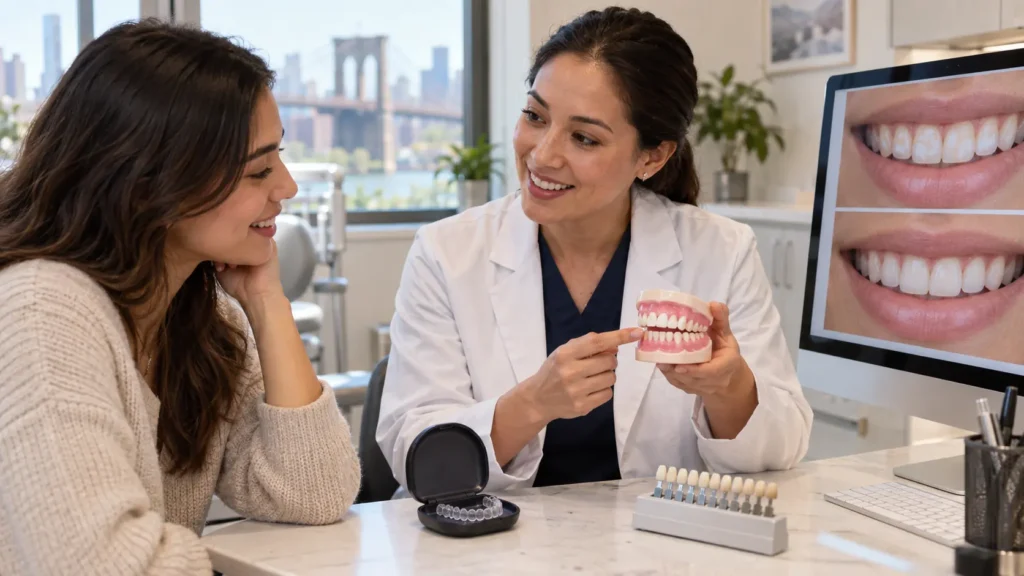
Post-Braces Cosmetic Guide · Williamsburg Brooklyn Chalky white patches where your brackets used to be are common after braces — and a cosmetic dentist may be able to help. The right treatment depends on the cause, depth, and whether active enamel changes are present. White Spots on Teeth After Braces: Can a Cosmetic Dentist Fix Them? BOOK A POST-BRACES CONSULT SEE TREATMENT OPTIONS Written by Toothology Editorial Team | Reviewed by Dr. Ayala Lieberman, DDS September 2026 After braces come off, some patients notice chalky white patches where the brackets used to be. These white spots on teeth after braces are a common post-orthodontic concern — and they can affect how the final smile looks after all that work. A cosmetic dentist may be able to improve them, but the right treatment depends on the cause, depth, and whether active enamel changes are present. The best first step is a post-braces dental evaluation. White Spots After Braces at a Glance Common Cause Enamel demineralization around brackets or hard-to-clean areas — where plaque and acids weakened the tooth surface during treatment. Not Always Permanent Mild surface spots may fade over time. Deeper or more established lesions often need professional treatment to improve. Whitening Is Usually Not the Fix Whitening changes the overall tooth shade but does not repair enamel mineral loss — and may temporarily make spots more noticeable. Possible Treatments Fluoride, remineralization support, microabrasion, resin infiltration, or dental bonding — depending on cause, depth, and activity of the spots. Why White Spots Appear After Braces Most white spots after braces are caused by enamel demineralization. This happens when plaque bacteria produce acids that pull minerals from the tooth surface, leaving enamel weak, chalky, or opaque in appearance. Brackets and attachments can make certain areas harder to clean. If plaque stays around the bracket edges or near the gumline for extended periods, white spot lesions can develop in those areas. Braces themselves do not directly cause the spots — the issue is plaque and acid exposure around the appliances, which is why some patients finish orthodontic treatment without any spots while others notice visible changes. White spots most commonly appear around bracket edges, along the gumline, or on the front teeth where they are most visible. Are White Spots After Braces Early Cavities? They can be, but not always. White spots often represent early enamel demineralization — where minerals have been lost from the tooth surface but a cavity has not yet fully formed. This stage is sometimes described as a “pre-cavity.” With the right care, some early white spot lesions may be stabilised or improved. Ignored, some can progress into actual cavities over time. NOT EVERY WHITE PATCH IS FROM BRACES Some white spots have nothing to do with orthodontic treatment. A post-braces dental exam helps determine whether the spots are active demineralization, cosmetic discoloration, a pre-existing enamel condition, or early decay that needs restorative care. Other Possible Causes of White Spots FLUOROSIS White streaks or patches that developed while the teeth were forming due to fluoride exposure. These are pre-existing and unrelated to braces. ENAMEL HYPOPLASIA Areas where enamel formed thin, weak, or uneven during tooth development — often present before braces and more visible after treatment. OLD TRAUMA A previous tooth injury that caused localised enamel changes — which may become more noticeable after teeth are straightened and more visible. Will White Spots Fade on Their Own? Mild, very superficial white spots may become less noticeable over time — especially once brushing becomes easier after brackets are removed. Better oral hygiene, enamel rehydration, fluoride, and remineralization support may help very surface-level spots blend in more naturally. However, many established white spot lesions do not fully disappear on their own. The enamel may become stronger, but the chalky or opaque appearance can remain. For mild spots, monitoring over a few months with excellent home care is reasonable. If spots are deeper, very noticeable, or unchanged after consistent oral hygiene, a professional dental evaluation is the right next step. Why Whitening Usually Does Not Fix White Spots Whitening is often the first thing patients think of — but it is usually not the best starting point for white spots after braces. Whitening lightens the overall tooth shade. Since white spot lesions are already lighter than the surrounding enamel, whitening may temporarily make the contrast more noticeable rather than reducing it. Whitening also does not repair enamel mineral loss, stop active demineralization, or close an early cavity. For this reason, white spots should be evaluated before starting any whitening treatment. A dentist can confirm whether the spots are cosmetic, active demineralization, or early decay — and then recommend the right sequence of care. EVALUATE BEFORE YOU WHITEN Whitening may be appropriate as part of a broader cosmetic plan — but after the white spots are properly assessed and treated, not before. Starting with a dental evaluation protects the enamel and leads to a better cosmetic result. Remineralization and Minimally Invasive Options For many white spots after braces, the first goal is to strengthen and stabilise the enamel before choosing a cosmetic treatment. The right option depends on the depth, size, activity, and location of the spots. Fluoride Varnish Professionally applied fluoride may support remineralisation and help protect enamel from further acid damage. Often recommended as a first-line supportive step for active or significant spots. Prescription Fluoride Toothpaste A dentist may recommend stronger fluoride toothpaste for active or significant demineralisation, used at home as part of a daily preventive routine. Calcium-Phosphate Remineralisation Support Products such as MI Paste may support remineralisation in selected cases. These should only be used if specifically recommended by the dentist — not self-prescribed. Microabrasion A minimally invasive option that removes a very thin outer enamel layer to improve shallow surface discoloration. Suitable only for very superficial spots. Resin Infiltration A treatment that may help mask some non-cavitated white spot lesions with minimal tooth preparation. Confirm availability and suitability at your consultation — not every spot qualifies. ACTIVE
How to Fix Black Triangles Between Teeth & Gums in Williamsburg

Cosmetic Dentistry Guide · Williamsburg Those dark triangle-shaped gaps between your teeth and gumline? They’re called black triangles — and dental bonding can close them conservatively, often in one to two visits, without touching veneers. How to Fix Black Triangles Between Teeth & Gums in Williamsburg WHAT CAUSES THEM? BIOCLEAR VS. BONDING Written by Toothology Editorial Team | Reviewed by Dr. Ayala Lieberman, DDS April 2026 You spot them in a photo first — small triangle-shaped gaps between your teeth and the gumline, dark against the brightness of your smile. They weren’t as noticeable a few years ago. Now they seem to show up in every picture, and you find yourself angling your head differently or keeping your lips a little lower when you laugh. Those dark spaces are called black triangles — and dental bonding has become a conservative, effective way to close them. Often without removing any tooth structure or committing to porcelain veneers. Black triangles are more common than most people realise — particularly in adults whose gums have receded slightly with age, or whose teeth have shifted after orthodontic treatment. What Are “Black Triangles” and Why Do They Appear? Black triangles are the open, dark spaces that form in the embrasure — the V-shaped area between adjacent teeth near the gumline — when the gum tissue no longer fills that space completely. In a healthy, younger mouth, the interdental papilla (the small triangular flap of gum between each pair of teeth) fits snugly into that space. When it recedes or is absent, a visible gap forms. They tend to be most noticeable in the upper front teeth, and are often described as “aging teeth” or as something that “suddenly appeared” after braces came off. Common Causes of Black Triangles Gum Recession & Tissue Loss Gum tissue can recede gradually due to age, previous gum disease, or bone loss — leaving more of the tooth root exposed and the embrasure open. Triangular Tooth Shape Some people naturally have teeth that taper toward the gumline. When these teeth sit side by side, the contact point sits high and the gap below is wider — even with perfectly healthy gums. Post-Orthodontic Movement Teeth gap closure through braces or aligners can reposition teeth in ways that leave the gum papilla behind, creating visible triangular gaps that weren’t there before. Aggressive Brushing or Flossing Repeated trauma to the interdental papilla — from brushing too hard or snapping floss aggressively — can cause it to shrink or recede over time. Bone Loss from Periodontal Disease When the bone that supports the teeth is lost, the gum tissue that relies on it follows. This is one of the more progressive causes and requires gum health evaluation and treatment before any cosmetic closure. A Simple Self-Check Are you noticing any of the following alongside the gaps? Dark triangle-shaped spaces between upper or lower front teeth Food getting trapped more easily in the gaps between teeth Gum bleeding when you brush or floss Sensitivity near the gumline Teeth that look longer than they used to Recent completion of orthodontic treatment — braces or clear aligners GUM HEALTH COMES FIRST If you’re experiencing bleeding, bad breath, or signs of ongoing gum recession alongside these gaps, a periodontal evaluation should come first. Cosmetic closure over active gum disease or untreated bone loss is not the appropriate starting point — and a responsible dentist will assess gum health before recommending any bonding approach. The Bioclear Method vs. Traditional Bonding Both the Bioclear method and traditional composite bonding work by adding tooth-coloured composite resin to the tooth surface to widen its profile and reduce or close the triangle-shaped gap. Your consultation will confirm which technique — or combination — is the best fit for your specific tooth shape and gum health. HOW TRADITIONAL COMPOSITE BONDING WORKS In a conventional composite bonding procedure, the dentist applies composite resin directly to the tooth surface, sculpts it by hand to the desired shape, hardens it with a curing light, and then polishes it smooth. It’s generally completed in a single appointment and requires no drilling on healthy tooth structure. WHAT MAKES THE BIOCLEAR METHOD DIFFERENT Bioclear uses a matrix system — a thin, transparent form that wraps around the tooth — combined with heated composite resin that is injected into the space. The goal of this injection-moulding technique is to produce a contiguous, seamless filling that flows fully into the embrasure and creates smooth, rounded tooth contours with fewer surface irregularities. SIDE-BY-SIDE COMPARISON Review this as a general guide — your dentist will advise which approach suits your tooth anatomy, gum status, and aesthetic goals. Category Bioclear Method Traditional Bonding What It Means for You How composite is placed Injection-moulded matrix wraps the tooth for a seamless contour fill Composite applied freehand and sculpted by the dentist Bioclear may provide smoother embrasure fill; results depend on the case and clinician Aesthetic outcome Can produce very natural-looking, rounded contours that mimic tooth anatomy Results depend heavily on skill and artistry; can look excellent in experienced hands Both can achieve natural results Stain resistance Polished surface may resist staining somewhat better; requires maintenance Standard composite; more susceptible to surface staining over time Co ee, tea, and smoking a ect both; routine polishing helps either option Plaque retention risk Smooth sealed margins may reduce plaque trapping in the embrasure Open or slightly rough margins can harbour plaque if not well-finished Good oral hygiene and professional cleanings matter with either technique Typical appointment time Often 1–2 visits depending on the number of teeth treated Often 1 visit for mild–moderate cases; more teeth require more time Timeline depends on your case complexity — confirm at consultation Long-term maintenance Periodic polishing/touch-up; avoid biting hard objects; consider nightguard if grinding Same maintenance principles apply; bonding can chip or stain over time Neither option is ‘permanent’ — lifespan depends on habits, hygiene, and gum stability Best suited for Multiple adjacent black triangles; patients wanting very seamless closure Single gaps; mild cases;
Spring Smile Makeover: Best Cosmetic Dental Treatments in Williamsburg

Spring 2026 · Williamsburg Brooklyn · Cosmetic Dentistry Guide Spring Smile Makeover: Best Cosmetic Dental Treatments in Williamsburg Brooklyn Rooftop season, weddings, graduations, photos — spring in Brooklyn is full of reasons to finally do something for your smile. Here’s how to find the right treatment for your goals. BOOK A SMILE CONSULTATION EXPLORE TREATMENTS Written by Toothology Editorial Team | Reviewed by Dr. Ayala Lieberman, DDS April 2026 Spring in Brooklyn brings a different kind of energy. Rooftop season returns, calendars fill with weddings and graduation dinners, and photos start happening a lot more often. If you’ve been thinking about finally doing something for your smile, you’re not alone For anyone researching a smile makeover in Brooklyn, NY, the options can feel overwhelming at first. Teeth whitening, dental bonding, porcelain veneers, gum contouring, and broader smile restoration plans all sound appealing — but they solve different problems and come with different timelines, costs, and levels of commitment. If you’re considering a smile makeover Williamsburg Brooklyn, it’s essential to explore all your options for achieving that perfect smile. The good news is that a spring smile refresh doesn’t have to be extreme to be effective. For some people, the right plan is a whitening treatment and a small bonding repair. For others, it may be veneers or a more comprehensive cosmetic plan. The best treatment is the one that matches your goals, your timeline, your dental health, and your budget. Why Spring Is the Best Time for a Smile Makeover There’s no clinical reason spring is inherently better than fall or winter for cosmetic dentistry. But from a practical standpoint, it makes sense for many people. WHY SPRING WORKS AS A PLANNING WINDOW Photos and smile analysis to document your starting point Digital impressions or scans for veneers, bonding, or aligners Shade analysis — current shade and target shade discussion Bite and gum assessment to determine what’s safe long-term Goals conversation — what bothers you most, what “natural” looks like to you, your timeline Top Cosmetic Dental Treatments for a Spring Refresh Cosmetic dentistry covers a wide spectrum — from same-day procedures to multi-appointment treatment plans. Before choosing any treatment, it helps to understand what each one is actually best for. Professional Teeth Whitening Simplest entry point — brightest results for natural enamel If your main concern is dullness, staining, or a smile that no longer looks as bright as it used to, whitening is often the simplest starting point. Toothology offers both in-office treatment for faster results and custom take-home trays for more gradual whitening on your schedule. Professional whitening is best for surface staining and general brightening on natural enamel. It won’t change the color of crowns, veneers, or existing bonding — so planning matters if you have visible restorations. Surface stains General yellowing Natural enamel only Single-visit option Lowest commitment BEFORE YOU WHITEN A dentist should evaluate your mouth before whitening — especially if you have sensitivity, possible decay, worn enamel, or gum concerns. Sensitivity can sometimes signal an underlying issue that should be addressed first. In-Office Same Day Take-Home Kit 1–2 Weeks Results Last 1–3 Years Dental Bonding Quick fix for chips, gaps & minor shape changes Bonding is a strong option for smaller, localised concerns — a chipped tooth, a minor gap, uneven edges, or a small shape issue. Tooth-coloured composite resin is applied directly to the tooth, sculpted to blend with natural teeth, and hardened in place. Often completed in a single visit, frequently without anaesthesia for purely cosmetic changes. For patients who want a visible change with minimal commitment, bonding can be an excellent spring refresh treatment. It’s more conservative than veneers and often works well when the issue is limited to one or two teeth. Chipped tooth Minor gaps Worn edges Shape tweaks Single visit Most affordable per tooth Timeline Often One Visit Durability Several years with care Commitment Level Conservative Porcelain Veneers Shape, colour, symmetry & stubborn discolouration Porcelain veneers are ultra-thin custom shells bonded to the front surface of teeth. They can address concerns that whitening or bonding often can’t — including stubborn discolouration, uneven lengths, asymmetry, worn edges, minor spacing, and overall smile harmonisation. Veneers can be customised to match your facial features, skin tone, and personal goals. For larger smile-makeover cases, Toothology can show you a preview of expected results before treatment begins. IMPORTANT — PERMANENT CHANGE Veneer treatment involves removing a small amount of enamel. This is a permanent change — the tooth will always need a veneer or crown afterward. When planned carefully, veneers don’t damage teeth, but they do permanently modify them. Stubborn discolouration Uneven lengths Shape & asymmetry Minor spacing Complete transformation Timeline 2–3 visits / 2–4 weeks Longevity 10+ years with care Preview Available Yes, before treatment Gum Contouring Reshaping an uneven or gummy smile for better proportions If the concern isn’t tooth colour or shape, but the way the gumline frames the smile, gum contouring may be worth discussing. It can reshape an uneven or “gummy” smile and improve overall smile proportions and balance. This isn’t the right treatment for everyone — but when gum asymmetry is part of the aesthetic concern, it can make a meaningful difference, often as a precursor to veneers or bonding. Uneven gumline Gummy smile Smile proportions Often before veneers DISCUSS AT CONSULTATION Gum contouring is worth raising during your cosmetic consultation if you feel your gumline affects how your smile looks — even if you originally came in to discuss veneers or whitening. Professional Whitening vs. Over-the-Counter Kits If your goal is a brighter smile before spring and summer events, whitening is usually the lowest-commitment place to start. The biggest practical differences between professional whitening and store-bought kits come down to supervision, customisation, and strength. Professional Whitening Professional-strength gel — stronger than OTC options Professional-strength gel — stronger than OTC options Choice of in-office (same day) or take-home (1–2 weeks) Dentist evaluates mouth before treatment — safer if you have sensitivity or gum concerns Results
The Beginner’s Guide to NY Cosmetic Dentistry

Beginner’s Guide · NY Cosmetic Dentistry Transforming Your Smile: The Beginner’s Guide to NY Cosmetic Dentistry Veneers, bonding, whitening, Invisalign — what’s the difference, what’s realistic, and how do you avoid a result that looks artificial? Clear answers for first-time patients. BOOK A CONSULTATION EXPLORE TREATMENTS Written by Toothology Editorial Team | Reviewed by Dr. Ayala Lieberman, DDS If you’ve ever caught yourself covering your mouth when you laugh, or hesitated before a photo because you weren’t happy with your smile — you’re not alone. Cosmetic dentistry in Brooklyn has grown significantly in recent years, not because everyone is chasing a Hollywood ideal, but because more people are realizing that confidence in your smile affects how you move through the world. The challenge is that cosmetic dentistry can feel overwhelming for first-time patients. Veneers, bonding, whitening, Invisalign, smile makeovers — what’s the difference? What’s realistic for your budget and timeline? And how do you avoid spending money on something that ends up looking artificial? The Rise of NY Cosmetic Dentistry: Your Options New York has always been a city where first impressions can matter — in a job interview, a pitch meeting, a first date, or simply walking into your day feeling your best. Most patients scheduling a cosmetic dentistry consultation in Brooklyn aren’t asking for the whitest, most uniform teeth imaginable. They’re asking for something more nuanced: a smile that looks like a natural, enhanced version of their own. The Most Common Smile Concerns Cosmetic Dentistry Can Address Old or discoloured bonding/restorations that no longer match nearby teeth Chipped, cracked, or worn front edges Small gaps between teeth, including a front-tooth gap (diastema) Uneven tooth length, shape, or surface texture Mild to moderate crowding or spacing Uneven gum lines — too much or too little tooth showing Old or discoloured bonding/restorations that no longer match nearby teeth Multiple concerns combined — addressed in a phased smile makeover plan HEALTH FIRST Cosmetic dentistry isn’t a substitute for treating oral health problems. If you have cavities, active gum disease, or structurally compromised teeth, those issues need to be addressed first — cosmetic work built on an unstable foundation won’t hold up. What Is Cosmetic Dentistry? Cosmetic dentistry focuses on improving the appearance of your teeth, gums, and overall smile — while ideally supporting or maintaining function at the same time. The line between cosmetic and functional isn’t always sharp. Bonding can repair a chip and protect the tooth. Invisalign improves appearance, but straighter teeth can also be easier to clean and less prone to uneven wear. What Cosmetic Dentistry Typically Addresses Tooth discolouration coffee, tea, wine, tobacco, and some medications — note that whitening only works on natural enamel Chips and minor fractures often correctable with bonding or veneers Gaps and spacing bonding, veneers, or aligners depending on size and bite Shape and symmetry issues reshaping, bonding, or veneers depending on severity Mild crowding or misalignment often treatable with Invisalign or clear aligners in appropriate cases Uneven gum lines gum contouring can create a more symmetrical “frame” for the teeth Popular Treatments Most cosmetic dentistry questions come down to one core dilemma: which treatment fits your specific concern? The answer depends on what you’re starting with, how much change you want, how quickly you need results, and what maintenance you’re comfortable with. Teeth Whitening Brightest results for natural enamel Professional whitening is often the simplest entry point into cosmetic dentistry. It’s best for patients whose primary concern is dullness or staining on natural enamel. It will not change the colour of crowns, veneers, or existing bonding — so planning matters if you have visible restorations. Surface stains General yellowing Natural enamel only Pre-veneer shade baseline In-Office Same Day In-Office Same Day In-Office Same Day Dental Bonding Quick fix for chips, gaps & minor shape changes Bonding uses tooth-coloured composite resin applied directly to the tooth, shaped, and hardened in place — often in a single visit and frequently without anesthesia for purely cosmetic changes. It’s one of the most affordable and fast entry points in cosmetic dentistry. Small chips Small chips Worn edges Subtle shape tweaks Worth Knowing Composite can stain over time and may chip under heavy bite pressure. With proper care, bonding often lasts several years, but it may need touch-ups or eventual replacement. Timeline Often One Visit Durability Several years with care Upkeep Same Touch-ups as needed Porcelain Veneers Shape, colour, symmetry & stubborn discolouration Porcelain veneers are thin custom shells bonded to the front surface of teeth. They can address concerns that whitening or bonding often can’t — including stubborn discolouration, uneven lengths, asymmetry, and overall smile harmonisation. A small amount of enamel is usually removed (a permanent change), temporaries may be placed, and the final veneers are bonded after lab fabrication. Veneers can look extremely natural when shade and shape are selected carefully. Results look artificial when planning is rushed and teeth are made too white or too uniform. Stubborn discolouration Uneven lengths Shape & asymmetry Minor spacing Smile harmonisation Timeline 2–3 visits / 2–4 weeks Longevity 10+ years with care Note Nightguard helps grinders Invisalign & Clear Aligners Straightening without the metal Clear aligners are popular for adults and older teens who want straighter teeth discreetly. Treatment often ranges from several months to 12+ months depending on complexity. Success depends on compliance — aligners typically need to be worn 20–22 hours per day. Clear aligners are best for mild to moderate crowding, spacing, and certain bite adjustments. Not every case qualifies. Retainers are necessary after treatment to maintain results. Mild–moderate crowding Spacing issues Discreet straightening Adults & older teens Timeline Months to 12+ Wear Time 20–22 hrs/day After Treatment Retainers required Treatment Comparison at a Glance Treatment Best For Typical Timeline Durability & Upkeep Teeth Whitening Surface stains, yellowing on natural teeth In-office: same day Take-home: 1–2 weeks Touch-ups every 6–18 months depending on habits Dental Bonding Small chips, worn edges, minor gaps, quick shape tweaks Often one visit Can last years; more prone to staining/chipping than veneers
Investing in Perfection: How Long Do Veneers Last & How to Protect Them?
Blog Investing in Perfection: How Long Do Veneers Last & How to Protect Them? Veneer Lifespan, Care Habits, and How to Protect Your Smile Investment Reviewed by Dr. Michael Shaffer, with clinical insight into veneer materials, longevity, and maintenance. This article is designed to help patients understand realistic expectations and long-term care considerations for dental veneers. How long do dental veneers last? Porcelain veneers typically last 10 -15 years with proper care, though some can last longer. Composite resin veneers usually have a shorter lifespan. Actual longevity varies by case and depends on factors like teeth grinding (bruxism), bite forces, oral hygiene habits, and gum recession. Regular dental checkups, avoiding hard foods, wearing a nightguard if you grind your teeth, and maintaining good oral hygiene can help maximize veneer lifespan. How Long Do Veneers Last & How to Protect Them You’ve invested in a beautiful smile. Whether you chose veneers to correct chips, close gaps, brighten discolored teeth, or reshape your smile entirely, you made a significant commitment to your appearance and confidence. Now comes the natural question: how long will they last? If you’re searching for dental veneers in Brooklyn or already have them and want to protect your investment, understanding realistic lifespan expectations and proper maintenance is important. The good news is that with the right care and habits, porcelain veneers can serve you well for many years. However, certain habits and risk factors can significantly shorten that lifespan. How Long Do Dental Veneers Actually Last Veneer lifespan depends heavily on the type of material used and how well you care for them. Here’s what research and clinical experience generally show. Porcelain Veneers: 10-15 Years (Often Longer with Excellent Care) Porcelain veneers are the most durable and stain-resistant option. Research and clinical experience commonly suggest a porcelain veneer lifespan of around 10–15 years, and many last longer with excellent care. In ideal cases, some porcelain veneers may last 20+ years, but results vary by person and habits. With conscientious care, porcelain veneers can be a long-term cosmetic solution. Composite Veneers: Shorter Lifespan, More Maintenance Composite resin veneers (sometimes called dental bonding when applied to repair or reshape teeth) typically have a shorter lifespan than porcelain. They are more prone to staining from coffee, tea, red wine, and certain foods, and they can chip more easily. Many composite veneers may need repair, refinishing, or replacement often around 5 –7 years (sometimes longer with meticulous care). With conscientious care, porcelain veneers can be a long-term cosmetic solution. What Actually Determines Veneer Lifespan? Longevity isn’t just about the material. Several clinical and lifestyle factors play a major role in how long veneers last. Material and Lab QualityPorcelain veneers are stronger and more stain-resistant than composite resin. High-quality dental labs that specialize in cosmetic work tend to produce veneers with better fit, color matching, and durability. Bonding Substrate: Enamel vs. DentinVeneers bond more predictably to enamel than to dentin. When bonded primarily to enamel, the bond tends to be stronger and longer lasting. Bite Forces and Bruxism (Teeth Grinding)Bruxism, is one of the biggest risk factors for veneer damage, so a nightguard is often recommended. Gum Recession and MarginsOver time, gums can naturally recede due to aging, aggressive brushing, gum disease, or genetics. Damaging HabitsUsing your teeth as tools – opening packages, biting nails, chewing on pens, or cracking ice puts unnecessary stress on veneers and can lead to chips or fractures. Veneer Maintenance Tips: How to Protect Caring for veneers isn’t complicated, but it does require consistent attention. 1. Daily and Weekly Care Brush twice daily with a soft-bristled toothbrush Use non-abrasive fluoride toothpaste Floss daily ,especially at the gum line and veneer margins. Rinse after meals when possible 2. Professional Care Schedule regular dental cleanings Ask your hygienist to check veneer margins during cleanings Have bite adjustments made if needed 3. If You Grind Your Teeth (Bruxism) Wear a custom night guard as recommended Clean the night guard regularly 4. For Sports and Physical Activities Wear a mouthguard during contact sports or high-impact activities Foods and Habits That Can Damage Veneers Veneers are durable, but they’re not immune to damage. Certain foods and habits put them at higher risk. Don’t use your teeth to, Open packages or bottles Bite your nails Chew on pens, pencils, or other objects Crack nuts or tear tags off clothing Hard foods can chip veneers. Be Careful with very hard foods Ice cubes (never chew ice) Hard candies and lollipops Popcorn kernels (especially unpopped kernels) Very hard crusty bread or pizza crust Bone-in meats where you might accidentally bite bone Watch Out for Sticky and Chewy Foods Sticky foods can pull at the edges of veneers and, in some cases, stress the bonding material. Taffy and caramel Gummy candies Chewy granola bars or energy bars This doesn’t mean you can never enjoy these foods, but moderation and mindfulness matter. Can Veneers Be Replaced? Veneer replacement is a normal possibility over time. Whether due to normal wear, chips, changes in gum margins, or simply wanting to update the aesthetics, veneers can be replaced. What Replacement Involves Evaluating the health of the underlying tooth and surrounding gum tissue Carefully removing the old veneer Planning and fabricating a new veneer Bonding the new restoration in place Why Patients Choose Replacement Chips, cracks, or visible wear after years of use Gum recession exposing the veneer margin or creating a dark line Staining or discoloration of the margins or adjacent natural teeth Desire to update the color, shape, or size for a refreshed look Replacement is a normal part of the lifecycle of cosmetic dental work. With advances in materials and techniques, replacement veneers often look even better than the originals. Signs Your Veneers May Need Repair or Replacement Visible Chips, Cracks, or Rough Edges Loose Veneer or Veneer That Fell Off Persistent Sensitivity or Pain Dark Line Near the Gumline or Visible Margins Bite Feels ‘Off’ or Discomfort When Chewing Protecting Your Veneers in