
Dental Crown Pain After Root Canal: Is It Normal or a Warning Sign?

Crown & Root Canal Clinical Guide · Brooklyn Root canal treatment is complete and the crown is in place — but the tooth still hurts. Mild tenderness can be part of normal healing. The key question is whether your discomfort is improving or getting worse. Dental Crown Pain After Root Canal: Is It Normal or a Warning Sign? BOOK AN EVALUATION SEE THE URGENCY GUIDE Written by Toothology Editorial Team | Reviewed by Dr. Ayala Lieberman, DDS September 2026 Dental crown pain after root canal treatment does not automatically mean the treatment has failed. Mild tenderness can occur while the tissues around the tooth heal. What matters most is the pattern — whether discomfort is steadily improving or becoming more persistent and intense. Mild and Improving Often consistent with normal post-treatment healing. Monitor and follow aftercare instructions. Lasting More Than a Few Days Should be evaluated. Pain that doesn’t resolve on its own within the expected window needs a dentist’s review. Pain That Returns After Improving A warning sign. Pain coming back after a symptom-free period should be assessed promptly. Severe or With Swelling Should not be ignored. Severe pain or any swelling alongside crown discomfort needs prompt dental evaluation. Is Crown Pain After a Root Canal Normal? Mild soreness for a few days after root canal treatment can be normal, especially if the tooth was painful or infected beforehand. This tenderness usually comes from the tissues around the root — not the tooth itself — and should gradually improve as healing progresses. Contact your dentist if the pain is any of the following: Severe or worsening over time Lasting more than a few days without improving Returning after the tooth had felt better Accompanied by swelling, pus, or bad taste Triggered by an uneven or high bite THE PATTERN MATTERS MORE THAN THE PAIN LEVEL A tooth that is mildly sore but improving each day is very different from one that is worsening, plateauing, or getting better then worse again. Tracking the direction of your symptoms is the most useful thing you can do before your follow-up appointment. Why a Treated Tooth Can Still Hurt A root-canal-treated tooth can still hurt because the tissues around the root remain sensitive, even though the nerve tissue inside the tooth has been removed. Several distinct issues can cause pain under a crown, and many of them feel similar — which is why a dental exam is usually needed to identify the actual source. Normal healing: Temporary inflammation around the root tip after treatment — should improve steadily over days. High bite: A crown that contacts the opposing tooth too early or too heavily places extra pressure on the tissues around the root, causing soreness when biting. Crown fit or cement problems: A loose or poorly sealed crown can allow bacteria to reach the underlying tooth structure. Inflammation at the root tip: Persistent inflammation around the apex can cause ongoing tenderness or pressure sensitivity. Crack or fracture: A damaged tooth or root may cause pain specifically when chewing or applying pressure. Reinfection or new decay: Bacteria entering through decay or a leaking crown can cause pain months or even years after the original treatment. Crown Pain When Biting or Chewing Some sensitivity when biting is expected during early healing after a root canal and should gradually improve. If the crown hurts when biting and that pain persists, worsens, or starts after the tooth had felt better, possible causes include a high bite, a crack or fracture, ongoing inflammation or reinfection, or a loose or leaking crown. Because these problems feel similar, bite pain alone cannot confirm the cause. If discomfort is not steadily improving, schedule a dental evaluation rather than continuing to test the tooth by chewing on it. DO NOT FILE OR GRIND THE CROWN AT HOME Even if the crown feels like it might be too high, do not try to adjust it yourself. Bite adjustments need to be done by a dentist using articulating paper so that only the necessary contact points are changed — not the crown’s overall shape or seal. Could the Bite Be Too High? A high crown contacts the opposing tooth too early or too heavily. This extra pressure irritates the tissues around the root and causes soreness — especially when biting. The effect can be cumulative: repeated pressure on already-healing tissues slows recovery and makes symptoms feel more pronounced. A bite problem is not always obvious. Even when the crown does not feel dramatically “off,” it may still be receiving more pressure than it should. The dentist can check the bite with articulating paper and make a small, precise adjustment if needed. This is one of the most common and most easily corrected causes of post-treatment soreness. Can a Root Canal Tooth Become Reinfected? Yes. A root-canal-treated tooth can become reinfected — sometimes months or years after treatment seemed successful. Pain that returns after a symptom-free period should be evaluated promptly. Possible causes of reinfection include: Missed canal anatomy: Complex root systems may include canals that were not fully treated initially Delayed or failed seal: Bacteria may re-enter if the tooth was not permanently restored soon enough after the root canal New decay: Cavities around crown margins can allow bacteria to reach the canal system Loose or damaged restoration: A cracked crown or filling can compromise the internal seal Tooth fracture: A crack extending into the root may allow persistent bacterial contamination RETREATMENT MAY BE POSSIBLE If reinfection is confirmed, endodontic retreatment — reopening, cleaning, and resealing the canals — may be an option. Whether it is appropriate depends on the tooth structure, extent of infection, existing restoration, and whether a fracture is present. A dental exam and imaging are needed to assess suitability. When Crown Pain Becomes an Emergency Not every symptom requires emergency care. Use the pattern below to decide when to monitor at home, contact the dentist, or seek immediate medical attention. Monitor / Improving ✔ Call The Dentist ☎ Emergency Care 🚨
Dental Bridge Infection Symptoms: When Pain, Swelling, or Bad Taste Needs Attention

Restorative & Emergency Dental Guide · Brooklyn Pain under a bridge, swelling near the gumline, a bad taste, or looseness should not be ignored. These symptoms may point to a problem around the supporting tooth, gum tissue, or cement margin — and early evaluation almost always leads to simpler treatment. Dental Bridge Infection Symptoms: When Pain, Swelling, or Bad Taste Needs Attention CALL 718-678-3800 SEE URGENCY GUIDE Written by Toothology Editorial Team | Reviewed by Dr. Ayala Lieberman, DDS September 2026 Pain under a dental bridge, swelling near the gumline, a bad taste, odor, or looseness should not be ignored. These symptoms may point to a problem around the supporting tooth, gum tissue, or cement margin beneath the bridge. Not every symptom means a severe emergency, but dental bridge problems should be checked promptly — an exam and X-rays can identify whether the issue is decay, gum inflammation, infection, a loose bridge, or another concern. Dental Bridge Symptoms — Quick Reference Signs to Evaluate Pain, swelling, bad taste, odor, bleeding gums, looseness, or pain when chewing Urgent Symptoms Severe pain, fever, pus with swelling, facial or jaw swelling, or a loose or fallen bridge Emergency Medical Care Trouble breathing or swallowing, or rapidly spreading facial or neck swelling Do Not Try to remove the bridge, use household glue, ignore swelling, or keep chewing on a painful or loose bridge How to Tell If a Dental Bridge Is Infected The phrase “dental bridge infection” can be misleading. The bridge itself does not become infected. The problem usually develops around the supporting teeth, gum tissue, bone, or the space beneath the artificial tooth — and symptoms can start mildly before getting worse. Possible signs that something is wrong around a dental bridge: Persistent or throbbing pain— especially near one side of the bridge Swelling— puffiness or tenderness near the gumline or bridge margin Pus or discharge— a gum bump or drainage with an unpleasant taste or odor Bad taste or odor— bacteria, decay, or drainage under the bridge may cause a persistent foul taste or smell Bleeding gums— gum inflammation around the bridge or supporting teeth Sensitivity— unusual pain with temperature changes, pressure, or chewing SYMPTOMS CAN DEVELOP SLOWLY Decay or infection under a bridge may not always cause obvious pain right away. Regular dental exams with X-rays help detect problems while they are still easier to treat — even when symptoms are absent or mild. Pain Under a Bridge: What It Usually Means Tooth pain under a bridge can come from several different causes — not always infection. Because the symptoms can feel similar, dental bridge pain should be checked with an exam and X-rays rather than relying on pain relievers alone. Decay under the bridge: Cavities can form around the supporting teeth or bridge margins, especially in areas difficult to clean. Loose cement or margin failure: A broken seal lets bacteria enter under the bridge. Gum inflammation: Irritated or infected gum tissue can cause pain, bleeding, or sensitivity around the bridge. Cracked abutment tooth: A tooth supporting the bridge may crack under bite pressure — sometimes without obvious visible damage. Root infection or abscess: Deep decay or infection reaching the root can cause pain in the area beneath the bridge. Bite misalignment: A high or uneven bite can cause chewing pain even without decay or infection. Swelling, Odor, and Bad Taste as Warning Signs Swelling near a dental bridge, a persistent bad taste, or an odor that does not improve with brushing should be evaluated by a dentist. Swelling may indicate gum infection, a periodontal abscess around a supporting tooth, or a dental abscess at the tooth root. Bad taste or odor can result from trapped food, bacterial buildup under the bridge, decay, or drainage from an infected area. A bad taste alone does not necessarily mean there is a serious infection. However, if it occurs alongside swelling, pain, pus, tenderness, or a painful bump near the bridge, contact your dentist promptly. When to Seek Emergency Medical Care If swelling spreads rapidly toward the face or neck, or if you have difficulty breathing or swallowing, seek emergency medical care immediately — not a dental appointment. These can be signs of a spreading dental infection that requires urgent treatment. Why Decay Can Form Beneath a Bridge The teeth supporting a dental bridge can still develop cavities, especially around areas that are harder to clean. Plaque commonly builds up at the crown margins near the gumline, beneath the pontic, and between the bridge and neighboring teeth. Because a regular toothbrush cannot fully clean under a fixed bridge, additional tools may help: Floss threaders or superfloss — threaded under the bridge for contact point cleaning Water flossers — useful for flushing debris from beneath the pontic and around margins Small interdental brushes — for cleaning around crown margins near the gumline ASK YOUR HYGIENIST A dentist or hygienist can show you the best cleaning technique for your specific bridge design at your next visit. Without consistent cleaning, plaque can gradually damage the supporting teeth and cavities may develop before noticeable symptoms appear. When a Bridge Becomes Loose A loose dental bridge should be evaluated promptly. Common causes include cement failure, decay in a supporting tooth, fracture, excessive bite pressure, or normal wear over time. If the bridge feels loose, moves, or comes out: IF YOUR BRIDGE IS LOOSE — DO THIS Avoid chewing on that side to reduce the risk of further damage Save the bridge or any loose pieces in a clean container if they come out Rinse gently with warm water Contact your dentist promptly — especially if you also have pain, swelling, bleeding, or sharp edges DO NOT DO THIS Do not use super glue or household adhesives to reattach the bridge Do not pull on a partially attached bridge Do not keep chewing on the bridge or affected side Do not wait if you have pain, swelling, or the bridge has fully come out
Dental Onlay vs Crown: Which Is Better for a Damaged Tooth?
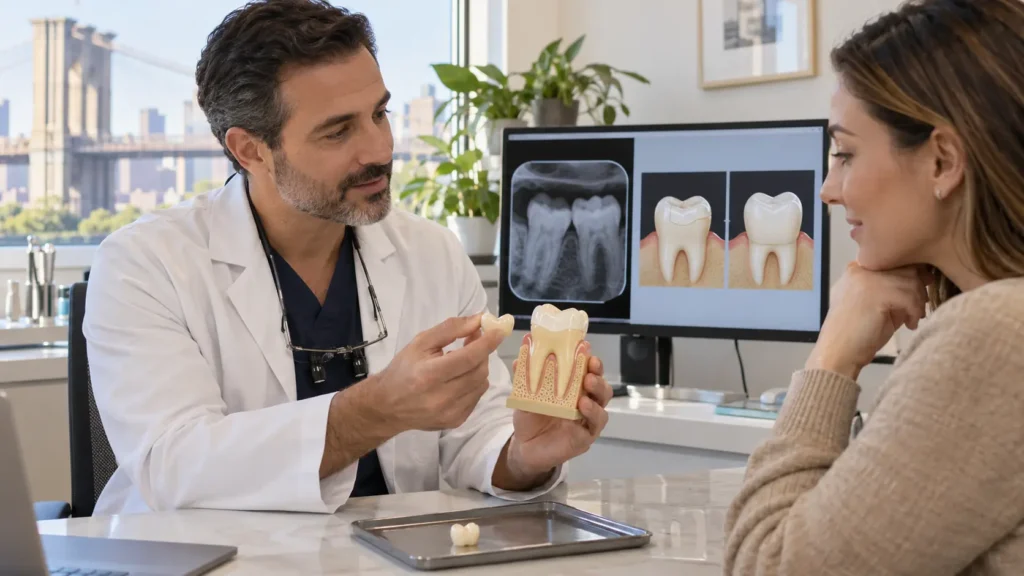
Restorative Dentistry Guide · Williamsburg Brooklyn If a filling is no longer enough, a crown isn’t automatically the next step. A dental onlay may preserve more tooth structure when the conditions are right. The difference comes down to what the tooth can actually support. Dental Onlay vs Crown: Which Is Better for a Damaged Tooth? SEE THE COMPARISON WHEN EACH IS USED Written by Toothology Editorial Team | Reviewed by Dr. Ayala Lieberman, DDS September 2026 If your dentist says a filling is no longer enough, you may be wondering whether a crown is your only option. This is where the onlay vs crown comparison matters. A dental onlay can be a more conservative choice when the tooth still has enough healthy structure. A dental crown may be better when the tooth is badly weakened, deeply decayed, or heavily cracked. Neither is automatically better — the right choice depends on the tooth. Onlay vs Crown: At a Glance Dental Onlay Covers part of the tooth and one or more cusps. May preserve more healthy tooth structure when the tooth is suitable for a partial restoration. Dental Crown Covers the full visible portion of the tooth from the gumline up. Provides stronger protection when the tooth is severely damaged or weakened. Neither Is Always Better The right option depends on the condition of the tooth — not a preference or a cost choice. A dental exam determines what the tooth can safely support. How the Decision Is Made Exam findings and X-rays guide the recommendation — the amount of remaining tooth structure, any crack pattern, bite forces, and the size of the damage all matter. What Is a Dental Onlay? A dental onlay is a custom restoration used to repair a damaged part of a back tooth. Unlike a standard filling placed directly in the mouth, an onlay is fabricated outside the mouth — either in a dental lab or with digital milling technology — and then precisely bonded to the prepared tooth. An onlay covers one or more cusps — the raised points of the tooth that handle biting and chewing force. Because of this, it is sometimes called a partial crown. It sits between a large filling and a full dental crown in terms of coverage and preparation. Onlays are commonly made from ceramic or porcelain for a natural appearance and good durability, though other materials may also be used depending on the case. Each onlay is custom-made to fit the prepared tooth, support the bite, and protect the damaged area. FILLING Repairs within the chewing surface only. No cusp coverage. ONLAY Covers chewing surface and one or more cusps. Partial coverage. CROWN Covers the full visible tooth from the gumline up. Full coverage. Onlay vs Crown: The Core Difference The main difference between a dental onlay and a dental crown is how much of the tooth each restoration covers — and how much natural tooth structure is removed to place it. Factor Dental Onlay Dental Crown Coverage Covers the damaged chewing surface and one or more cusps — partial coverage Covers the full visible portion of the tooth from the gumline up Tooth Preparation Preserves more natural tooth structure when the tooth is suitable Requires reshaping the tooth on all sides for full coverage Best For Moderate damage, large filling replacement, or fractured cusp when enough healthy tooth remains Severe damage, extensive decay, little structure left, root canal-treated teeth, or heavy bite forces Material Often ceramic or porcelain — matched to tooth colour Porcelain, zirconia, ceramic, or metal-based options depending on the case Process Exam, preparation, scan or impression, temporary if needed, and final bonded placement Similar process with full crown preparation, temporary, and final cementation Longevity Can last many years with good care and regular monitoring at dental visits Can also last many years — longevity depends on care, material, and bite forces IN SIMPLE TERMS An onlay is more conservative when the tooth can support it. A crown is more protective when the tooth needs full coverage. The exam — not a preference — determines which option is appropriate for that specific tooth. How Much Tooth Structure Each Option Removes Preserving natural tooth structure matters because enamel and dentin do not regenerate once they are removed. For that reason, dentists try to use the most conservative restoration that can safely repair the tooth — not the most conservative option regardless of suitability. SUITABILITY DETERMINES WHICH IS CONSERVATIVE An onlay only qualifies as the conservative option when the tooth can safely support it. If a tooth needs full coverage to remain functional and protected, a crown is the safer and more appropriate choice — placing a partial restoration on an unsuitable tooth is not conservative, it is under-treating the problem. When an Onlay May Be the Better Choice A dental onlay may be a good option when the tooth is too damaged for a filling but still has enough healthy structure to support a partial restoration safely. Created with Sketch Beta. Replacing a large old filling: If an old filling is cracked, worn, or has decay around its margins, an onlay may provide stronger support when enough healthy tooth structure remains. Fractured cusp: If one cusp is damaged but the rest of the tooth is stable and solid, an onlay can cover and protect that specific area. Moderate decay: If decay is too large for a filling but not extensive enough to require full crown coverage, an onlay may be a suitable middle option. Tooth structure preservation: When the tooth is clinically suitable, an onlay can restore strength and function while preserving more natural tooth than a crown would require. ONLAYS ARE OFTEN USED ON PREMOLARS AND MOLARS These back teeth handle heavy chewing forces and are common sites for large fillings or cusp fractures. A restorative dental exam confirms whether the remaining tooth is solid enough to support an onlay or whether a crown is the safer option. When a Crown Is Necessary Instead A dental crown may
Restorative Dentistry in Brooklyn: How Dentists Repair Damaged, Decayed, or Missing Teeth
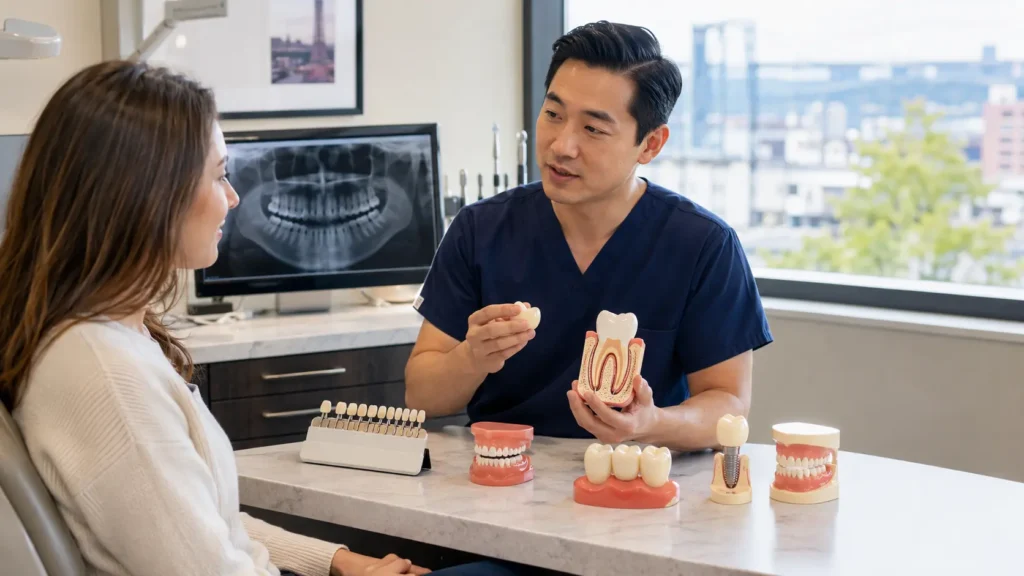
Restorative Dentistry Guide · Williamsburg Brooklyn From a cracked molar to a gap you’ve been covering when you smile — restorative dentistry is how dentists repair what’s broken and replace what’s missing so your mouth works the way it should. Restorative Dentistry in Brooklyn: How Dentists Repair Damaged, Decayed, or Missing Teeth EXPLORE TREATMENTS QUICK REFERENCE TABLE Written by Toothology Editorial Team | Reviewed by Dr. Ayala Lieberman, DDS July 2026 A tooth that has been hurting for weeks. An old filling that cracked while eating dinner. A gap from a missing tooth you have been covering with your hand when you smile. A crown that has been loose longer than you meant to let it go. These are exactly the situations restorative dentistry is designed to address — repairing what is damaged and replacing what is missing so the mouth can function comfortably, confidently, and without the daily awareness of a problem you are working around. The specific treatment that is right for a given situation depends on clinical findings — the extent of the damage, the amount of healthy structure remaining, the condition of surrounding teeth and gum tissue — not on a general hierarchy of which option is “best.” What Is Restorative Dentistry? Restorative dentistry focuses on repairing damaged teeth and replacing missing ones. The main goal is function — helping patients chew, speak, and maintain a healthy bite without pain, sensitivity, or instability. Restorative dental care can include simple tooth-colored fillings, crowns for cracked or weakened teeth, bridges, dentures, implant restorations, or more comprehensive treatment plans for multiple dental problems. RESTORATIVE VS COSMETIC Restorative and cosmetic dentistry can overlap — a porcelain crown, for example, can improve both the strength and appearance of a tooth. But restorative treatment is primarily about oral health and function, especially when a tooth is damaged, decayed, worn, or missing. Signs It May Be Time for a Restorative Dental Evaluation Restorative dental care may be needed when a tooth has lost structure or function because of decay, fracture, wear, injury, or missing teeth. Since enamel and dentin do not grow back, the right treatment depends on how much damage has occurred and what part of the tooth is affected. Pain is not the only signal. Cavities, cracks, and infections can sometimes progress without obvious symptoms — routine exams and X-rays help identify these issues earlier, before treatment becomes more complex. A cracked, chipped, or visibly broken tooth A large, dark, or growing cavity Tooth pain or sensitivity when biting or with hot or cold A loose, cracked, or uncomfortable filling, crown, or bridge A missing tooth affecting chewing or appearance Teeth that look worn down or shorter than before Food trapping around a gap or existing restoration Swelling, bad taste, or a bump near a tooth Difficulty chewing comfortably on one side for several weeks Common Restorative Dental Treatments The right option depends on your exam, X-rays, tooth structure, and overall treatment needs. Here is an overview of the most common restorative treatments available at Toothology in Williamsburg. TOOTH-COLORED FILLINGS Composite resin repairs small to moderate cavities and minor damage with a natural-looking, shade-matched result. Bonds directly to the tooth and is often completed in one visit. CONSERVATIVE · SINGLE VISIT DENTAL CROWNS A custom cap covers and protects a damaged tooth when a filling is not enough — often after large cavities, cracks, heavy wear, or root canal treatment. PROTECTS FULL TOOTH DENTAL BRIDGES Replaces one or more missing teeth by anchoring to nearby teeth or implants — restoring chewing function and helping prevent neighbouring teeth from shifting. FIXED REPLACEMENT DENTURES Partial or full dentures replace multiple or all missing teeth — improving chewing, speech, and appearance. Can be partial (some teeth remaining) or full arch. PARTIAL OR FULL IMPLANT RESTORATIONS The crown, bridge, or denture attached to a dental implant — creating a stable, long-term replacement for missing teeth that can feel and function like a natural tooth. STABLE · LONG-TERM BONDING Composite bonding repairs small chips, minor fractures, or surface irregularities when the tooth is otherwise healthy — a conservative option with minimal preparation. MINOR REPAIRS Fillings, Crowns, Bridges, Dentures & Implants: A Quick Reference Not sure which option applies to your situation? This table gives a side-by-side overview before your consultation. Treatment What It Does May Be Used For Patient Note Tooth-Colored Filling Repairs a cavity or small damaged area with a composite resin that matches your natural tooth shade Small to moderate decay, minor fracture, or surface damage with enough healthy tooth remaining Often completed in one visit Dental Crown Covers and fully protects the visible portion of a damaged or weakened tooth Large cavity, cracked tooth, broken cusp, weak remaining structure, or root-canal-treated tooth Used when a filling is not enough Dental Bridge Replaces one or more missing teeth by anchoring a fixed restoration to neighbouring teeth or implants One or more adjacent missing teeth with healthy anchor teeth or implants on either side Fixed; helps prevent tooth shifting Denture Replaces several or all missing teeth to restore chewing, speech, and appearance Multiple missing teeth across an arch, or full-arch tooth loss Can be partial or full; removable or implant-supported Implant Restoration Restores the visible tooth (crown, bridge, or denture) attached to a surgically placed dental implant Missing tooth replacement where implant placement is clinically appropriate Can feel and function like a natural tooth The right treatment is determined by exam and X-rays — not symptoms alone. The same painful tooth may need a filling, crown, root canal, or extraction depending on what is found clinically. How a Dentist Chooses the Right Treatment The right restorative treatment depends on exam findings — not preference alone. The same painful tooth could need a filling, a crown, a root canal and crown, or an extraction depending on what the X-rays and exam show. Remaining tooth structure: A small cavity may need a filling, while a weakened tooth with thin walls may
Tooth-Colored Fillings in Brooklyn: Natural-Looking Cavity Repair

Restorative Dentistry Guide · Williamsburg Brooklyn Do you really need a metallic-looking filling — or is there an option that blends in and still does the job? For most small to moderate cavities, the answer is a composite resin filling. Tooth-Colored Fillings in Brooklyn: Natural-Looking Cavity Repair COMPOSITE VS. SILVER WHAT TO EXPECT Written by Toothology Editorial Team | Reviewed by Dr. Ayala Lieberman, DDS June 2026 Hearing “cavity” at a routine checkup is never ideal. Or maybe the concern isn’t new — you’ve had a silver filling in a back molar since you were a teenager, and now you’re wondering whether it’s time for something more natural-looking. Either way, many patients ask the same question: do I really need a metallic-looking filling, or is there an option that blends in and still does the job? Tooth-colored fillings are often the answer. For many small to moderate cavities, a composite resin filling can repair decay, restore function, and match your natural tooth colour closely enough that most people won’t notice it. What Are Tooth-Colored Fillings? A tooth-colored filling — also called a composite filling or composite resin filling — is a dental restoration made from resin mixed with fine glass or ceramic particles. Unlike silver amalgam fillings, composite resin is shaded to match your natural tooth colour, so the repair blends in naturally. Bonds Directly to Tooth Composite adheres to the tooth with a dental adhesive. In many cases this allows the dentist to remove less healthy tooth structure compared with traditional fillings. Front and Back Teeth Tooth-colored fillings can be used on both front and back teeth. They are especially useful for visible front teeth, and commonly used for small to moderate cavities in back teeth. Shade-Matched to You The dentist selects the closest composite shade to your natural enamel before placing the filling, so the final result blends rather than contrasts. Mercury-Free Material Composite resin contains no mercury — a common preference for patients who want an alternative to silver amalgam for new fillings or replacements. NOT RIGHT FOR EVERY TOOTH For larger cavities or heavily damaged teeth, your dentist may recommend a different restoration — such as a crown or onlay — rather than a composite filling. The recommendation depends on how much healthy tooth structure remains. How Composite Fillings Repair Cavities The dental filling procedure for a composite resin filling is usually simple and completed in one visit. Knowing the steps makes the appointment feel more routine and less stressful. 1 DECAY REMOVAL The dentist removes the decayed or weakened part of the tooth, leaving healthy structure behind. Because composite bonds to the tooth, this is often more conservative than preparing for a silver filling. 2 BONDING A dental adhesive is applied so the composite resin can attach securely to the tooth’s surface. 3 LAYERING The composite material is placed in thin layers to rebuild the tooth shape accurately and ensure a strong, seamless result. 4 CURING Each layer is hardened with a special curing light — the process takes only seconds per layer. 5 SHAPING & BITE CHECK The filling is shaped to match the natural contours of your tooth and bite. Your dentist checks that it doesn’t sit too high or cause discomfort when biting. 6 POLISHING The surface is polished so it looks smooth and natural, and is less likely to collect plaque or stain over time. ONE APPOINTMENT, SAME DAY For a straightforward cavity, the process is typically calm, routine, and finished in a single appointment. Most patients return to normal daily activities the same day, once any numbness has worn off. Tooth-Colored Fillings vs. Silver Fillings Both tooth-colored and silver fillings have been used successfully in dentistry. The right choice depends on the tooth, the size of the cavity, your cosmetic goals, and your dentist’s recommendation. Factor Tooth-Colored (Composite) Silver (Amalgam) Appearance Matches natural tooth shade; blends with surrounding teeth Metallic grey/silver; visible, particularly on front or easily seen back teeth Material Composite resin — resin with fine glass or ceramic particles Amalgam — a metal alloy including mercury, silver, tin, and copper Bonding Bonds directly to tooth structure with a dental adhesive Held in place more by mechanical retention within the prepared cavity Best Fit Small to moderate cavities, visible areas, cosmetic preference Case dependent; many existing amalgam fillings remain functional for years Patient Priority Usually Driving the Choice Natural-looking result; mercury-free material preference Durability track record; less concern about visible colour A BALANCED WORD ON EXISTING SILVER FILLINGS Many older silver fillings still work well and do not need replacement just because they are old or visible. If a silver filling is intact, comfortable, and free of decay, replacement may not be necessary. However, if it is cracked, leaking, has decay around it, or you prefer a more natural-looking material, replacing it with composite can be a reasonable option — worth discussing at your next checkup. When Is a Filling Enough to Save a Tooth? Composite fillings are a conservative option, but they’re not right for every tooth. A filling usually works best when the cavity or damage is small to moderate and there is enough healthy tooth structure left to support the repair. A FILLING USUALLY WORKS WHEN: The cavity is small to moderate Enough healthy tooth structure remains to support the repair No significant crack or fracture is present The tooth has not had multiple previous fillings leaving weakened walls A CROWN MAY BE NEEDED WHEN: The cavity is large and has removed too much tooth structure A crack extends into the tooth A cusp is broken The tooth has had multiple fillings and little strong structure remains Root canal treatment has been completed on a back tooth ONLY AN EXAM CONFIRMS WHICH TREATMENT IS RIGHT The only way to know what your tooth needs is through an exam and X-rays. Your dentist will check the damage, the remaining tooth structure, and the bite pressure before recommending a filling, crown, or another restoration. What Happens During a Dental Filling Appointment?
Porcelain Crowns: When a Damaged Tooth Needs More Than a Filling
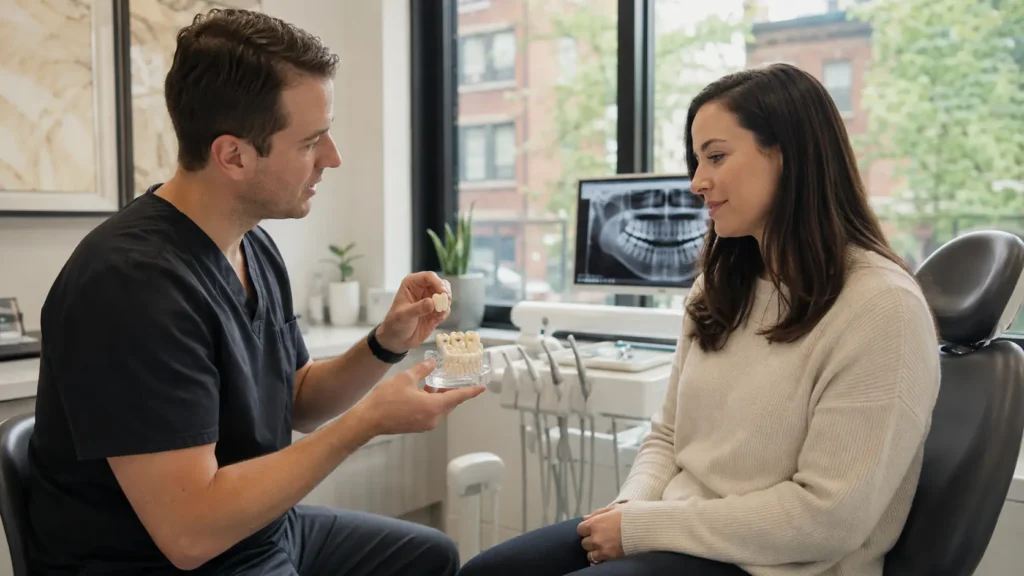
Restorative Dentistry Guide · Williamsburg Brooklyn A sharp twinge that hasn’t gone away. An old filling finally failing. A crown that’s come loose. The same question keeps coming up: is a filling enough, or do you need a crown? Porcelain Crowns: When a Damaged Tooth Needs More Than a Filling FILLING VS. CROWN SEE THE WARNING SIGNS Written by Toothology Editorial Team | Reviewed by Dr. Ayala Lieberman, DDS June 2026 You bit into something ordinary — bread, an apple, nothing dramatic — and felt a sharp twinge that hasn’t fully gone away. Or maybe an old, dark filling your dentist has been watching for years is finally starting to fail. Or perhaps a crown came loose, and you’re wondering whether it can simply be reattached. In all of these situations, the same question comes up: is a filling enough, or do I need a porcelain crown? A porcelain crown is a custom-made cap that covers and protects the visible part of a damaged tooth. Sometimes it’s the right choice; other times, a filling, bonding, or smaller restoration may be enough. The answer depends on how much healthy tooth remains, where the damage is, and how much chewing force the tooth needs to handle. IF A CROWN HAS COME LOOSE Do not try to glue it back yourself. In some cases, a dentist can re-cement the crown — but only after checking whether it still fits properly and whether the tooth underneath has decay, fracture, or other damage. What Is a Porcelain Crown? A porcelain crown is a custom-made cap that fits over the visible part of a damaged or weakened tooth. It is shaped and shaded to look natural while protecting the tooth underneath. F A FILLING REPAIRS PART OF A TOOTH If the damage is small, a filling can fully restore the affected portion while leaving the rest of the natural tooth structure intact. C A CROWN PROTECTS THE WHOLE TOOTH When a tooth has a large cavity, crack, broken cusp, or multiple old fillings, the remaining structure may be too weak to support another filling — full-coverage protection becomes the safer option. The recommendation is based on the tooth’s condition — not just appearance. When Is a Crown Better Than a Filling? The choice between a filling and a crown usually comes down to one question: is there enough healthy tooth structure left to support a filling under normal chewing force? If the tooth walls are too thin, cracked, or weakened, a crown may be the safer long-term option. Large Cavity If decay has removed too much tooth structure, a filling may not be strong enough. A crown can protect the remaining tooth from cracking under bite force. Cracked Tooth When a crack extends into the tooth, a crown can help hold the tooth together and reduce stress during chewing. Broken Cusp If one of the raised chewing points breaks, the tooth may need a crown to rebuild strength and restore normal function. Failing Old Filling Repeated filling replacements remove more natural tooth each time. When too little strong structure remains, a crown is often more durable. After Root Canal Treatment Many back teeth need crowns after root canals because they can become weaker and more prone to fracture. Your dentist will decide based on how much tooth remains and how much bite force it handles. Filling vs. Crown: A Quick Comparison Factor Filling Porcelain Crown Best For Small to moderate cavities with enough healthy tooth left Large cavities, cracks, broken cusps, or weakened teeth Protection Level Replaces the damaged portion only Covers and protects the whole visible tooth Longevity Works well for smaller repairs Often stronger for heavily damaged teeth Invasiveness More conservative Requires more shaping of the tooth When It Falls Short Large fillings can weaken or fracture over time Not needed for minor damage CHOOSING THE WRONG TREATMENT COSTS MORE LATER Trying to use a filling when a tooth really needs a crown can lead to cracks, breakage, or a future dental emergency. Choosing the right treatment early often helps protect the tooth and avoid a more complex repair down the line. Signs You May Need a Dental Crown While only an exam and X-rays can confirm whether a tooth needs a crown, there are recognisable signs and situations that warrant scheduling that evaluation rather than waiting. Visible crack lines on the tooth surface Pain or a sharp sensation specifically when biting down A large, old filling that covers much of the tooth A fractured or broken cusp — the pointed part of a back tooth Recurring decay around or beneath an existing filling A tooth that has been significantly worn down over time An old crown that is cracked, loose, or visibly damaged A tooth that has had root canal treatment and has not yet been crowned Warning Signs That Need Prompt Evaluation Sharp pain specifically when biting down Swelling near a tooth Worsening sensitivity to hot, cold, or pressure A visibly broken tooth edge A crown that has fallen off entirely THESE SIGNS DON’T CONFIRM A CROWN — BUT THEY CONFIRM AN EXAM These signs do not automatically mean you need a crown, but they do mean an exam and X-rays are the right next step. Your dentist can then decide whether a filling, crown, or another treatment is most appropriate for your specific tooth. Porcelain Crowns vs. Ceramic Crowns Patients often use porcelain and ceramic interchangeably, and that’s usually fine. Technically, porcelain is a type of ceramic material, often chosen for its natural tooth-like colour and translucency. Zirconia crowns are also ceramic, but they’re denser and known for strength — making them useful for back teeth that handle heavier chewing forces. Some cases may also use porcelain-fused-to-metal crowns, though all-ceramic and zirconia options are now more common. All-Ceramic / Porcelain vs. Zirconia: A Quick Comparison Factor All-Ceramic / Porcelain Zirconia Aesthetics Excellent shade-matching and translucency; often preferred for visible front teeth Good aesthetics with newer materials, but sometimes slightly less translucent