
- Symptom Guide
A one-time food trap is common. A recurring one — always the same spot — is worth a dental assessment. Here’s what it can mean and what to do next.
Food Keeps Getting Stuck Between the Same Teeth: What Should You Do?
If food keeps getting stuck between the same two teeth after meals, it may be more than an occasional nuisance. A one-time food trap — something caught during a particular meal — is common, especially with fibrous or stringy foods. But when the same spot repeatedly catches food across different meals and food types, it can point to a local change in that area.
For now, remove trapped food gently with floss or another appropriate interdental cleaner. If the problem keeps returning, book a dental assessment rather than repeatedly treating only the symptom. A dentist can examine the area, identify the underlying cause, and recommend treatment only if it is actually needed.
THE SHORT VERSION
A recurring food trap — always the same two teeth — can be caused by changes in the tooth contact, a filling or crown, the bite, tooth position, or the gum tissue. Cleaning away the food treats the immediate problem; a dental assessment identifies the cause. Recurring food trapping does not automatically mean a cavity or a failing restoration, but both are possibilities the dentist may check for.
One-Off Trapped Food vs. a Recurring Food Trap
Food occasionally getting caught between teeth is common, particularly with fibrous foods like meat, corn, or leafy greens. In many cases it is simply something that needs to be cleaned away, and it doesn’t happen again.
A recurring food trap is different. If food keeps getting stuck between the same two teeth — especially across different meals and food types — it may suggest a local change in that area: how the teeth contact each other, how a restoration is shaped, how the gum tissue fills the space, or whether the bite is directing food into the gap.
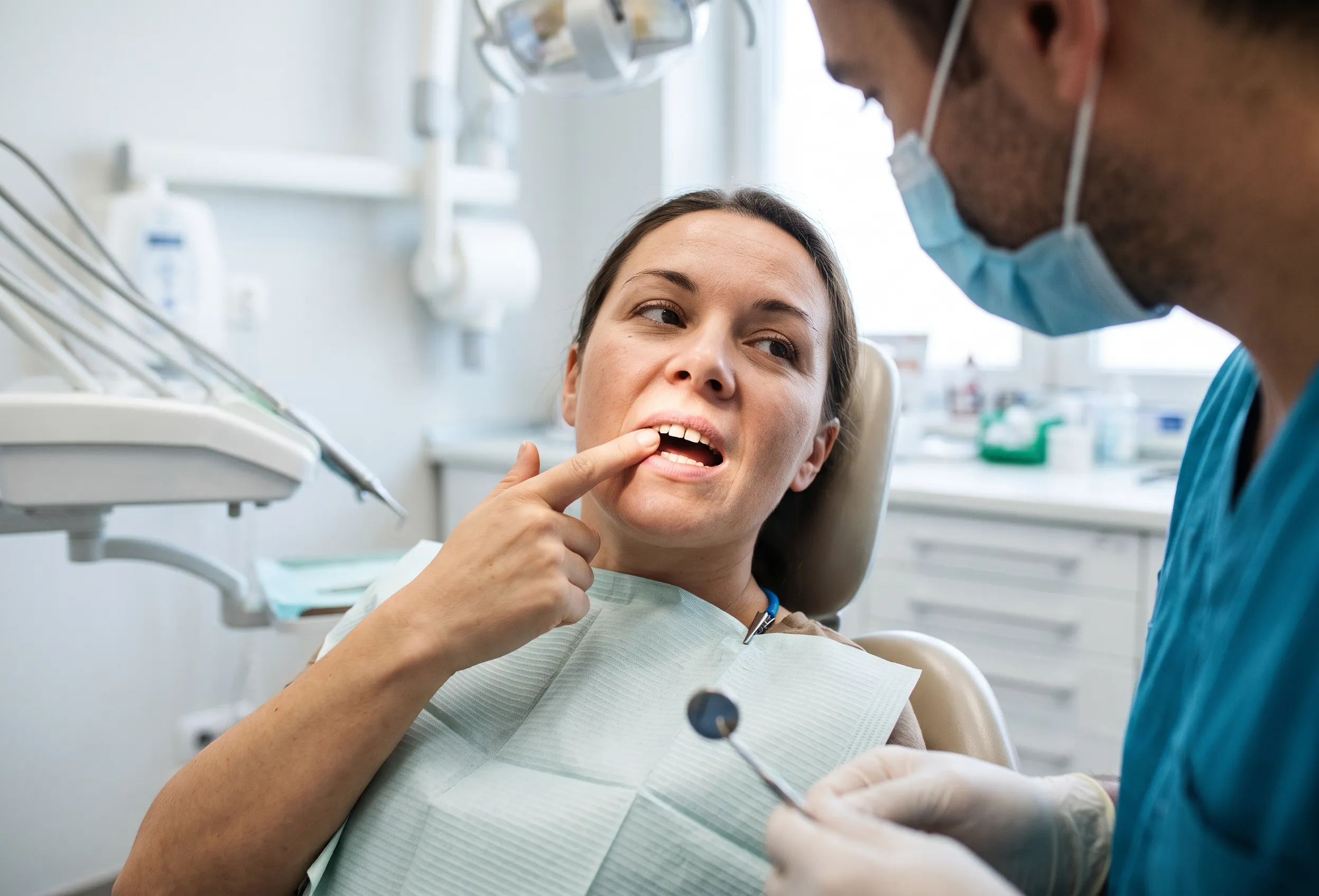
Pay attention to patterns such as:
- Which two teeth are involved
- Whether certain foods trigger it more than others
- Whether the problem started recently or developed gradually
- Whether floss catches, shreds, or passes through unusually easily in that spot
- Whether there is bleeding, tenderness, sensitivity, or a recurring bad taste
These details can help your dentist focus the examination, but the cause should be confirmed with a dental assessment rather than self-diagnosed.
What Can Change the Contact Between Teeth?
The area where neighboring teeth touch helps prevent food from being pushed between them during chewing. If that contact changes — due to wear, tooth movement, a restoration, or shifts in the surrounding tissue — food may begin getting trapped more consistently. The table below summarizes common factors your dentist may assess.
| Possible Factor | Possible Clue | What the Dentist May Assess |
|---|---|---|
| Tooth contact | Food repeatedly wedges between the same teeth; floss may pass through very easily | Contact between the teeth, wear, position, and stability |
| Filling or crown | Trapping started or changed after dental work; floss may catch or shred | Restoration contour, margins, contact with the neighboring tooth, and bite |
| Bite relationship | Food is pushed into the space while chewing | Bite contacts, marginal ridges, opposing cusps, and wear |
| Tooth position or movement | A gap develops or a tooth appears tilted or rotated | Alignment and whether tooth movement has changed the contact |
| Gum or tissue changes | Food collects near the gumline with bleeding or tenderness | Gum health, pocketing, recession, and interdental space |
| Tooth structure or decay | Roughness, sensitivity, or a change in tooth contour | Cavity assessment and imaging if clinically needed |
DOES FOOD TRAPPING MEAN YOU HAVE A CAVITY?
Not necessarily. Recurring food trapping can happen for several reasons, including changes in tooth contact, restoration shape, bite forces, or gum tissue. Decay is one possibility your dentist may check for, but it should not be assumed from food trapping alone. Similarly, food getting stuck near an older filling or crown does not automatically mean the restoration has failed — it means the area is worth examining to find out what has changed.
What to Tell Your Dentist About a Filling, Crown, or New Symptoms
If food trapping started after a filling or near a crown, let your dentist know when it began and whether your bite or that area started feeling different at the same time.
HELPFUL DETAILS TO MENTION AT YOUR APPOINTMENT
- Which exact spot traps food
- Whether floss catches, shreds, snaps, or passes through too easily there
- Sensitivity to cold or sweets
- Pain or discomfort when biting down
- Bleeding or tenderness around the gum in that area
- A recurring bad taste or smell
- Any swelling, or a chipped, cracked, or missing piece of tooth or restoration
These symptoms don’t identify the cause by themselves, but they help your dentist know what to examine closely. If you’ve noticed changes after recent dental work — a new filling, a crown, an adjustment — that timing is also useful to mention.
- CALL TOOTHOLOGY DIRECTLY FOR THESE
If you have any of the following, call (718) 678-3800 rather than using routine online booking — these may need a same-day or priority appointment:
- Severe or persistent pain
- Swelling in the jaw, face, or gum
- Fever alongside dental pain
- A broken or lost restoration
- Trauma to the tooth or surrounding area
Rapidly spreading facial swelling, difficulty breathing or swallowing, or swelling around the eye requires emergency medical care.
Safe Cleaning While You Wait for an Appointment
While waiting for a dental appointment, gently clean the area using a purpose-made interdental tool — floss, an interdental brush, a dental pick, or a water flosser. The goal is to remove trapped food without injuring the gums or damaging the teeth.
Safe Cleaning — What to Do and Avoid
Use floss gently:
Guide floss between teeth — don’t snap or force it into the gumline. If it repeatedly catches, shreds, or passes through very easily in the same spot, note that for your dentist.
Try an interdental brush or water flosser:
Either can reach areas that floss misses and may be gentler if the area is tender.
Do not use sharp or improvised objects:
Toothpicks (used aggressively), pins, or other household items can injure gum tissue or damage a restoration.
Don't repeatedly force stuck food out:
If food is firmly wedged or the area is painful or swollen, contact Toothology rather than continuing to try to extract it.
Note floss behavior:
Floss that shreds, catches, or snaps suggests a rough edge or overhanging restoration. Floss that glides through very easily may point to an open contact. Both are worth reporting.
Cleaning away the food only treats the immediate problem. If the same area keeps trapping food, book a dental assessment to find out why — the pattern is the signal.
TRACK THIS BEFORE YOUR VISIT
Note which teeth are involved; whether certain foods trigger it; whether it started after a filling or crown; whether floss catches, shreds, or passes through easily; any bleeding, tenderness, sensitivity, bad taste, swelling, or bite changes; and how quickly the food trap returns after cleaning. These details can help your dentist focus the examination on the affected area and reduce the time needed for assessment.
What the Dentist Checks Before Recommending Treatment
A recurring food trap is assessed by looking at the contact between the teeth, nearby restorations, gum tissue, bite, and tooth position. Treatment depends on what is actually causing the problem — there is no single treatment for every recurring food trap.
The Contact Between the Teeth
Whether the contact is open, unstable, rough, unusually tight, or affected by wear or tooth movement over time.
Existing Restorations
If a filling or crown is nearby, the dentist may assess its contour, margins, contact with the neighboring tooth, and the surrounding tooth structure.
Cavity Assessment
Both teeth may be checked for decay or structural changes. X-rays may be recommended if they would be clinically useful for the area in question.
Gum and Tissue Examination
Inflammation, recession, pocketing, or changes in the tissue between the teeth — the interdental papilla — can all affect how food is intercepted or collected at the gumline.
Bite Assessment
Bite contacts, wear patterns, opposing cusps, and marginal ridge relationships are checked to see whether chewing mechanics are directing food into the space.
Tooth Position
Rotation, tipping, spacing changes, or gradual tooth movement can alter how neighboring teeth contact each other and how much food can be pushed between them.
TREATMENT FOLLOWS THE CAUSE
Depending on findings, treatment may involve monitoring, hygiene guidance, repairing decay, adjusting or replacing a restoration, periodontal care, bite management, or orthodontic and restorative planning. The goal is to identify the cause first and treat only what is actually needed.
Frequently Asked Questions
Why does food always get stuck in the same place?
Can this happen around a filling or crown?
Does recurring food trapping always mean I have a cavity?
Should I book an appointment if the food comes out but keeps returning?
What if the area also hurts or swells?
Pain, swelling, or a recurring bad taste should be assessed promptly. Call Toothology at (718) 678-3800 rather than using routine online booking. Severe or rapidly spreading facial swelling, difficulty breathing or swallowing, or swelling near the eye requires emergency medical care rather than a dental appointment.
Ready to Find Out Why the Same Spot Keeps Trapping Food?
SAME SPOT, EVERY MEAL?
A recurring food trap is worth a dental assessment. Book at Toothology in Williamsburg to find out what’s causing it.
DIRECT LINE
IN THIS GUIDE
WHEN TO BOOK VS. CALL
Food trapping, no pain
Book Online
Started after a filling or crown
Book Online
Floss shreds or catches
Mention at Visit
Pain, sensitivity, bad taste
Call Directly
Swelling or facial swelling
Call Urgently
Recurring, cleaning helps short-term
Book Assessment
TOOTHOLOGY DENTAL
Williamsburg, Brooklyn, NY
Serving Greenpoint, Bushwick, Bed-Stuy & Downtown Brooklyn
718-678-3800
Emergency line available
Open Hours
Mon – Thu: 10:00 AM – 6:00 PM Friday: 10:00 AM – 2:00 PM Sunday: 10:00 AM – 2:00 PM Saturday: Closed
OUR COMMITMENT
- Board-Certified Pediatric Dentists
- Child-Friendly, Anxiety-Reducing Care
- Same-Day Emergency Slots
- Low-Radiation Digital X-Rays
- Most Major Insurance Accepted